

Leonardo Krapp
@krappleo
Associate prof at Universidad de Concepción. Working on Planet Formation and Computational Astrophysics.
ID: 1441243021089992711
http://sites.google.com/view/krappleo 24-09-2021 03:28:25
79 Tweet
174 Followers
129 Following

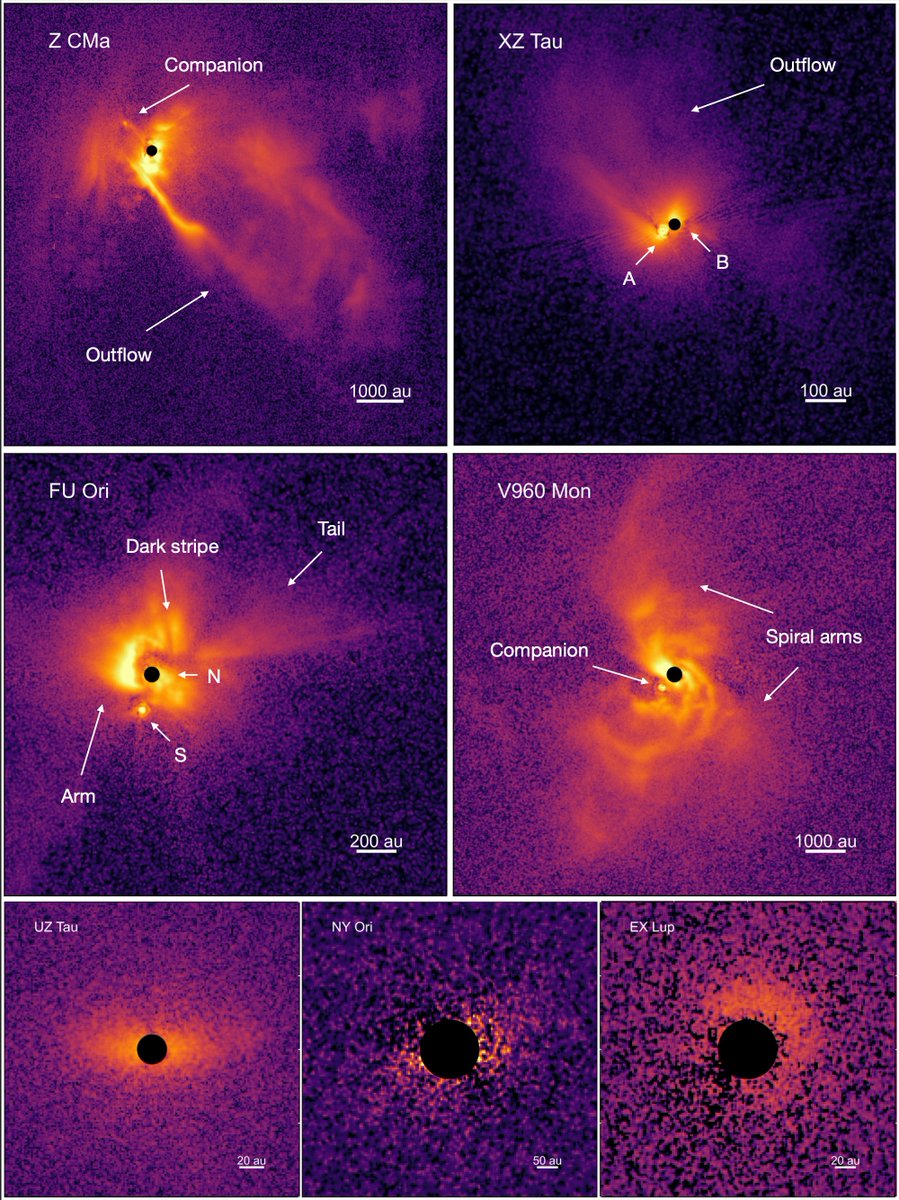
Paper day! SPHERE images of seven eruptive stars and their spectacular surroundings: turns out the streamer in Z CMa is part of a huge outflow, EXors have relatively faint disk-like structures except for XZ Tau, and more in 👇 arxiv.org/abs/2403.12124 #MilenioYEMS Astrofísica CIRAS




For the first time in their history, Argentina are #HSBCSVNS League winners! 🇦🇷🏆 Los Pumas 7s

I am thrilled to share that after 5 amazing years at University of Arizona I will join Universidad de Concepcion Astronomía UdeC as an assistant professor. It's been a great journey at Steward Observatory, University of Arizona and can't wait for the new adventures to come at Universidad de Concepción and the grand southern Chile.


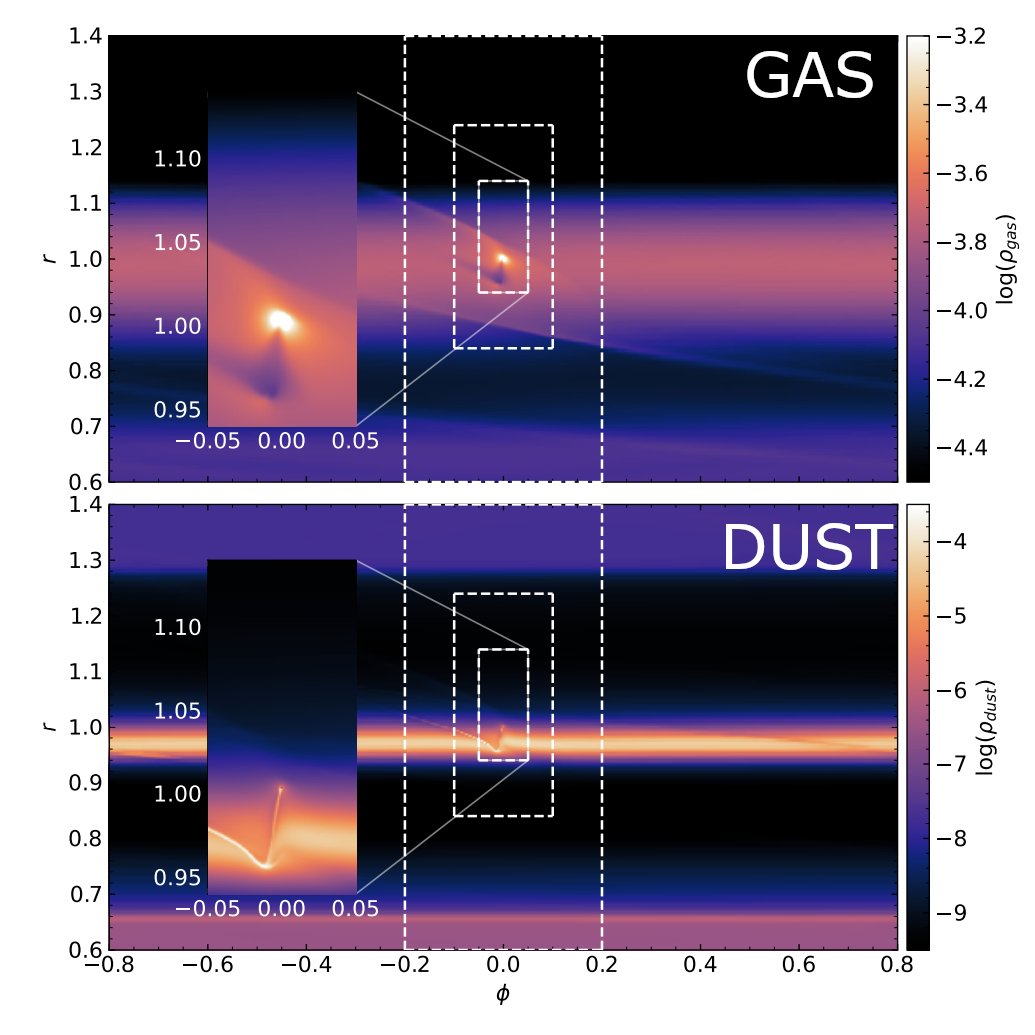
I would like to advertise our recently accepted paper led by David Velasco-Romero at Princeton University. #FARGO3D simulations show that eccentric planets (0.1-8 Earths) can get locked near dust rings due to their own accretion (heating/thermal torque). Link: arxiv.org/pdf/2407.16546
Encantado de presentar junto a Leonardo Krapp nuestro trabajo sobre #FARGO3D en #CARLA2024. Luego de 10 años, aún nos encontramos a la vanguardia en el uso de #GPUs en simulaciones astrofísicas. Agradezco a los organizadores y a quienes han contribuido al desarrollo de FARGO3D.
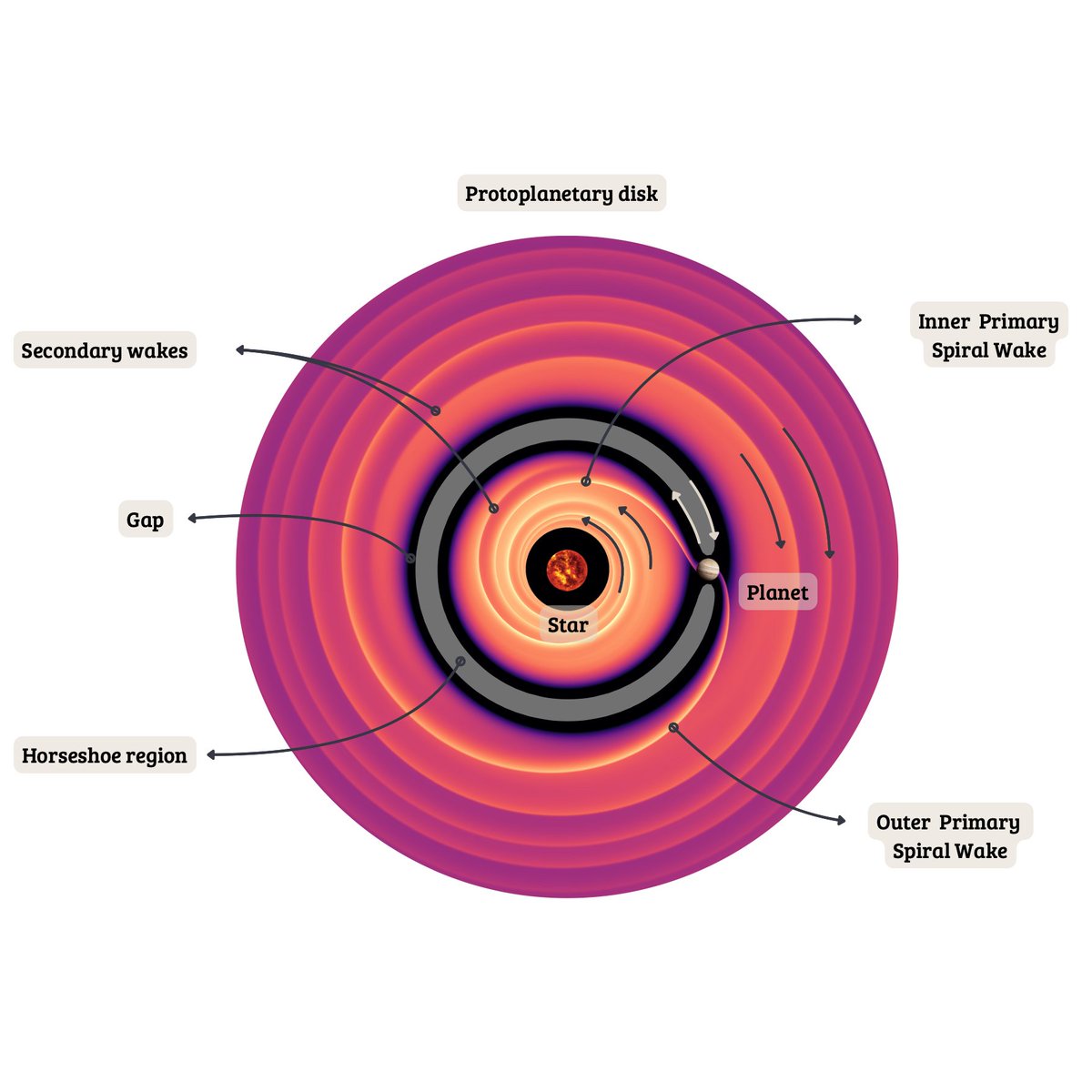
A great review article by Pablo Benitez Llambay on planet-disk interaction. The article covers many aspects of planet migration with a thorough and yet simple description. Excellent text for both uninitiated and advanced students. Highly recommended arxiv.org/abs/2410.00374
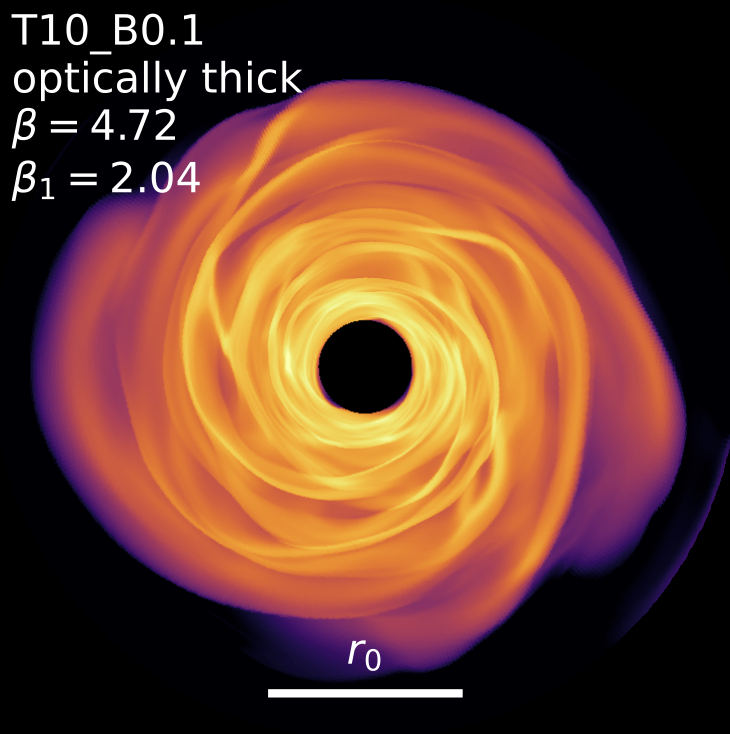


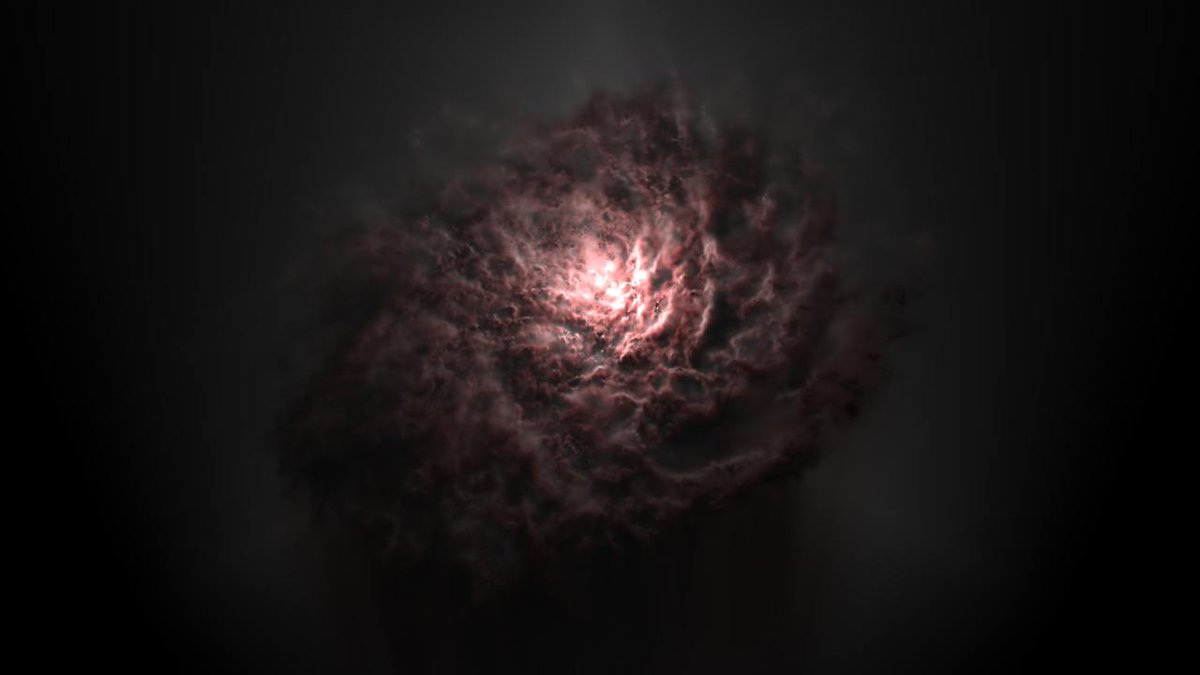
When our new tech for sphviewer2 intersects with the genius of Pablo Benitez Llambay and his new nebula code, you get stunning images like this: an SPH dusty galaxy. I don’t recall seeing anything this cool! Stay tuned for more exciting developments in simulation rendering tools!
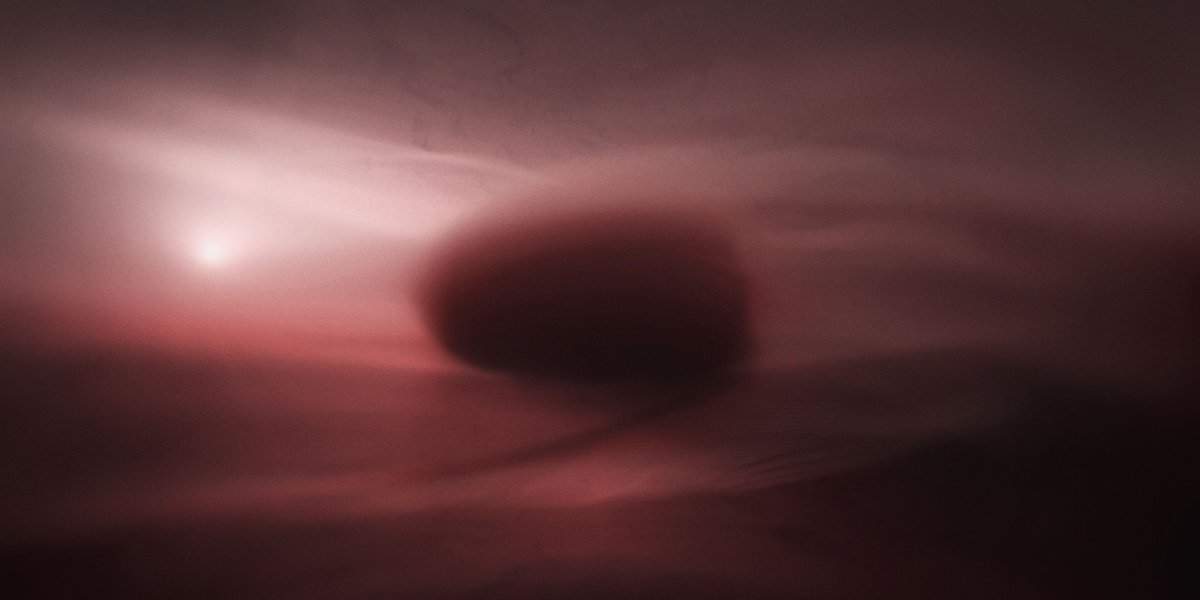
Ever wondered what a circumplanetary disk would look like up close? With #nebula and high-resolution dusty #FARGO3D simulations made by Leonardo Krapp we're starting to get a glimpse. And yes... There is a planet embedded in that dusty cloud! 🪐
Jiayin Dong Jiayin Dong, Dan Tamayo Daniel Tamayo and I will host a workshop April 22-25 Flatiron CCA in New York on methods and applications of ML for planetary dynamics and exoplanet population inference. Express your interest in attending by 3/3/25: forms.gle/k2WVVDPGLuuyyq…
We’re hosting a workshop on Machine Learning in Planetary System Dynamics Flatiron CCA April 22-25, covering a range of topics at the intersection of dynamics, exoplanet populations, planet formation, and ML. Link to apply in replies: we’ll start sending invites next week!

Our new paper with Ximena Ramos on a comoving framework for planet migration is on arXiv! Simulating planets moving through their disk is computationally expensive. Our new method solves this by keeping the planet fixed, making simulations over >10x faster!
Thomas Pfeil and I are organizing a workshop on Hydrodynamic and Dusty Turbulence in Protoplanetary Disks Flatiron Institute in New York, Feb 23-35 (2026). Details, and a short form to express interest in attending, at the link below: users.flatironinstitute.org/~parmitage/Dis…