Hossein Ravanbakhsh (@hravanbakhsh) 's Twitter Profile
Hossein Ravanbakhsh

@hravanbakhsh

Assistant Professor, BME, University of Akron #TissueEngineering #Biomaterials #Hydrogel #Bioprinting

ID: 1066768135401951243

linkhttp://www.beta-lab.org calendar_today25-11-2018 18:58:37

192 Tweet

313 Followers

257 Following

Hossein Ravanbakhsh (@hravanbakhsh) 's Twitter Profile Photo

Read our latest editorial with Y. Shrike Zhang on cryobioprinting: doi.org/10.2217/3dp-20… We introduced the concept of #cryobioprinting earlier this year in Matter: doi.org/10.1016/j.matt… #bioprinting #biomaterials
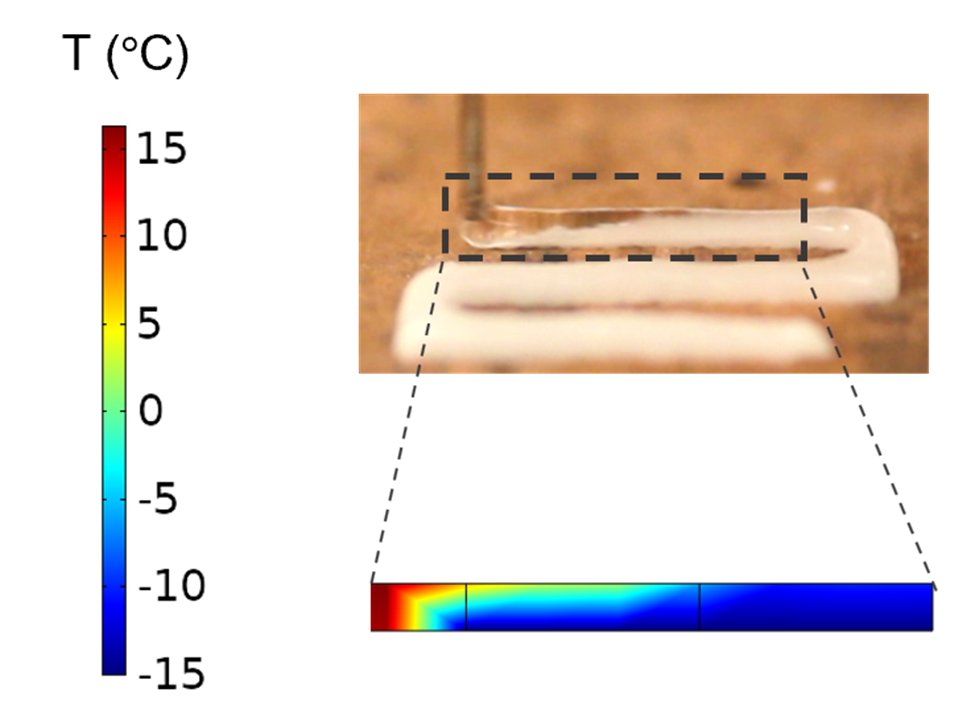
Read our latest editorial with <a href="/shrikezhang/">Y. Shrike Zhang</a>
 on cryobioprinting: doi.org/10.2217/3dp-20…

We introduced the concept of #cryobioprinting earlier this year in Matter: doi.org/10.1016/j.matt…

#bioprinting #biomaterials

Hossein Ravanbakhsh (@hravanbakhsh) 's Twitter Profile Photo

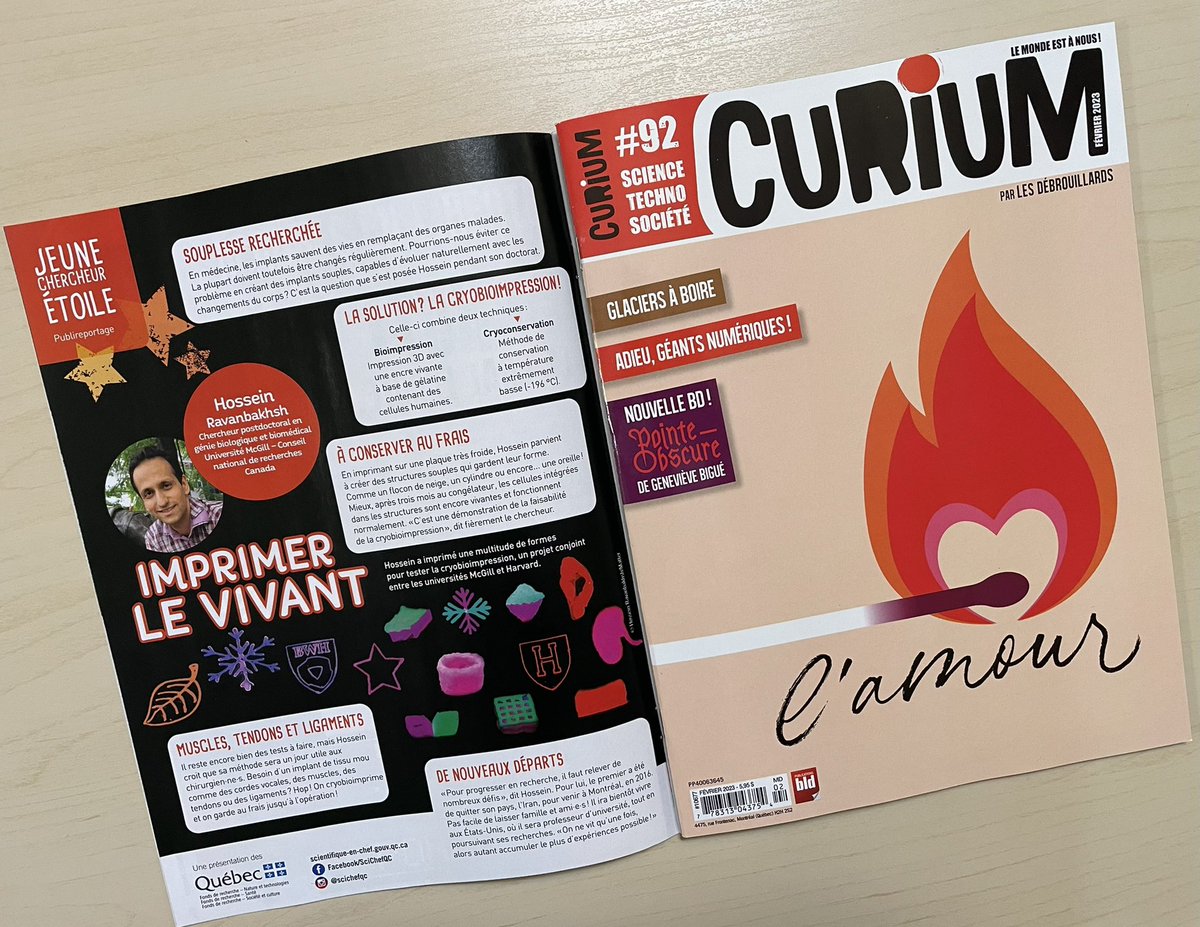
As a part of my outreach activities, I was interviewed by @CuriumMag to explain our #cryobioprinting work in a simple language for teenagers between 14-17. Read the full paper here: doi.org/10.1016/j.matt… #Science #scicomm

As a part of my outreach activities, I was interviewed by @CuriumMag to explain our #cryobioprinting work in a simple language for teenagers between 14-17. Read the full paper here: doi.org/10.1016/j.matt… #Science #scicomm
Y. Shrike Zhang (@shrikezhang) 's Twitter Profile Photo

Today in PNASNews, we show that coaxial bioprinting can be combined with liquid support bath to enable direct writing of ultra-fine, ultra-thin-walled conduits, both down to few-micron scale, not possible before with conventional microfluidic bioprinting: pnas.org/doi/10.1073/pn…

Hossein Ravanbakhsh (@hravanbakhsh) 's Twitter Profile Photo

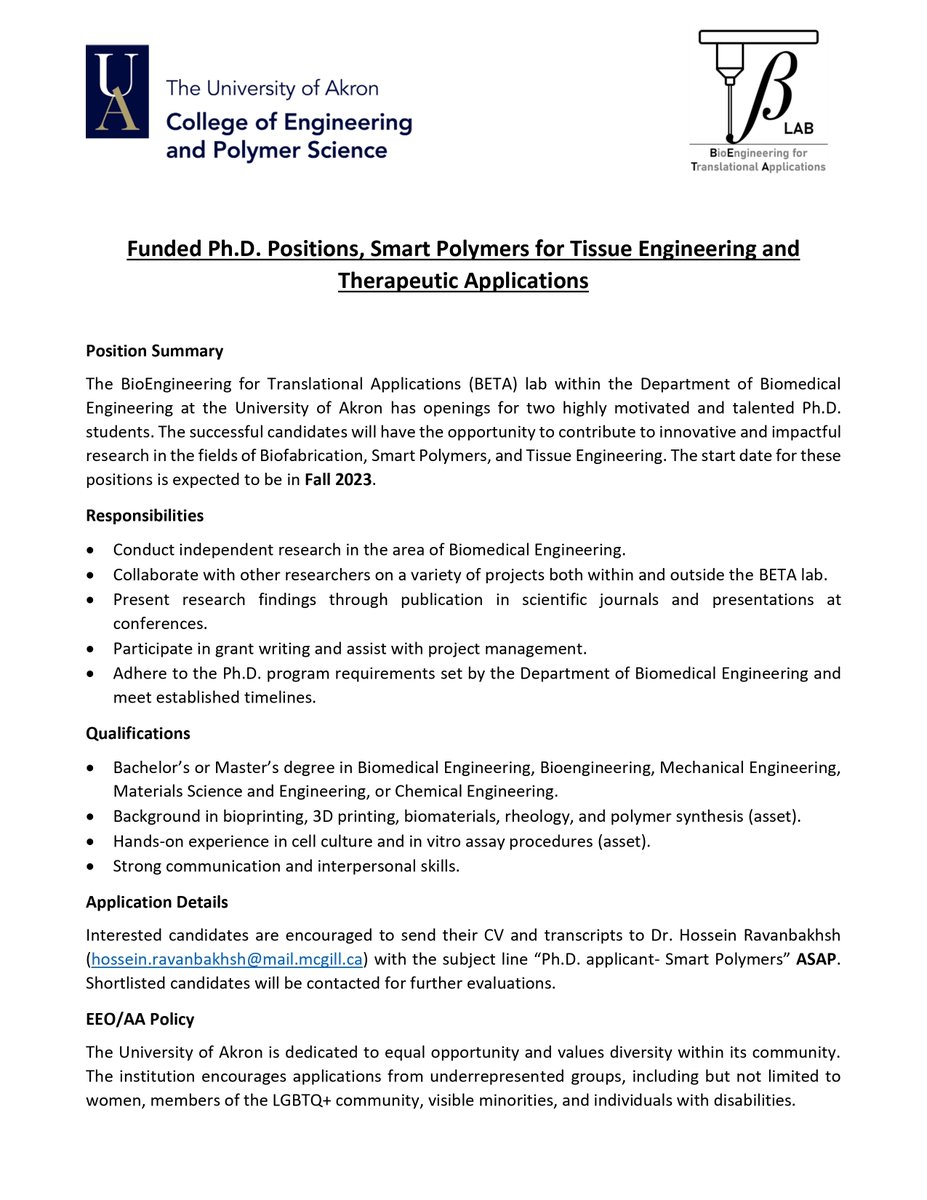
I am on the lookout for two Ph.D. students to join the BioEngineering for Translational Applications (BETA) laboratory at The University of Akron starting in Fall 2023. Interested candidates are highly encouraged to contact me only via email ASAP. Please RT. Future PI Slack

I am on the lookout for two Ph.D. students to join the BioEngineering for Translational Applications (BETA) laboratory at <a href="/uakron/">The University of Akron</a> starting in Fall 2023. Interested candidates are highly encouraged to contact me only via email ASAP. Please RT.
<a href="/FuturePI_Slack/">Future PI Slack</a>
Hossein Ravanbakhsh (@hravanbakhsh) 's Twitter Profile Photo

Our recent publication was selected for the front cover of Advanced Engineering Materials. Read the paper here: onlinelibrary.wiley.com/doi/abs/10.100… Kudos to the SciFig studio for designing such an eye-catching and creative cover!

Anna Clemens, PhD (@scientistswrite) 's Twitter Profile Photo

As an academic writing coach, here are the 7 most common mistakes I see researchers make when writing the Introduction section of their paper. A thread. 🧵 #newPI #AcademicTwitter

Khoon Lim (@khoonono) 's Twitter Profile Photo

We're looking for new PhD students to join us here at USyd to work on an exciting multidisciplinary project -> sydney.edu.au/scholarships/c… Applications close 22nd August, see link for application instructions :) ASBTE Intl Soc Biofab

Li Jianyu 李剑宇 (@jianyuvli) 's Twitter Profile Photo

We are looking for graduate students and postdoctoral associates. Our lab offers exciting funded projects, focusing on engineered bacteria-based bioadhesives, ultrasound-based biofabrication, wearable bioadhesive sensors, and hemostatic technologies (biomaterenglab.com/opening)

We are looking for graduate students and postdoctoral associates. Our lab offers exciting funded projects, focusing on engineered bacteria-based bioadhesives, ultrasound-based biofabrication, wearable bioadhesive sensors, and hemostatic technologies (biomaterenglab.com/opening)
NIH (@nih) 's Twitter Profile Photo

Last year, $9B of the $35B that the National Institutes of Health (NIH) granted for research was used for administrative overhead, what is known as “indirect costs.” Today, NIH lowered the maximum indirect cost rate research institutions can charge the government to 15%, above
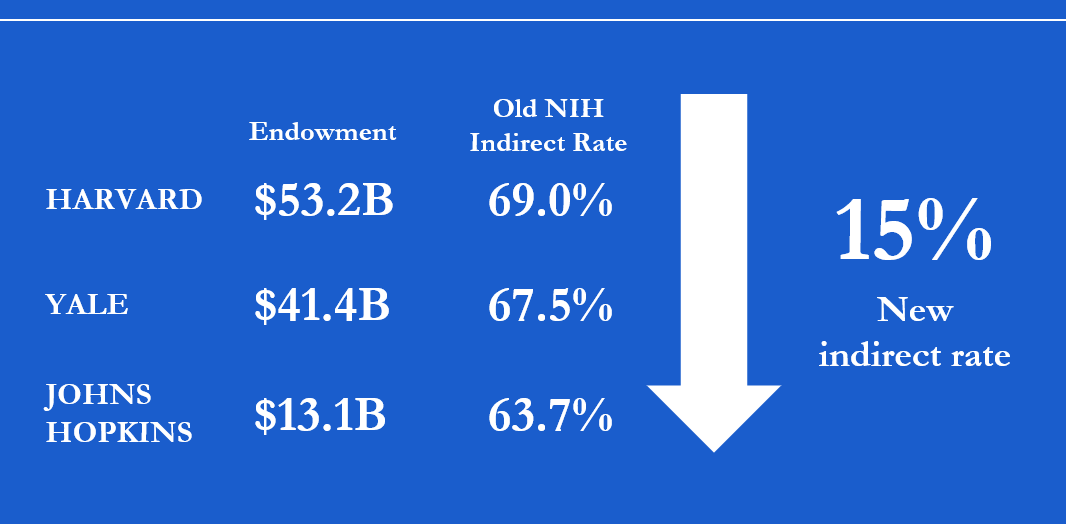
Last year, $9B of the $35B that the National Institutes of Health (NIH) granted for research was used for administrative overhead, what is known as “indirect costs.” Today, NIH lowered the maximum indirect cost rate research institutions can charge the government to 15%, above