Eric Green (@ercgrn) 's Twitter Profile
Eric Green

@ercgrn

Physician-scientist-entrepreneur. Biotech CEO/CSO; Adjunct @stanfordmed. Genetics, biotech, birds (mostly raptors), books.

ID: 240510920

calendar_today20-01-2011 02:56:10

366 Tweet

542 Followers

567 Following

Sasha Gusev (@sashagusevposts) 's Twitter Profile Photo

A 🧵 on some of my intuitions/priors about the genetics of complex and molecular traits in humans (i.e. what I think of as typical), largely motivated by GWAS/QTL studies over the past decade [citing papers with nice figures where possible]

Sek Kathiresan MD (@skathire) 's Twitter Profile Photo

A mutation in APOL1 that protects against kidney disease. How does it work? Seems to reduce APOL1 pore function Cool new work integrating human genetics with cellular APOL1 function. 👏@alexbickmdphd Eric Green Maze Therapeutics journals.lww.com/jasn/fulltext/…


A mutation in APOL1 that protects against kidney disease.  

How does it work?  Seems to reduce APOL1 pore function

Cool new work integrating human genetics with cellular APOL1 function.

👏@alexbickmdphd <a href="/ercgrn/">Eric Green</a> <a href="/MazeInBiotech/">Maze Therapeutics</a> 

journals.lww.com/jasn/fulltext/…
JASN_News (@jasn_news) 's Twitter Profile Photo

A variant of APOL1, p.N264K, is associated with reduced risk of CKD and ESKD among carriers of APOL1 high risk variants to levels comparable to individuals with APOL1 low-risk genotypes bit.ly/JASN0219 Caitlyn Vlasschaert Michael Matheny Katalin Susztak Eddie siew Cassy Robinson-Cohen


A variant of APOL1, p.N264K, is associated with reduced risk of CKD and ESKD among carriers of APOL1 high risk variants to levels comparable to individuals with APOL1 low-risk genotypes bit.ly/JASN0219

<a href="/DrFlashHeart/">Caitlyn Vlasschaert</a> <a href="/MichaelEMatheny/">Michael Matheny</a> <a href="/KSusztak/">Katalin Susztak</a> <a href="/Eddiesiew2/">Eddie siew</a> <a href="/CassyRCohen/">Cassy Robinson-Cohen</a>
Daniel J Drucker (@danieljdrucker) 's Twitter Profile Photo

Here, substrate reduction therapy with GYS1 inhibition may be a promising therapeutic approach for Pompe disease and other glycogen storage diseases Science Translational Medicine science.org/doi/10.1126/sc…
Michael Baym (@baym) 's Twitter Profile Photo

If there was only one scientific practice I could teach to every scientist regardless of stage or field I think it would be: look at the data. Spot check it. Find a few data points and trace them through to see if they make sense. Look at the raw data. Don't just do analyses.

Eric Green (@ercgrn) 's Twitter Profile Photo

Nice example of integrating human genetics, functional genomics and protein structure to understand disease biology. Congrats Art Wuster Karol Estrada and team.
Eric Green (@ercgrn) 's Twitter Profile Photo

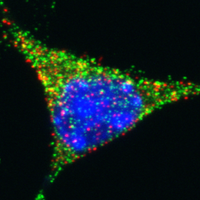
Beautiful work from Pietro Fratta, Juan Burrone groups linking TDP-43 to synaptic function with UNC13A as key mediator. Combined with human genetics, strengthens case for UNC13A as promising target for patients with ALS.

FrattaLab (@frattalab) 's Twitter Profile Photo

We find TDP-43 loss to cause presynaptic defects, which are rescued by ASOs correcting a single cryptic exon in UNC13A. Surprising effect of just one cryptic exon and promising strategy for ALS! Matt Keuss Pete Harley in great collaboration with Juan Burrone Lab biorxiv.org/content/10.110…