Nicholas Ho (@eigennick) 's Twitter Profile
Nicholas Ho

@eigennick

PhD Student @CMUCompBio @SCSatCMU | Machine Learning and AI4Bio Researcher | Yoyo enthusiast 🪀

ID: 1407875772078039040

linkhttp://nickdst.github.io calendar_today24-06-2021 01:38:45

52 Tweet

117 Takipçi

503 Takip Edilen
Jian Ma (@jmuiuc) 's Twitter Profile Photo

My amazing PhD student Wendy Yang Muyu "Wendy" Yang is graduating this summer & seeking industry R&D roles! She's published in ISMB, Nature Methods, and interned at Genentech. Strong in #AI/#ML for gene regulation. Looking for top AI+bio talent? Contact Wendy: [email protected]

GenBio AI (@genbioai) 's Twitter Profile Photo

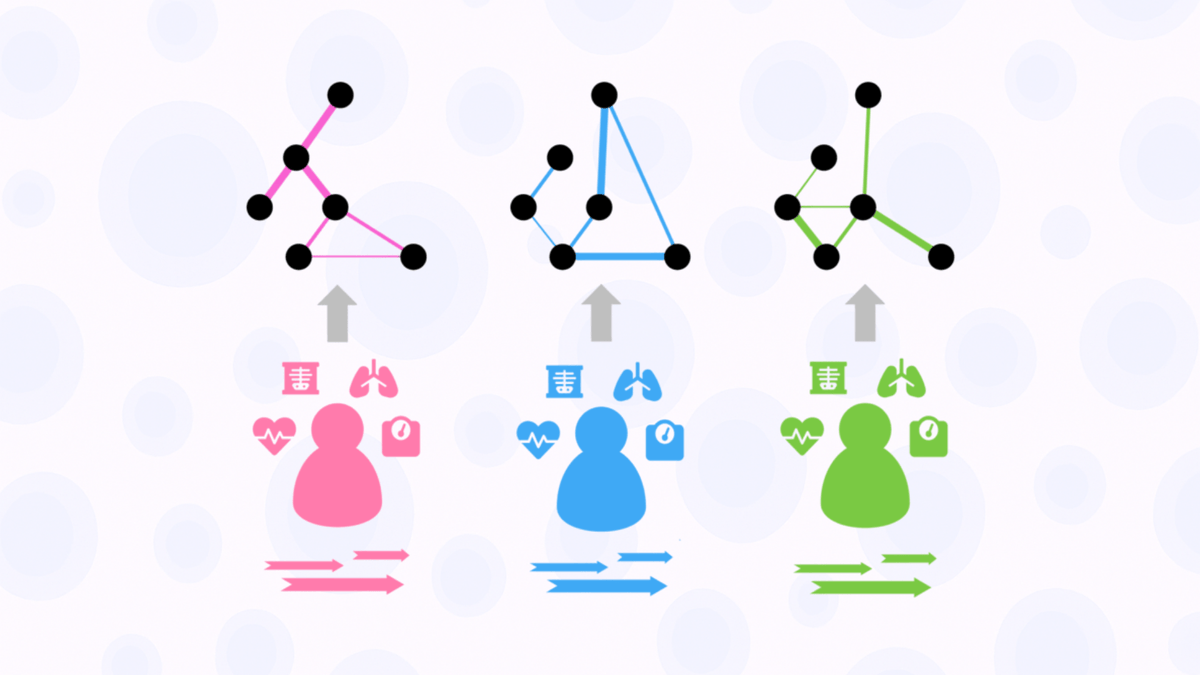
1/ How can we model each tumor’s unique biology instead of relying on one-size-fits-all approaches? In our latest blog post, we highlight findings from the recent PNAS paper with GenBio AI Research Scientist Caleb Ellington and Co-Founder and Chief Scientist Eric Xing, showing how

1/ How can we model each tumor’s unique biology instead of relying on one-size-fits-all approaches?

In our latest blog post, we highlight findings from the recent PNAS paper with GenBio AI Research Scientist <a href="/probablybots/">Caleb Ellington</a> and Co-Founder and Chief Scientist <a href="/ericxing/">Eric Xing</a>, showing how
Patrick Schwab (@schwabpa) 's Twitter Profile Photo

David Li IMO it's not just data the field needs - rarely is supervised/correlation learning what we want to achieve, yet it's all everyone uses. So now we have structure prediction models that don't learn any physics and break down when there isn't a close evolutionary analogue.. .. we

Caleb Ellington (@probablybots) 's Twitter Profile Photo

Recently, we used contextualized.ml to go beyond physical limits in biology and medicine, inferring n-of-1 models for 7997 of patients and generating models of unseen diseases on-demand. This hints at how to develop accurate and personalized biological simulators like AIDO.

Pranam Chatterjee (@pranamanam) 's Twitter Profile Photo

Lots of hype around multimodal FMs, virtual cells (and labs?), all-atom design...I really think core algorithms (not just scale/integration) will solve the next problems in AIxBio. Take Transition Path Sampling: models transitions for dynamics, optimization, and cell fate. 👇

Andrew Gordon Wilson (@andrewgwils) 's Twitter Profile Photo

A common takeaway from "the bitter lesson" is we don't need to put effort into encoding inductive biases, we just need compute. Nothing could be further from the truth! Better inductive biases mean better scaling exponents, which means exponential improvements with computation.

François Chollet (@fchollet) 's Twitter Profile Photo

We were able to reproduce the strong findings of the HRM paper on ARC-AGI-1. Further, we ran a series of ablation experiments to get to the bottom of what's behind it. Key findings: 1. The HRM model architecture itself (the centerpiece of the paper) is not an important factor.

jack morris (@jxmnop) 's Twitter Profile Photo

first i thought scaling laws originated in OpenAI (2020) then i thought they came from Baidu (2017) now i am enlightened: Scaling Laws were first explored at Bell Labs (1993)

first i thought scaling laws originated in OpenAI (2020)

then i thought they came from Baidu (2017)

now i am enlightened:
Scaling Laws were first explored at Bell Labs (1993)
Rayan Chikhi (@rayanchikhi) 's Twitter Profile Photo

🌎👩‍🔬 For 15+ years biology has accumulated petabytes (million gigabytes) of🧬DNA sequencing data🧬 from the far reaches of our planet.🦠🍄🌵 Logan now democratizes efficient access to the world’s most comprehensive genetics dataset. Free and open. doi.org/10.1101/2024.0…

🌎👩‍🔬 For 15+ years biology has accumulated petabytes (million gigabytes) of🧬DNA sequencing data🧬 from the far reaches of our planet.🦠🍄🌵

Logan now democratizes efficient access to the world’s most comprehensive genetics dataset. Free and open.

doi.org/10.1101/2024.0…
Nadav Brandes (@brandesnadav) 's Twitter Profile Photo

Latest genomic AI models report near-perfect prediction of pathogenic variants (e.g. AUROC>0.97 for Evo2). We ran extensive independent evals and found these figures are true, but very misleading. A breakdown of our new preprint: 🧵

Latest genomic AI models report near-perfect prediction of pathogenic variants (e.g. AUROC&gt;0.97 for Evo2). We ran extensive independent evals and found these figures are true, but very misleading.

A breakdown of our new preprint: 🧵
Eric Xing (@ericxing) 's Twitter Profile Photo

A true David vs. Goliath moment from MBZUAI, with the release of K2 Think, a 32B model beating models 10 to 20 x bigger in math and ascending to top 1 spot in global open source reasoning model lineup, edging toward the best proprietary models 100sX of bigger. Congrats to all!

Marinka Zitnik (@marinkazitnik) 's Twitter Profile Photo

Ever wish you could hit "undo" on disease? 🩺🔄 nature.com/articles/s4155… Most drug discovery asks: what does this perturbation do to cells? But we can also ask the reverse: which perturbations undo a disease signature and move cells back toward health? That's the idea behind

Ever wish you could hit "undo" on disease? 🩺🔄

nature.com/articles/s4155…

Most drug discovery asks: what does this perturbation do to cells? But we can also ask the reverse: which perturbations undo a disease signature and move cells back toward health? 

That's the idea behind
Anshul Kundaje (anshulkundaje@bluesky) (@anshulkundaje) 's Twitter Profile Photo

Another thing that is maybe less emphasized in this paper is that CLINVAR is a great database of curated pathogenic/benign variants but it is extremely biased (in all sorts of ways) & should never be used as a representative benchmark dataset for most types of variants. 1/

GenBio AI (@genbioai) 's Twitter Profile Photo

📡 Join us for the next #FM4Bio Seminar on Sept 17 at 9 AM PT featuring Haotian Cui Haotian will present “Large Models for Single-Cell Omics and Drug Discovery: Data, Pretraining, and Closed-Loop Environment.” Save your spot → genbio.ai/fm4bio-seminar/

📡 Join us for the next #FM4Bio Seminar on Sept 17 at 9 AM PT featuring <a href="/HAOTIANCUI1/">Haotian Cui</a>

Haotian will present “Large Models for Single-Cell Omics and Drug Discovery: Data, Pretraining, and Closed-Loop Environment.”

Save your spot → genbio.ai/fm4bio-seminar/
Brian Hie (@brianhie) 's Twitter Profile Photo

Welcome to the age of generative genome design! In 1977, Sanger et al. sequenced the first genome—of phage ΦX174. Today, led by Samuel King, we report the first AI-generated genomes. Using ΦX174 as a template, we made novel, high-fitness phages with genome language models. 🧵
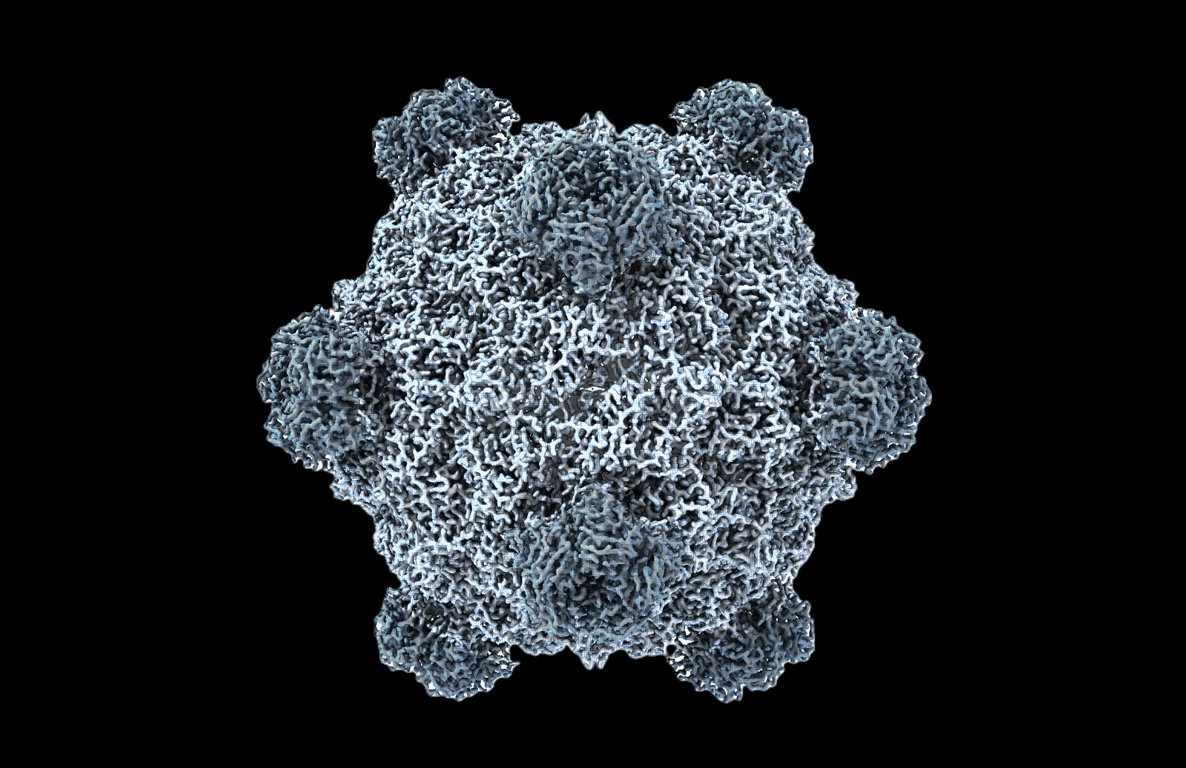
Welcome to the age of generative genome design!

In 1977, Sanger et al. sequenced the first genome—of phage ΦX174.

Today, led by <a href="/samuelhking/">Samuel King</a>, we report the first AI-generated genomes. Using ΦX174 as a template, we made novel, high-fitness phages with genome language models. 🧵
Yun S. Song (@yun_s_song) 's Twitter Profile Photo

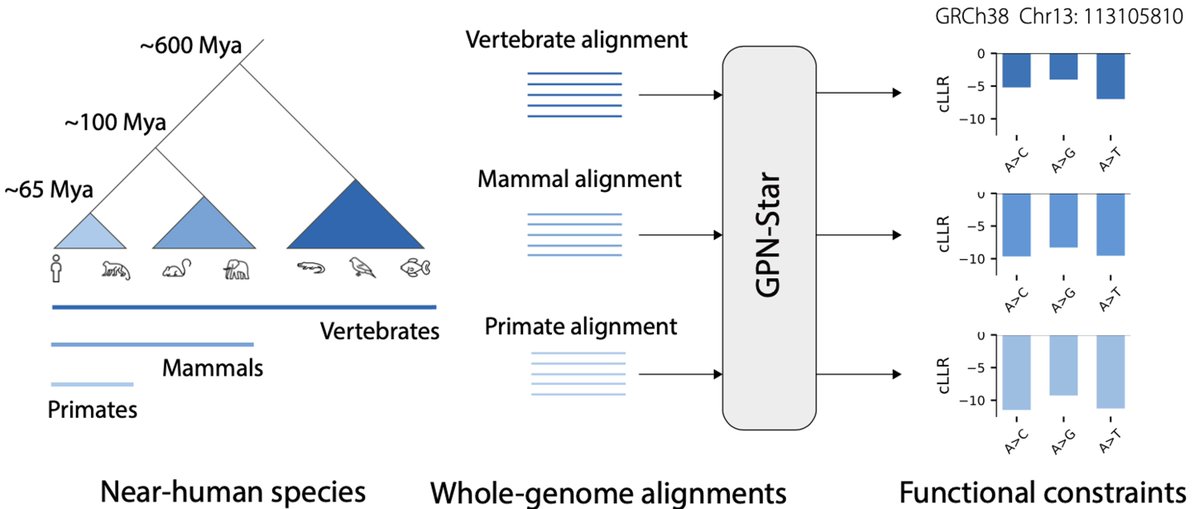
We are excited to share GPN-Star, a cost-effective, biologically grounded genomic language modeling framework that achieves state-of-the-art performance across a wide range of variant effect prediction tasks relevant to human genetics. biorxiv.org/content/10.110… (1/n)

We are excited to share GPN-Star, a cost-effective, biologically grounded genomic language modeling framework that achieves state-of-the-art performance across a wide range of variant effect prediction tasks relevant to human genetics.
biorxiv.org/content/10.110…
(1/n)
Jingyi Jessica Li (李婧翌) (@jsb_ucla) 's Twitter Profile Photo

1/3 Metacells boost power in single-cell RNA-seq & multiome analysis. But without checking homogeneity, they risk forming dubious metacells that bias discoveries. We introduce mcRigor: a statistical safeguard for rigorous metacell analysis. 👉 nature.com/articles/s4146…

Bo Wang (@bowang87) 's Twitter Profile Photo

🧬 Building the Virtual Cell starts with data. Today, we’re making the X-Atlas/Orion Perturb-seq dataset even more accessible — now live on Hugging Face Hugging Face 🤗 📊 One of the largest & highest-quality perturbation datasets ever released, it provides the foundation for