Petertje...... (@petertje_w) 's Twitter Profile
Petertje......

@petertje_w

Just new updating with 100 followers.......

ID: 1819389970320183296

calendar_today02-08-2024 15:09:41

42 Tweet

29 Followers

115 Following

Petertje...... (@petertje_w) 's Twitter Profile Photo

AI is creating more roles than ever. Engineers. Prompt specialists. DevOps. Quants. Demand is exploding. But here’s the real shift: What if the complexity that created these roles… gets compressed into one system? With GraphLinq: → workflows are assembled, not coded →

AI is creating more roles than ever.
Engineers. Prompt specialists. DevOps. Quants.
Demand is exploding.

But here’s the real shift:

What if the complexity that created these roles…
gets compressed into one system?

With GraphLinq:
→ workflows are assembled, not coded
→
GraphLinq Chain (@graphlinq_proto) 's Twitter Profile Photo

Hub vs CEX spreads been sitting there like a free lunch nobody’s touching GraphLinq Hub quietly printing for those paying attention ✨ hub.graphlinq.io

Hub vs CEX spreads been sitting there like a free lunch nobody’s touching

GraphLinq Hub quietly printing for those paying attention ✨

hub.graphlinq.io
Petertje...... (@petertje_w) 's Twitter Profile Photo

Most people hold. I built a system. Instead of just holding $GLQ, I’m using the full power of GraphLinq to create a layered setup: • Staking → steady accumulation & long-term positioning • LP (wide range) → always active, capturing baseline fees • LP (narrow range) →

Most people hold.
I built a system.
Instead of just holding $GLQ, I’m using the full power of GraphLinq to create a layered setup:

• Staking → steady accumulation & long-term positioning
• LP (wide range) → always active, capturing baseline fees
• LP (narrow range) →
GraphLinq Chain (@graphlinq_proto) 's Twitter Profile Photo

Automation usually begins with one simple goal: save time. That’s where tools like Zapier, Make, n8n, and GraphLinq come in. They all automate work—but they don’t solve the same problems, and they don’t solve them the same way. So instead of another surface-level comparison,

Automation usually begins with one simple goal: save time.

That’s where tools like Zapier, Make, n8n, and GraphLinq come in. They all automate work—but they don’t solve the same problems, and they don’t solve them the same way.

So instead of another surface-level comparison,
Petertje...... (@petertje_w) 's Twitter Profile Photo

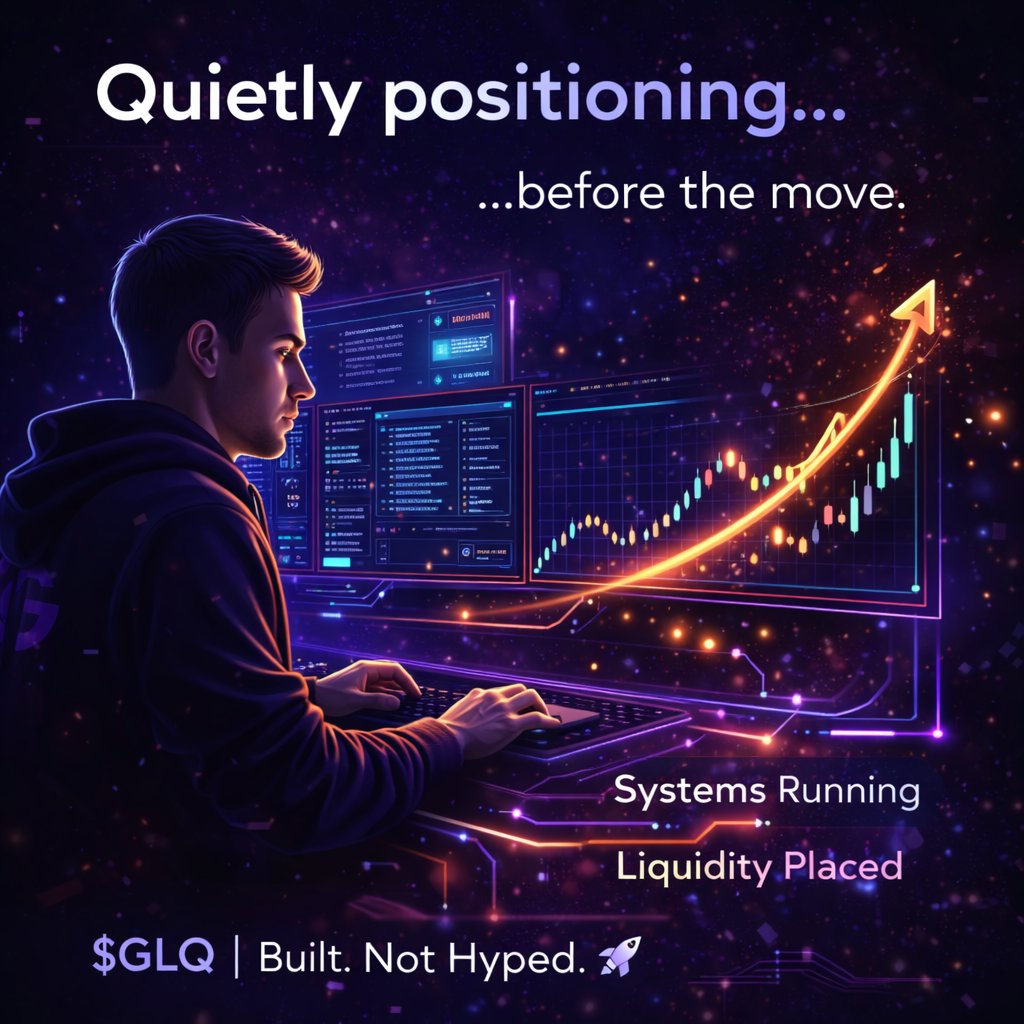
Most people still think this is about price. It’s not. It’s about positioning before the move. While the market is quiet: • systems are being built • liquidity is being positioned • strategies are being layered • compounding starts early By the time attention returns…

Most people still think this is about price.

It’s not.

It’s about positioning before the move.

While the market is quiet:

• systems are being built
• liquidity is being positioned
• strategies are being layered
• compounding starts early
By the time attention returns…
Petertje...... (@petertje_w) 's Twitter Profile Photo

Automation isn’t one thing. Zapier, Make, n8n… they all automate. But they stop at the surface. → app-to-app → API-based → cloud-dependent That works… until you need real execution. GraphLinq is different. → workflows run on-chain → AI turns intent into execution → no

Automation isn’t one thing.

Zapier, Make, n8n… they all automate.
But they stop at the surface.
→ app-to-app
→ API-based
→ cloud-dependent

That works… until you need real execution.
GraphLinq is different.
→ workflows run on-chain
→ AI turns intent into execution
→ no
Petertje...... (@petertje_w) 's Twitter Profile Photo

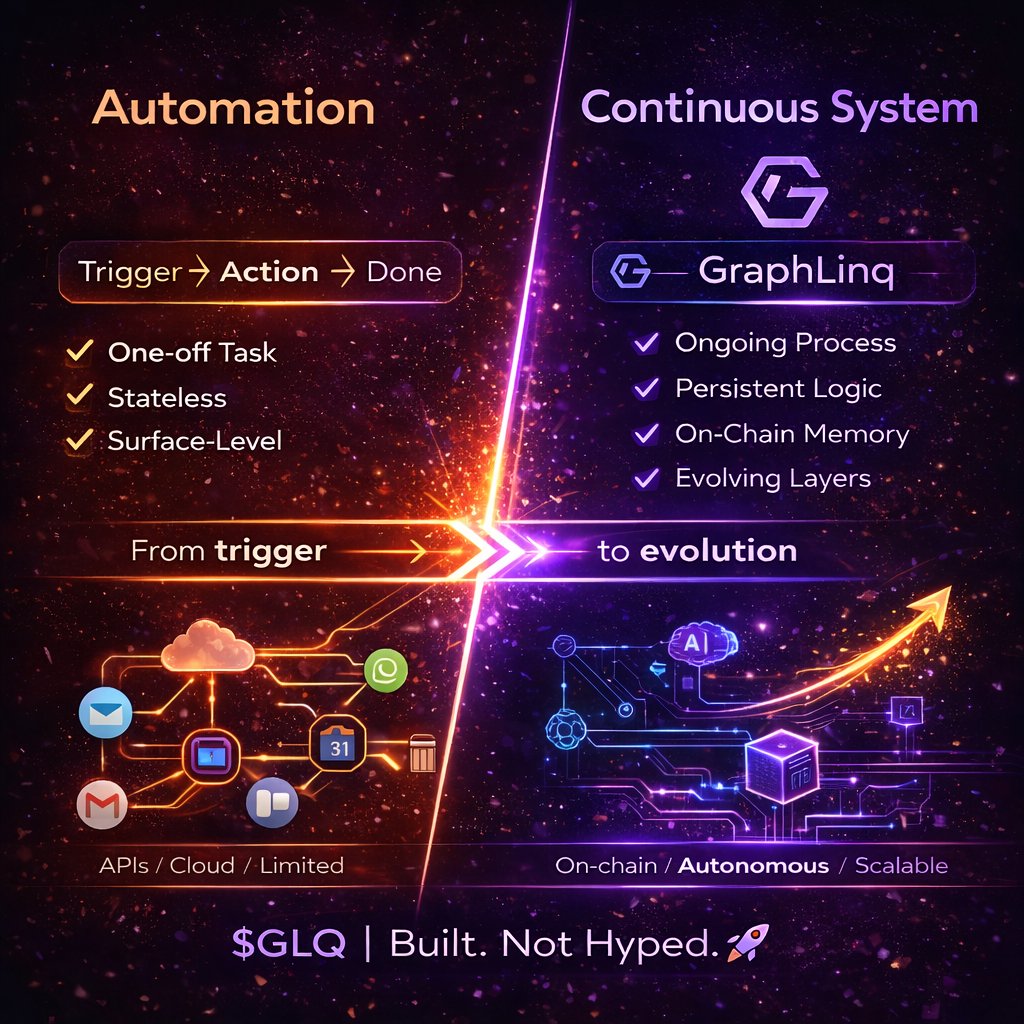
Most people still use automation to connect things. That’s the old model. → trigger → action → done But what happens after that? Nothing. No memory. No persistence. No execution layer. That’s the real gap. With GraphLinq: → workflows don’t stop → agents keep running →

Most people still use automation
to connect things.
That’s the old model.

→ trigger
→ action
→ done

But what happens after that?
Nothing.
No memory.
No persistence.
No execution layer.

That’s the real gap.

With GraphLinq:

→ workflows don’t stop
→ agents keep running
→
Petertje...... (@petertje_w) 's Twitter Profile Photo

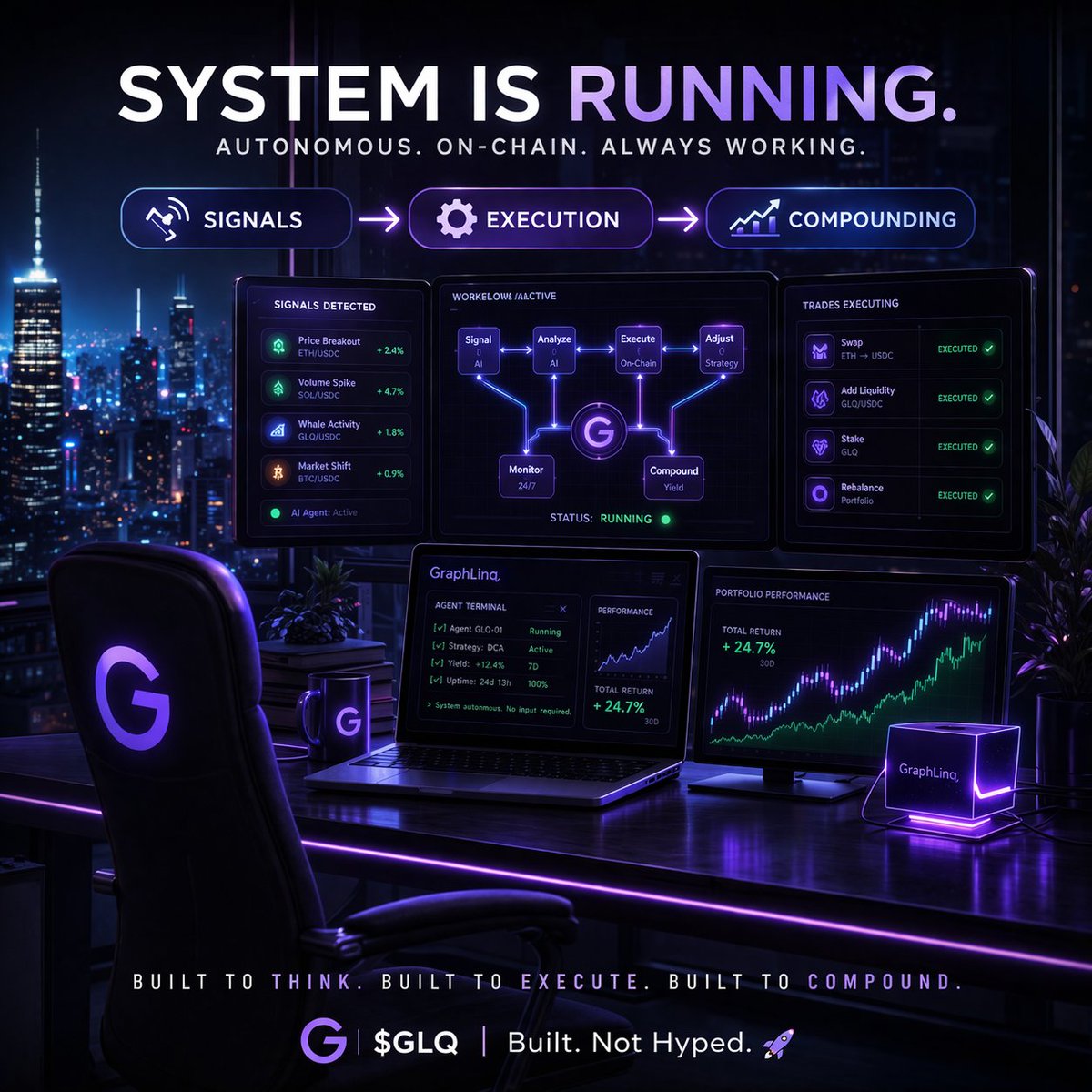
At some point… you stop building. And the system starts running. No more waiting. No more reacting. Just: → signals being detected → strategies executing → positions adjusting → capital compounding All without interruption. This is where most people fall behind. They’re

At some point…
you stop building.
And the system starts running.

No more waiting.
No more reacting.

Just:
→ signals being detected
→ strategies executing
→ positions adjusting
→ capital compounding

All without interruption.

This is where most people fall behind.
They’re
GraphLinq Chain (@graphlinq_proto) 's Twitter Profile Photo

We’re seeing more builders hit the same wall: - prompts generate code - code runs once - then breaks in real conditions Because real systems need: - state - monitoring - execution guarantees - cost awareness That’s where vibe coding ends and systems engineering begins.

We’re seeing more builders hit the same wall:

- prompts generate code
- code runs once
- then breaks in real conditions

Because real systems need:

- state
- monitoring
- execution guarantees
- cost awareness

That’s where vibe coding ends and systems engineering begins.
Petertje...... (@petertje_w) 's Twitter Profile Photo

Most people think AI is about generating code. It’s not. Anyone can prompt. Anyone can generate. But almost nobody can build systems that: run continuously adapt to real conditions execute on-chain manage risk & costs That’s the difference. 👉 Vibe coding creates demos 👉

Most people think AI is about generating code.

It’s not.

Anyone can prompt.
Anyone can generate.
But almost nobody can build systems that:

run continuously

adapt to real conditions
execute on-chain
manage risk & costs
That’s the difference.

👉 Vibe coding creates demos
👉
Petertje...... (@petertje_w) 's Twitter Profile Photo

What if AI isn’t about generating code… but about executing decisions on-chain? Not once. Not manually. But continuously. With state. With logic. With real capital. Most people are still prompting… But what happens when systems start acting? Are we ready for that shift? $GLQ

What if AI isn’t about generating code…
but about executing decisions on-chain?
Not once.
Not manually.
But continuously.

With state.
With logic.
With real capital.
Most people are still prompting…
But what happens when systems start acting?

Are we ready for that shift?
$GLQ
Petertje...... (@petertje_w) 's Twitter Profile Photo

Why do most “automated systems” fail the moment they go live? Not because the idea is bad. Not because the code is wrong. But because they were never built as systems. They: don’t track state don’t adapt don’t handle real conditions They just… run once. And that’s the gap

Why do most “automated systems” fail the moment they go live?

Not because the idea is bad.
Not because the code is wrong.
But because they were never built as systems.

They:

don’t track state

don’t adapt
don’t handle real conditions
They just… run once.

And that’s the gap
GraphLinq Chain (@graphlinq_proto) 's Twitter Profile Photo

GraphLinq Chain is L1 and no-code blockchain automation platform. It runs on its own Proof-of-Authority blockchain (the GraphLinq Chain) and lets anyone build automated workflows using a visual drag-and-drop IDE or launch own AI agents using GraphAI. Graphs can natively interact

GraphLinq Chain is L1 and no-code blockchain automation platform. It runs on its own Proof-of-Authority blockchain (the GraphLinq Chain) and lets anyone build automated workflows using a visual drag-and-drop IDE or launch own AI agents using GraphAI. Graphs can natively interact
GraphLinq Chain (@graphlinq_proto) 's Twitter Profile Photo

Here’s how a GLQ-native user can turn passive holdings into an operating yield loop: - bridges GLQ into GraphLinq Chain from Ethereum - swaps and wraps as needed to access DeFi features - provides liquidity on Hub to earn trading fees - stakes $GLQ for additional yield and

Petertje...... (@petertje_w) 's Twitter Profile Photo

Most people hold. Some build a loop. Here’s what a GLQ-native yield system looks like: → bridge GLQ into GraphLinq Chain → swap & wrap to unlock DeFi → provide liquidity on Hub → earn fees → stake $GLQ → generate yield → monitor via Explorer & tools → automate

Most people hold.

Some build a loop.

Here’s what a GLQ-native yield system looks like:

→ bridge GLQ into GraphLinq Chain
→ swap & wrap to unlock DeFi
→ provide liquidity on Hub → earn fees
→ stake $GLQ → generate yield
→ monitor via Explorer & tools
→ automate
GraphLinq Chain (@graphlinq_proto) 's Twitter Profile Photo

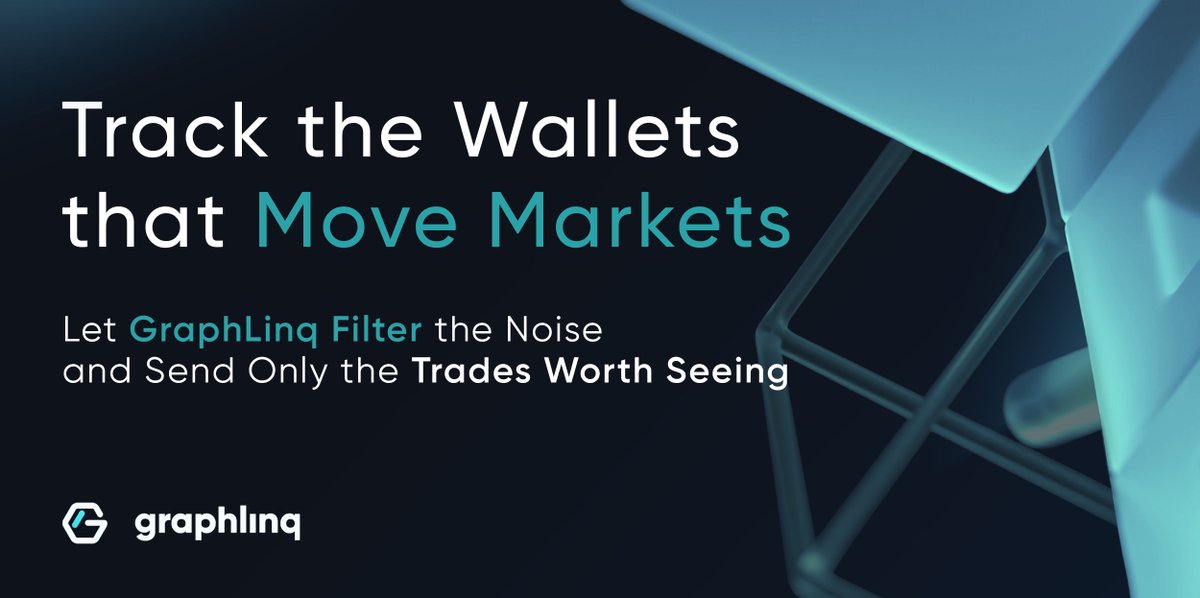
GraphLinq tracks curated list of smart-money wallets on ethereum, flags only buys/swaps over your USD threshold, scores them, and sends the cleanest alerts to telegram or discord in real time. How it works: - monitors wallets block by block - filters by size, token, and pair

GraphLinq tracks curated list of smart-money wallets on ethereum, flags only buys/swaps over your USD threshold, scores them, and sends the cleanest alerts to telegram or discord in real time.

How it works:
- monitors wallets block by block
- filters by size, token, and pair
GraphLinq Chain (@graphlinq_proto) 's Twitter Profile Photo

Everyone talks about Polymarket alpha. No one talks about infrastructure. But the real compounding advantage is pipelines. You can literally build a weather trading bot with: ⛅ NOAA API (forecast updates + probabilistic signals) 🤖 GraphLinq (rules, triggers, scheduling,

Everyone talks about Polymarket alpha.
No one talks about infrastructure.

But the real compounding advantage is pipelines.

You can literally build a weather trading bot with:
⛅ NOAA API (forecast updates + probabilistic signals)
🤖 GraphLinq (rules, triggers, scheduling,
Petertje...... (@petertje_w) 's Twitter Profile Photo

Everyone talks about Polymarket alpha. Almost no one talks about infrastructure. But that’s where the real edge is built. Not in predictions — but in pipelines. With GraphLinq you don’t just analyze data… you act on it. → pull signals → compare to market odds → size

Everyone talks about Polymarket alpha.
Almost no one talks about infrastructure.
But that’s where the real edge is built.

Not in predictions —
but in pipelines.

With GraphLinq you don’t just analyze data…
you act on it.
→ pull signals
→ compare to market odds
→ size
GraphLinq Chain (@graphlinq_proto) 's Twitter Profile Photo

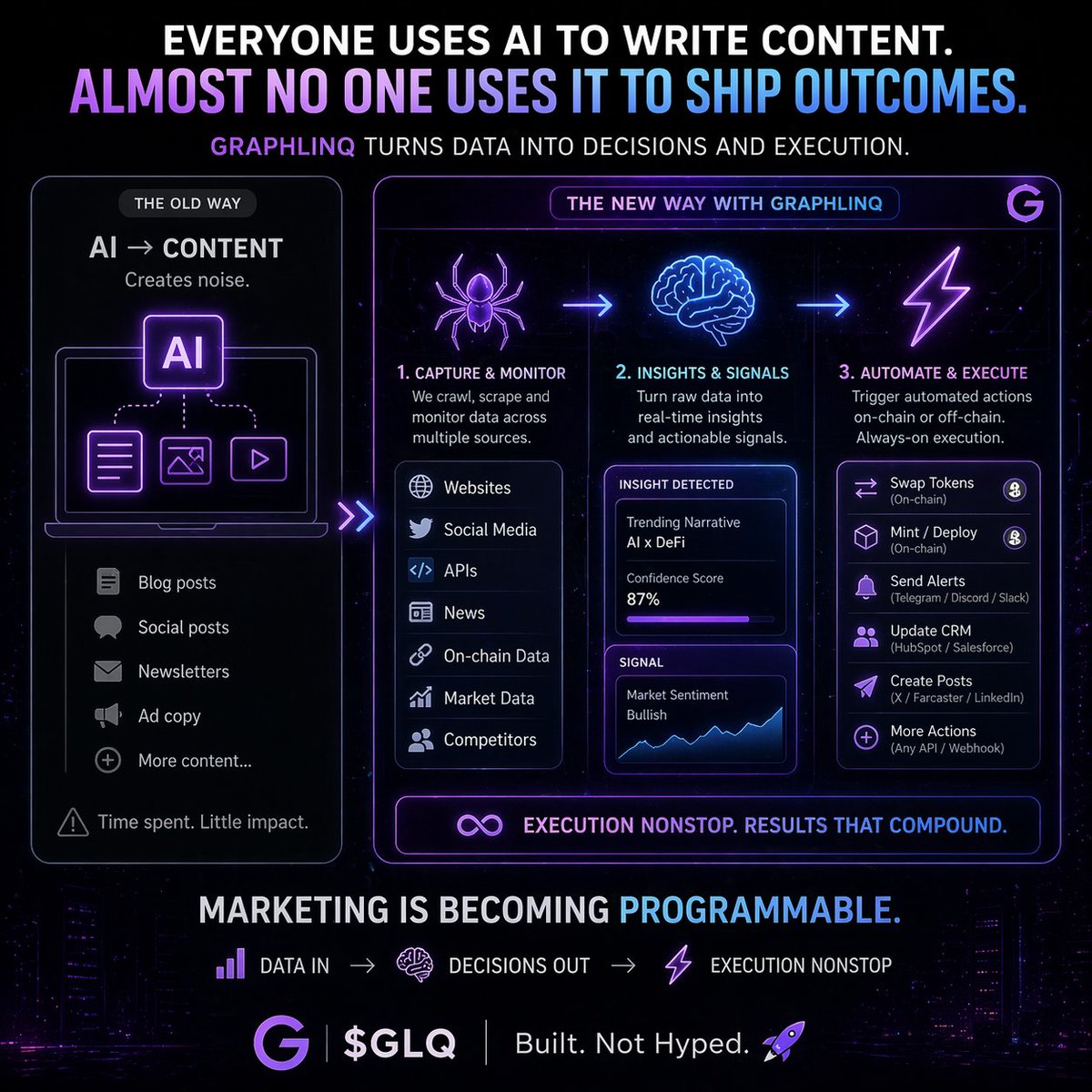
Everyone uses AI to write content. Almost no one uses it to actually ship outcomes. GraphLinq lets you: 🕷️ scrape + monitor data across sources 🛠️turn it into real-time insights and signals 💫 trigger automated actions (on-chain / off-chain): swaps, mints, alerts, CRM updates,

Petertje...... (@petertje_w) 's Twitter Profile Photo

Everyone uses AI to write content. Almost no one uses it to ship outcomes. That’s the difference. With GraphLinq: 🕷️ data gets pulled & monitored 🛠️ signals get generated in real-time 💫 actions get executed automatically → on-chain → off-chain → always running From:

Everyone uses AI to write content.
Almost no one uses it to ship outcomes.
That’s the difference.

With GraphLinq:

🕷️ data gets pulled & monitored
🛠️ signals get generated in real-time
💫 actions get executed automatically

→ on-chain
→ off-chain
→ always running
From: