Derek Guo (@loneschicksal) 's Twitter Profile
Derek Guo

@loneschicksal

Passion is the genesis of genius. FICC trading

ID: 2467271010

calendar_today28-04-2014 05:53:42

9,9K Tweet

1,1K Followers

448 Following

The Hormuz Letter (@hormuzletter) 's Twitter Profile Photo

BREAKING: Oil needs to average $140 per barrel for two months to trigger a global recession, per Oxford Economics. Capital Economics projects Brent could average $150 over the next six months if the conflict lasts another three months. Brent has already spiked over 60% since the

BREAKING: Oil needs to average $140 per barrel for two months to trigger a global recession, per Oxford Economics. Capital Economics projects Brent could average $150 over the next six months if the conflict lasts another three months.

Brent has already spiked over 60% since the
Warren Pies (@warrenpies) 's Twitter Profile Photo

Market pricing still indicates a temporary war. In comparison to 2022, neither credit spreads or breakevens have risen as aggressively (no "stagflationary smile" in the data yet).

Market pricing still indicates a temporary war.

In comparison to 2022, neither credit spreads or breakevens have risen as aggressively (no "stagflationary smile" in the data yet).
Brian Sozzi (@briansozzi) 's Twitter Profile Photo

Goldman Sachs on AI Agents stealing jobs from humans: "Our analysis implies that AI substitution has reduced monthly payroll growth by roughly 25k and raised the unemployment rate by 0.16 percentage points over the past year, while augmentation has added about 9k to monthly

Goldman Sachs on AI Agents stealing jobs from humans:

"Our analysis implies that AI substitution has reduced monthly payroll growth by roughly 25k and raised the unemployment rate by 0.16 percentage points over the past year, while augmentation has added about 9k to monthly
NBER (@nberpubs) 's Twitter Profile Photo

FOMC records show the Fed reacts more strongly to perceived demand-driven inflation, while perceived supply shocks have more loading on realized inflation and term and risk premia, from Ali Kakhbod, Amir Kermani, and Bernardo Maciel nber.org/papers/w35016
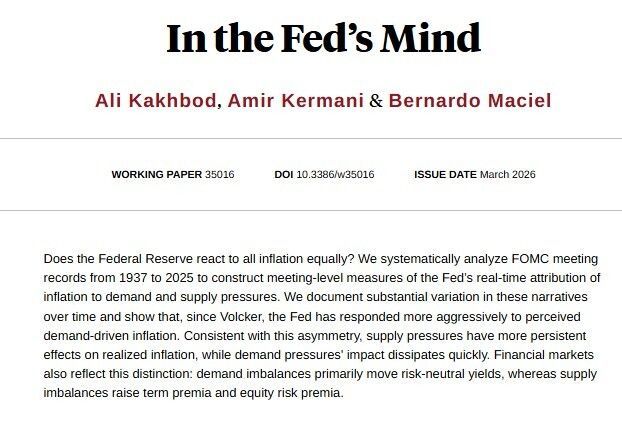

FOMC records show the Fed reacts more strongly to perceived demand-driven inflation, while perceived supply shocks have more loading on realized inflation and term and risk premia, from Ali Kakhbod, <a href="/amirrkermani/">Amir Kermani</a>, and Bernardo Maciel nber.org/papers/w35016
Ricardo Reis (@r2rsquared) 's Twitter Profile Photo

** Reducing the Fed's balance sheet ** Ten days ago, I was part of a discussion at The Brookings Institution on how to shrink the Fed's balance sheet with Darrell Duffie and Wenxin Du. I tried to lay out the discussion in terms that, hopefully, clarify it to a broader set of economists.

Cleveland Fed (@clevelandfed) 's Twitter Profile Photo

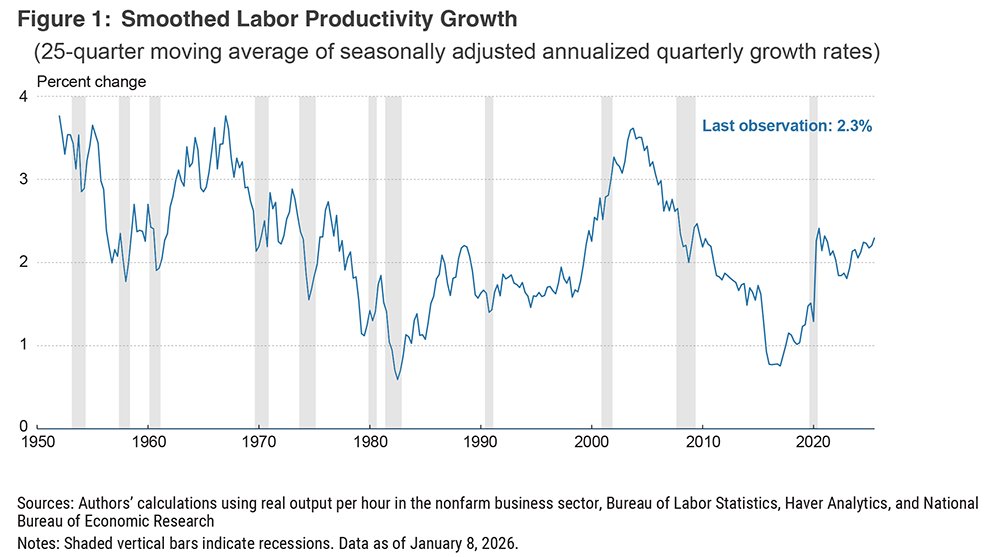
When GDP goes up, unemployment typically goes down. But in recent years GDP has been going up at the same time unemployment has gradually increased. Our researchers explain why: clefed.org/4bQp5ri

When GDP goes up, unemployment typically goes down. But in recent years GDP has been going up at the same time unemployment has gradually increased. Our researchers explain why: clefed.org/4bQp5ri
Nick Timiraos (@nicktimiraos) 's Twitter Profile Photo

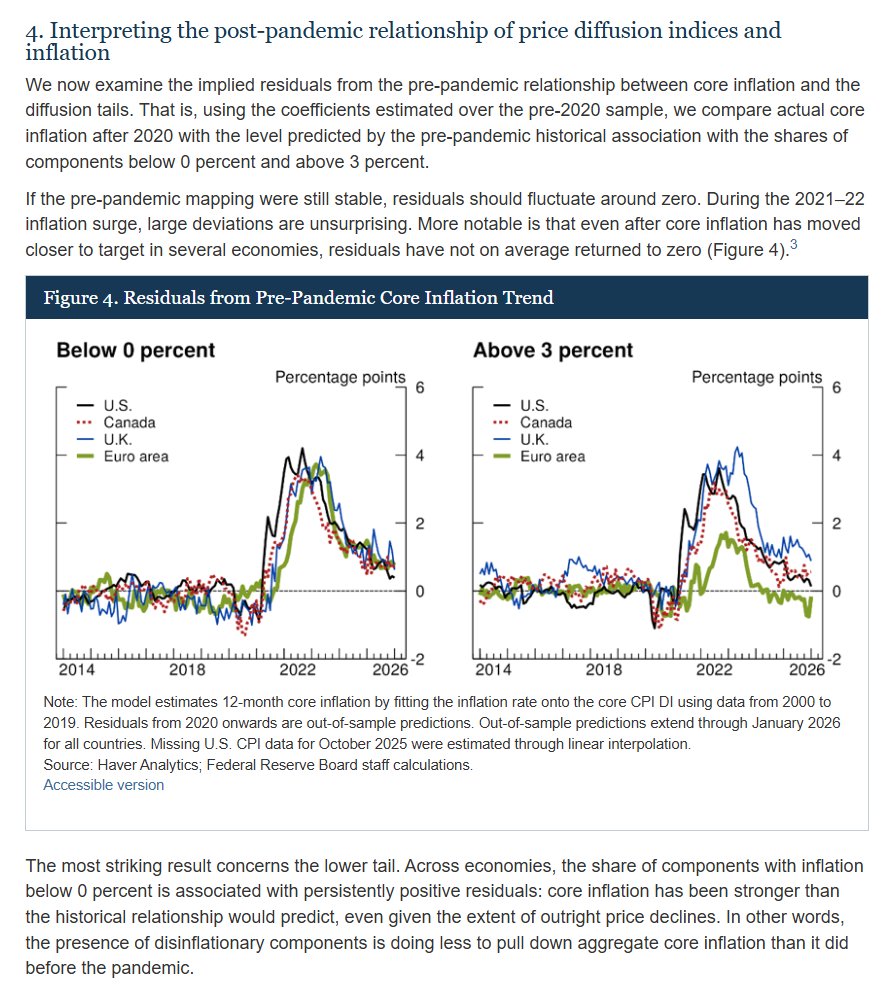
Fed research suggests the inflation engine may be running differently across advanced economies since the pandemic: 1/ More categories continue to see price growth above 3%, with broad-based wage growth in services appearing to be a key driver 2/ Even categories with flat or

Fed research suggests the inflation engine may be running differently across advanced economies since the pandemic:

1/ More categories continue to see price growth above 3%, with broad-based wage growth in services appearing to be a key driver

2/ Even categories with flat or
Pierre-Olivier Gourinchas (@pogourinchas) 's Twitter Profile Photo

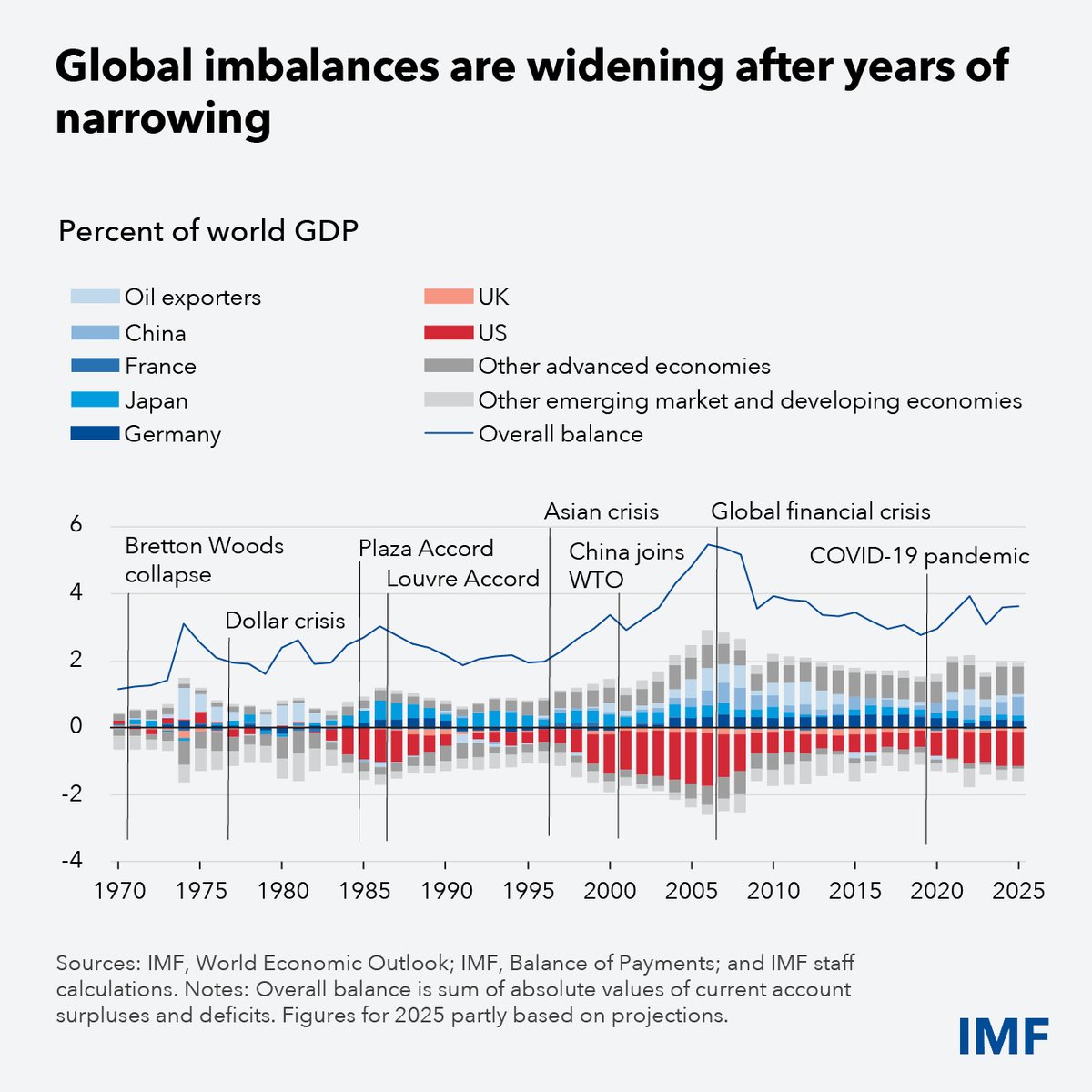
Global current account imbalances are widening again. History shows widening imbalances can cause sectoral dislocation, often come before financial crises or abrupt reversals of capital flows. A disorderly adjustment could be exceptionally costly. 1/7

Global current account imbalances are widening again. History shows widening imbalances can cause sectoral dislocation, often come before financial crises or abrupt reversals of capital flows. A disorderly adjustment could be exceptionally costly. 1/7
Javier Blas (@javierblas) 's Twitter Profile Photo

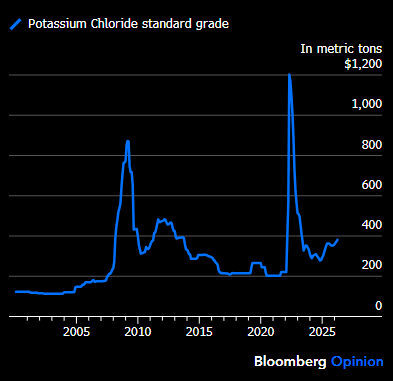
CHARTS OF THE DAY: Not every fertiliser price is going up. Back in 2022, after Russia invaded Ukraine, nitrogen fertilisers (urea and ammonia) rose shaprly. AT THE SAME TIME, potash fertiliser (potassium chloride) also surged. This time, potash fertilisers are little changed.

CHARTS OF THE DAY: Not every fertiliser price is going up.

Back in 2022, after Russia invaded Ukraine, nitrogen fertilisers (urea and ammonia) rose shaprly. AT THE SAME TIME, potash fertiliser (potassium chloride) also surged.

This time, potash fertilisers are little changed.
Daily Chartbook (@dailychartbook) 's Twitter Profile Photo

"Last year’s price drop of -18.9% was way bigger than this selloff’s -9.1% max drawdown, but this year’s valuation pullback (-18.4%) is almost the same as what we’ve seen last year (-19.5%)." Duality Research
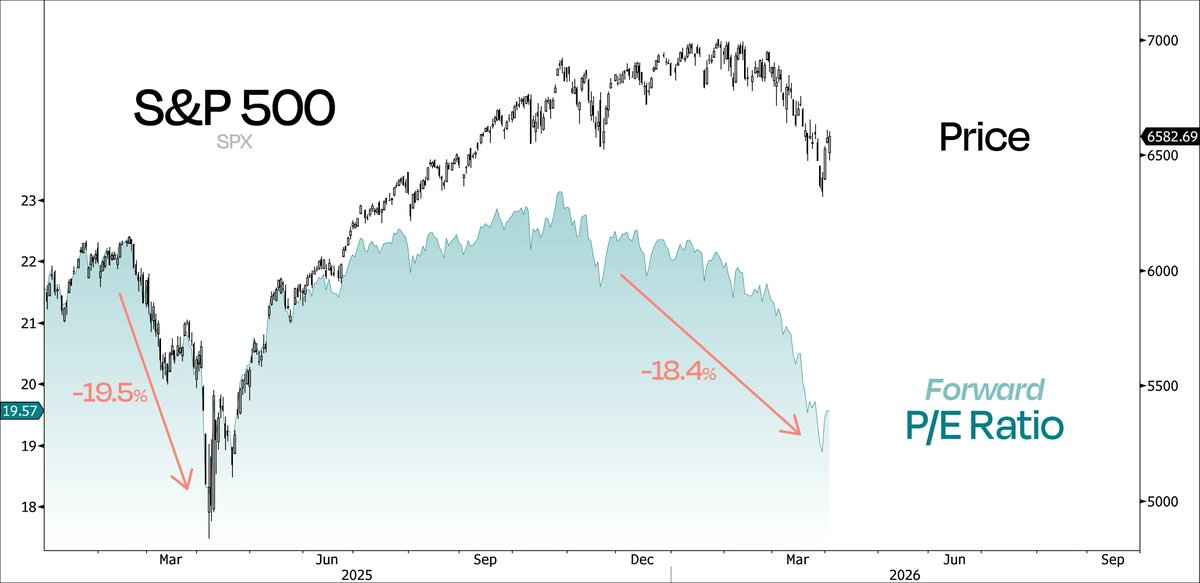

"Last year’s price drop of -18.9% was way bigger than this selloff’s -9.1% max drawdown, but this year’s valuation pullback (-18.4%) is almost the same as what we’ve seen last year (-19.5%)."

<a href="/DualityResearch/">Duality Research</a>
International and Monetary Economics Network (@int_mon_econ) 's Twitter Profile Photo

Super interesting! "Federal Reserve shocks: which securities really flow?" by Julia Schmidt, Maéva Silvestrini, and Urszula Szczerbowicz. "This paper challenges the conventional wisdom that US monetary policy tightening attracts foreign capital through purchases of US

Super interesting!

"Federal Reserve shocks: which securities really flow?" by Julia Schmidt, Maéva Silvestrini, and Urszula Szczerbowicz.

"This paper challenges the conventional wisdom that US monetary policy tightening attracts foreign capital through purchases of US
Neil Sethi (@neilksethi) 's Twitter Profile Photo

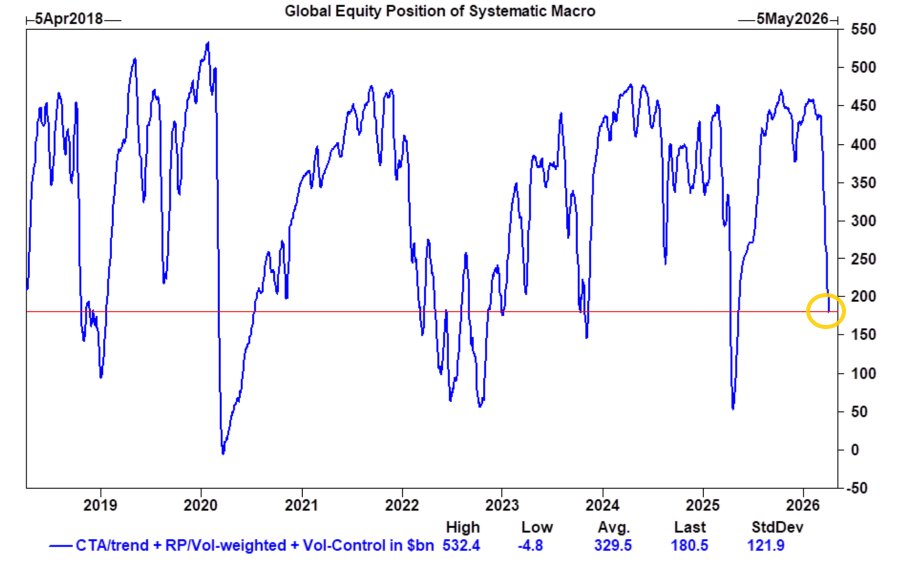
Goldman: Our team now estimates global equity systematic length at just ~$180bn net long (3.3/10), with the US at roughly $100bn (similar rank). Within that, CTA/trend followers are now short ~$55bn globally, including nearly $40bn in the US, which puts them close to the bottom

Goldman: Our team now estimates global equity systematic length at just ~$180bn net long (3.3/10), with the US at roughly $100bn (similar rank). 

Within that, CTA/trend followers are now short ~$55bn globally, including nearly $40bn in the US, which puts them close to the bottom
IMF (@imfnews) 's Twitter Profile Photo

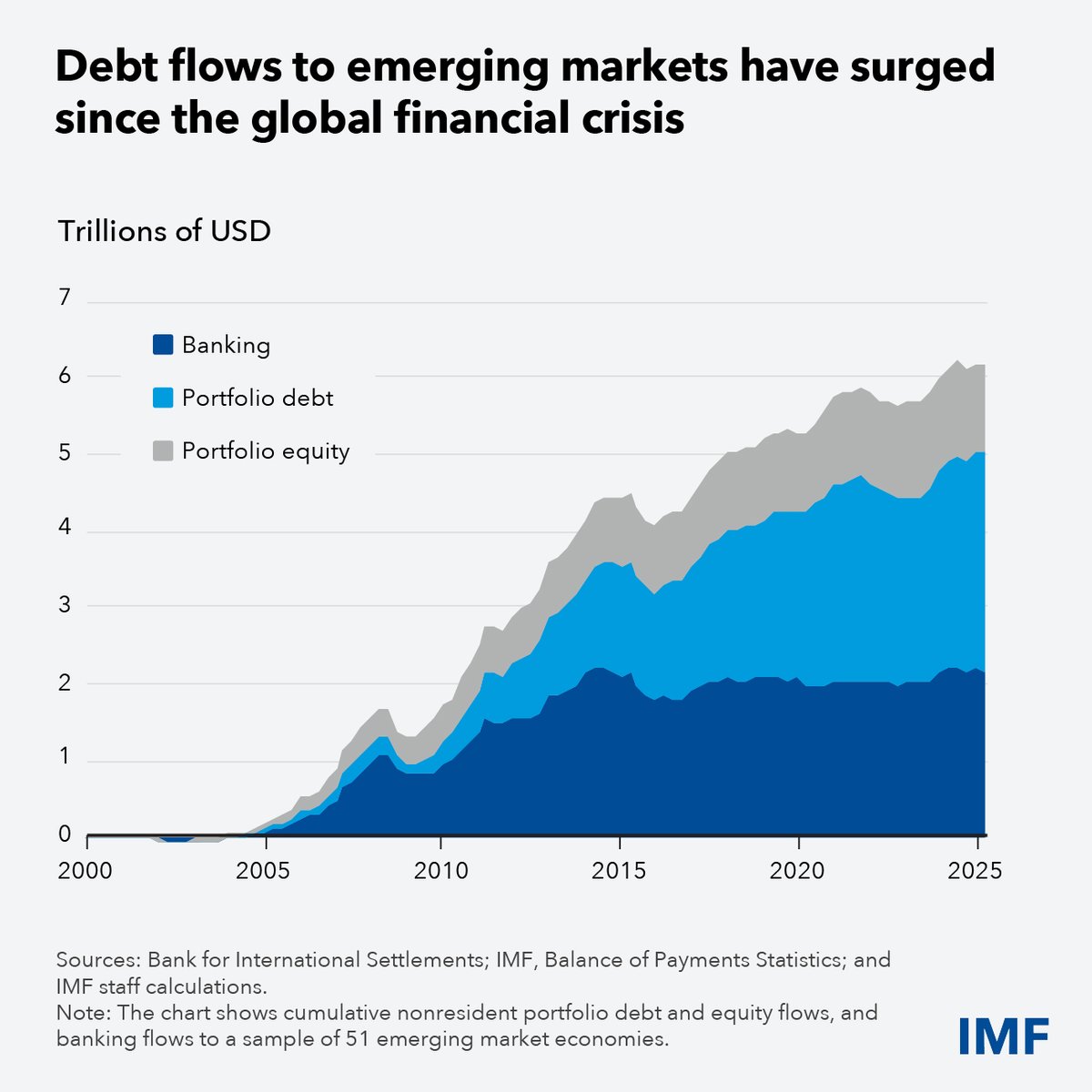
Our latest analysis shows cross-border portfolio flows to emerging markets have risen sharply since the global financial crisis, driven largely by nonbank financial investors, with cumulative inflows approaching $4 trillion in 2025. Chapter 2 of our latest Global Financial

Our latest analysis shows cross-border portfolio flows to emerging markets have risen sharply since the global financial crisis, driven largely by nonbank financial investors, with cumulative inflows approaching $4 trillion in 2025. 

Chapter 2 of our latest Global Financial
Nick Timiraos (@nicktimiraos) 's Twitter Profile Photo

Economists at the Dallas Fed try to model the effects on PCE inflation of a one-, two-, or three-quarter disruption of oil shipping through the Strait of Hormuz The DSGE model projects WTI prices peaking at $110, $132, or $167 per barrel depending on the length of the closure

Economists at the Dallas Fed try to model the effects on PCE inflation of a one-, two-, or three-quarter disruption of oil shipping through the Strait of Hormuz

The DSGE model projects WTI prices peaking at $110, $132, or $167 per barrel depending on the length of the closure
NBER (@nberpubs) 's Twitter Profile Photo

Forecasts of how AI will affect the US economy, from @ezrakarger, Otto Kuusela, @jabaluck, @afinetheorem, @basilhalperin, Todd Jones 🦊, Connacher Murphy, Philip Trammell, Matt Reynolds, Dan Mayland, Ria Viswanathan, Ananaya Mittal, Rebecca Ceppas de Castro, Josh Rosenberg, and Philip

Forecasts of how AI will affect the US economy, from @ezrakarger, Otto Kuusela, @jabaluck, @afinetheorem, @basilhalperin, <a href="/toddrjones/">Todd Jones 🦊</a>, <a href="/connacher_/">Connacher Murphy</a>, Philip Trammell, Matt Reynolds, Dan Mayland, Ria Viswanathan, Ananaya Mittal, Rebecca Ceppas de Castro, Josh Rosenberg, and Philip

Javier Blas (@javierblas) 's Twitter Profile Photo

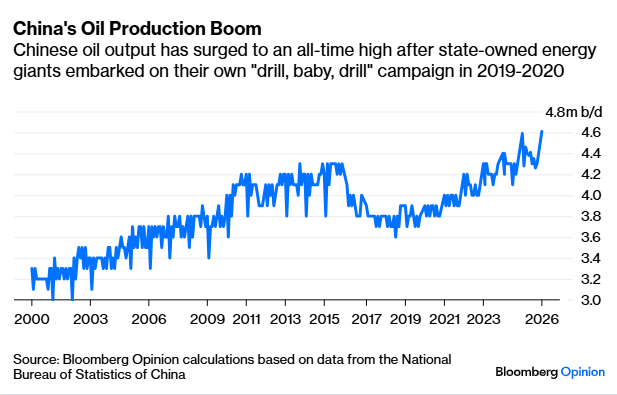
CHART OF THE DAY: Perfect timing! Chinese oil production hit a record high last month >4.6 m b/d. For sure, just a fraction of what the global oil market has lost from the Persian Gulf, but every droplet helps. (Note Chinese domestic oil production is highly seasonal, and

CHART OF THE DAY: Perfect timing! Chinese oil production hit a record high last month &gt;4.6 m b/d. For sure, just a fraction of what the global oil market has lost from the Persian Gulf, but every droplet helps. 

(Note Chinese domestic oil production is highly seasonal, and
Robin Brooks (@robin_j_brooks) 's Twitter Profile Photo

Most oil "experts" are industry shills. They told us that Dated Brent can't fall because the physical shortage is too great. Well, Dated Brent fell $20 in one day on Friday. The stuff from these guys is just scare-mongering. Same as in 2022 after Ukraine. robinjbrooks.substack.com/p/this-week-is…

Most oil "experts" are industry shills. They told us that Dated Brent can't fall because the physical shortage is too great. Well, Dated Brent fell $20 in one day on Friday. The stuff from these guys is just scare-mongering. Same as in 2022 after Ukraine. 
robinjbrooks.substack.com/p/this-week-is…