Jon Greif (@jongreif) 's Twitter Profile
Jon Greif

@jongreif

Retired Cancer Surgeon and Researcher. #astrophotography. #golf. #RVTravel.

ID: 18392900

linkhttps://www.skyandtelescope.com/author/jgreif/ calendar_today26-12-2008 18:31:33

151 Tweet

95 Followers

198 Following
Jon Greif (@jongreif) 's Twitter Profile Photo

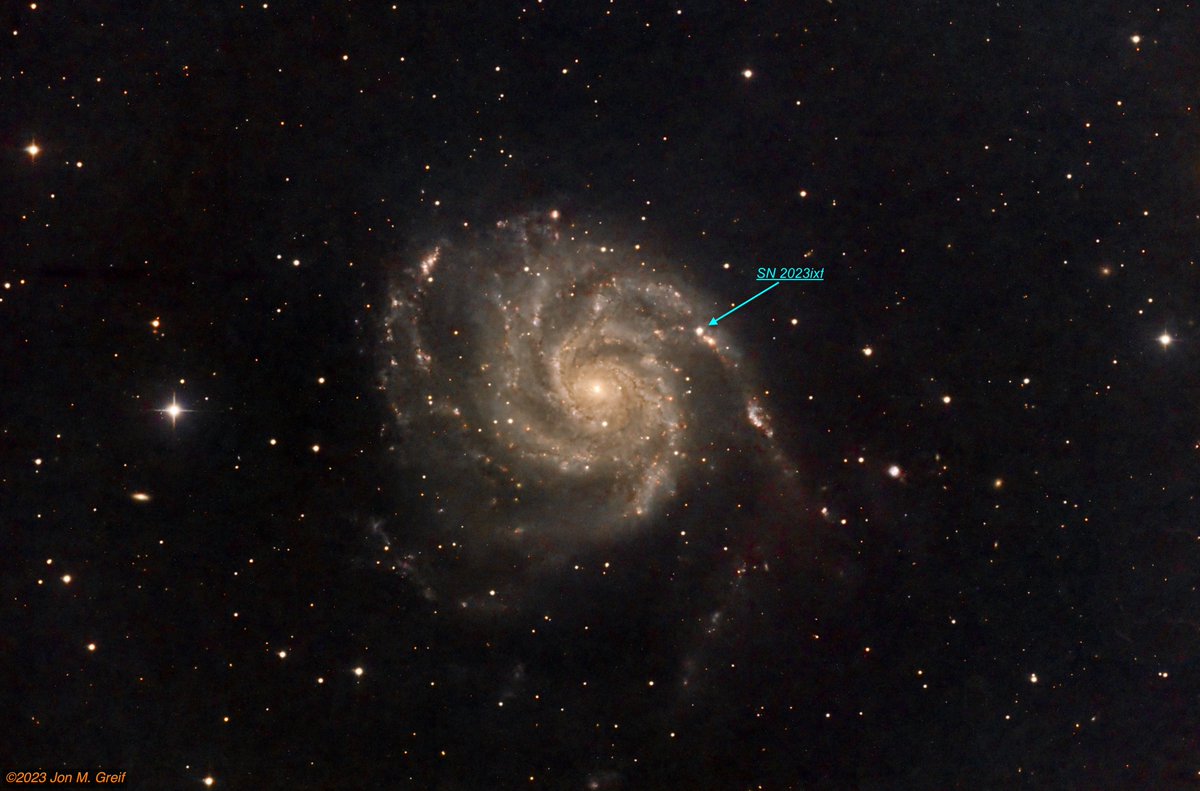
My image of the recently discovered Supernova in galaxy M101, from 100 minutes of LRGB data obtained remotely via the iTelescope.net facility near St. George, Utah, Monday, early AM.

My image of the recently discovered Supernova in galaxy M101, from 100 minutes of LRGB data obtained remotely via the iTelescope.net facility near St. George, Utah, Monday, early AM.
Jon Greif (@jongreif) 's Twitter Profile Photo

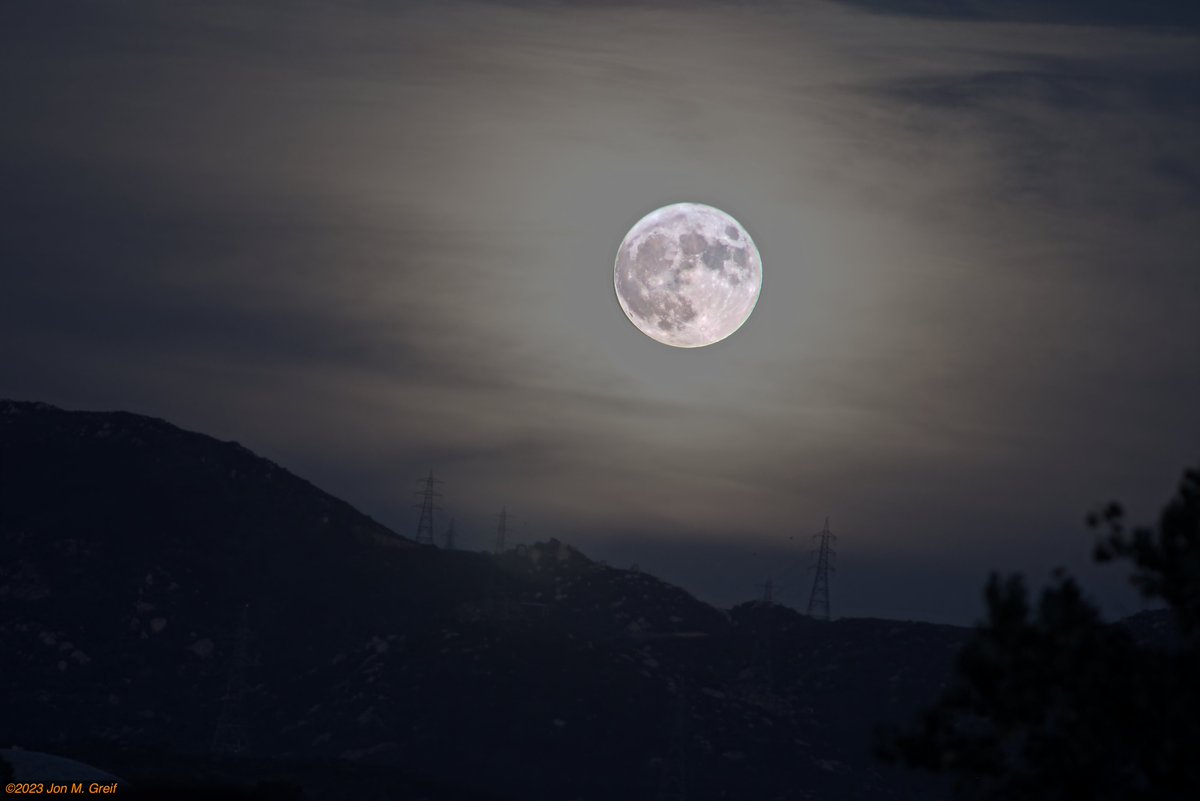
Tonight's full Supermoon rising behind mountains near our new home in Alpine CA USA. The first of four consecutive Full Supermoons is known as the Buck Moon because at this time of year, the antlers of male deer grow rapidly, sometimes to impressive sizes.

Jon Greif (@jongreif) 's Twitter Profile Photo

This is M27, the Dumbbell Nebula, which lies 1200 light years from Earth, in the constellation Vulpecula. Spotted and catalogued by Charles Messier in 1764, M27 was the first planetary nebula ever discovered. #Astrophotography

This is M27, the Dumbbell Nebula, which lies 1200 light years from Earth, in the constellation Vulpecula. Spotted and catalogued by Charles Messier in 1764, M27 was the first planetary nebula ever discovered.  #Astrophotography
Jon Greif (@jongreif) 's Twitter Profile Photo

These two interacting galaxies are 12 million light-years distant toward the northern constellation Ursa Major. Above, with grand spiral arms and bright core is spiral galaxy M81. Below, marked by red gas and dust clouds, is irregular galaxy M82. #Astrophotography

These two interacting galaxies are 12 million light-years distant toward the northern constellation Ursa Major. Above, with grand spiral arms and bright core is spiral galaxy M81. Below, marked by red gas and dust clouds, is irregular galaxy M82. #Astrophotography
Jon Greif (@jongreif) 's Twitter Profile Photo

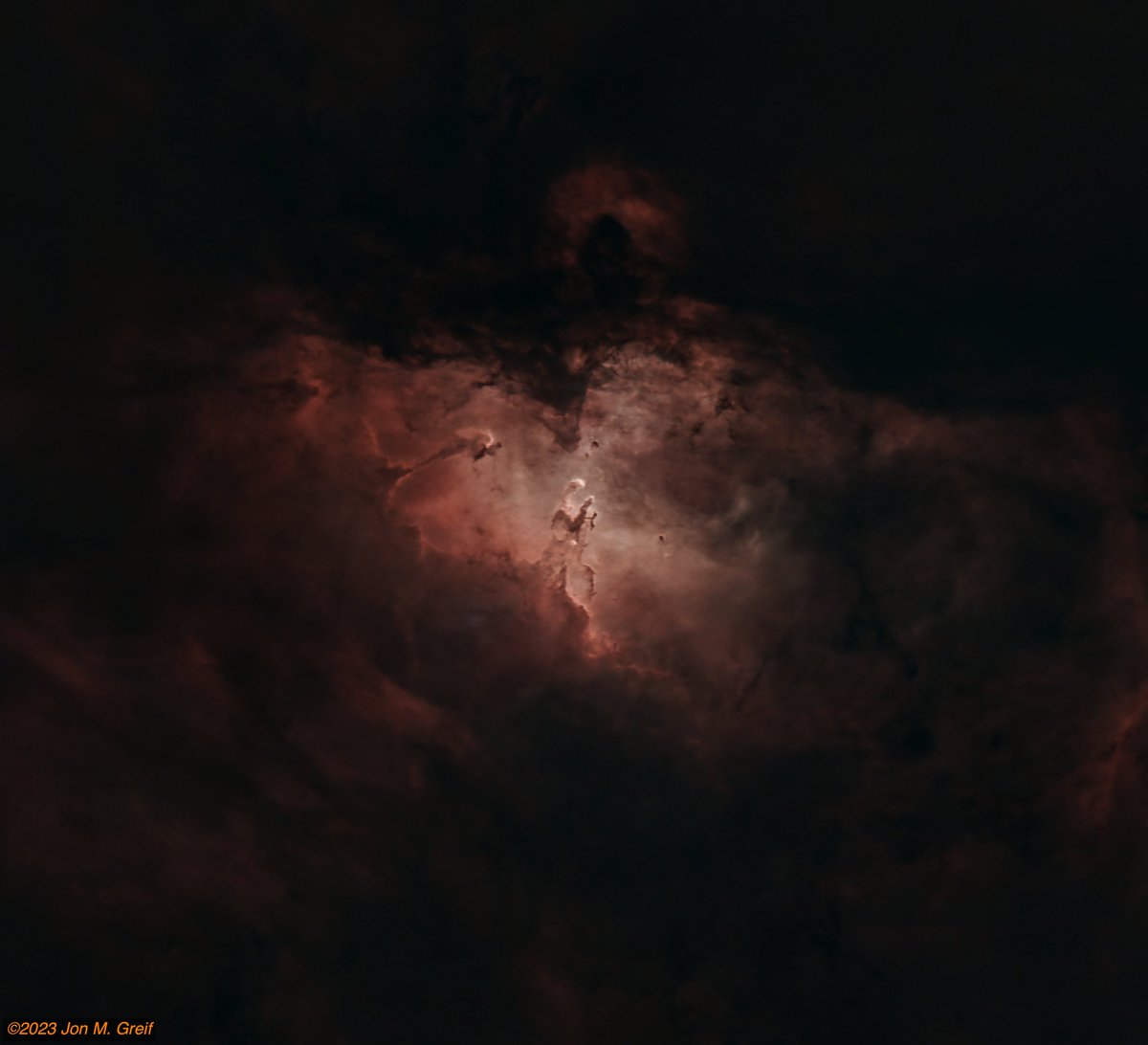
This is the Eagle Nebula located in the constellation Serpens. It lies 5700 light years from Earth. I've removed the stars to enhance the detail, particularly in the center of the nebula, the area made famous by the Hubble Space Telescope as the Pillars of Creation

This is the Eagle Nebula located in the constellation Serpens. It lies 5700 light years from Earth. I've removed the stars to enhance the detail, particularly in the center of the nebula, the area made famous by the Hubble Space Telescope as the Pillars of Creation
Jon Greif (@jongreif) 's Twitter Profile Photo

Tonight's Super Blue Moon rising over the mountains behind our home in Alpine, CA. It's the third of 4 Supermoons in a row, and the most "Super" of the 4, owing to it's being the closest and largest of the Supermoons. #Astrophotography

Tonight's Super Blue Moon rising over the mountains behind our home in Alpine, CA.  It's the third of 4 Supermoons in a row, and the most "Super" of the 4, owing to it's being the closest and largest of the Supermoons. #Astrophotography
Jon Greif (@jongreif) 's Twitter Profile Photo

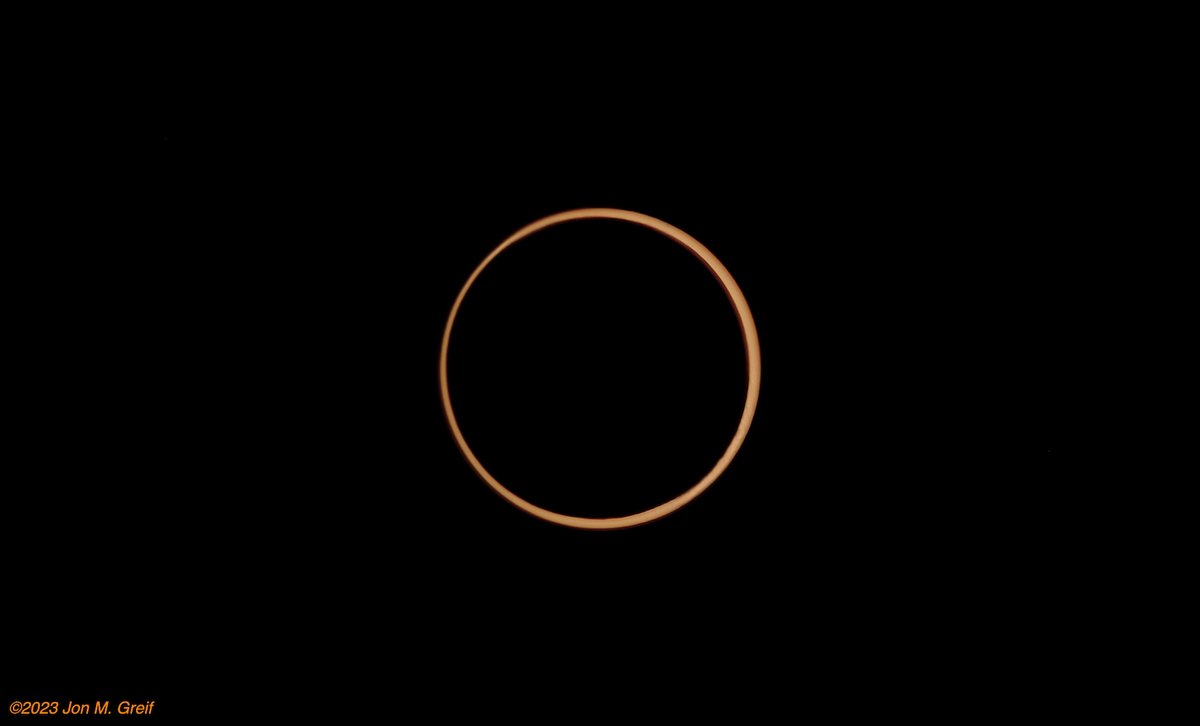
The sun looks none the worse for it's close encounter with the moon on Saturday. There are a few very subtle and scattered sunspots on the solar surface, and some flares along the Eastern and Northeastern rims. #astrophotography

The sun looks none the worse for it's close encounter with the moon on Saturday.  There are a few very subtle and scattered sunspots on the solar surface, and some flares along the Eastern and Northeastern rims. #astrophotography
Jon Greif (@jongreif) 's Twitter Profile Photo

October is a great month to view the Andromeda Galaxy (AKA M31). It is high in the northeastern sky in the early evening and stays out all night. At 2.5 million light years away, it is the most distant object visible to the unaided eye, albeit in dark skies. #Astrophotography

October is a great month to view the Andromeda Galaxy (AKA M31).  It is high in the northeastern sky in the early evening and stays out all night. At 2.5 million light years away, it is the most distant object visible to the unaided eye, albeit in dark skies. #Astrophotography
Jon Greif (@jongreif) 's Twitter Profile Photo

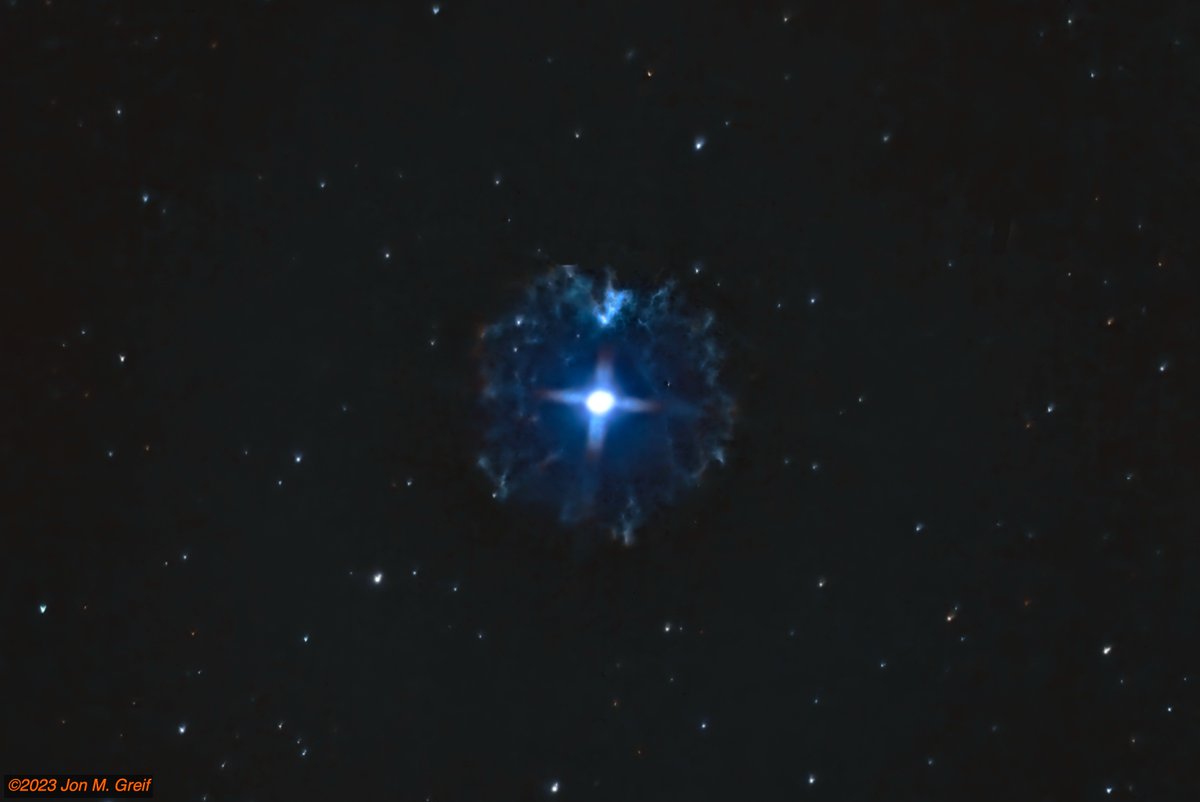
This is the planetary nebula known as the Cat's Eye (NGC 6543), and was once described by NASA as looking "like the penetrating eye of the disembodied sorcerer Sauron from the film version of The Lord of the Rings." Shot in NB and processed HOO. #Astrophotography

This is the planetary nebula known as the Cat's Eye (NGC 6543), and was once described by NASA as looking "like the penetrating eye of the disembodied sorcerer Sauron from the film version of The Lord of the Rings." Shot in NB and processed HOO. #Astrophotography
Jon Greif (@jongreif) 's Twitter Profile Photo

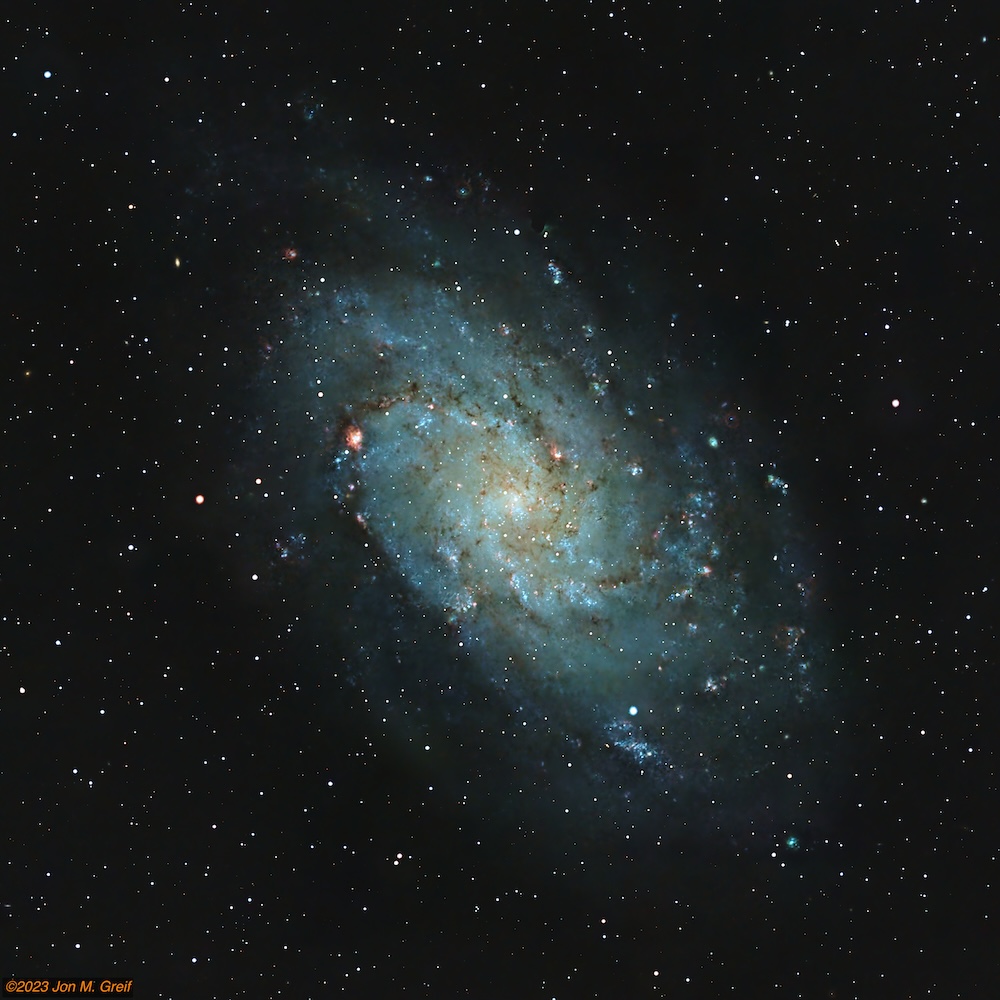
The Triangulum Galaxy is a spiral galaxy 2.73 million light-years from Earth in the constellation Triangulum, and at 61,100 light-years across is the third-largest member of the Local Group of galaxies, after the Andromeda Galaxy and the Milky Way. #Astrophotography

The Triangulum Galaxy is a spiral galaxy 2.73 million light-years from Earth in the constellation Triangulum, and at 61,100 light-years across is the third-largest member of the Local Group of galaxies, after the Andromeda Galaxy and the Milky Way. #Astrophotography
Jon Greif (@jongreif) 's Twitter Profile Photo

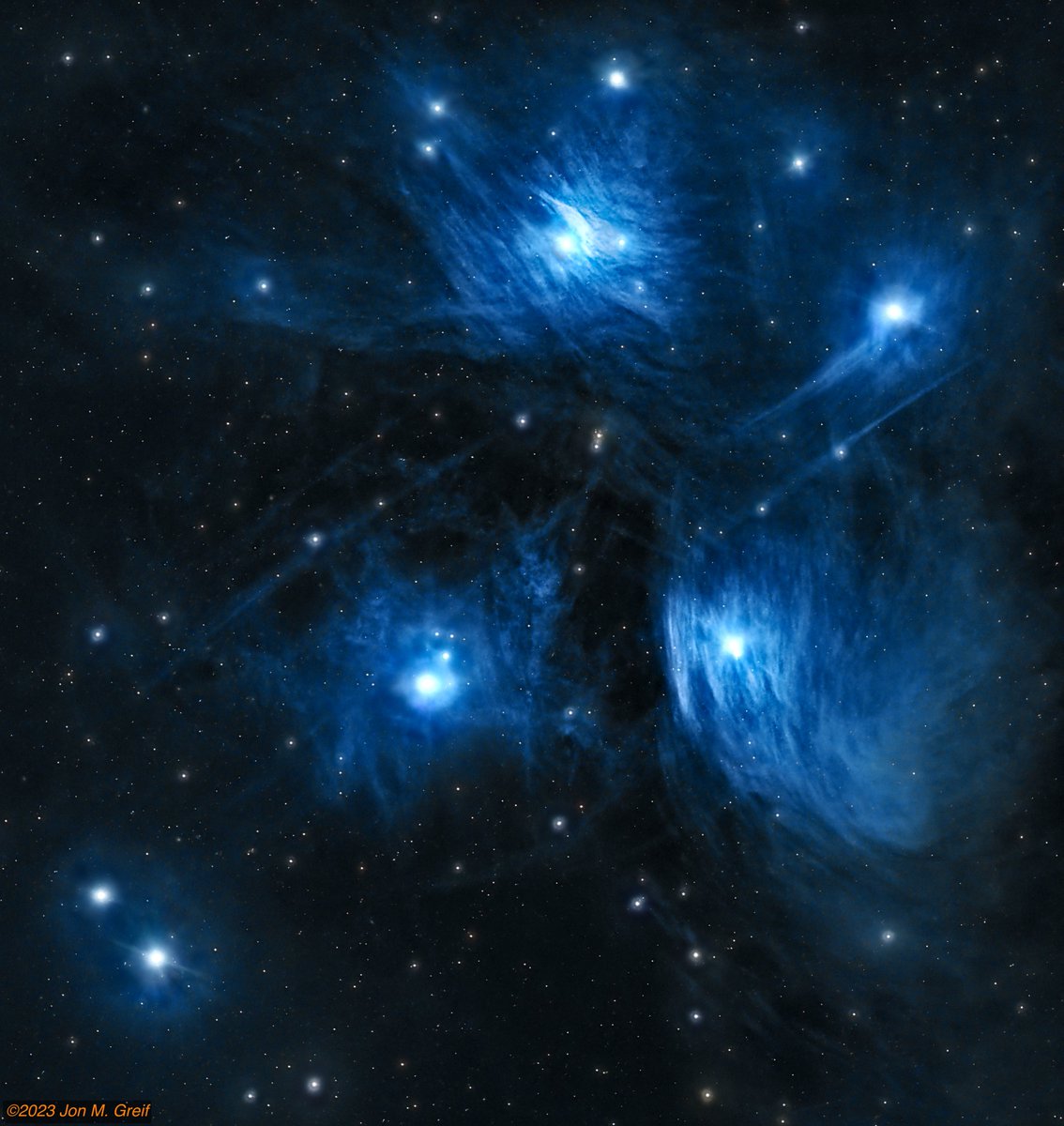
The Pleiades, also known as the Seven Sisters and Messier 45, is an open star cluster in the constellation Taurus. At a distance of about 444 light years, it is among the nearest star clusters to Earth. #Astrophotography

The Pleiades, also known as the Seven Sisters and Messier 45, is an open star cluster in the constellation Taurus. At a distance of about 444 light years, it is among the nearest star clusters to Earth.  #Astrophotography
Jon Greif (@jongreif) 's Twitter Profile Photo

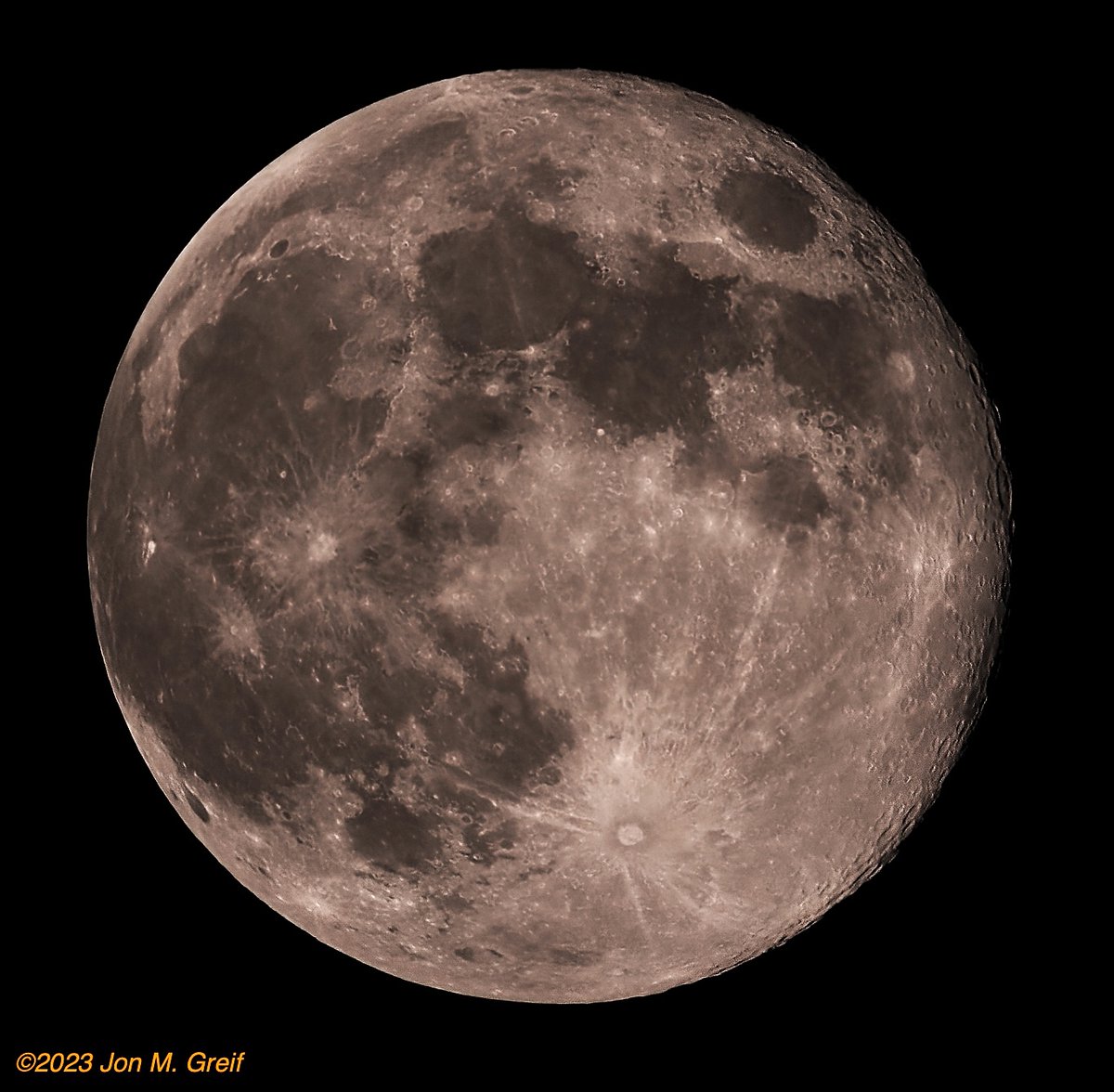
Last week's Beaver Full Moon, shot on November 27. There was cloud cover all night in Alpine CA but for short periods, the clouds were thin enough to allow imaging. This is integration of a stack of 21 "usable" exposures selected from over 1000 shots. #Astrophotography

Last week's Beaver Full Moon, shot on November 27.  There was cloud cover all night in Alpine CA but for short periods, the clouds were thin enough to allow imaging.  This is integration of a stack of 21 "usable" exposures selected from over 1000 shots. #Astrophotography
Jon Greif (@jongreif) 's Twitter Profile Photo

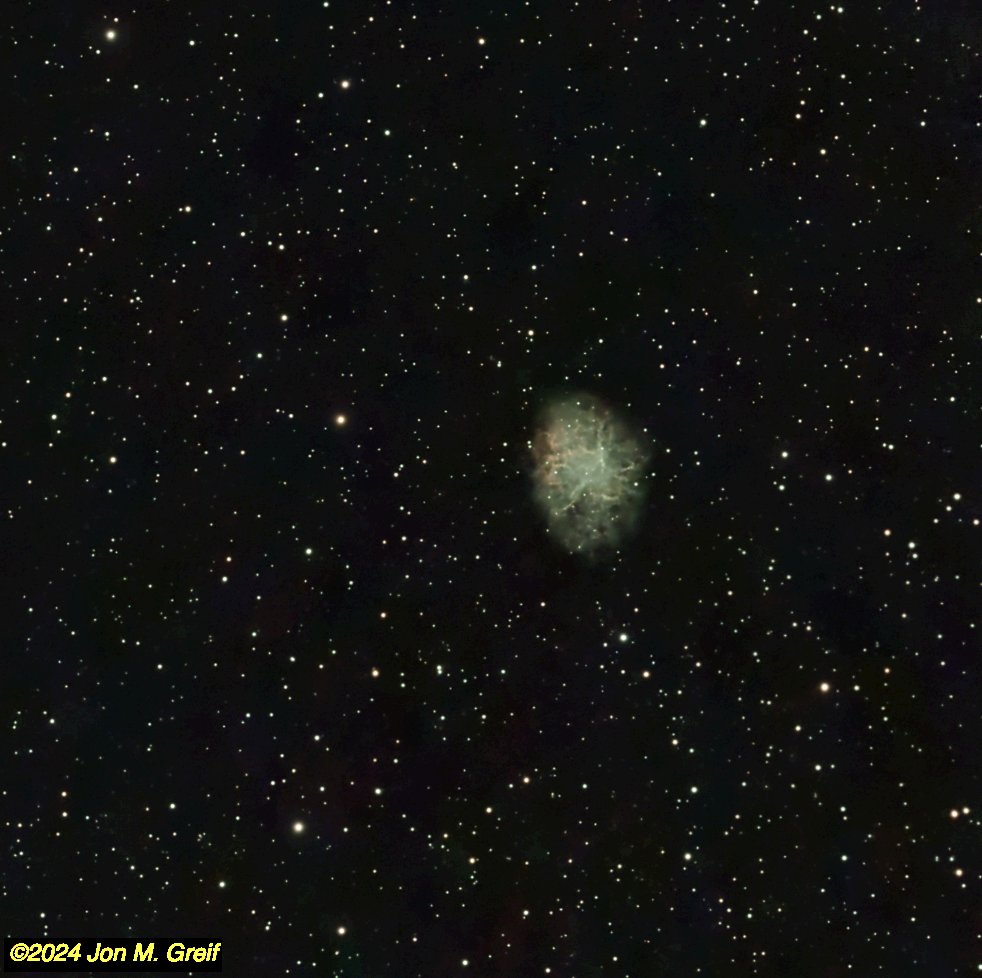
This is the the Crab Nebula, a supernova remnant, what’s left of an exploded neutron star, imaged from our backyard last night in an unusually (for recent weeks) clear dark sky. The image is from a stack of over 200 10-second frames using a SeeStar smart-scope. #Astrophotography

This is the the Crab Nebula, a supernova remnant, what’s left of an exploded neutron star, imaged from our backyard last night in an unusually (for recent weeks) clear dark sky. The image is from a stack of over 200 10-second frames using a SeeStar smart-scope. #Astrophotography
Jon Greif (@jongreif) 's Twitter Profile Photo

The C4 Screen Your Gut-Save Your Butt 5K Timed Race/Walk, Saturday, March 9, 2024, at Mission Bay Park in San Diego, CA - Join us if you can, in person or virtually! @cacoloncancer #ColorectalCancer #CRCScreening einpresswire.com/article/685224…

Jon Greif (@jongreif) 's Twitter Profile Photo

C4 Screen Your Gut-Save Your Butt 5K Timed Race/Walk, Saturday, March 29, 2025, at Mission Bay Park, San Diego CA. #Race/Walk #ColorectalCancer #CRC #ColonCancer einpresswire.com/article/781548…