Lydia Burleson (@burlesonlydia) 's Twitter Profile
Lydia Burleson

@burlesonlydia

English PhD @stanford | @knighthennessy | thinking about identity, poverty, and humanities interventions

ID: 1266211421118959617

linkhttps://lydiaburleson.com/ calendar_today29-05-2020 03:35:17

113 Tweet

97 Takipçi

241 Takip Edilen

Min Jin Lee (@minjinlee11) 's Twitter Profile Photo

Today’s decision is decidedly *not* a win for all poor kids. Highly selective colleges and universities will focus more on personal essays and letters of recommendations, which always always always privileges kids with more resources.

Lydia Burleson (@burlesonlydia) 's Twitter Profile Photo

Are you considering pursuing the #humanities in graduate school? This Thursday at 9am PST / 12pm EST, Kay, Karishma, and I are hosting a panel tailored to prospective KHumanities Scholars! Register here: lnkd.in/ev2fzaWp KnightHennessy Stanford University #phd

Are you considering pursuing the #humanities in graduate school? 

This Thursday at 9am PST / 12pm EST, Kay, Karishma, and I are hosting a panel tailored to prospective KHumanities Scholars!

Register here: lnkd.in/ev2fzaWp

<a href="/KnightHennessy/">KnightHennessy</a> <a href="/Stanford/">Stanford University</a> #phd
Hector Tobar (@tobarwriter) 's Twitter Profile Photo

Today, in honor of Labor Day, I would like to tell you what I learned about class struggle--and U.S. literature--after reading 150 novels and story collections, as a member of the 2023 Pulitzer jury for fiction. 1/8

Paul Novosad (@paulnovosad) 's Twitter Profile Photo

What kind of childhood makes a top scientist? Is it enough to have all the right traits (brilliance, grit, etc) or do you need the right family too? And why should we care? A 🧵 on our paper on the Nobel Laureates. A teaser: the income distribution of the laureates' fathers.1/N

What kind of childhood makes a top scientist? Is it enough to have all the right traits (brilliance, grit, etc) or do you need the right family too?

And why should we care? A 🧵 on our paper on the Nobel Laureates.

A teaser: the income distribution of the laureates' fathers.1/N
Duke University Press (@dukepress) 's Twitter Profile Photo

Save 30% on #NewBook "Poor Things," by Lennard J. Davis, which argues that those who write about the poor but have not themselves been poor are governed by harmful tropes and stereotypes. #LiteraryStudies #CulturalStudies ow.ly/SHhg50TZS3r

Save 30% on #NewBook "Poor Things," by Lennard J. Davis, which argues that those who write about the poor but have not themselves been poor are governed by harmful tropes and stereotypes. #LiteraryStudies #CulturalStudies
ow.ly/SHhg50TZS3r
Philipp Heimberger (@heimbergecon) 's Twitter Profile Photo

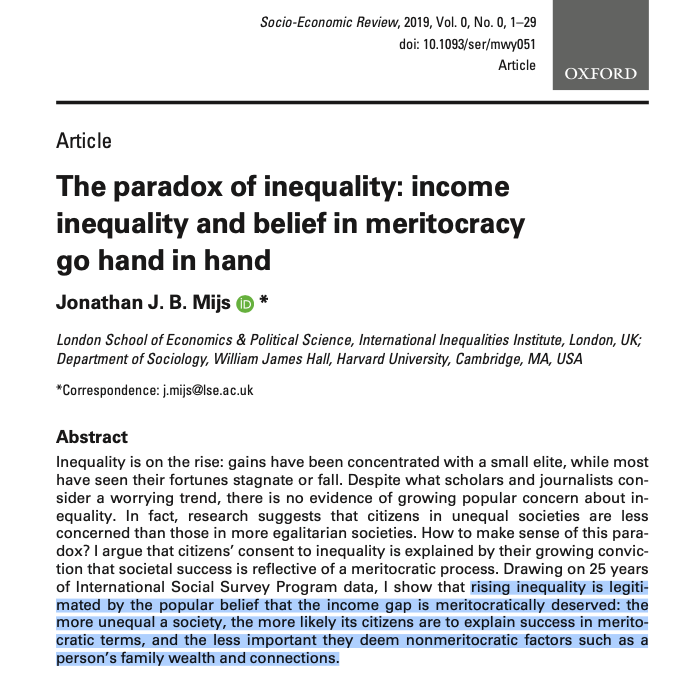
"rising inequality is legitimated by the popular belief that the income gap is meritocratically deserved: the more unequal a society, the more likely its citizens are to explain success in meritocratic terms... the less important... a person’s family wealth and connections."

"rising inequality is legitimated by the popular belief that the income gap is meritocratically deserved: the more unequal a society, the more likely its citizens are to explain success in meritocratic terms... the less important... a person’s family wealth and connections."
James S Murphy (@james_s_murphy) 's Twitter Profile Photo

This is such good reporting from the The Harvard Crimeson: There are about 27,000 high schools in the U.S. Over the past 15 years, 1 in 11 students at Harvard have come from just 21 high schools. So 9.1% of Harvard students come from 0.07% of US schools. David Brooks
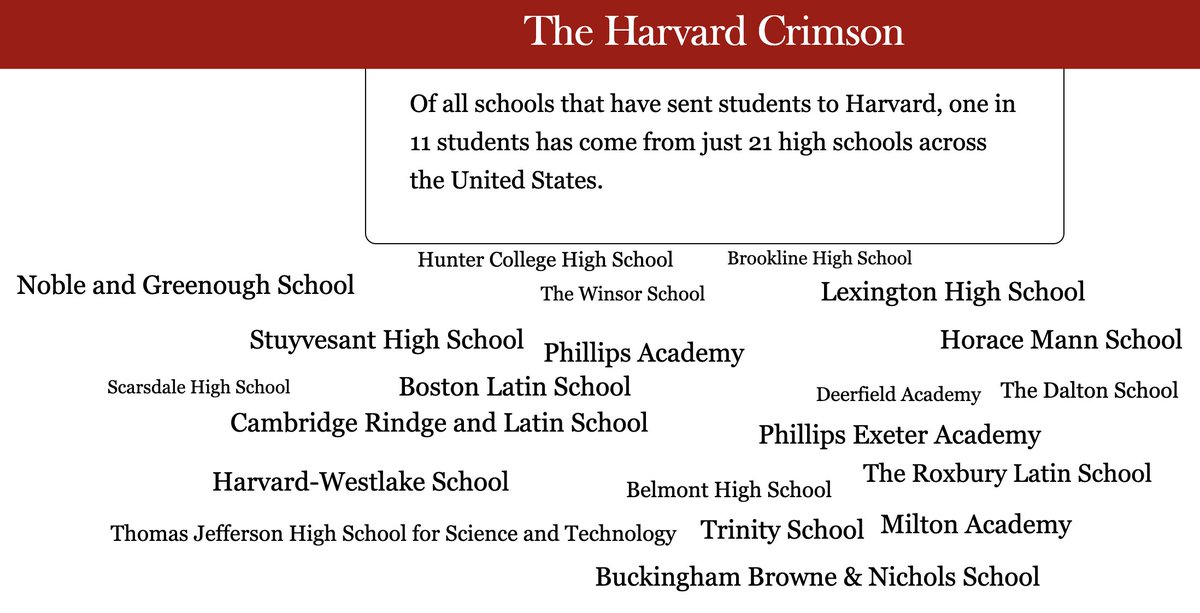
This is such good reporting from the <a href="/harvardcrimeson/">The Harvard Crimeson</a>:  

There are about 27,000 high schools in the U.S.

Over the past 15 years, 1 in 11 students at Harvard have come from just 21 high schools.  

So 9.1% of Harvard students come from 0.07% of US schools. <a href="/nytdavidbrooks/">David Brooks</a>