Clyde Mallinson (@clydemallinson) 's Twitter Profile
Clyde Mallinson

@clydemallinson

Providing multi-system solutions to wicked problems.

ID: 1107303712815546369

calendar_today17-03-2019 15:32:32

965 Tweet

1,1K Followers

406 Following

Clyde Mallinson (@clydemallinson) 's Twitter Profile Photo

Nick Hedley @lensofjw David Osmond Anton Eberhard SAPVIA SAWEA Grové Steyn Done. 60GW PV, 40GW wind, 30GW 4 hour storage + existing 2.7GW 20 hour pump storage, and still using Hydro from Cahora Bassa plus Gariep and Vd Kloof dams. Last week of March 2023. Zero coal, zero nuclear, and zero 'gas' OCGTs. RE 100%
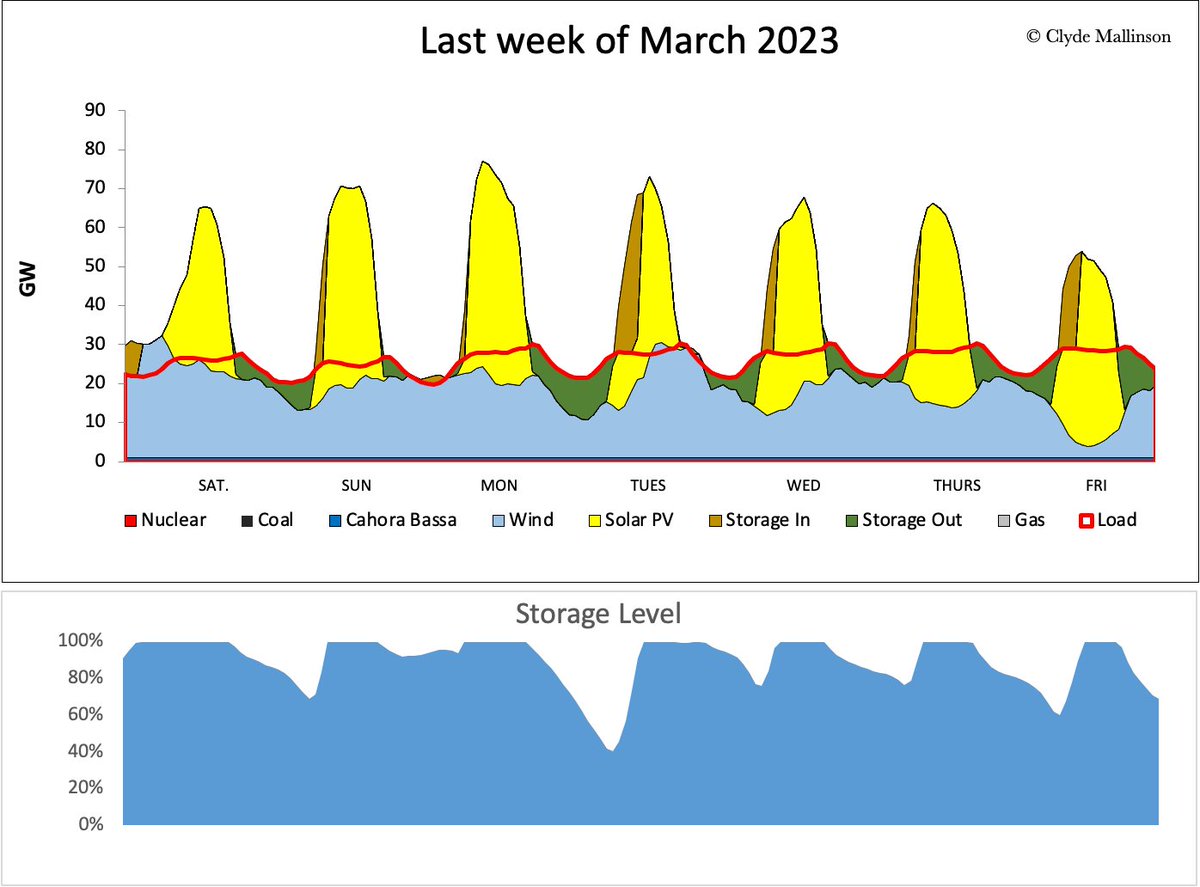
<a href="/nickhedley/">Nick Hedley</a> @lensofjw <a href="/DavidOsmond8/">David Osmond</a> <a href="/AntonEberhard/">Anton Eberhard</a> <a href="/SAPVIA/">SAPVIA</a> <a href="/_sawea/">SAWEA</a> <a href="/grovesteyn/">Grové Steyn</a> Done. 60GW PV, 40GW wind, 30GW 4 hour storage + existing 2.7GW 20 hour pump storage, and still using Hydro from Cahora  Bassa plus Gariep and Vd Kloof dams. Last week of March 2023. 

Zero coal, zero nuclear, and zero 'gas' OCGTs.

RE 100%
Clyde Mallinson (@clydemallinson) 's Twitter Profile Photo

@lensofjw Nick Hedley Anton Eberhard SAPVIA SAWEA Grové Steyn Something like this? 2023, 2025, 2030, 2035. By 2035, only 6GW of coal left, with 60GW additional PV, 40GW additional wind, and 30GW of 4 hour storage.
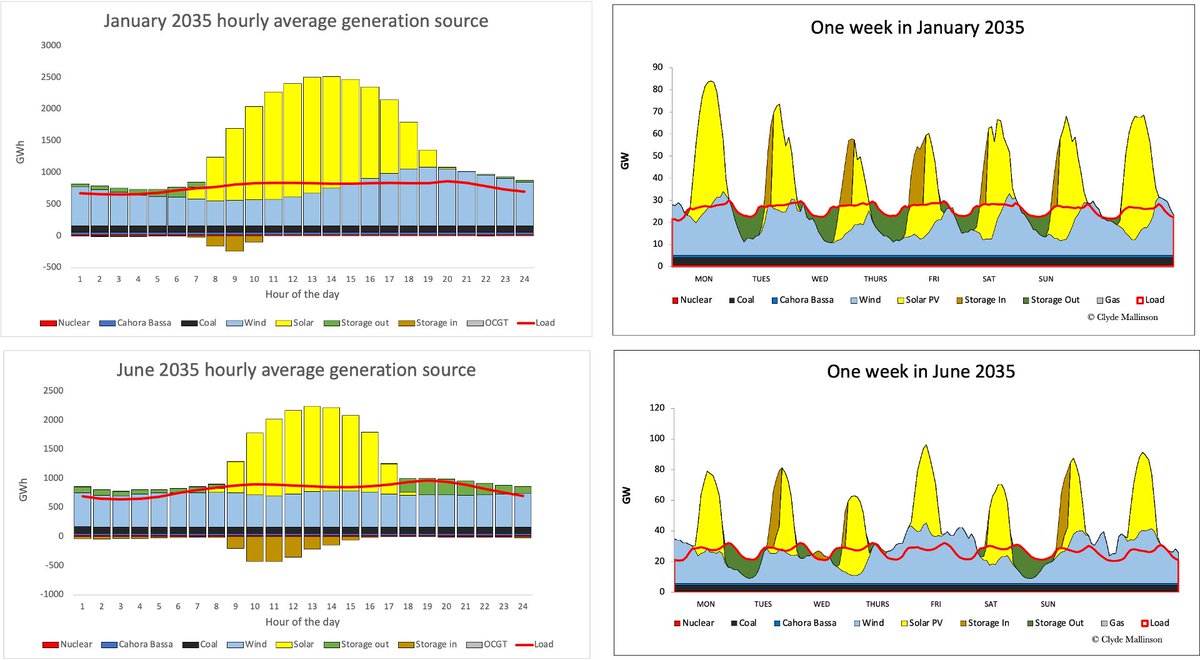
@lensofjw <a href="/nickhedley/">Nick Hedley</a> <a href="/AntonEberhard/">Anton Eberhard</a> <a href="/SAPVIA/">SAPVIA</a> <a href="/_sawea/">SAWEA</a> <a href="/grovesteyn/">Grové Steyn</a> Something like this? 2023, 2025, 2030, 2035. By 2035, only 6GW of coal left, with 60GW additional PV, 40GW additional wind, and 30GW of 4 hour storage.
Clyde Mallinson (@clydemallinson) 's Twitter Profile Photo

We generally import slightly more electricity from our neighbours than we export. Imports dropped for quite long periods when the line to Cahora Bassa was down.

We generally import slightly more electricity from our neighbours than we export. Imports dropped for quite long periods when the line to Cahora Bassa was down.
Clyde Mallinson (@clydemallinson) 's Twitter Profile Photo

Electricity imports from and exports to South Africa's neighbours. Note the drop off in imports when the Cahora Bassa line has been damaged. We generally import slightly more than we export.

Electricity imports from and exports to South Africa's neighbours. Note the drop off in imports when the Cahora Bassa line has been damaged. We generally import slightly more than we export.
Clyde Mallinson (@clydemallinson) 's Twitter Profile Photo

Catch me on SABC channel 404 this evening when I will be delivering my second energy whether forecast. This time it focuses on whether we can expect reduced load shedding for the remainder of winter.

Clyde Mallinson (@clydemallinson) 's Twitter Profile Photo

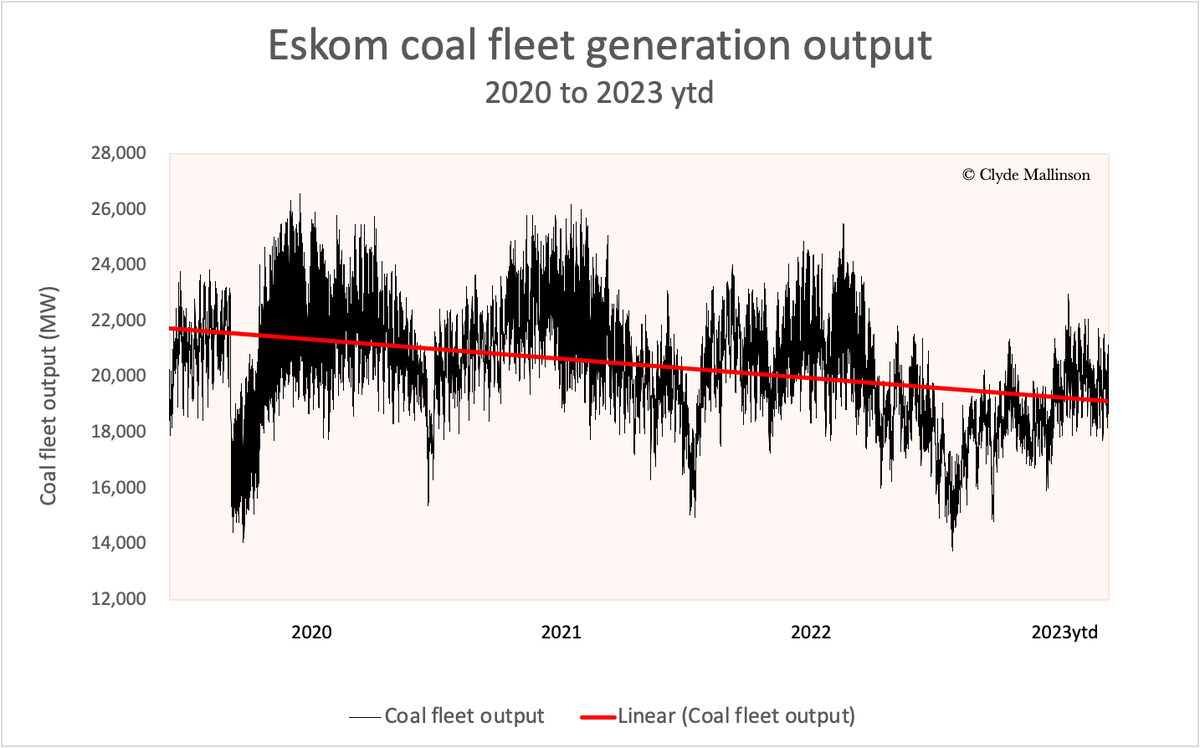
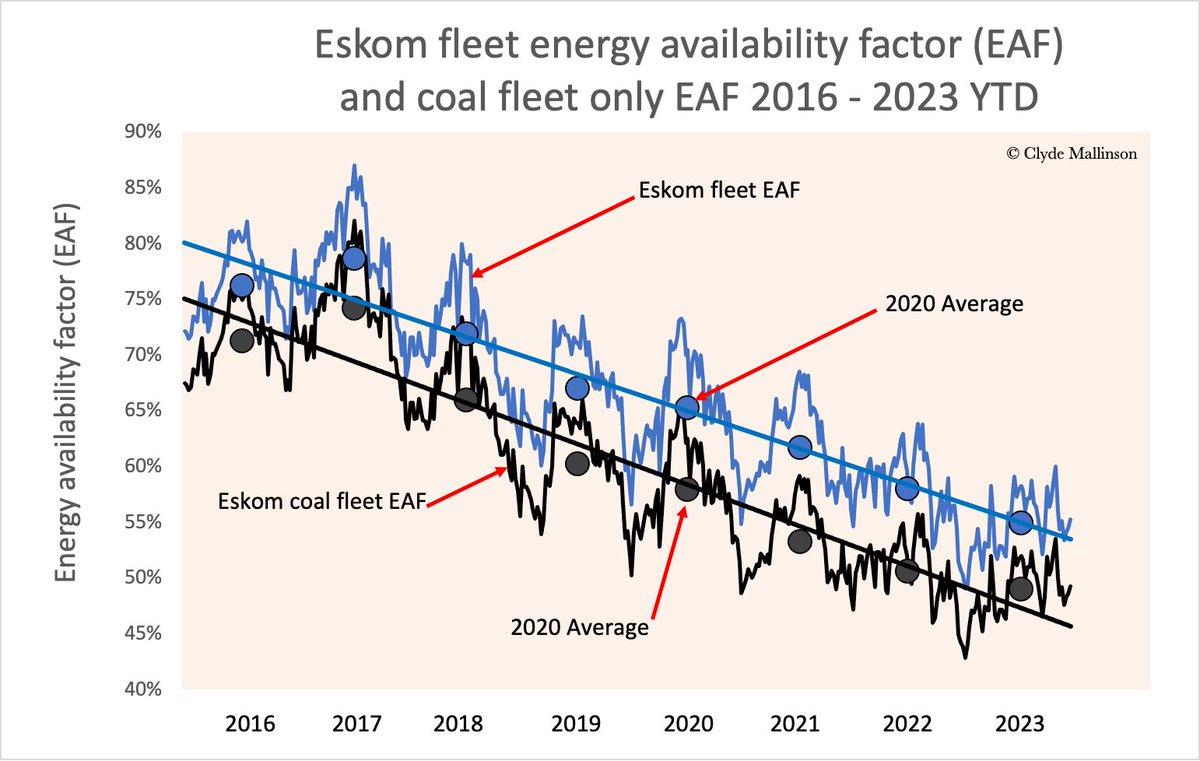
The factual picture of declining output from the Eskom coal fleet. The average output for 2023 YTD is less than 19GW, which represents an average coal fleet capacity factor of just under 49%. The actual output is the key metric to monitor, not the total fleet EAF, so often quoted

The factual picture of declining output from the Eskom coal fleet. The average output for 2023 YTD is less than 19GW, which represents an average coal fleet capacity factor of just under 49%. The actual output is the key metric to monitor, not the total fleet EAF, so often quoted
Clyde Mallinson (@clydemallinson) 's Twitter Profile Photo

"We do not need to consume as much energy as we do, and we won't in the future." Try explaining that to the ten million households that are connected to the grid, but live in energy poverty, primarily due to affordability.

Clyde Mallinson (@clydemallinson) 's Twitter Profile Photo

The chart that I published in January this year, showing predicted levels of maximum shortfall based on coal fleet capacity factors. Currently, the coal fleet is flirting with a capacity factor of just over 41%. This translates to a shortfall of 8GW. Hope no more units drop out.

The chart that I published in January this year, showing predicted levels of maximum shortfall based on coal fleet capacity factors. Currently, the coal fleet is flirting with a capacity factor of just over 41%. This translates to a shortfall of 8GW. Hope no more units drop out.
Clyde Mallinson (@clydemallinson) 's Twitter Profile Photo

Giving an updated whether forecast on SABC morning live at 07h35, channel 404, 15 September. This time round, I will be forecasting whether or not we can expect an extended spell of high stages of load shedding.

Clyde Mallinson (@clydemallinson) 's Twitter Profile Photo

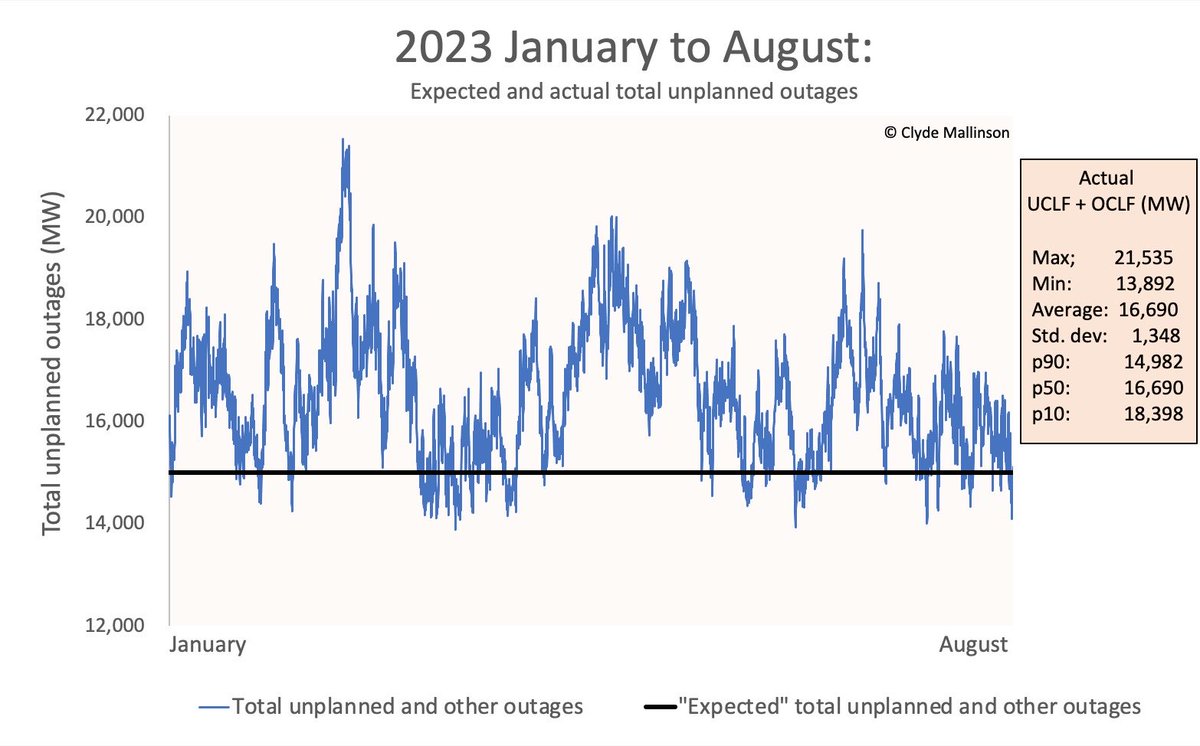
Some cold, old fashion, hard facts about unplanned outages. It seems that the revised figure of 16,000 MW used in the most recent Eskom 12 month outlook is a tad optimistic. A textbook example of unpredictability.

Some cold, old fashion, hard facts about unplanned outages. It seems that the revised figure of 16,000 MW used in the most recent Eskom 12 month outlook is a tad optimistic. A textbook example of unpredictability.
Clyde Mallinson (@clydemallinson) 's Twitter Profile Photo

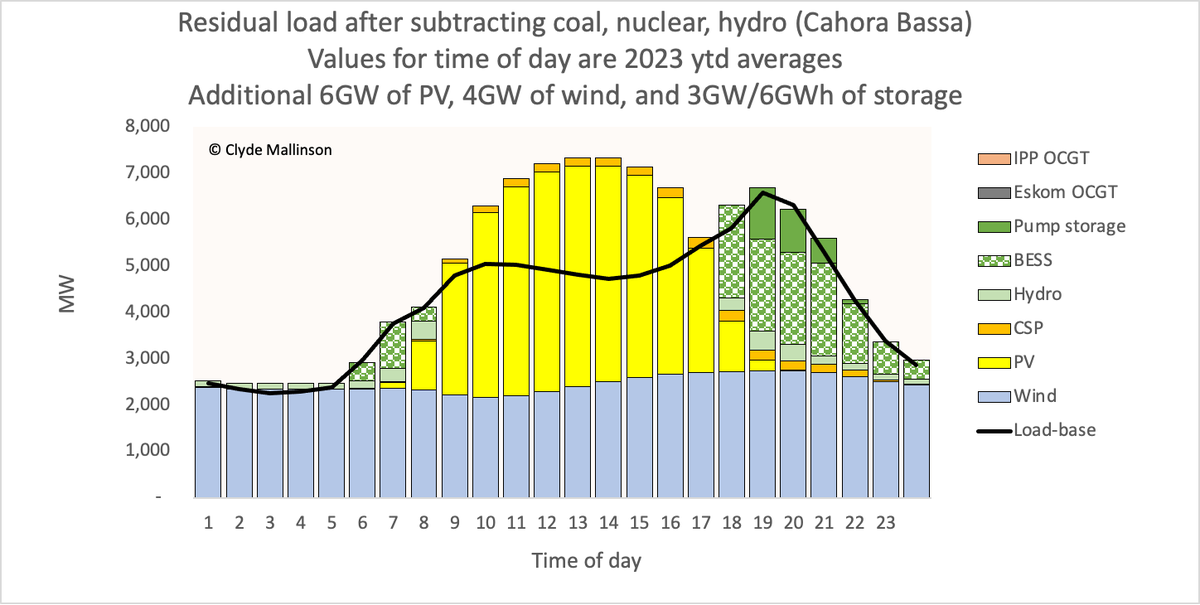
1. Ave. hourly residual load (= load - coal-nuclear-Cahora Bassa) for 2023 ytd. Ave. other generation per hour. Gap = ave. shortfall. 2. Load-shedding to meet shorfall. 3. A much better way of meeting shortfall - no load-shedding, no diesel, excess generation fills the storage.

1. Ave. hourly residual load (= load - coal-nuclear-Cahora Bassa) for 2023 ytd. Ave. other generation per hour. Gap = ave. shortfall. 2. Load-shedding to meet shorfall. 3. A much better way of meeting shortfall - no load-shedding, no diesel, excess generation fills the storage.
Clyde Mallinson (@clydemallinson) 's Twitter Profile Photo

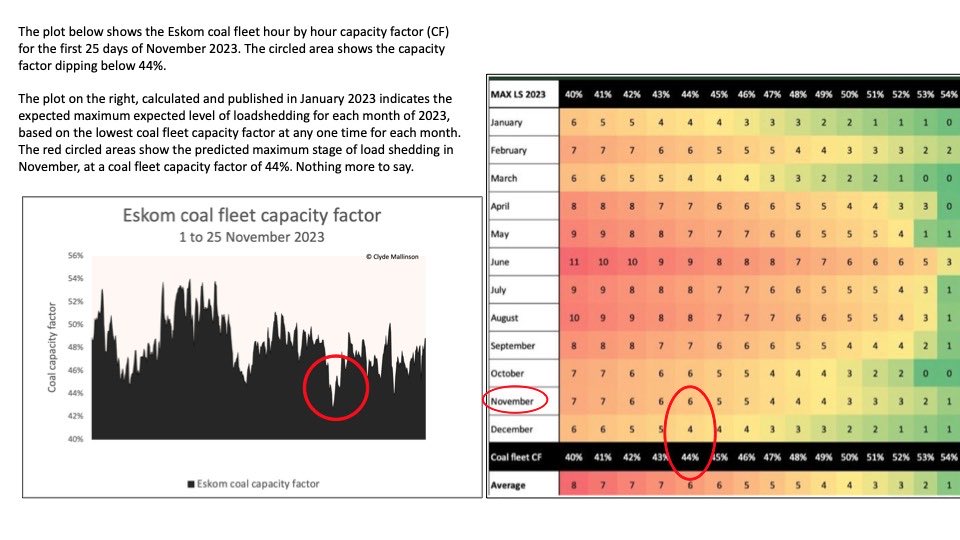
The Eskom coal fleet recently dipped below a capacity factor of 44% in Nov. An analysis I undertook in January 2023 led to the publication of the maximum level of load shedding to expect each month, based on forecast demand, and the performance of the coal fleet. Check it out.

The Eskom coal fleet recently dipped below a capacity factor of 44% in Nov. An analysis I undertook in January 2023 led to the publication of the maximum level of load shedding to expect each month, based on forecast demand, and the performance of the coal fleet. Check it out.
Clyde Mallinson (@clydemallinson) 's Twitter Profile Photo

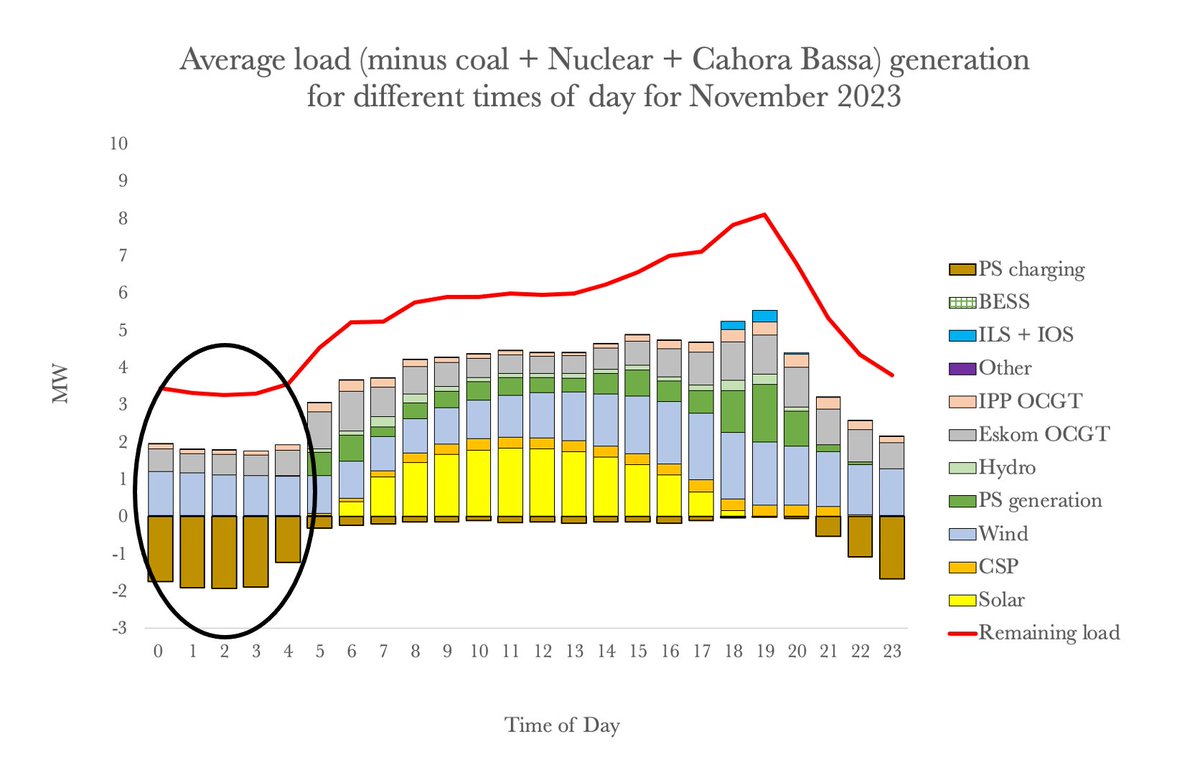
Plot of November 2023 average hourly residual load (Load-coal-nuclear-Cahora Bassa). Shortfall made up by wind, PV, CSP, hydro, OCGTs, PS, and load shedding. Shocking that in windy, sunny SA we have to resort to nightime usuage of diesel OCGTs and load shedding to replenish PS.

Plot of November 2023 average hourly residual load (Load-coal-nuclear-Cahora Bassa). Shortfall made up by wind, PV, CSP, hydro, OCGTs, PS, and load shedding. Shocking that in windy, sunny SA we have to resort to nightime usuage of diesel OCGTs and load shedding to replenish PS.
Clyde Mallinson (@clydemallinson) 's Twitter Profile Photo

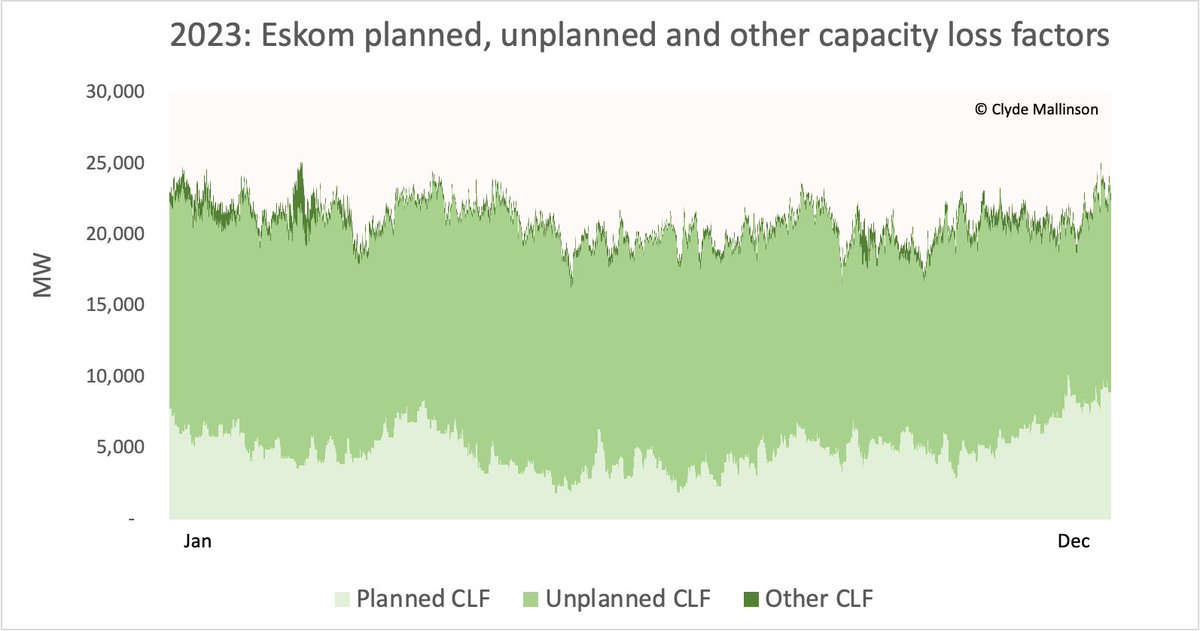
Not a pretty picture. Eskom planned, unplanned, and other capacity loss factors for 2023. In an ideal world, the unplanned and other losses should be less than those falling under planned maintenance. Unplanned maintenance (UCLF) is otherwise known as broken.

Not a pretty picture. Eskom planned, unplanned, and other capacity loss factors for 2023. In an ideal world, the unplanned and other losses should be less than those falling under planned maintenance. Unplanned maintenance (UCLF) is otherwise known as broken.
Clyde Mallinson (@clydemallinson) 's Twitter Profile Photo

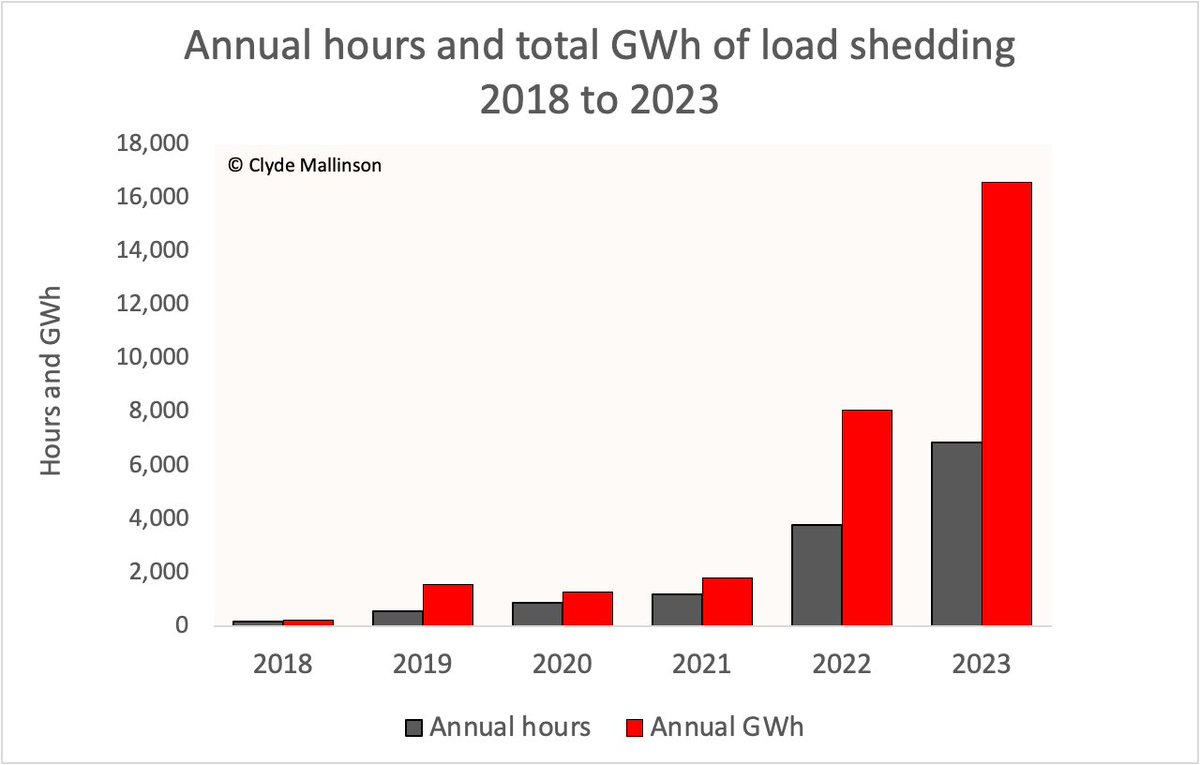
Hours and TWh of actual manual load reduction for 2018 to 2023. Load shedding for 2023 was 16.56TWh, more than double that of 2022, and nine times that of 2021. The IRP 2023 is not suitable to arrest the crisis. We urgently require a fit for purpose peoples IRP.

Hours and TWh of actual manual load reduction for 2018 to 2023. Load shedding for 2023 was 16.56TWh, more than double that of 2022, and nine  times that of 2021. 
The IRP 2023 is not suitable to arrest the crisis. We urgently require a fit for purpose peoples IRP.
Clyde Mallinson (@clydemallinson) 's Twitter Profile Photo

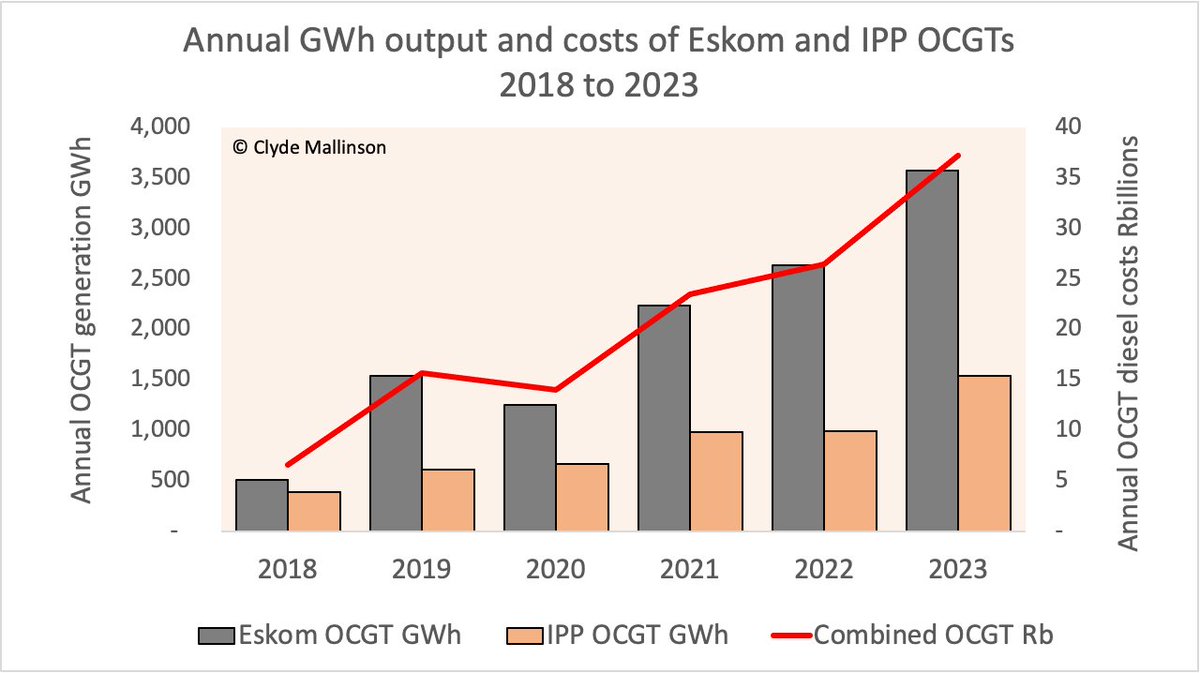
The chart shows figures for calendar years, and Eskom results are for the financial year, which runs from 1 April each year. When Eskom declare diesel expenditure for 2023, they mean for the Eskom financial year to date. The Eskom financial year 2023/24 ends on 31 March 2024.

The chart shows figures for calendar years, and Eskom results are for the financial year, which runs from 1 April each year. When Eskom declare diesel expenditure for 2023, they mean for the Eskom financial year to date. The Eskom financial year 2023/24 ends on 31 March 2024.