꧁𝑺𝒊𝒏𝒈𝒉꧂ (@yuvrajs2012p) 's Twitter Profile
꧁𝑺𝒊𝒏𝒈𝒉꧂

@yuvrajs2012p

𝕾𝖊𝖊𝖐𝖊𝖗

ID: 1297076171151204353

linkhttps://instagram.com/singhyuvraj42?igshid=ZDdkNTZiNTM= calendar_today22-08-2020 07:40:53

5,5K Tweet

85 Followers

144 Following

चेदिराड्रिपुपार्षदः 🟩⬜️⬛️ (@saatvata) 's Twitter Profile Photo

In the original tale, Ayampula asks Gosāla about the shape of a hallā (a type of insect), to which he replies that a hallā is defined as having the shape of bamboo rhizomes ("vaṃsīmūlasaṃṭhiyā hallā paṇṇattā," vaṃśīmūlasaṃsthitā hallā prajñaptā) followed by the command

Srinivas Jammalamadaka (@jamvasu) 's Twitter Profile Photo

Rāma Śēṣan Chandraśēkaran Yes. This is precisely why the śāstras identify multiple conditions required for verbal cognition (śābdabodha): • Ākāṅkṣā-jñāna — awareness of expectancy (sense of syntactic/semantic incompleteness) • Yogyatā-jñāna — awareness of semantic fitness (compatibility of meanings) +

चेदिराड्रिपुपार्षदः 🟩⬜️⬛️ (@saatvata) 's Twitter Profile Photo

Lokayata The section potrays all castes as markedly inferior to the rājanyà/kṣattríya in order to emphasize the symbolic and "hereditary" consequences of a King who consumes the wrong sacrificial portion during a ritual. If the king falls to the position of a Brāhmaṇá, he will become

The Nobel Prize (@nobelprize) 's Twitter Profile Photo

"Jana Gana Mana" (Bengali: [ɟənə gəɳə mənə]) is the national anthem of India, originally composed in Bengali by poet Rabindranath Tagore, who was awarded the #NobelPrize in Literature in 1913. Pictured: An English translation of Jana Gana Mana by Tagore

"Jana Gana Mana" (Bengali: [ɟənə gəɳə mənə]) is the national anthem of India, originally composed in Bengali by poet Rabindranath Tagore, who was awarded the #NobelPrize in Literature in 1913.

Pictured: An English translation of Jana Gana Mana by Tagore
John Oldman (@prasunnagar) 's Twitter Profile Photo

#MudraRakshasam " The fire of my wrath is like a forest conflagration. It has destroyed the members of the Nanda family, deserted by terror-stricken citizens, like bamboo canes forsaken by terrified birds." "This fire has, moreover, spread far and wide, the smoke of grief in

#MudraRakshasam

" The fire of my wrath is like a forest conflagration. It has destroyed the members of the Nanda family, deserted by terror-stricken citizens, like bamboo canes forsaken by terrified birds."

"This fire has, moreover, spread far and wide, the smoke of grief in
Ashish Dhar (@infinitchy) 's Twitter Profile Photo

The infallibility of the vedas is not denied by Adi Shankaracharya here. As a thumb rule, it is always better to accept that the logic of mimamsakas is so watertight that our fragmented attention cannot even dream of countering it. Hindutva smritikaras on X (not a sly on the OP

The Nobel Prize (@nobelprize) 's Twitter Profile Photo

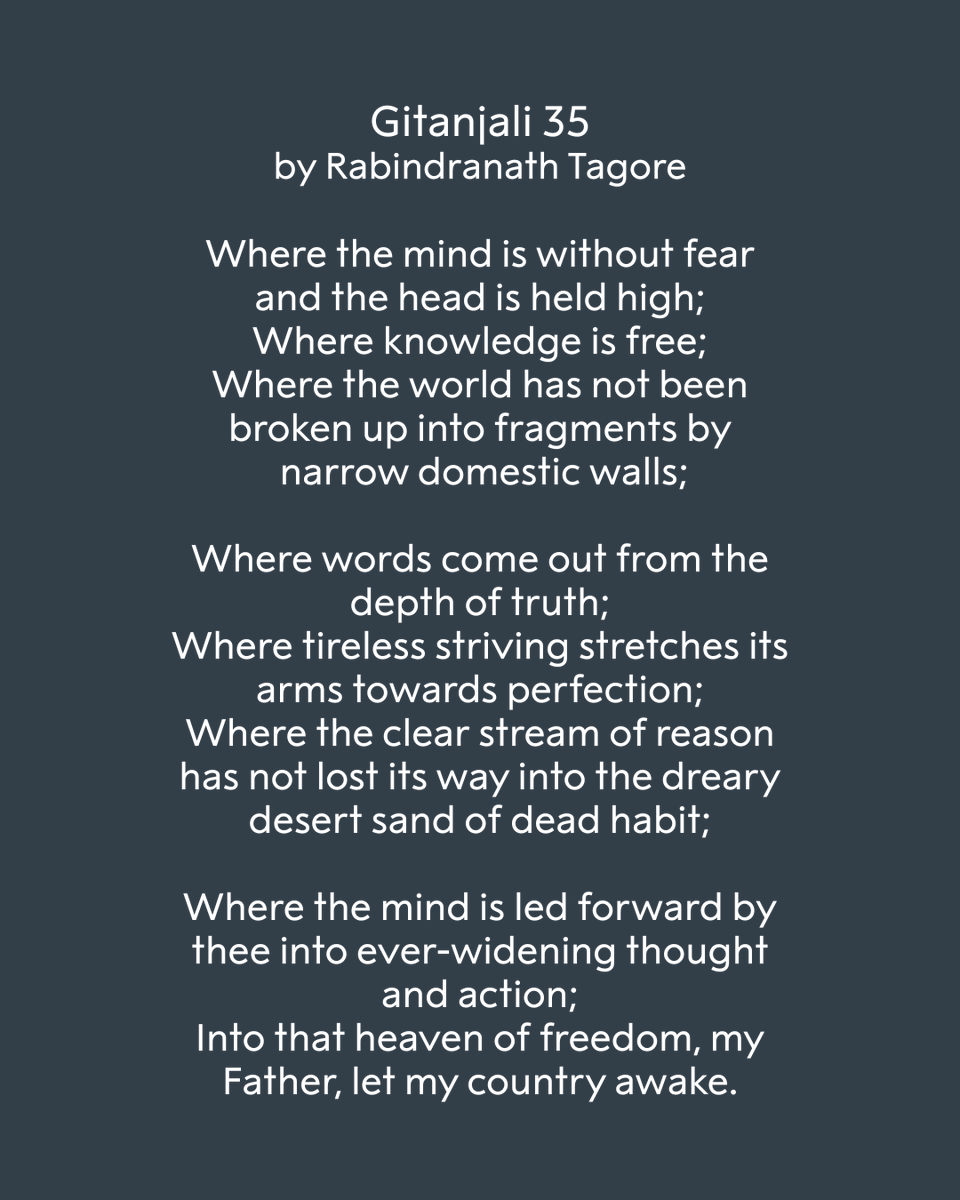
Tomorrow marks the 165th anniversary of Rabindranath Tagore's birthday. We remember the poet by sharing one of his most famous poems, "Gitanjali 35". Stay tuned to learn more about Tagore tomorrow.

Tomorrow marks the 165th anniversary of Rabindranath Tagore's birthday. We remember the poet by sharing one of his most famous poems, "Gitanjali 35". 

Stay tuned to learn more about Tagore tomorrow.
𑀓𑀺𑀭𑀼𑀱𑁆𑀡𑀷𑁆 🇮🇳 (@tskrishnan) 's Twitter Profile Photo

“Krishna” is a Sanskrit name, so it is obvious that Sangam texts may not use that exact name. But does that mean the deity is different? Let us see what the texts actually say. Kalithogai 103 refers to Krishna slaying Kesi, the horse-demon: காயாம்பூங் கண்ணிப் பொதுவன் தகை கண்டை

चेदिराड्रिपुपार्षदः 🟩⬜️⬛️ (@saatvata) 's Twitter Profile Photo

꧁Siṃha꧂ Lokayata Based on his handle name, he seems to be a Laukāyatika. The Laukāyatika were very confused individuals. One of their critiques was: paśuś cen nihataḥ svargaṃ jyotiṣṭome gamiṣyati। svapitā yajamānena tatra kasmān na hiṃsyate॥ If a paśu slain in the Jyotiṣṭoma sacrifice

Smasher (@gigasanatani) 's Twitter Profile Photo

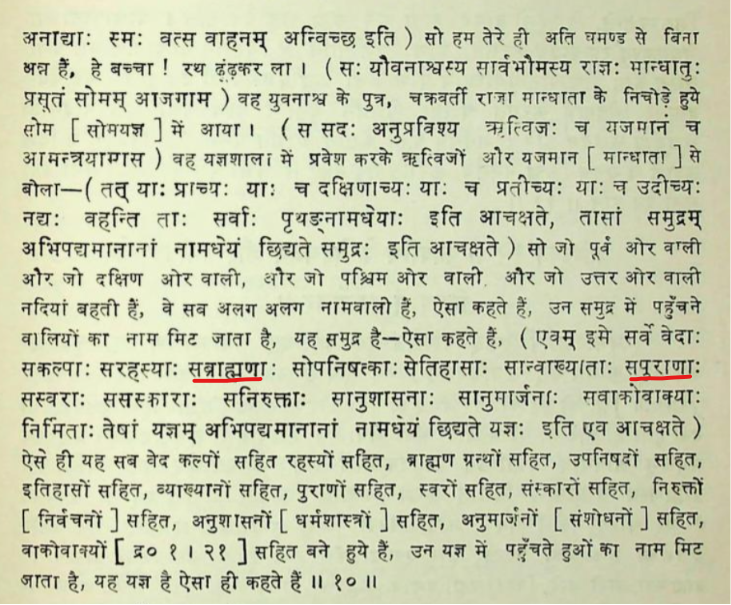
Gopatha Brahmana of Atharva Veda 1.2.10 also clears this confusion where brahmin bhaga and purana bhaga are mentioned separately.

Gopatha Brahmana of Atharva Veda 1.2.10 also clears this confusion where brahmin bhaga and purana bhaga are mentioned separately.
Hotṛ (@rathatreya_) 's Twitter Profile Photo

Aćharya Kumārila Bhaṭṭa, Acharya Prabhākara Miśra, Acharya Pārthasārathi Miśra,Acharya Śabara Svāmin, Acharya Khaṇḍadeva descending from HEAVENs🗣

Aćharya Kumārila Bhaṭṭa, Acharya Prabhākara Miśra, Acharya Pārthasārathi Miśra,Acharya Śabara Svāmin, Acharya Khaṇḍadeva descending from HEAVENs🗣
ಮಹೇಶ 𑀰𑀸𑀲𑁆𑀢𑁆𑀭𑀺 (@karatalaamalaka) 's Twitter Profile Photo

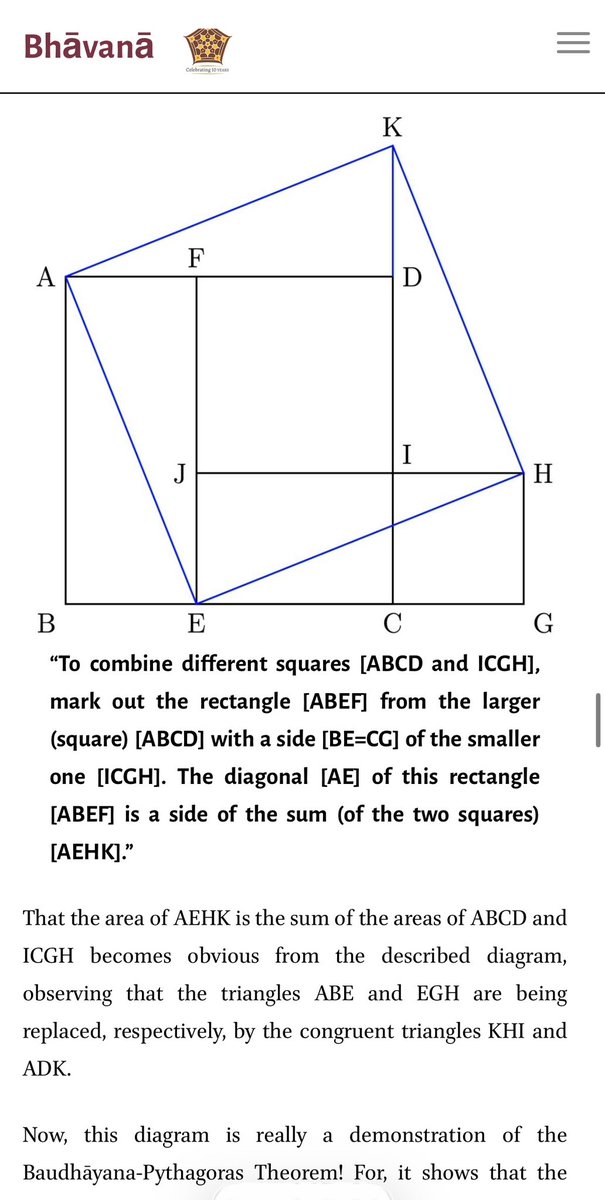
Further, the claim that “Indian mathematicians didn’t do proofs,” is also hollow. Simply, Baudhayana himself follows its statement with a proof-by-construction Misconceptions about Indian history and thought are shocking in how they endured in spite of being trivially wrong.

Further, the claim that “Indian mathematicians didn’t do proofs,” is also hollow. Simply, Baudhayana himself follows its statement with a proof-by-construction

Misconceptions about Indian history and thought are shocking in how they endured in spite of being trivially wrong.
Dr. Satyan Sharma (@sharmasatyan) 's Twitter Profile Photo

An academician's work stays incomplete without sharing academic knowledge with non-academic audience. It takes both courage and creativity to be able to convey that knowledge in the layperson's language. [1/5]

Dr. Satyan Sharma (@sharmasatyan) 's Twitter Profile Photo

Surely there's nothing new in this. Traditional Ācāryas have been doing this. They have composed texts for laypersons also. Glad to see many young traditional scholars now doing this on social media platforms. Others have also joined in. [4/5]

चेदिराड्रिपुपार्षदः 🟩⬜️⬛️ (@saatvata) 's Twitter Profile Photo

Erwin Rommel ദേവാനാം അസുരഃ ꧁Siṃha꧂ Lokayata "Righteous Śūdra-s," i.e. Śūdras who observed dietary rules and performed saṃskāras similar to the upper castes/dvija castes. In other words, very similar to dvijas in lifestyle but distinguished from the dvijas due to upanayana/gāyatrī dīkṣā. This classification was common in

Dr. Satyan Sharma (@sharmasatyan) 's Twitter Profile Photo

Dear Hindus It is very important to hear authoritative voices of Hinduism. How to find them? 1. Find a list of traditional sampradayas. 2. Find organisations (mathas, peethas, etc.) affiliated with them. 3. Find their webpages, publications, etc. [1/5]

Dr. Satyan Sharma (@sharmasatyan) 's Twitter Profile Photo

There are many more. Why traditional sampradayas? Because they have a long tradition of proper scriptural study and analysis. Plus, they have been interacting with laypersons for a long time. So they have a good idea about the wider application of scriptural knowledge. [4/5]