WarsawPL365 (@warsawpl365) 's Twitter Profile
WarsawPL365

@warsawpl365

🪖 | Where the front line once was, life now stands.
👨🏻 | Managed by @notlsd_ 🇹🇩
📩 | [email protected]
☕️ | buycoffee.to/warsawpl365

ID: 2026776403644133376

link calendar_today25-02-2026 21:49:03

71 Tweet

18 Takipçi

0 Takip Edilen

WarsawPL365 (@warsawpl365) 's Twitter Profile Photo

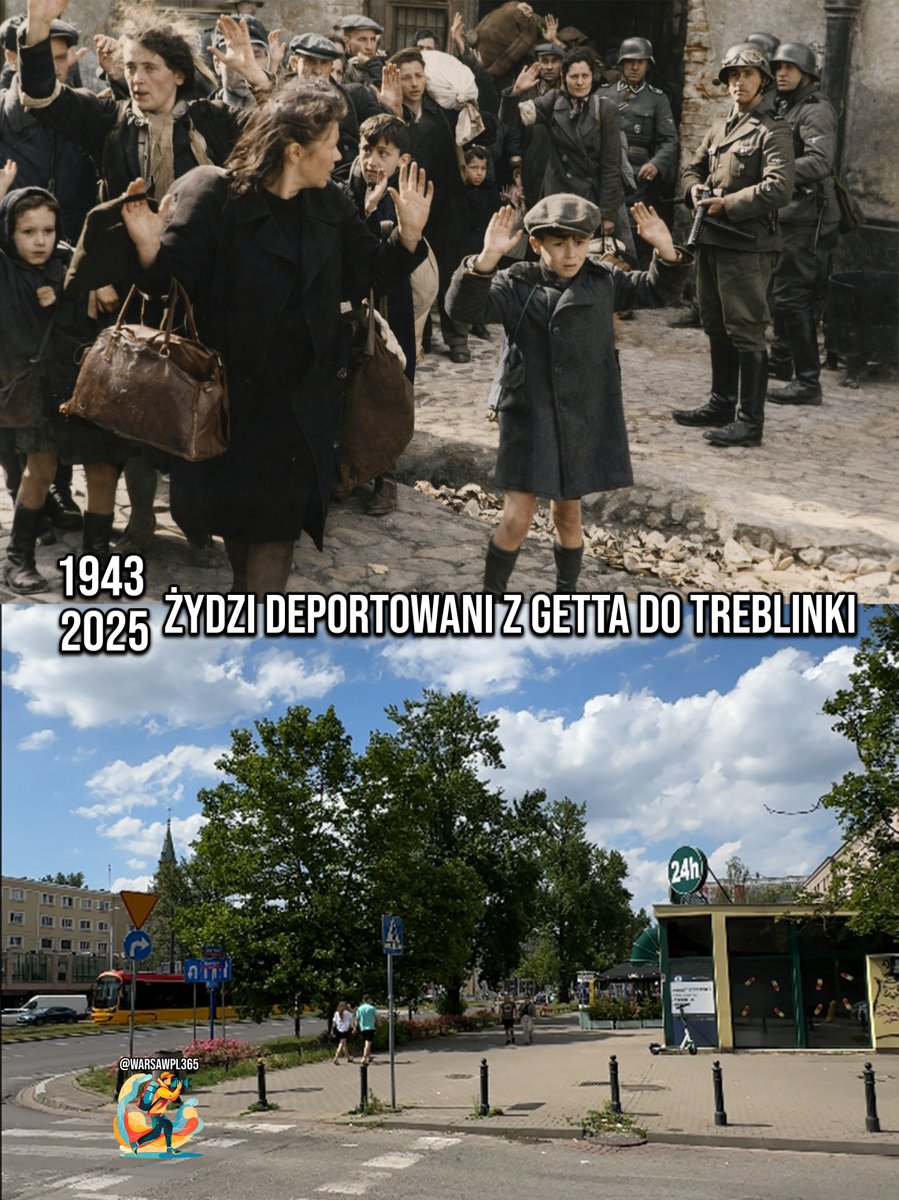
The Warsaw Ghetto boy is a key figure of the best-known photograph taken during the 1943 Warsaw Ghetto Uprising, seen holding his hands over his head while SS member Josef Blösche points an MP 28 submachine gun in his direction. #polska #warsawghetto #warszawa

The Warsaw Ghetto boy is a key figure of the best-known photograph taken during the 1943 Warsaw Ghetto Uprising, seen holding his hands over his head while SS member Josef Blösche points an MP 28 submachine gun in his direction. #polska #warsawghetto #warszawa
WarsawPL365 (@warsawpl365) 's Twitter Profile Photo

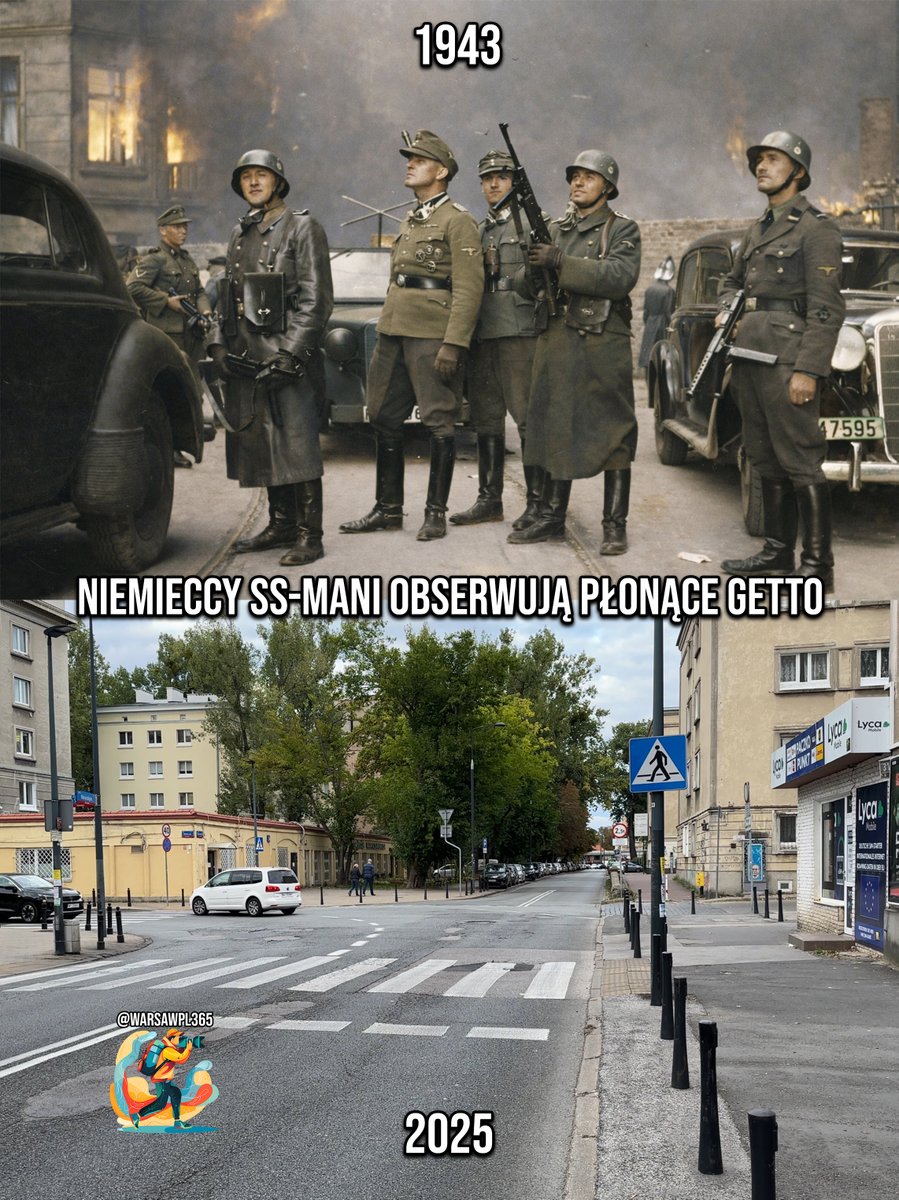
Photograph taken on Nowolipie Street looking east during the Warsaw Ghetto Uprising, near the intersection with Smocza Street. On the left, a burning balcony of the townhouse at 62 Nowolipie is visible, next to the ghetto wall. #poland #history #ww2 #ghetto

Photograph taken on Nowolipie Street looking east during the Warsaw Ghetto Uprising, near the intersection with Smocza Street. On the left, a burning balcony of the townhouse at 62 Nowolipie is visible, next to the ghetto wall. #poland #history #ww2 #ghetto
WarsawPL365 (@warsawpl365) 's Twitter Profile Photo

This photograph from the Warsaw Uprising of 1944 shows a column of German prisoners of war being escorted along Sienkiewicza Street by Polish Home Army (Armia Krajowa) insurgents. Most of the captured soldiers visible in the column belonged to the German garrison of the PAST

This photograph from the Warsaw Uprising of 1944 shows a column of German prisoners of war being escorted along Sienkiewicza Street by Polish Home Army (Armia Krajowa) insurgents. Most of the captured soldiers visible in the column belonged to the German garrison of the PAST
WarsawPL365 (@warsawpl365) 's Twitter Profile Photo

This photograph from 1936 shows the Great Synagogue on Tłomackie Street in Warsaw, one of the largest and most prominent Jewish houses of worship in Europe at the time. Built in 1878. #polska #history

This photograph from 1936 shows the Great Synagogue on Tłomackie Street in Warsaw, one of the largest and most prominent Jewish houses of worship in Europe at the time. Built in 1878. #polska
#history
WarsawPL365 (@warsawpl365) 's Twitter Profile Photo

This photograph from 1945 shows the heavily damaged Pancera Viaduct (Wiadykt Pancera) in Warsaw shortly after the end of the Second World War. The viaduct, which connected the Old Town area with the Vistula embankments, is covered with rubble and shows clear signs of demolition

This photograph from 1945 shows the heavily damaged Pancera Viaduct (Wiadykt Pancera) in Warsaw shortly after the end of the Second World War. The viaduct, which connected the Old Town area with the Vistula embankments, is covered with rubble and shows clear signs of demolition
WarsawPL365 (@warsawpl365) 's Twitter Profile Photo

A view of Marszałkowska Street during its reconstruction and redevelopment. The view is taken from the roof of the “House under the Toilets” (124/128 Marszałkowska Street) - Warsaw, Poland

A view of Marszałkowska Street during its reconstruction and redevelopment. The view is taken from the roof of the “House under the Toilets” (124/128 Marszałkowska Street) - Warsaw, Poland
WarsawPL365 (@warsawpl365) 's Twitter Profile Photo

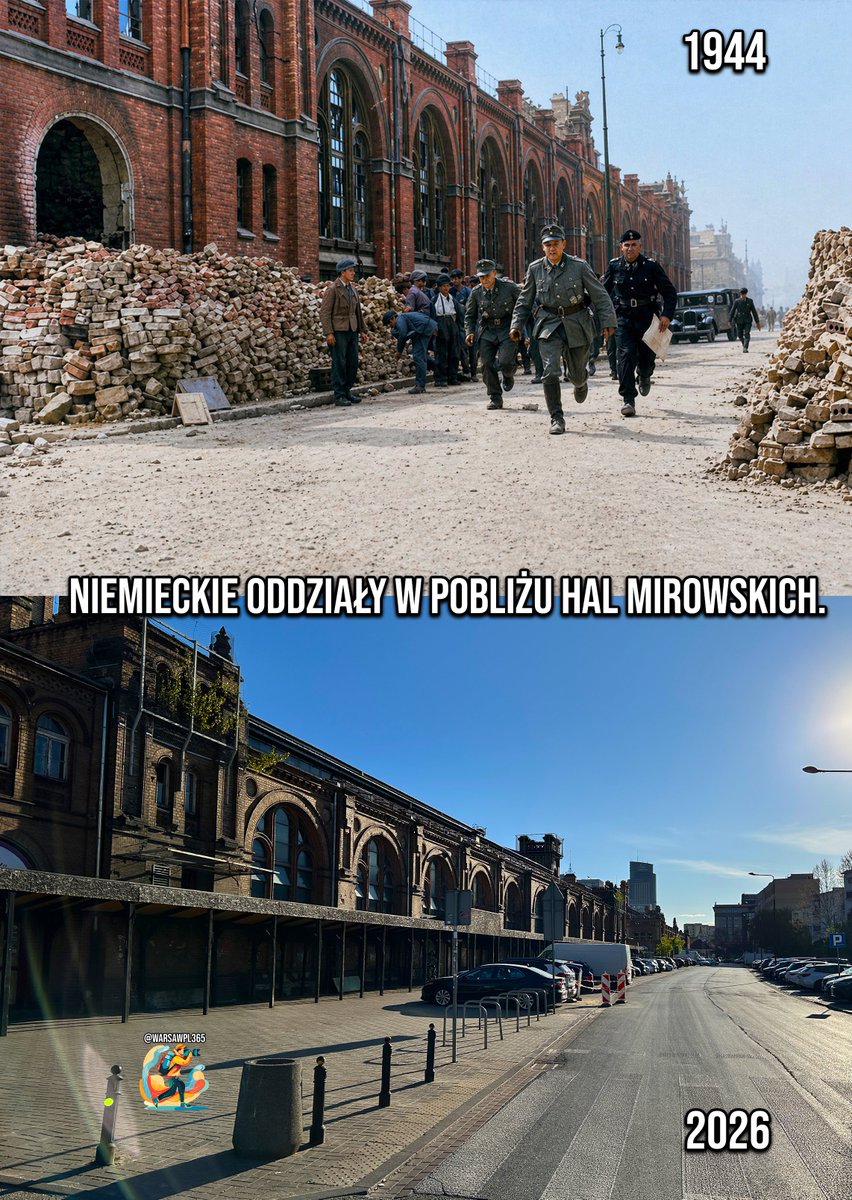
This photograph from August–September 1944 shows German troops moving near Hala Mirowska at Plac Mirowski, which had been turned into a fortified stronghold during the Warsaw Uprising. #war #history #warsaw #polska

This photograph from August–September 1944 shows German troops moving near Hala Mirowska at Plac Mirowski, which had been turned into a fortified stronghold during the Warsaw Uprising. #war #history #warsaw #polska
WarsawPL365 (@warsawpl365) 's Twitter Profile Photo

I am aware that the Lubomirski Palace was rotated by 74 degrees after the war, but for visual preference and better reach of this post I wanted to show it from this angle along Plac Żelaznej Bramy. In this view from 24 May 1941, the palace still stands in its original prewar

I am aware that the Lubomirski Palace was rotated by 74 degrees after the war, but for visual preference and better reach of this post I wanted to show it from this angle along Plac Żelaznej Bramy. In this view from 24 May 1941, the palace still stands in its original prewar
WarsawPL365 (@warsawpl365) 's Twitter Profile Photo

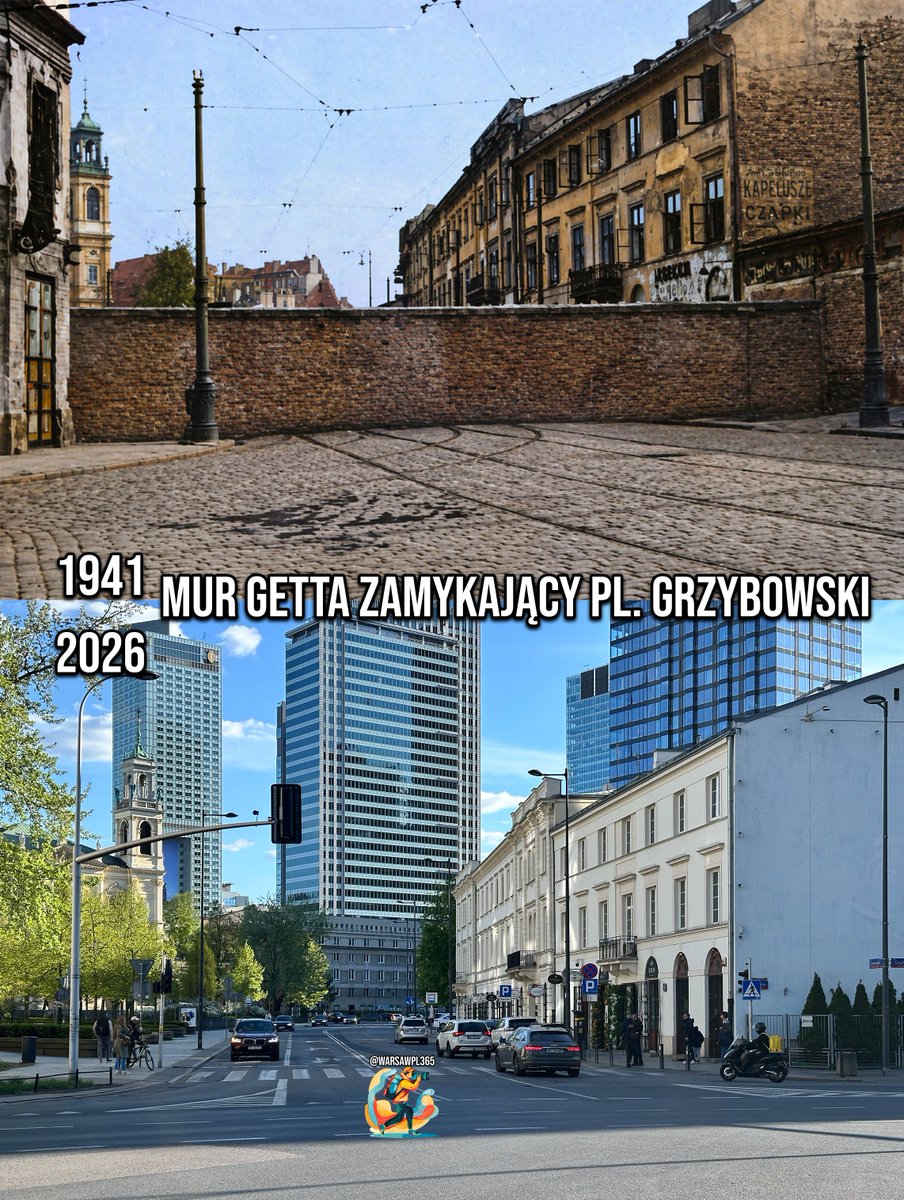
In this 1941 view I’m standing at Plac Grzybowski, looking from Królewska Street, where the Warsaw Ghetto wall abruptly seals off the square and cuts through what had once been an open urban space. The tram tracks visible in the cobblestones run straight into the brick barrier, a

In this 1941 view I’m standing at Plac Grzybowski, looking from Królewska Street, where the Warsaw Ghetto wall abruptly seals off the square and cuts through what had once been an open urban space. The tram tracks visible in the cobblestones run straight into the brick barrier, a
WarsawPL365 (@warsawpl365) 's Twitter Profile Photo

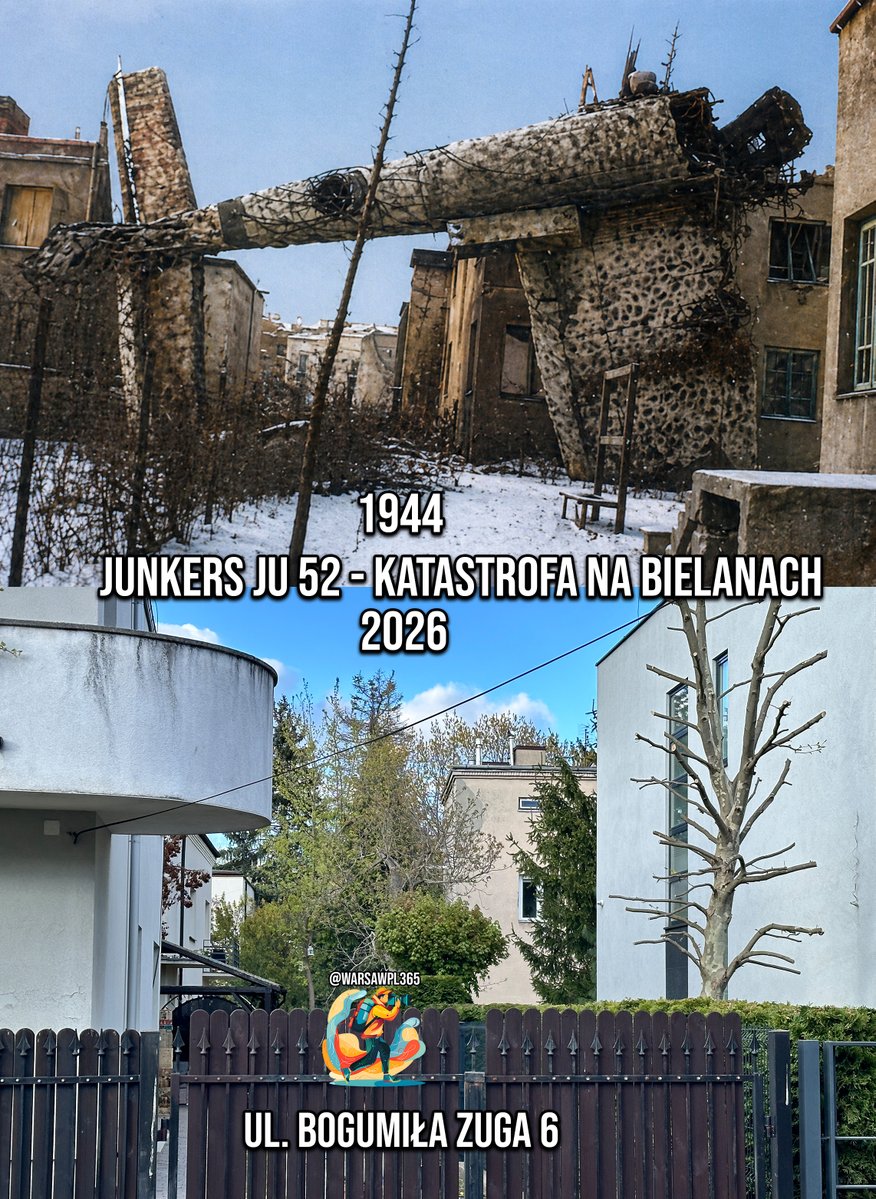
February 1944 was far colder than most winters today, and the corner of Zuga and Lubomielska streets looked very different from the modern landscape. A German Junkers Ju 52 transport aircraft, attempting to land at the nearby Bielany airfield after departing from the Bielany

February 1944 was far colder than most winters today, and the corner of Zuga and Lubomielska streets looked very different from the modern landscape. A German Junkers Ju 52 transport aircraft, attempting to land at the nearby Bielany airfield after departing from the Bielany
WarsawPL365 (@warsawpl365) 's Twitter Profile Photo

This photograph from 1944, taken during the Warsaw Uprising, shows Plac Trzech Krzyży viewed from Mokotowska Street, where insurgents erected a barricade across the roadway to block German movement into the city center. The damaged buildings and scattered debris along the street

This photograph from 1944, taken during the Warsaw Uprising, shows Plac Trzech Krzyży viewed from Mokotowska Street, where insurgents erected a barricade across the roadway to block German movement into the city center. The damaged buildings and scattered debris along the street
WarsawPL365 (@warsawpl365) 's Twitter Profile Photo

This photograph from 1945 shows the vast ruins of the former Warsaw Ghetto, reduced to a landscape of rubble after the Ghetto Uprising of 1943 and the later systematic destruction of the city in 1944. In the right background stands the relatively intact Sąd Okręgowy (District

This photograph from 1945 shows the vast ruins of the former Warsaw Ghetto, reduced to a landscape of rubble after the Ghetto Uprising of 1943 and the later systematic destruction of the city in 1944. In the right background stands the relatively intact Sąd Okręgowy (District
WarsawPL365 (@warsawpl365) 's Twitter Profile Photo

The Church of the Visitation of the Blessed Virgin Mary in Warsaw, founded in 1409, is one of the city’s oldest surviving Gothic churches and stood for centuries overlooking the Vistula escarpment in the New Town. During World War II, the church continued to serve the local

The Church of the Visitation of the Blessed Virgin Mary in Warsaw, founded in 1409, is one of the city’s oldest surviving Gothic churches and stood for centuries overlooking the Vistula escarpment in the New Town. During World War II, the church continued to serve the local