Upstream Alliance
@upstreamallies
Global Partners in Schistosomiasis Reduction
ID: 3256993290
http://www.theupstreamalliance.org 26-06-2015 21:08:25
326 Tweet
149 Followers
112 Following
"This is a game-changer for developing-country public health agencies because it will make it possible for them to efficiently find the villages that need their help the most." UW SAFS Chelsea L. Wood on recent research with De Leo Lab & Hopkins Marine Station Stanford University stanford.io/2MSaHnS

New paper from our lab published in Frontiers - Immunology - “Concomitant Immunity and Worm Senescence May Drive Schistosomiasis Epidemiological Patterns: An Eco-Evolutionary Perspective” frontiersin.org/articles/10.33…

New paper out today in The Lancet Planetary Health with Rohr Ecology Lab De Leo Lab lucifer_he11 Justin Remais and others investigating #agrochemical pollution and #schistosomiasis transmission. Also gives me my first opportunity for a gif-filled #scicomm twitter thread on results! 🧵🤓

. Upstream Alliance uses a scientific solution—just not one you might think—to fight disease in Sub-Saharan Africa. Hilary Duff writes about the multidisciplinary team’s trajectory in the Fall 2020 issue. #globalhealth De Leo Lab Stanford University ssir.org/articles/entry…
In the Fall 2020 issue, Hilary Duff reports on the work of Upstream Alliance to reduce schistosomiasis (a chronic infection acquired through freshwater parasitic worms), help restore ecosystems, and alleviate poverty in Sub-Saharan Africa. #globalhealth ssir.org/articles/entry…
New paper out in BMC with David Rehkopf De Leo Lab Espoir Pour La Santé HED Lab on the role of irrigated agriculture in #Schistosomiasis in a dammed landscape in Senegal 🇸🇳. idpjournal.biomedcentral.com/articles/10.11… 🧵 1/n
Thanks U.S. National Science Foundation & Gates Foundation for grants and @StanfordEarth & Stanford Vice Provost for Graduate Education for graduate fellowships that made this work possible and Upstream Alliance Stanford Woods Institute Stanford Center for Innovation in Global Health Hopkins Marine Station Stanford University Stanford King Center on Global Development @StanfordGCH for intellectual community that has enriched it! /fin
Very fun to see #PHAM2021 abstracts in print The Lancet Planetary Health! Looking forward to sharing my work (with Upstream Alliance De Leo Lab Isabel Jones Chelsea L. Wood + others) next week and learning from others. Planetary Health Alliance

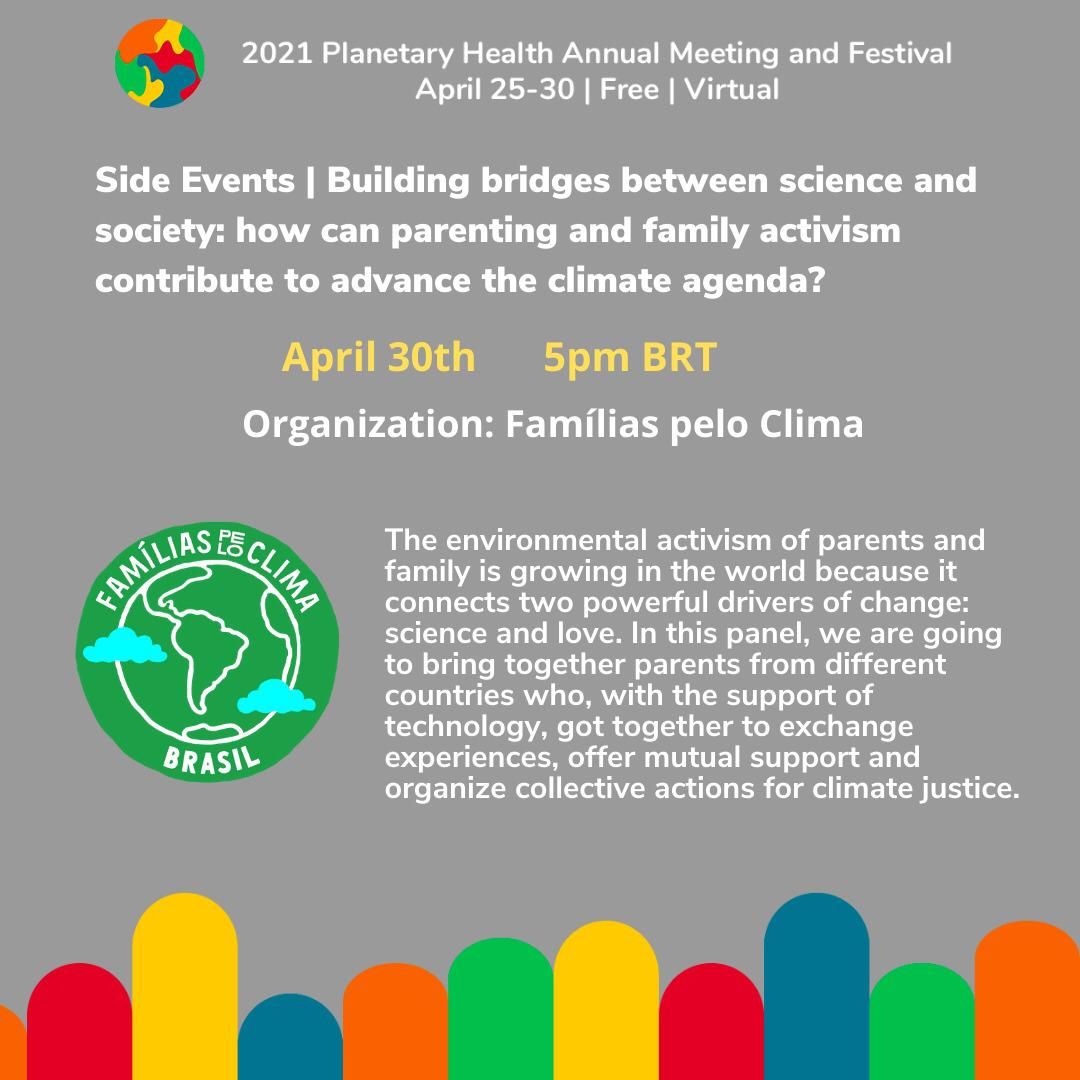
‼️ 50+ Side & Festival Events are Part of #PlanetaryHealthWeek #PHAM2021 (4/25 - 4/30) will feature 50+ side events and 25+ artistic-cultural activities. A few are highlighted below! Register here ➡️ planetaryhealthannualmeeting.com/register Saúde Planetária Brasil USP - Universidade de São Paulo
Kicking off this fantastic webinar is Prof Giulio de Leo - Senior Fellow, Woods Institute for the Environment Stanford Woods Institute, De Leo Lab Hopkins Marine Station Stanford University by giving us an outline on biological control of diseases. inc. #Schistosomiasis. #BeatSchisto #BeatNTDs

In real-world applications there are always new challenges we need to face. Prof Giulio de Leo - Senior Fellow, Woods Institute for the Environment Stanford Woods Institute De Leo Lab Hopkins Marine Station Stanford University shares this team's experience on biological control of #Schistosomiasis in Senegal #BeatNTDs
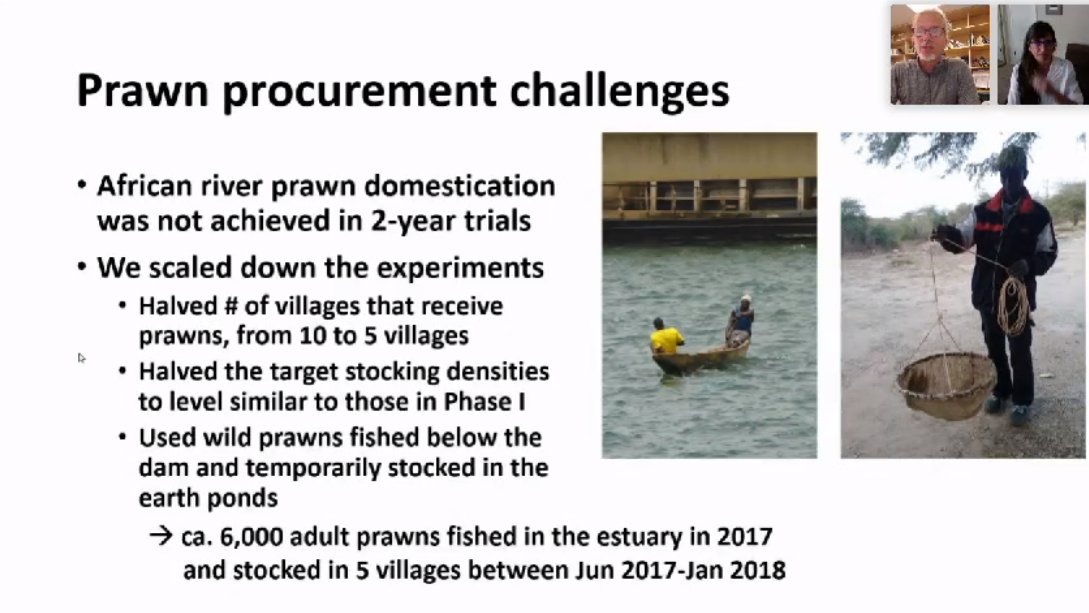

Read the complete reference to Prof Giulio de Leo De Leo Lab Hopkins Marine Station Stanford University; Dr Susanne Sokolow Stanford Woods Institute & Dr Nana Rose Diakité, Université Félix Houphouët Boigny, publications on #Schistosomiasis: dropbox.com/s/nzbv6vytystc… #BeatSchisto #BeatNTDs
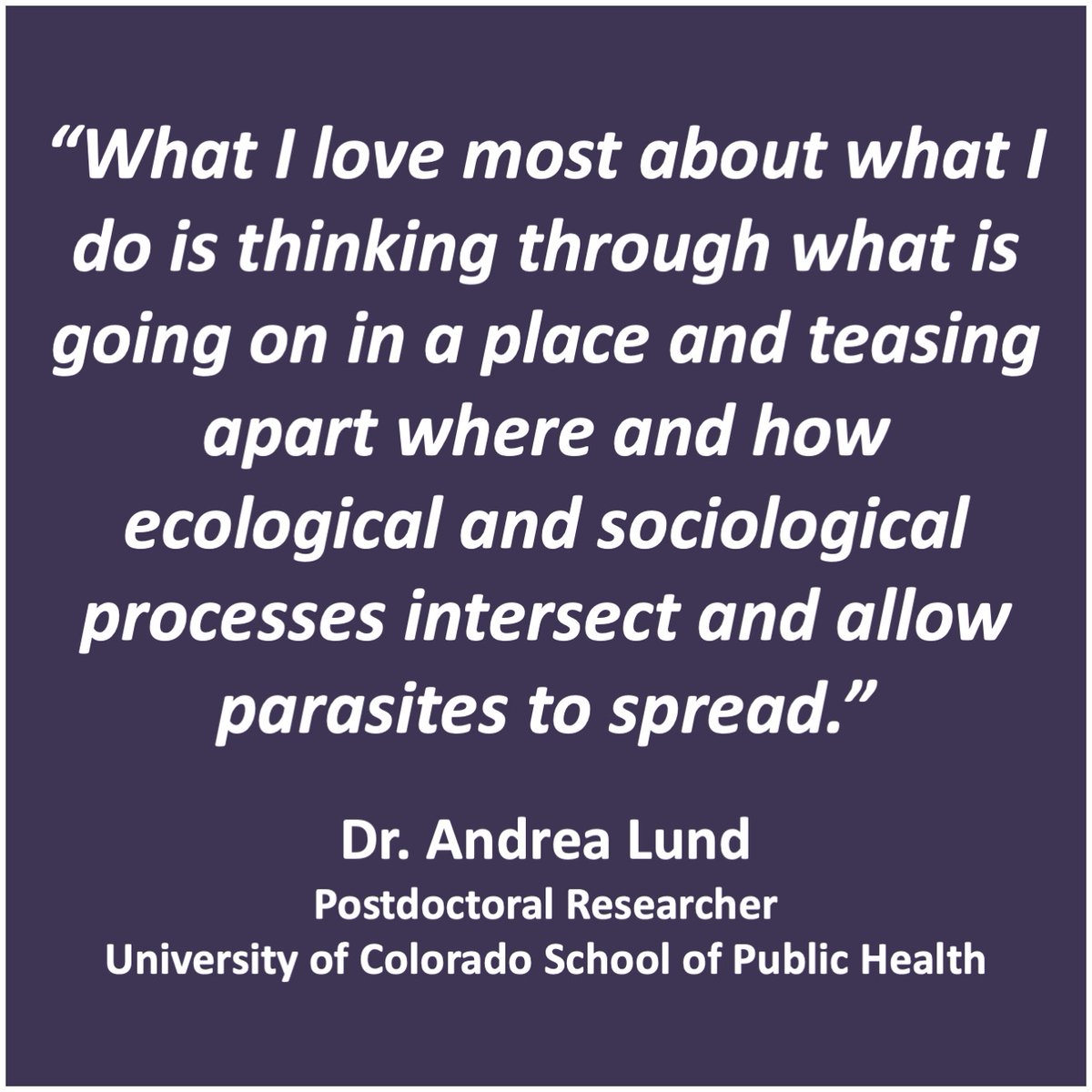
Next up in our #WomenBehindTheWork series is Dr. Andrea Lund Andrea Lund, an epidemiologist at ColoradoSPH Environmental & Occupational Health ColoradoSPH who uses a variety of methods to understand social and environmental drivers of schistosomiasis. Read her latest PLOS NTDs paper here: doi.org/10.1371/journa…
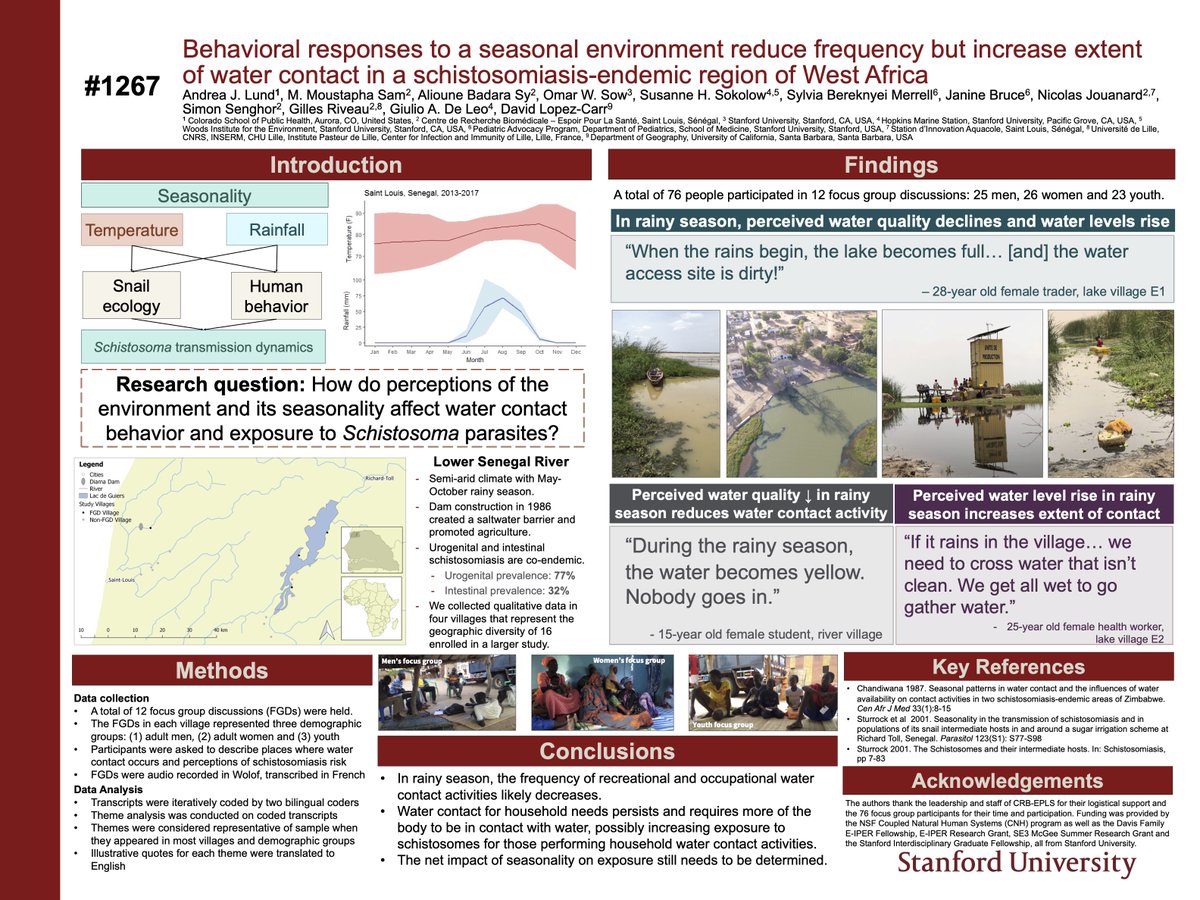
At poster 1267, in collaboration with De Leo Lab Upstream Alliance, I present #qualitative data to understand how perceptions of the environment affect water contact behavior and exposure to #schistosomes in #Senegal 🇸🇳

In The Lancet Planetary Health we show that nearly 80% of human infectious diseases are environmentally mediated, and that the largest global driver of environmentally mediated disease burden in a country is rural poverty. bit.ly/3fYjzKg


"We’re talking about a disease of poverty. It’s in rural areas ... where there’s no easy access to piped, clean water," says Giulio De Leo, a Stanford Doerr School of Sustainability prof of oceans testing out an unconventional solution to control schistosomiasis in Senegal. stanfordmag.org//contents/just…