Mehran Bahmani (@mehranbahmani93) 's Twitter Profile
Mehran Bahmani

@mehranbahmani93

PhD Candidate at @SchulichSchool | Graduate Research Fellow at @HarvardNegoti8 | AI and Future of Work + Conflict & Negotiation + Culture

ID: 1547604622218432513

calendar_today14-07-2022 15:31:17

74 Tweet

67 Takipçi

69 Takip Edilen

TIME (@time) 's Twitter Profile Photo

"Just as we now glance at nutrition labels without a second thought, we could one day check content labels before diving into a news article or blog post." Column: Why the internet needs content labels 📝 Tali Sharot and Christopher A. Kelly time.com/7177598/intern…

Stanford HAI (@stanfordhai) 's Twitter Profile Photo

AI is moving so fast and it's dominated by industry. The CREATE AI Act will drive public-interest AI research, making sure that AI benefits everyone, says Stanford HAI executive director Russell Wald. Will Congress push it through? Read this Q&A: stanford.io/417WutE


Ethan Mollick (@emollick) 's Twitter Profile Photo

I don't really see a clear path where we keep an open internet that is not mostly full of AIs talking to each other. We can't reliably detect AI content, it is cheap and easy to generate, and there are lots of incentives to do so. You can see the problem on all the social sites.

Ethan Mollick (@emollick) 's Twitter Profile Photo

If AI development stopped this week we would have 5-10 years of absorbing the impact of current models on education, culture, healthcare, and business. But this week has also suggested that development is not stopping.

Nature Human Behaviour (@naturehumbehav) 's Twitter Profile Photo

.Moshe Glickman and affective.brain reveal a human-AI feedback loop, where AI amplifies subtle human biases, which are then further internalized by humans. This cycle increases human bias over time across domains. nature.com/articles/s4156…

Kurt Gray (@kurtjgray) 's Twitter Profile Photo

Are we more predators or prey? We’ve guessed wrong for a century. Today we can shoot wolves from helicopters but—I argue in the The New York Times today—humans evolved more as hunted than hunters. Link ⬇️
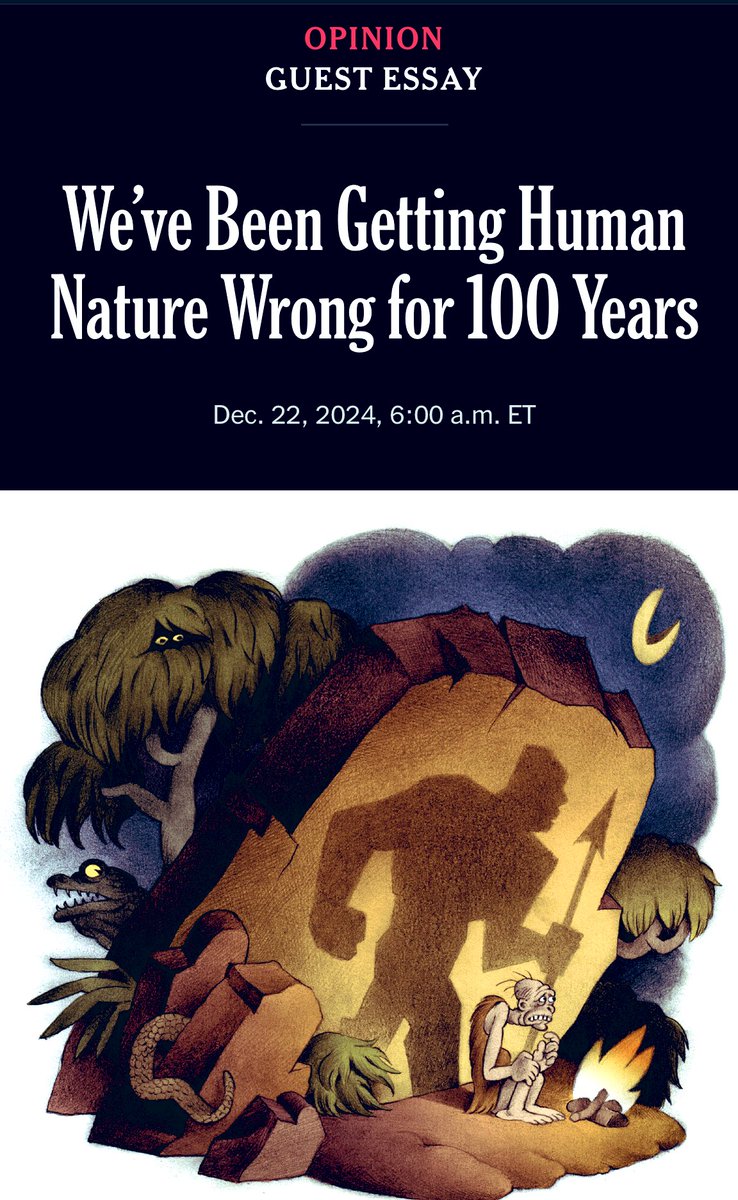

Are we more predators or prey? We’ve guessed wrong for a century.

Today we can shoot wolves from helicopters but—I argue in the <a href="/nytimes/">The New York Times</a> today—humans evolved more as hunted than hunters. 

Link ⬇️
TechCrunch (@techcrunch) 's Twitter Profile Photo

"The ChatGPT moment for general robotics is just around the corner," said Nvidia CEO Jensen Huang during his #CES2025 keynote presentation.

Ethan Mollick (@emollick) 's Twitter Profile Photo

The US Copyright office has ruled that AI/human combined work can be copyrighted as long as a human is adding, changing or selecting elements. Prompts alone do not usually produce copyrighted work. Everything is case-by-case, but the report is clear and thoughtful about reasoning

The US Copyright office has ruled that AI/human combined work can be copyrighted as long as a human is adding, changing or selecting elements. Prompts alone do not usually produce copyrighted work. Everything is case-by-case, but the report is clear and thoughtful about reasoning
Ethan Mollick (@emollick) 's Twitter Profile Photo

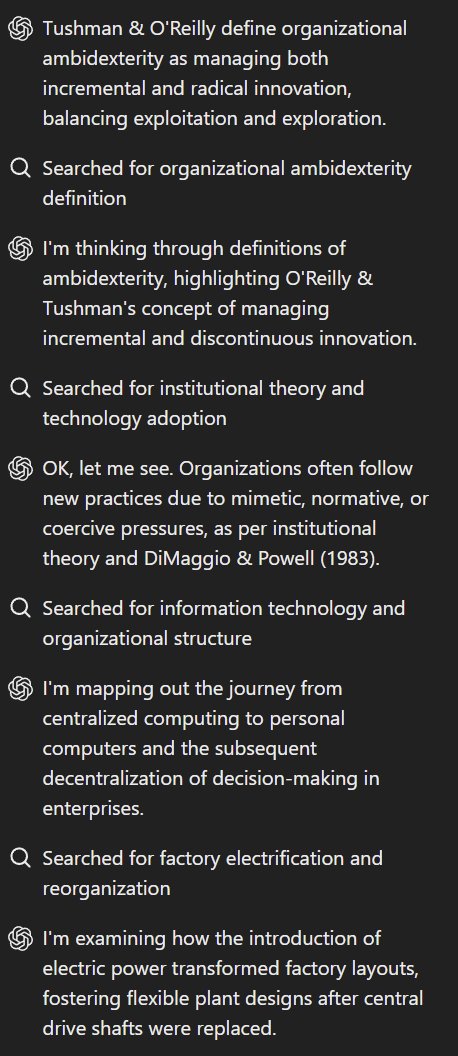
Fun to watch Deep Research basically go through the same learning journey I did in my first year PhD classes on organizational theory in order to answer a question, though this was in a few seconds, rather than a semester (and I hope I grappled with this more deeply myself?)

Fun to watch Deep Research basically go through the same learning journey I did in my first year PhD classes on organizational theory in order to answer a question, though this was in a few seconds, rather than a semester (and I hope I grappled with this more deeply myself?)
Ethan Mollick (@emollick) 's Twitter Profile Photo

The amount of capability overhang in current AI systems is hard to overstate, even in narrow areas like vision & image creation. If AI development stopped today (and no indication that is happening), we have a couple decades of figuring out how to integrate it into work & life.

Hamed Mahdavi (@hamedmahdavi93) 's Twitter Profile Photo

🧵 1/ How well do LLMs actually do on Olympiad-level math? We evaluated frontier models on 455 problems from the IMO Shortlist. Unlike most benchmarks, we emphasize proof validity, not just final answer correctness. Here’s what we found 👇

🧵 1/ How well do LLMs actually do on Olympiad-level math?

We evaluated frontier models on 455 problems from the IMO Shortlist.

Unlike most benchmarks, we emphasize proof validity, not just final answer correctness.
Here’s what we found 👇
Ethan Mollick (@emollick) 's Twitter Profile Photo

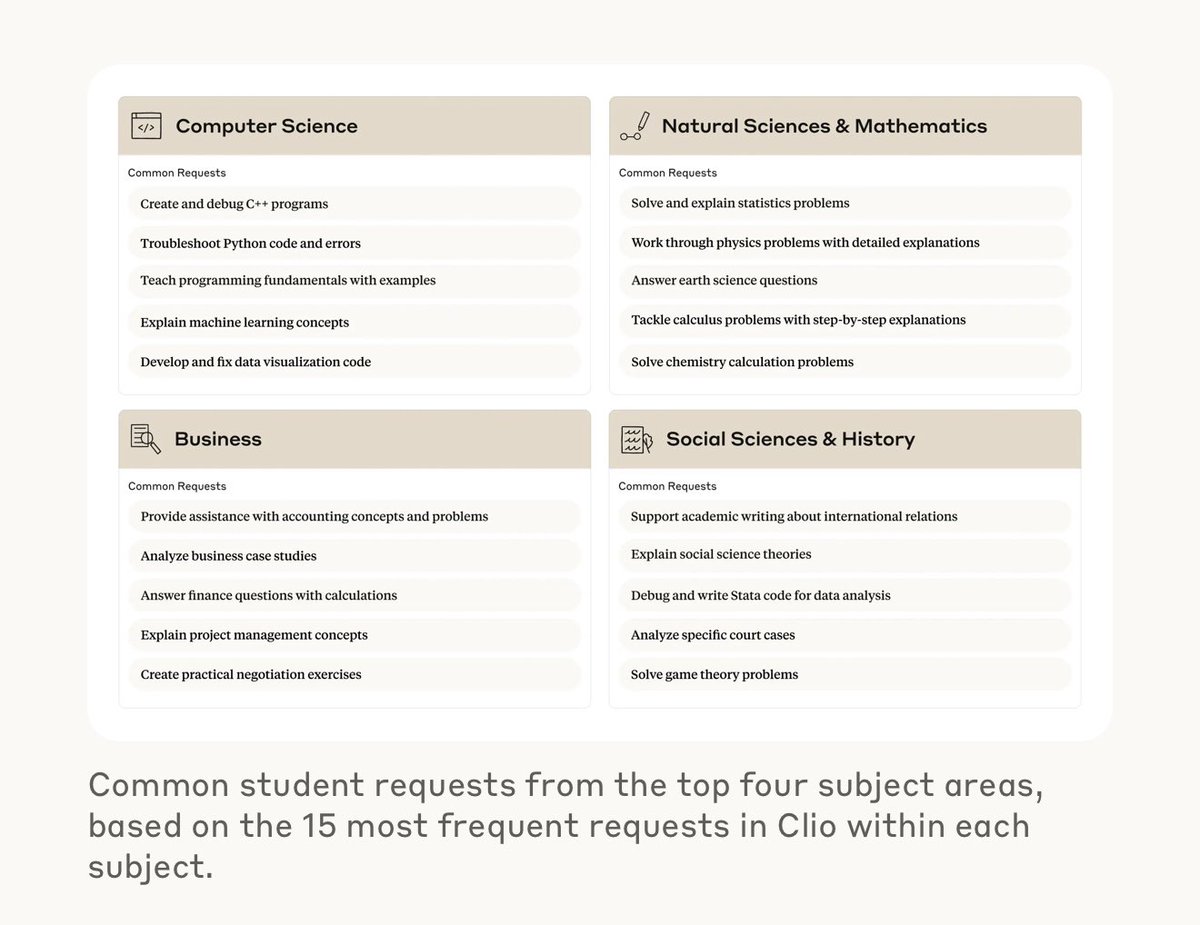
Anthropic continues to put out solid studies of how Claude is used, this time in universities It shows both AI perils & promise. Students are using it for all sorts of purposes, with getting direct answers making up a lot use, but many cases of AI supporting their learning; too.

Anthropic continues to put out solid studies of how Claude is used, this time in universities

It shows both AI perils &amp; promise. Students are using it for all sorts of purposes, with getting direct answers making up a lot use, but many cases of AI supporting their learning; too.
Ethan Mollick (@emollick) 's Twitter Profile Photo

With Google's AlphaEvolve, we have evidence that LLMs can discover novel & useful ideas, when put together with the right tooling. These results are impressive: given 50 open math problems, the AI rediscovered the leading approach 75% of the time & improved on it 20% of the time

With Google's AlphaEvolve, we have evidence that LLMs can discover novel &amp; useful ideas, when put together with the right tooling.

These results are impressive: given 50 open math problems, the AI rediscovered the leading approach 75% of the time &amp; improved on it 20% of the time
Amit Goldenberg (@amit_goldenb) 's Twitter Profile Photo

New paper in Nature Human Behavior (led by Matan Rubin), where we manipulated the perceived identity of a real-time empathic response to be or AI. We observed a drop in perceived empathy when label was AI, and this effect was mainly driven by emotion. rdcu.be/et9ad

𝗬𝗲𝗻𝗮 𝗞𝗶𝗺 (@yenasci) 's Twitter Profile Photo

We'll be talking about advice, feedback, and conversations. If you're at #IACM2025, then check out our symposium this coming Monday! IACM (🧵)

We'll be talking about advice, feedback, and conversations.   

If you're at #IACM2025, then check out our symposium this coming Monday!

<a href="/iacm_conflict/">IACM</a>
(🧵)
Erik Brynjolfsson (@erikbryn) 's Twitter Profile Photo

"How much time do I have left? I don't mean for this presentation, I mean as a professional economist." -Joel Waldfogel discussing a paper at our NBER Workshop on the Economics of AI last week 😱

Stanford HAI (@stanfordhai) 's Twitter Profile Photo

📣 A new Stanford Digital Economy Lab study shows one of the first large-scale evidence of genAI's impact on entry-level workers. Using data from ADP, the study reveals a sharp decline in employment in AI-exposed occupations, but not in jobs where AI augments human work. digitaleconomy.stanford.edu/publications/c…

Ethan Mollick (@emollick) 's Twitter Profile Photo

I had access to Gemini 3. It is a very good, very fast model. It also demonstrates the change from chatbot to agent. oneusefulthing.org/p/three-years-…