Stefan Herweg (@stefan_herweg) 's Twitter Profile
Stefan Herweg

@stefan_herweg

Global Economy @BMF_Bund | formerly tax justice, AML, #GreenNewDeal @linksfraktion, debt management @UNCTAD /MinFin 🇧🇮, studied @econunimannheim @LSE_ID

ID: 729167983

calendar_today31-07-2012 20:25:39

954 Tweet

887 Takipçi

647 Takip Edilen

Süddeutsche Zeitung (@sz) 's Twitter Profile Photo

Die Beschlüsse zur Rettung des Regenwaldes werden als zu lasch kritisiert. Dabei könnte Moor-Entwässerungsweltmeister Deutschland mit natürlichem Klimaschutz durchaus zu Hause beginnen. Ein Kommentar von @VeraSchroeder #SZPlus sz.de/1.6118172?utm_…

Stefan Herweg (@stefan_herweg) 's Twitter Profile Photo

Nicht nur die Verluste vergesellschaften! Marcel Fratzscher wägt Für & Wider einer temporären Übergewinnsteuer ab. Der Bankensektor profitiert derzeit nicht nur vom gestiegenen Intermediationsspread, sondern va auch von risikolosen Erträgen auf die Überschussliquidität bei der ZB.


Ricardo Lange (@ricardolange4) 's Twitter Profile Photo

Dieses Video stammt aus einem Klinikum in Berlin, aufgenommen bei Starkregen. Es zeigt sinnbildlich, wie man heute mit Kliniken umgeht: Man lässt sie einfach absaufen! Bevor wir uns Gedanken über KI im KH machen, sollten wir uns um solche Probleme kümmern Herr Lauterbach!

Stefan Herweg (@stefan_herweg) 's Twitter Profile Photo

Soziale Sicherung und menschenwürdige Teilhabe sind oft auch ökonomische weit sinnvollere Investition als manch andere Debattenbeiträge. #Kindergrundsicherung

Gabriel Zucman (@gabriel_zucman) 's Twitter Profile Photo

Important letter signed by more than 300 economists, policymakers including former presidents and prime ministers, and – yes – many very rich people from all over the world: It’s high time to tax extreme wealth theguardian.com/world/2023/sep…

Stefan Herweg (@stefan_herweg) 's Twitter Profile Photo

Euro area central bankers warming up to the idea of increasing minimum reserves. This would at least be an important step to reduce massively increased risk-free interest income for the banking sector Paul De Grauwe has repeatedly pointed to. Sebastian Mack bnnbloomberg.ca/nagel-says-ecb…

Thiemo Fetzer 🇪🇺🇺🇦 - same handle elsewhere (@fetzert) 's Twitter Profile Photo

Lots of talk about #bankruptcy of local councils in the UK. Let me offer my explanation here on what is going on. There are three to four factors that interplay: 1. #Austerity measures reduced central government funding to local councils. There were drastic real cuts to local

Stefan Herweg (@stefan_herweg) 's Twitter Profile Photo

Interesting new estimates in the controversial debate about fiscal costs of net zero. We should for sure strive for cost-efficient spending, but the bottom line remains: “The real metric is, what is the cost of inaction?” Delphine Strauss Emma Agyemang ft.com/content/7d343c…
Stefan Herweg (@stefan_herweg) 's Twitter Profile Photo

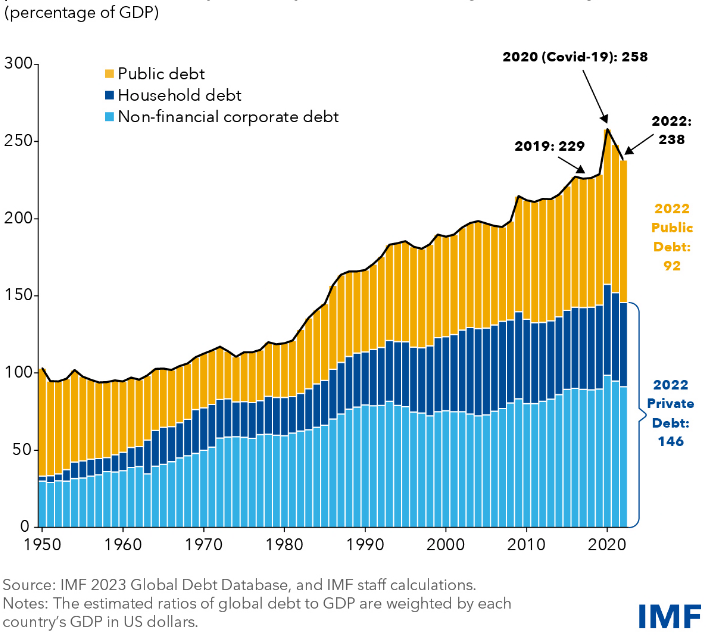
New IMF Global Debt Monitor: Global debt as a share of GDP has risen substantially since 1980. My take: This is also a consequence of substituting wage-led with debt-fuelled growth in many economies. Redistribution can be efficiency-enhancing here. imf.org/en/Blogs/Artic…

New <a href="/IMFNews/">IMF</a> Global Debt Monitor: Global debt as a share of GDP has risen substantially since 1980. 
My take: This is also a consequence of substituting wage-led with debt-fuelled growth in many economies. Redistribution can be efficiency-enhancing here. imf.org/en/Blogs/Artic…
Stefan Herweg (@stefan_herweg) 's Twitter Profile Photo

Nice piece by Soumaya Keynes. Monetary policy has manifold side effects where slowing the economy implies externalities (including on delayed green transition, not mentioned here). Important to keep thinking about inflation-taming policies besides MP. ft.com/content/e9a1ee…

Martyna Linartas (@martyna_lin) 's Twitter Profile Photo

Die reichsten 10% besitzen oft mehr als die Hälfte ihrer Bevölkerung. Selbst Financial Times fragt mittlerweile: „What happened to the wealth tax?“ #Ungleichheit

Die reichsten 10% besitzen oft mehr als die Hälfte ihrer Bevölkerung. Selbst <a href="/FinancialTimes/">Financial Times</a> fragt mittlerweile: „What happened to the wealth tax?“ #Ungleichheit

E L   H O T Z O (@elhotzo) 's Twitter Profile Photo

Komisch, dass „WER SOLL DAS BEZAHLEN???“ immer nur bei Sozialleistungen, Schulen oder dem 9€-Ticket gefragt wird und nie bei Autobahnbau, Subventionen von Autokonzernen und Steuerhinterziehung von Unternehmen

Marcel Fratzscher (@mfratzscher) 's Twitter Profile Photo

Wir brauchen eine Versachlichung der Debatte um #Zuwanderung. Wiss. Studien zeigen: Die Kürzung von Leistungen würde die Zuwanderung nicht nennenswert reduzieren – aber massiven Schaden für die Integration von Migranten bedeuten. Mein Kommentar mit 🧵 : tagesspiegel.de/wirtschaft/lei…


Sebastian Dullien (@sdullien) 's Twitter Profile Photo

Aktuellen Debatten vermitteln den Eindruck, in Deutschland seien die Sozialausgaben explodiert und der Staat über alle Maße aufgebläht worden. Ein genauer Blick auf die OECD-/EU-Statistiken offenbart: Dieser Eindruck ist von Fakten nicht gedeckt. Ein 🧵1/

Philipp Heimberger (@heimbergecon) 's Twitter Profile Photo

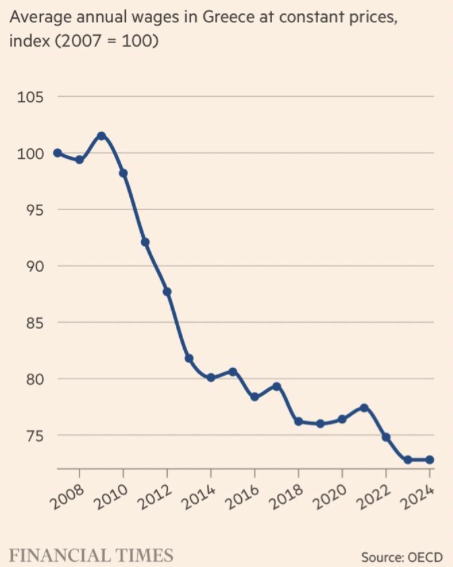
Real annual wages in Greece are, on average, still more than 25% lower than in 2007. Meanwhile, some are continuing to frame the Greek experience over the past 10+years as a miracle success of adjustment. If this is what success looks like...

Real annual wages in Greece are, on average, still more than 25% lower than in 2007. Meanwhile, some are continuing to frame the Greek experience over the past 10+years as a miracle success of adjustment. If this is what success looks like...
Daniel Kral (@danielkral1) 's Twitter Profile Photo

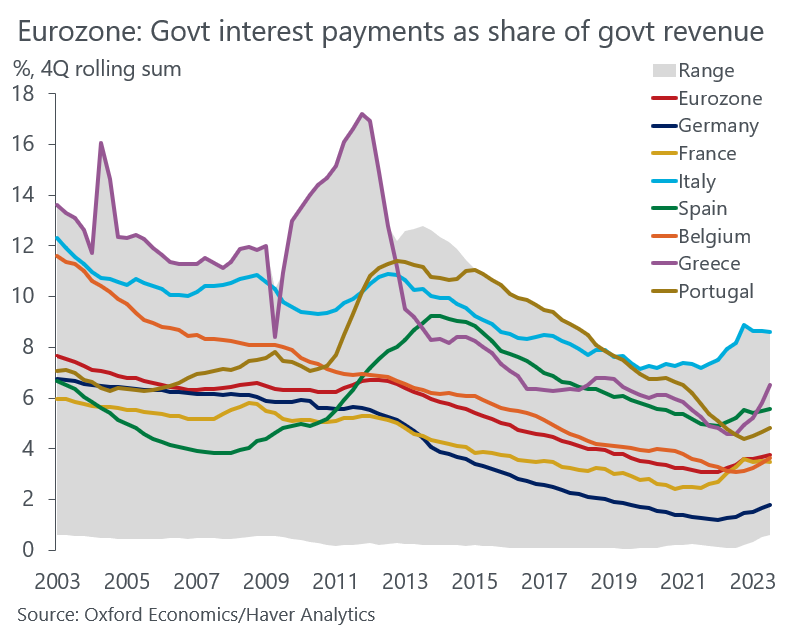
On average, Eurozone governments still spend less than 4% of their total revenues on debt interest payments. Twenty years ago it was double that. Italy's average for 2010s was 10%, now at 8.6%. Puts public debt sustainability alarmism on this website into perspective.

On average, Eurozone governments still spend less than 4% of their total revenues on debt interest payments. Twenty years ago it was double that. Italy's average for 2010s was 10%, now at 8.6%. Puts public debt sustainability alarmism on this website into perspective.