Samira Elghaayda (@samiraelghaayda) 's Twitter Profile
Samira Elghaayda

@samiraelghaayda

PhD student, Relativistic quantum information in open quantum systems.

ID: 1578572650191937536

calendar_today08-10-2022 02:27:35

31 Tweet

124 Followers

1,1K Following

Horizon Quantum (@horizon_quantum) 's Twitter Profile Photo

While error correction requires a large number of qubits, error mitigation is capable of trading space resources with time resources in the form of sampling costs. We invited Dr @RyujiTakagi_ to present his research on the potential and limitations of quantum error mitigation.

SQMS Center (@sqmscenter) 's Twitter Profile Photo

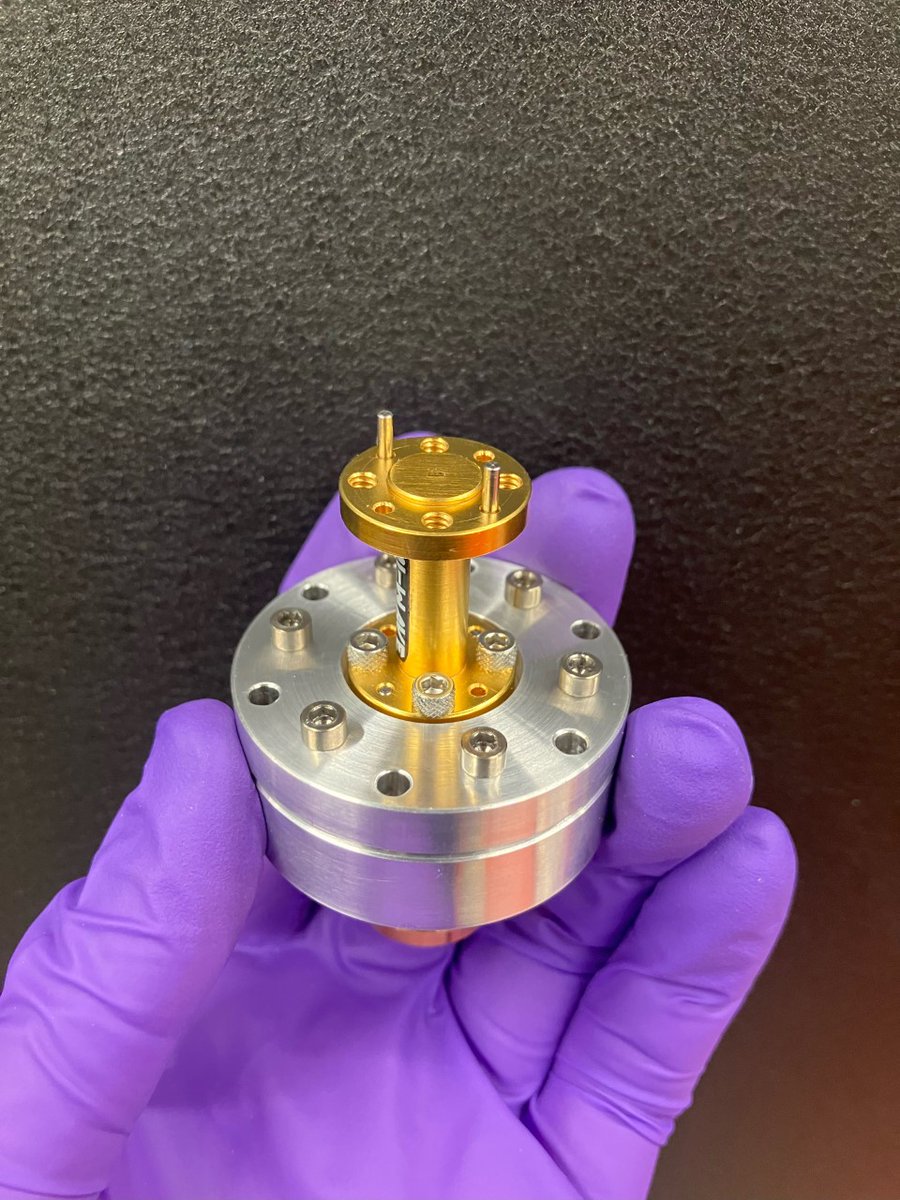
#MaterialsMonday - Machinists Fermilab Machine Shop crafted these 150 GHz silver cavities (quarter for scale.) We are working with our friends Northwestern and studying surface processing techniques with these cavities to improve their single electron qubits. #qis

#MaterialsMonday - Machinists <a href="/Fermilab/">Fermilab</a> Machine Shop crafted these 150 GHz silver cavities (quarter for scale.) We are working with our friends <a href="/NorthwesternU/">Northwestern</a>  and studying surface processing techniques with these cavities to improve their single electron qubits. #qis
Physics Latam (@physicslatam) 's Twitter Profile Photo

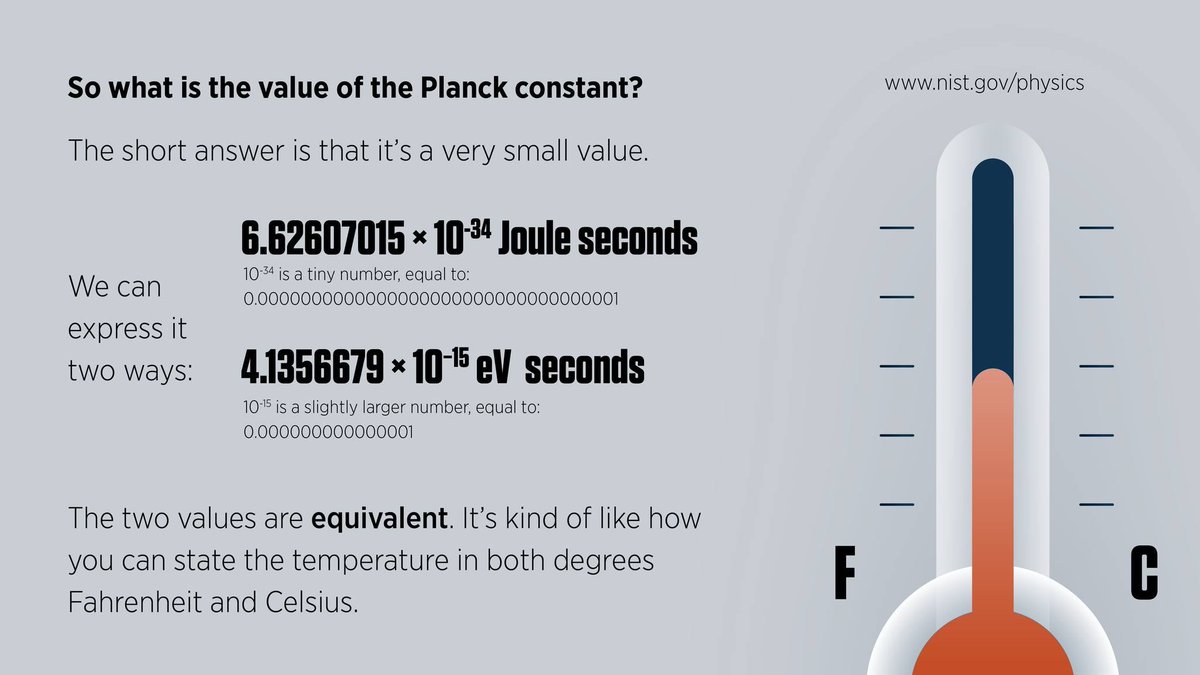
Happy Quantum Day! We celebrate the fascinating world of quantum mechanics. Did you know that the Planck constant is a fundamental constant. It relates the energy of a photon to its frequency, and plays a crucial role in understanding the behavior of particles at the atomic level

Happy Quantum Day! We celebrate the fascinating world of quantum mechanics. Did you know that the Planck constant is a fundamental constant. It relates the energy of a photon to its frequency, and plays a crucial role in understanding the behavior of particles at the atomic level
Wallenberg Centre for Quantum Technology - WACQT (@wacqt_sweden) 's Twitter Profile Photo

All talks from our virtual workshop on quantum technology are now freely available on our YouTube channel. 26 Apr, quantum computing and simulation Part 1: youtu.be/cNo0IDEvbJ8 Part 2: youtu.be/vgyZh5Ff_iE 27 Apr, quantum sensing and communication youtu.be/dmPGStBm8V0

Clarice D. Aiello (she,her) (@claricedaiello) 's Twitter Profile Photo

The The Conversation U.S. publishes my piece, "Quantum physics proposes a new way to study biology – and the results could revolutionize our understanding of how life works." It's been nice to communicate our science and our vision. Here's to #QuantumBiology! theconversation.com/quantum-physic…

Argonne National Lab (@argonne) 's Twitter Profile Photo

Quantum mechanics holds the potential to revolutionize computing, communication, and sensing. How Argonne is helping lead the way - bit.ly/3LtZY06

Quantum mechanics holds the potential to revolutionize computing, communication, and sensing. 

How Argonne is helping lead the way - bit.ly/3LtZY06
Ryan O'Donnell (@booleananalysis) 's Twitter Profile Photo

The great Omar Fawzi just finished his grad summer school lectures on Quantum Info Theory, here at Institute for Advanced Study (IAS) Park City Math Institute. Lecture videos here: youtube.com/playlist?list=… (You've never seen this proof of Strong Subadditivity before!) Stay tuned for further updates...

Physics In History (@physinhistory) 's Twitter Profile Photo

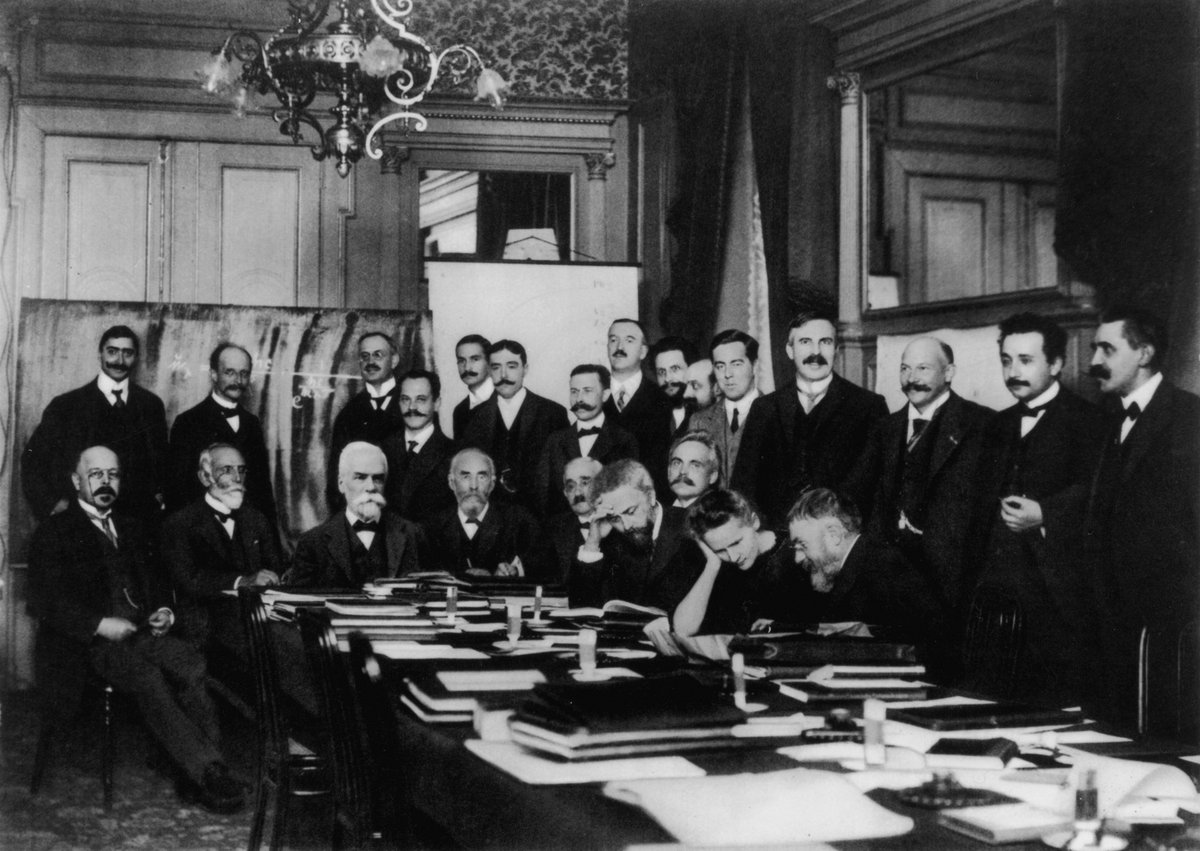
The first Solvay Conference on Physics was a historic event that brought together some of the most brilliant minds of the early 20th century to discuss the new and puzzling phenomena of radiation and quantum theory. It was held in Brussels, Belgium, from October 30 to November 3,

The first Solvay Conference on Physics was a historic event that brought together some of the most brilliant minds of the early 20th century to discuss the new and puzzling phenomena of radiation and quantum theory. It was held in Brussels, Belgium, from October 30 to November 3,
Jeremy Trimble (@jeremyntrimble) 's Twitter Profile Photo

This video shows the response of the disk to a static magnetic field in the x direction that continuously increases then decreases.

Kenna Hughes-Castleberry @kennaculture.bsky.social (@kennaculture) 's Twitter Profile Photo

It's #womenwednesday and Inside Quantum Technology and I are honored to showcase the work of Samira Elghaayda, a #quantumresearcher at the University of Hassan II Casablanca. insidequantumtechnology.com/news-archive/w… #womeninstem #womeninscience #womenintech #womeninresearch

Physics In History (@physinhistory) 's Twitter Profile Photo

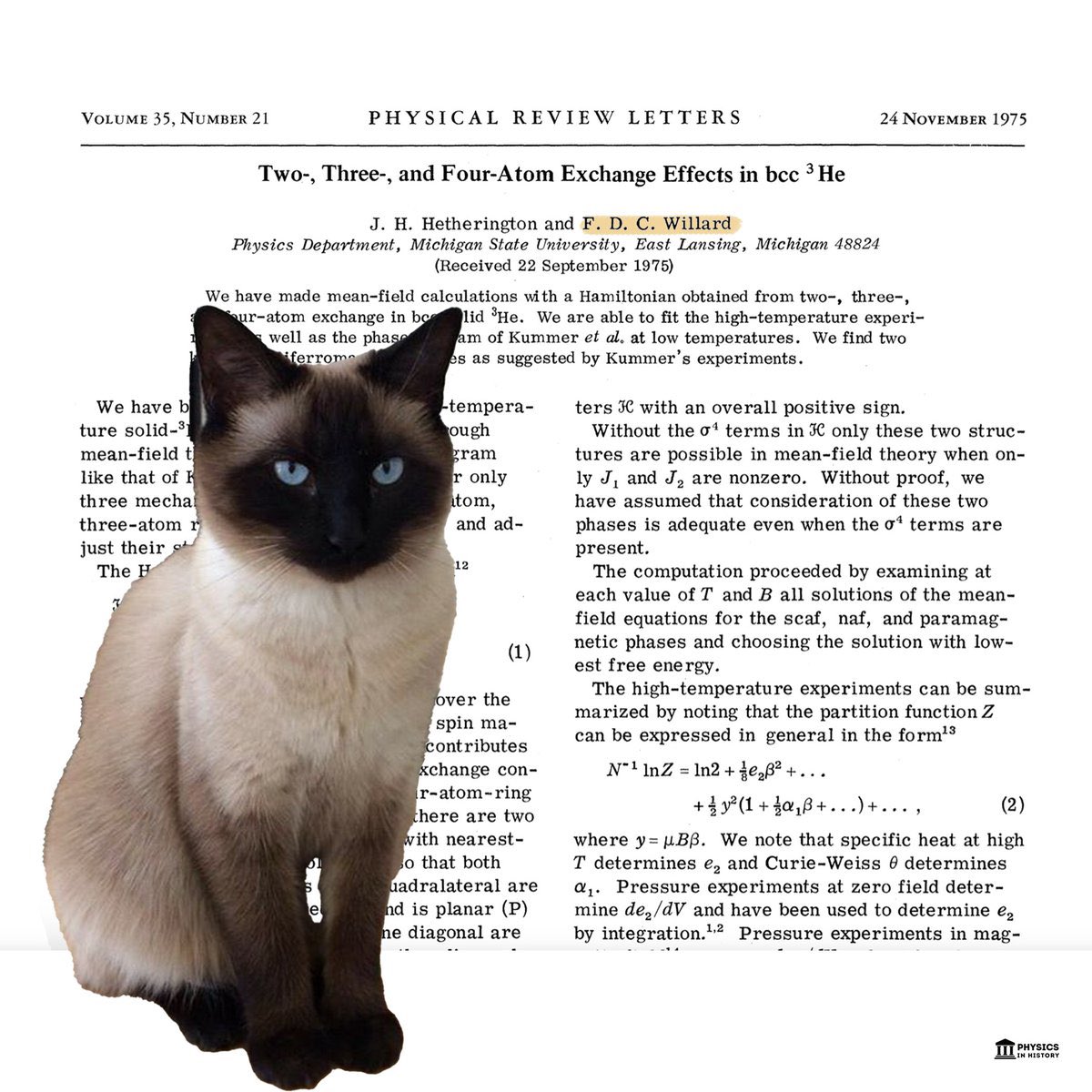
A cat co-authored a scientific paper in 1975, when his owner, a physicist named Jack H. Hetherington, decided to add him as a second author to avoid changing the plural pronouns in his manuscript. The cat’s name was Chester, and he was given the pen name F.D.C. Willard, which

A cat co-authored a scientific paper in 1975, when his owner, a physicist named Jack H. Hetherington, decided to add him as a second author to avoid changing the plural pronouns in his manuscript. The cat’s name was Chester, and he was given the pen name F.D.C. Willard, which
Physics In History (@physinhistory) 's Twitter Profile Photo

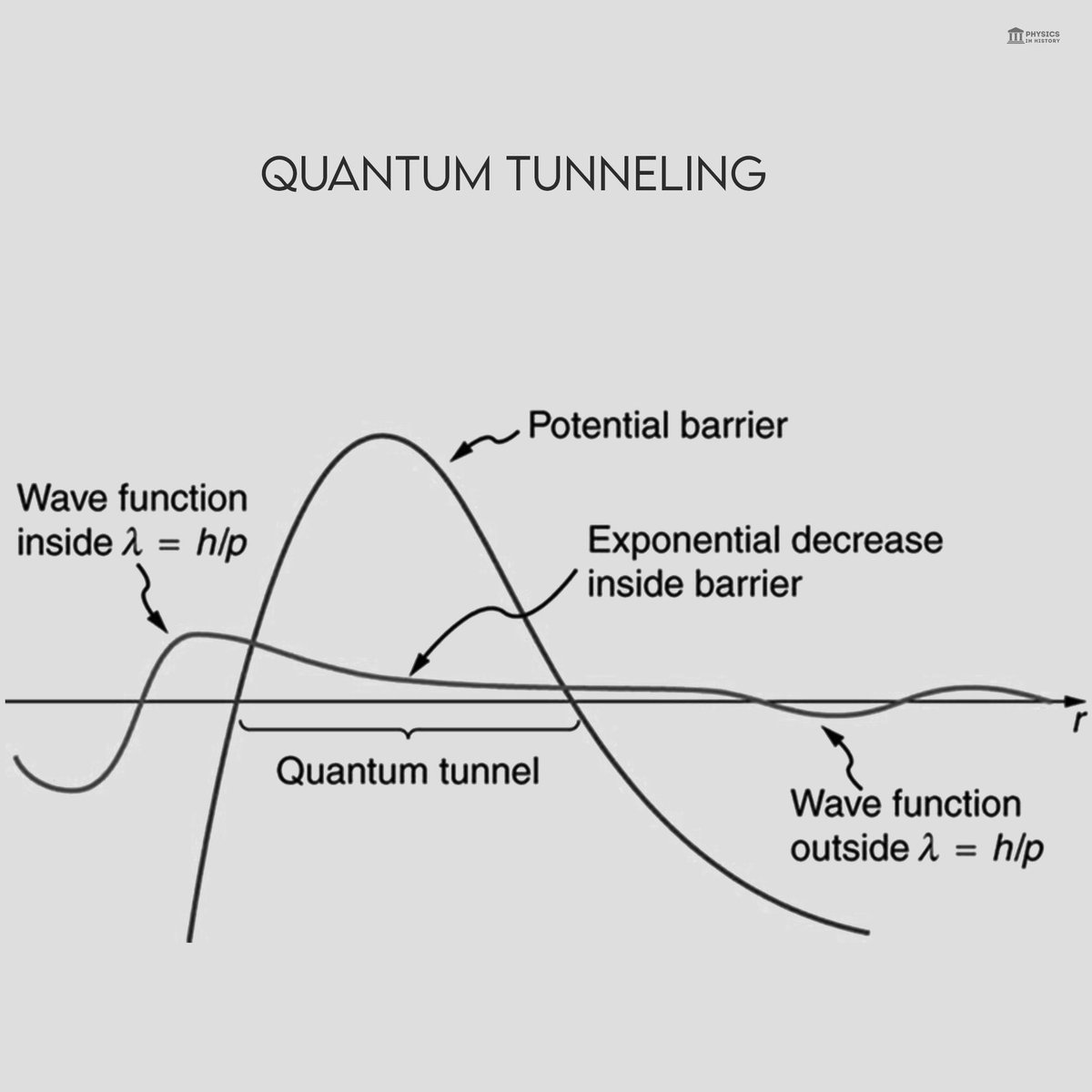
Quantum tunneling is a process where a particle can pass through a barrier that it normally would not have enough energy to overcome. This happens because the particle has a wave-like nature and can exist in a superposition of states, meaning it has a nonzero probability of being

Quantum tunneling is a process where a particle can pass through a barrier that it normally would not have enough energy to overcome. This happens because the particle has a wave-like nature and can exist in a superposition of states, meaning it has a nonzero probability of being
Daniel Green (@nu_phases) 's Twitter Profile Photo

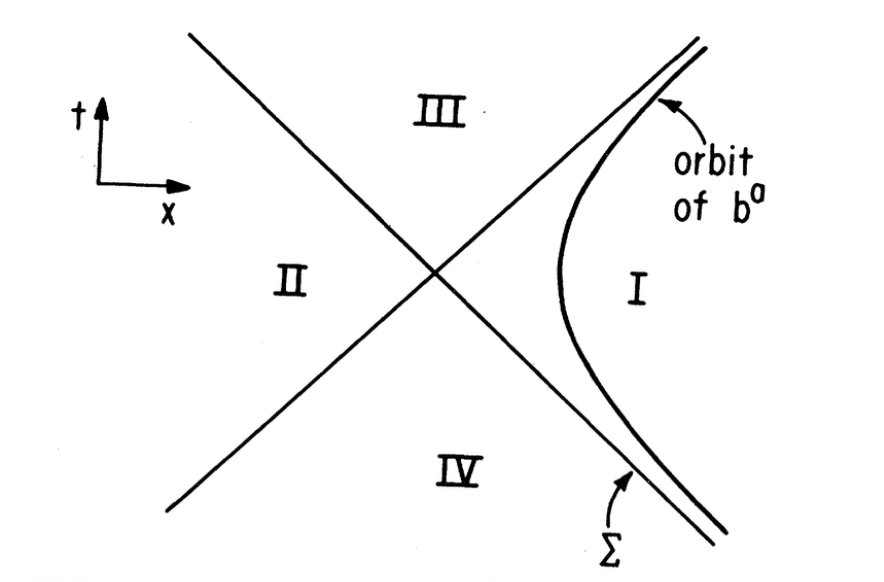
Dec 10 - Detectors and Rindler Particles journals.aps.org/prd/abstract/1… Unruh and Wald give a fantastically clear explanation of why accelerating observers see a thermal spectrum of particles: the particles are created from the energy you put into the detector to accelerate it.

Dec 10 - Detectors and Rindler Particles

journals.aps.org/prd/abstract/1…

Unruh and Wald give a fantastically clear explanation of why accelerating observers see a thermal spectrum of particles: the particles are created from the energy you put into the detector to accelerate it.
Physics In History (@physinhistory) 's Twitter Profile Photo

Quantum decoherence is the process where a quantum system loses its superposition due to interactions with its environment. This doesn’t "collapse" the wavefunction but entangles the system with its surroundings, making quantum interference unobservable. As coherence fades,

Quantum decoherence is the process where a quantum system loses its superposition due to interactions with its environment. This doesn’t "collapse" the wavefunction but entangles the system with its surroundings, making quantum interference unobservable. As coherence fades,
Physics In History (@physinhistory) 's Twitter Profile Photo

The quantum vacuum isn't truly empty. Even in the emptiest parts of space, tiny particles are constantly popping in and out of existence. This happens because of quantum fluctuations, making space-time at very small scales look active and restless. It's like space is never

The quantum vacuum isn't truly empty. Even in the emptiest parts of space, tiny particles are constantly popping in and out of existence. This happens because of quantum fluctuations, making space-time at very small scales look active and restless. It's like space is never
Physics In History (@physinhistory) 's Twitter Profile Photo

How to understand Feynman diagrams ✍️ • Axes (usually implied): Time flows from left to right or bottom to top (depends on the convention); space is the other axis. • Lines: - Straight solid lines represent fermions (e.g., electrons, quarks); arrows indicate particle vs.

How to understand Feynman diagrams ✍️

• Axes (usually implied): Time flows from left to right or bottom to top (depends on the convention); space is the other axis.  
• Lines:  
  - Straight solid lines represent fermions (e.g., electrons, quarks); arrows indicate particle vs.