Phoenix (@phoenix244001) 's Twitter Profile
Phoenix

@phoenix244001

Web3 Security Researcher

ID: 1349816098640674816

linkhttps://pheonix244001.github.io/portfolio-website/ calendar_today14-01-2021 20:30:25

609 Tweet

673 Followers

1,1K Following

Phoenix (@phoenix244001) 's Twitter Profile Photo

With the rise in crypto prices, there will undoubtedly be a surge in on-chain developments. That will lead to an unparalleled demand in smart contract security. We are still heavily understaffed !

Phoenix (@phoenix244001) 's Twitter Profile Photo

It took me a long time to realize this: Compulsive info-gathering isn’t just about dopamine—it’s rooted in low self-esteem that comes from feeling powerless. You chase “knowledge” to mask the lack of mastery over anything. It’s a mimicry of intellect, which is superficial.

Phoenix (@phoenix244001) 's Twitter Profile Photo

Here's an analogy: Understanding a codebase is just like understanding an engine. You grasp each part of individually and, then you understand the local synergy of multiple parts. Follow this for every part and you can visualize the entire engine running in your mind.

Phoenix (@phoenix244001) 's Twitter Profile Photo

vm.mockCall is heavily under-appreciated ! It avoids all the pain you need to go through to achieve the initial states of an exploit. book.getfoundry.sh/cheatcodes/moc…

Phoenix (@phoenix244001) 's Twitter Profile Photo

Diving into test files is still the best way to grasp a contract’s intended flow. A well-written test suite (not in Hardhat 🙏) saves time, letting researchers focus on depth. Auditing becomes fun and interactive when you play with the test files, rather than just staring.

Phoenix (@phoenix244001) 's Twitter Profile Photo

LLM's are great for syntax understanding. But over reliance of it for understanding the logic behind implementation will lead to growth plateau in long run. It's better to think hard. The more you think hard, the more hard thinking becomes easier. We call it Neuroplasticity.

Phoenix (@phoenix244001) 's Twitter Profile Photo

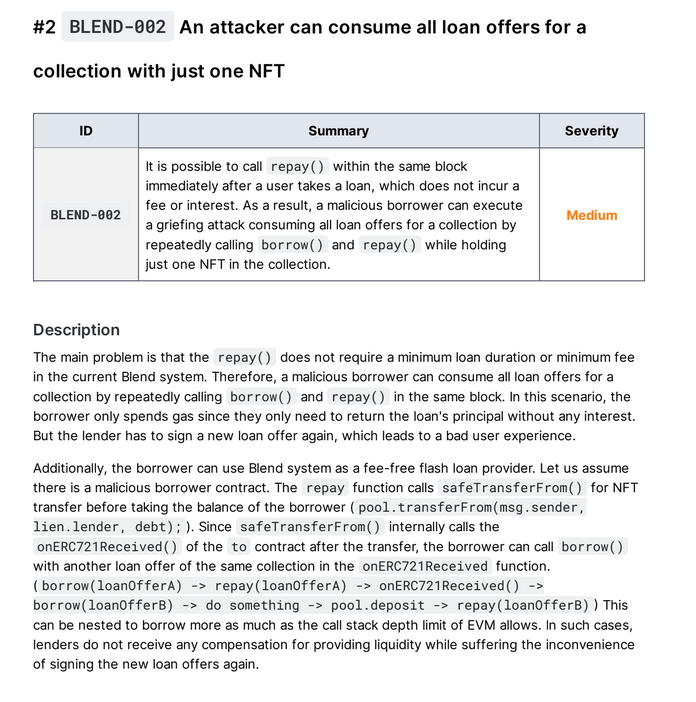
An attack vector that I recently figured out on my own was : atomically calling opposite functions like deposit/withdraw, stake/unstake etc. in the same block. This is useful especially if there is a lack of fee enforced or cooldown period that could prevent or make this attack

An attack vector that I recently figured out on my own was :
atomically calling opposite functions like deposit/withdraw, stake/unstake etc. in the same block. 

This is useful especially if there is a lack of fee enforced or cooldown period that could prevent or make this attack
Phoenix (@phoenix244001) 's Twitter Profile Photo

A very common misconception about Solidity compilation is that using `via-ir` flag will make it faster. On the contrary, it will [usually] increase your compilation time. Normal Compilation : Solidity -> EVM Assembly -> EVM Optimizer (multiple iterations) -> Bytecode

Phoenix (@phoenix244001) 's Twitter Profile Photo

When I'm out of attack vectors, I start journaling—writing down everything I know about the protocol until I run out of words. This reveals blind spots I’ve overlooked and helps me generate new what-if scenarios. Some examples below:

When I'm out of attack vectors,  I start journaling—writing down everything I know about the protocol until I run out of words.  

This reveals blind spots I’ve overlooked and helps me generate new what-if scenarios.  

Some examples below:
Nolan | Exvul (@ma1fan) 's Twitter Profile Photo

Want to become a top-tier web3 security researcher? The most important thing is to not limit yourself. Don't be afraid of unfamiliar languages or protocols. Don't use "I don't understand this language" or "I don't like this protocol" as excuses to avoid difficulties. In fact,

Phoenix (@phoenix244001) 's Twitter Profile Photo

Client satisfaction is a byproduct of not just high quality audits. It’s effective communication, timely updates and willingness to provide more value. That’s how you build a long term reputation.

Phoenix (@phoenix244001) 's Twitter Profile Photo

Understanding the codebase and identifying bugs should not be treated as separate stages. They progress in parallel. Ironically, rushing the understanding part in hopes of devoting more time to bugs finding stage will increase the likelihood of overlooking of bugs.

Akshay Babhulkar (@akshaybabhulkar) 's Twitter Profile Photo

We at QuillAudits Just wrapped up one of our Audit and what a ride! 🚀 80 issues identified, including multiple criticals and some truly fascinating vulnerabilities. Massive shoutout to our auditors Cryptanu 🥷 Phoenix Rahul Saxena for delivering exceptional depth and
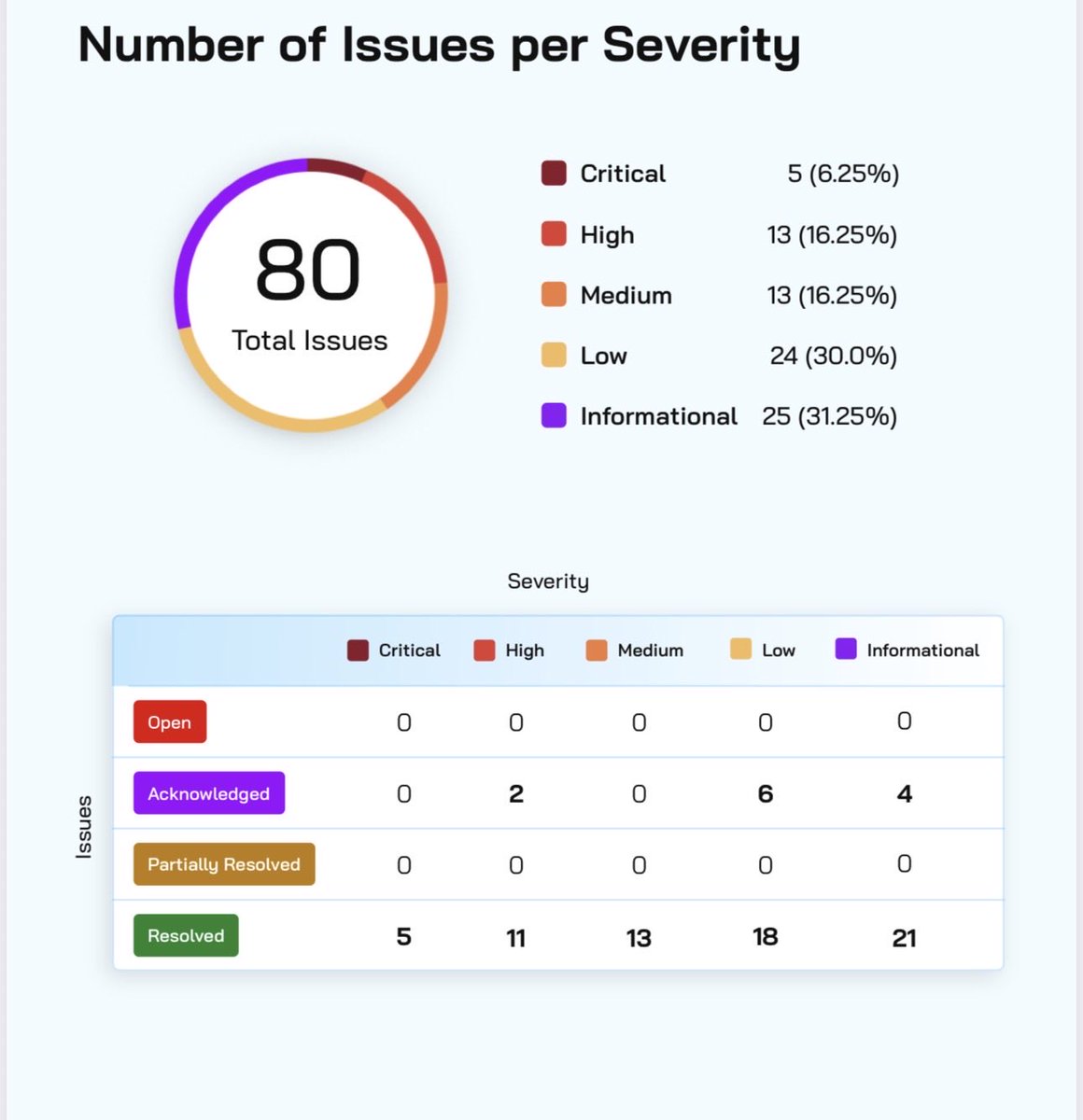
We at <a href="/QuillAudits_AI/">QuillAudits</a> Just wrapped up one of our Audit and what a ride! 🚀

80 issues identified, including multiple criticals and some truly fascinating vulnerabilities.

Massive shoutout to our auditors <a href="/cryptanu/">Cryptanu 🥷</a> <a href="/phoenix244001/">Phoenix</a> <a href="/saxenism/">Rahul Saxena</a>  for delivering exceptional depth and
Akshay Babhulkar (@akshaybabhulkar) 's Twitter Profile Photo

As 2025 comes to a close, what an incredible year it’s been for us QuillAudits ✈️ ConsensusHK26 ✅ 200+ audits completed 🐞 1200+ issues identified, including ~300 High & Critical findings Worked across ecosystems: Monad, Sonic, Soneium, Avalanche, Plume Chain, Scroll, Tron, Avitus, XRP,

QuillAudits | Web3 Security 🥷 (@quillaudits_ai) 's Twitter Profile Photo

Dropping Claude Skills to speed up smart contract audits with structured AI workflows. 10 open-source Claude Skills that turn AI into a reasoning-driven audit companion: → Reentrancy Detector → Access Control Mapper → Oracle Risk Scout → Upgradeability Checker → MEV

Dropping Claude Skills to speed up smart contract audits with structured AI workflows.

10 open-source Claude Skills that turn AI into a reasoning-driven audit companion:

→ Reentrancy Detector
→ Access Control Mapper
→ Oracle Risk Scout
→ Upgradeability Checker
→ MEV