Orlando Math Circle (@orlandomathcir) 's Twitter Profile
Orlando Math Circle

@orlandomathcir

ID: 833559378737377280

linkhttp://www.orlandomathcircle.org calendar_today20-02-2017 06:10:17

890 Tweet

290 Followers

654 Following
Yana Mohanty (@geometiles) 's Twitter Profile Photo

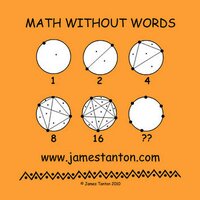
Join me tomorrow at 11a EST to learn a bit about the history of this ancient toy and it’s close relationship to some flexagons. Catch this great conference organized by Orlando Math Circle before it ends. Register at bit.ly/fmcn-conference #FMCN22 #iteachmath #matheducation
Math Circle Network (@mathcirclenet) 's Twitter Profile Photo

In this week's #ThrowbackThursday, we revisit A. Rodin’s activity guide for “Art Meets Math: Escher’s Tilings.” We love the exploration of #tessellations & #symmetry! See mathcircles.org/activity/art-m… [📷: M. Dağlı] Anyone have #tiling pics to share? Post them here!

In this week's #ThrowbackThursday, we revisit A. Rodin’s activity guide for “Art Meets Math: Escher’s Tilings.” We love the exploration of #tessellations & #symmetry! See mathcircles.org/activity/art-m… [📷: M. Dağlı] Anyone have #tiling pics to share? Post them here!
James Tanton (@jamestanton) 's Twitter Profile Photo

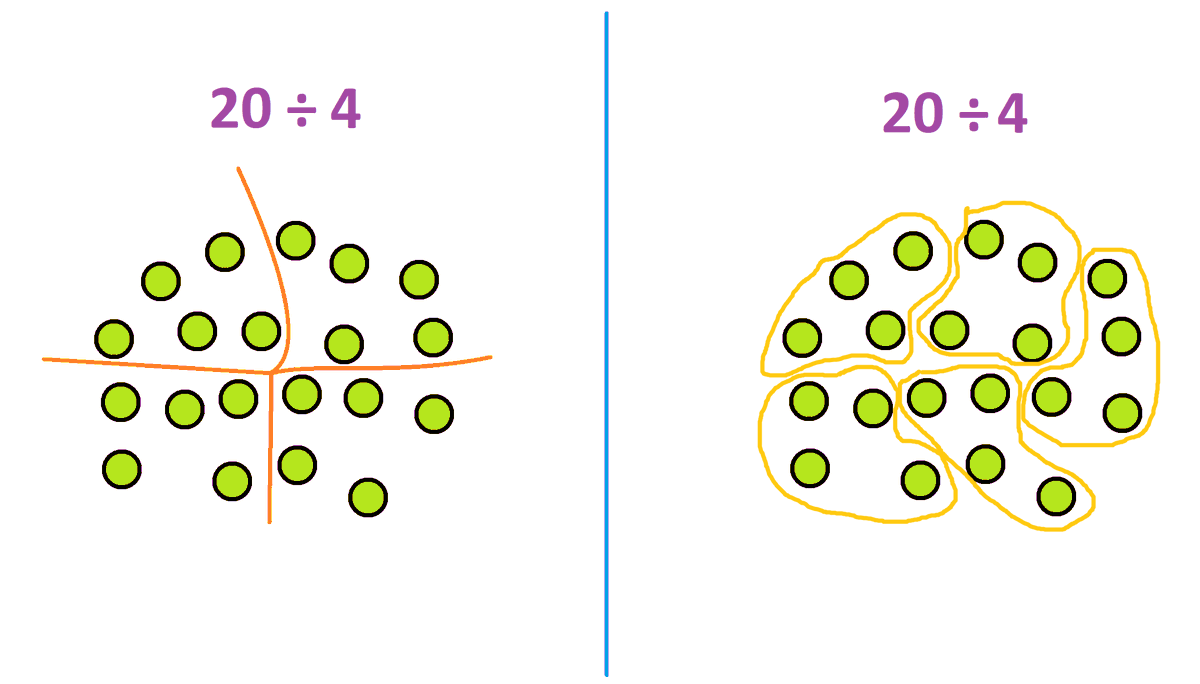
Partitive versus Quotative division? Or is it Quotative versus Partitive? (Really unenlightening K-12 education jargon!) Have I got it right with my pics? My question: In what sense are these the same? How explain to a student in a convincing/meaningful way?

Partitive versus Quotative division? Or is it Quotative versus Partitive? (Really unenlightening K-12 education jargon!) Have I got it right with my pics?
My question: In what sense are these the same? How explain to a student in a convincing/meaningful way?
Michaela Epstein (@mathscirclesoz) 's Twitter Profile Photo

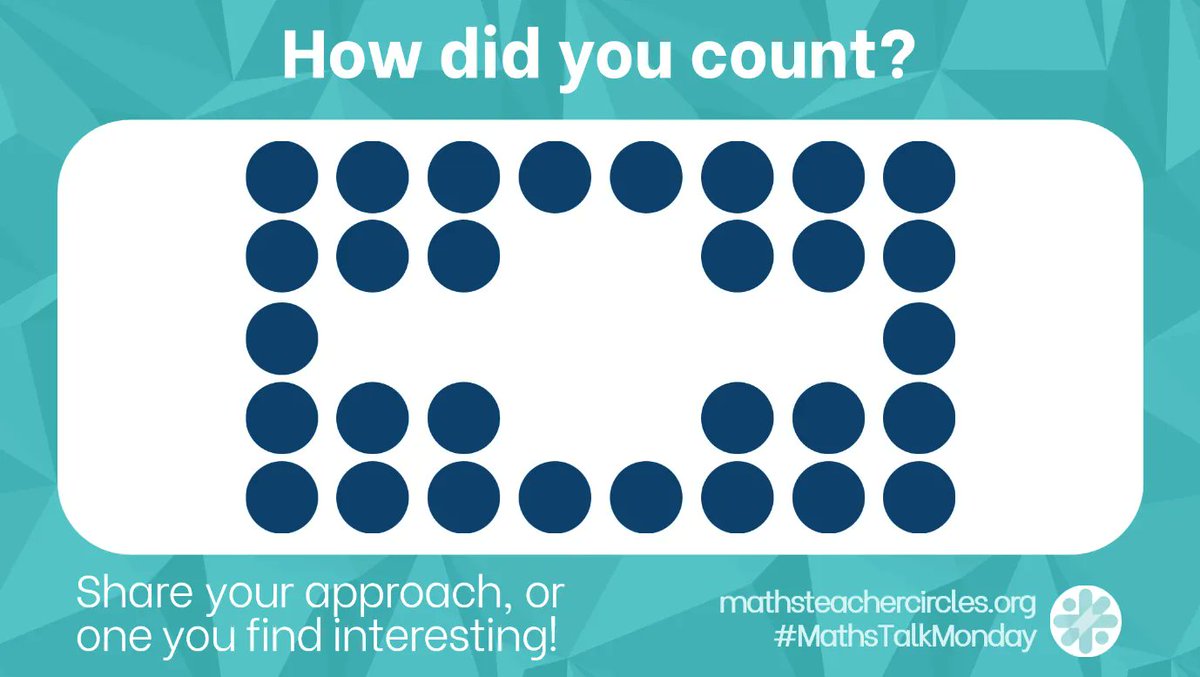
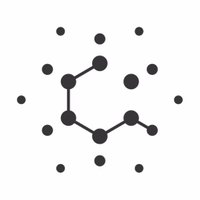
It's Maths Talk Monday! How many dots do you see? More interestingly, how do you see them? For great maths teaching ideas straight to your inbox, sign up at: mathsteachercircles.org/sign-up/ #MTCoz #MathsTalkMonday #iteachmath #mtbos

It's Maths Talk Monday! 

How many dots do you see? More interestingly, how do you see them? 

For great maths teaching ideas straight to your inbox, sign up at: mathsteachercircles.org/sign-up/

#MTCoz #MathsTalkMonday #iteachmath #mtbos
James Tanton (@jamestanton) 's Twitter Profile Photo

Okay. I am fully owning it! For those for which this is a "thing," here's my take on folding a fitted sheet. For those for which this is not a "thing,"...great! youtu.be/DEwConOQmWM (For some reason, this video is garnering some notice again. It does so every now & then.)

James Tanton (@jamestanton) 's Twitter Profile Photo

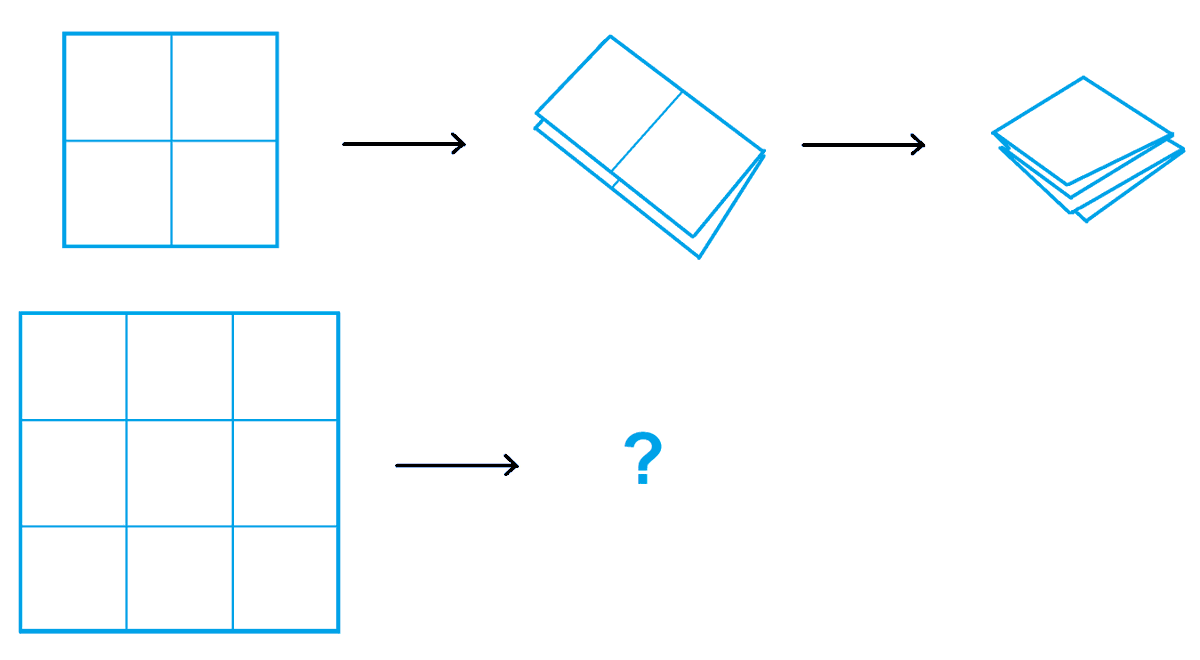
One can fold a 2x2 square of paper into a 1x1 square with four layers in two folds. What's the minimum number of folds needed to fold a 3x3 square of paper into a 1x1 square with nine layers? (How do you know your answer is minimal?)

One can fold a 2x2 square of paper into a 1x1 square with four layers in two folds. 
What's the minimum number of folds needed to fold a 3x3 square of paper into a 1x1 square with nine layers? 
(How do you know your answer is minimal?)
Francis Su - moved to 🦋 and🧵 (@mathyawp) 's Twitter Profile Photo

Math educators: The IES Math Summit is taking place virtually over the next 3 Tuesdays: Sep 12, 19, 26. Lots of great sessions and panels, covering preK-12. Free. Register here: registration.socio.events/e/iesmathsummit

Math educators: The IES Math Summit is taking place virtually over the next 3 Tuesdays: Sep 12, 19, 26. Lots of great sessions and panels, covering preK-12. Free. Register here: registration.socio.events/e/iesmathsummit
Mathigon (@mathigonorg) 's Twitter Profile Photo

Polypad is a great tool for exploring the artistic style of Piet Mondrian while also working on the Mondrian Art Puzzle by Gordon Hamilton (MathPickle). Explore for yourself at mathigon.org/task/mondrians…
Quanta Magazine (@quantamagazine) 's Twitter Profile Photo

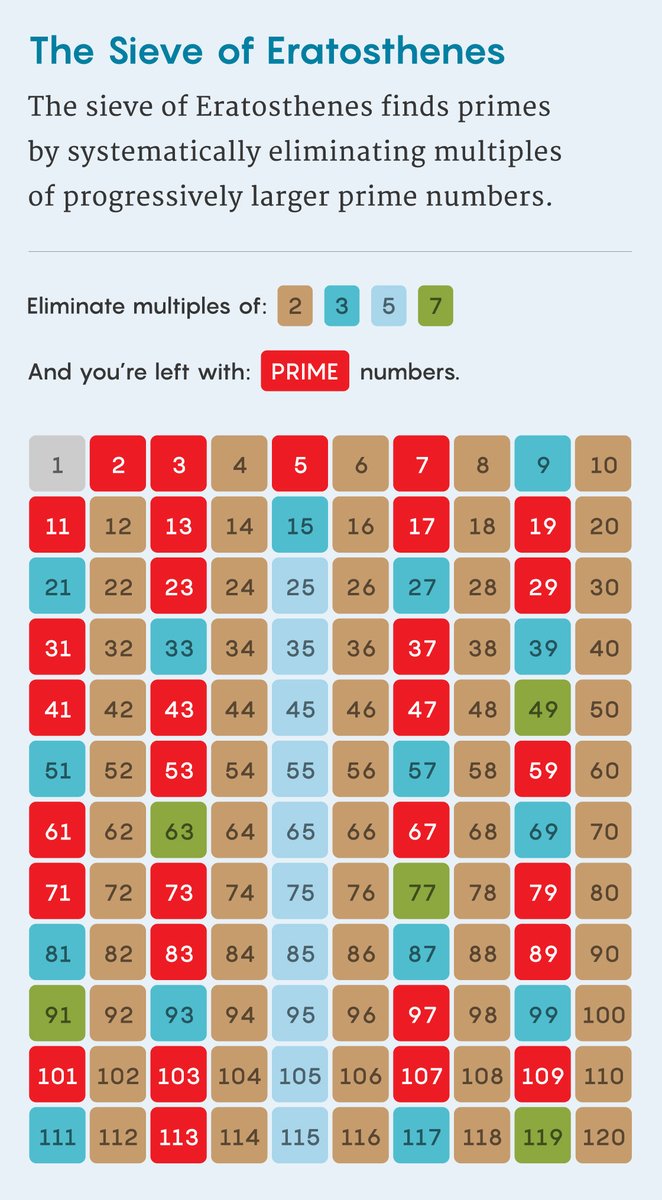
More than 2,000 years ago, the Greek mathematician Eratosthenes came up with a method for sifting prime numbers out from the number line. In 1965, Paul Erdős called sieve methods “perhaps our most powerful elementary tool in number theory.” quantamagazine.org/a-new-generati…

More than 2,000 years ago, the Greek mathematician Eratosthenes came up with a method for sifting prime numbers out from the number line. In 1965, Paul Erdős called sieve methods “perhaps our most powerful elementary tool in number theory.” quantamagazine.org/a-new-generati…
Angela Wilson (@awilson_alp) 's Twitter Profile Photo

“If gifted kids resist explaining their thinking, maybe the problems aren’t challenging enough.” Rich (and fun) mathematical discussion among this group with an elementary addition challenge! Cobb ALP #lovetothinkhere #NAGC23

“If gifted kids resist explaining their thinking, maybe the problems aren’t challenging enough.” Rich (and fun) mathematical discussion among this group with an elementary addition challenge! <a href="/CobbAlp/">Cobb ALP</a> #lovetothinkhere #NAGC23
Angela Wilson (@awilson_alp) 's Twitter Profile Photo

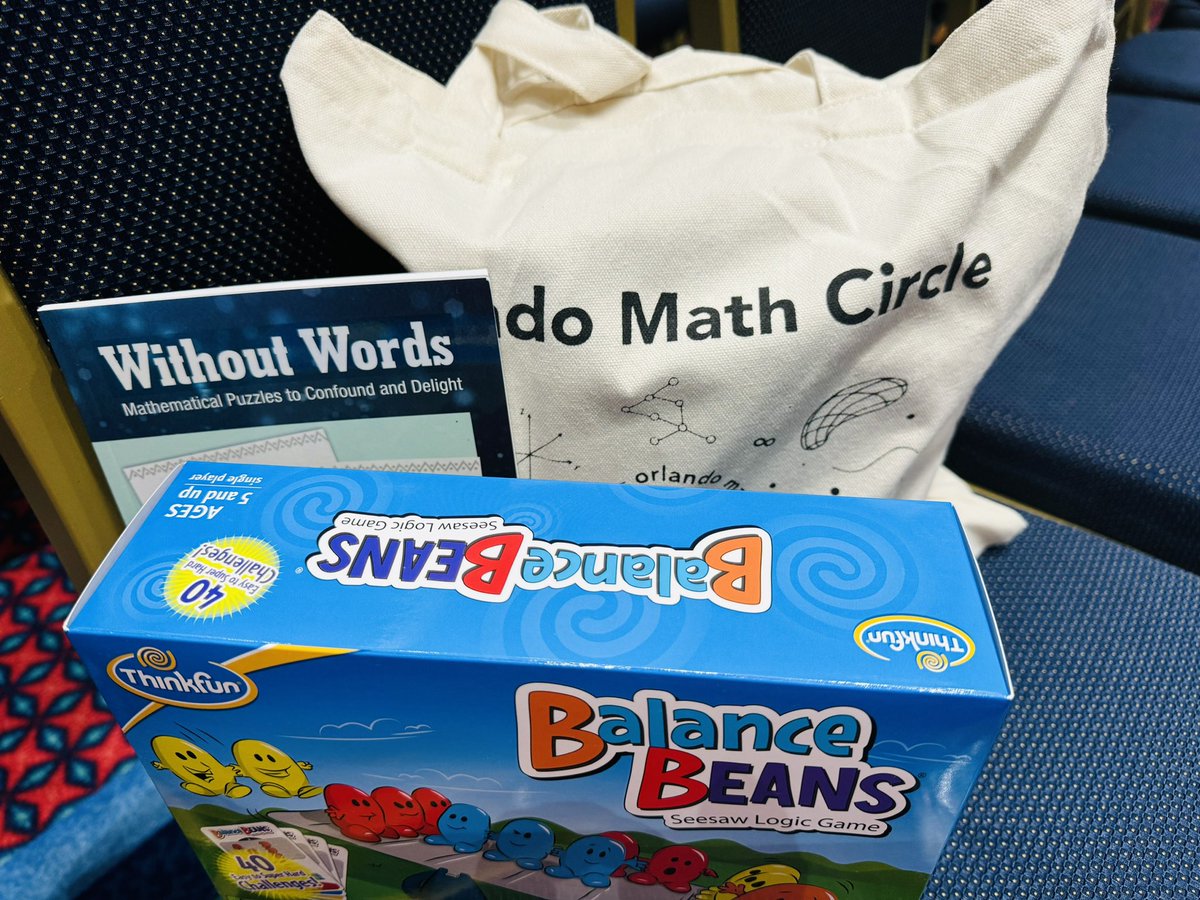
Yahoo! Won a door prize during an inspiring session on math circles. Thank you to the Orlando Math Circle—I’ll love exploring these resources with our Cobb ALP Ts! Orlando Math Circle #NAGC23 #lovetothinkhere

Yahoo! Won a door prize during an inspiring session on math circles. Thank you to the Orlando Math Circle—I’ll love exploring these resources with our <a href="/CobbAlp/">Cobb ALP</a> Ts! <a href="/orlandomathcir/">Orlando Math Circle</a> #NAGC23 #lovetothinkhere