MAAPnext (@maapnext) 's Twitter Profile
MAAPnext

@maapnext

MAAPnext is a transformative approach in the management and regulation of Harris County’s floodplains, contributing to our county’s resilience.

ID: 1150812021807562752

linkhttp://maapnext.org/ calendar_today15-07-2019 16:59:01

259 Tweet

95 Followers

10 Following

MAAPnext (@maapnext) 's Twitter Profile Photo

Did you know? Renter’s insurance does not cover flood damage. To find out more about your #flooding risk, visit maapnext.org

Harris County Flood Control District (@hcfcd) 's Twitter Profile Photo

Weather Alert! The Flood Operations Team will monitor rainfall trends and check gages that measure rainfall amounts and water levels in bayous and creeks. Click here for more: bit.ly/42MIYtb

Weather Alert! The Flood Operations Team will monitor rainfall trends and check gages that measure rainfall amounts and water levels in bayous and creeks.

Click here for more: bit.ly/42MIYtb
MAAPnext (@maapnext) 's Twitter Profile Photo

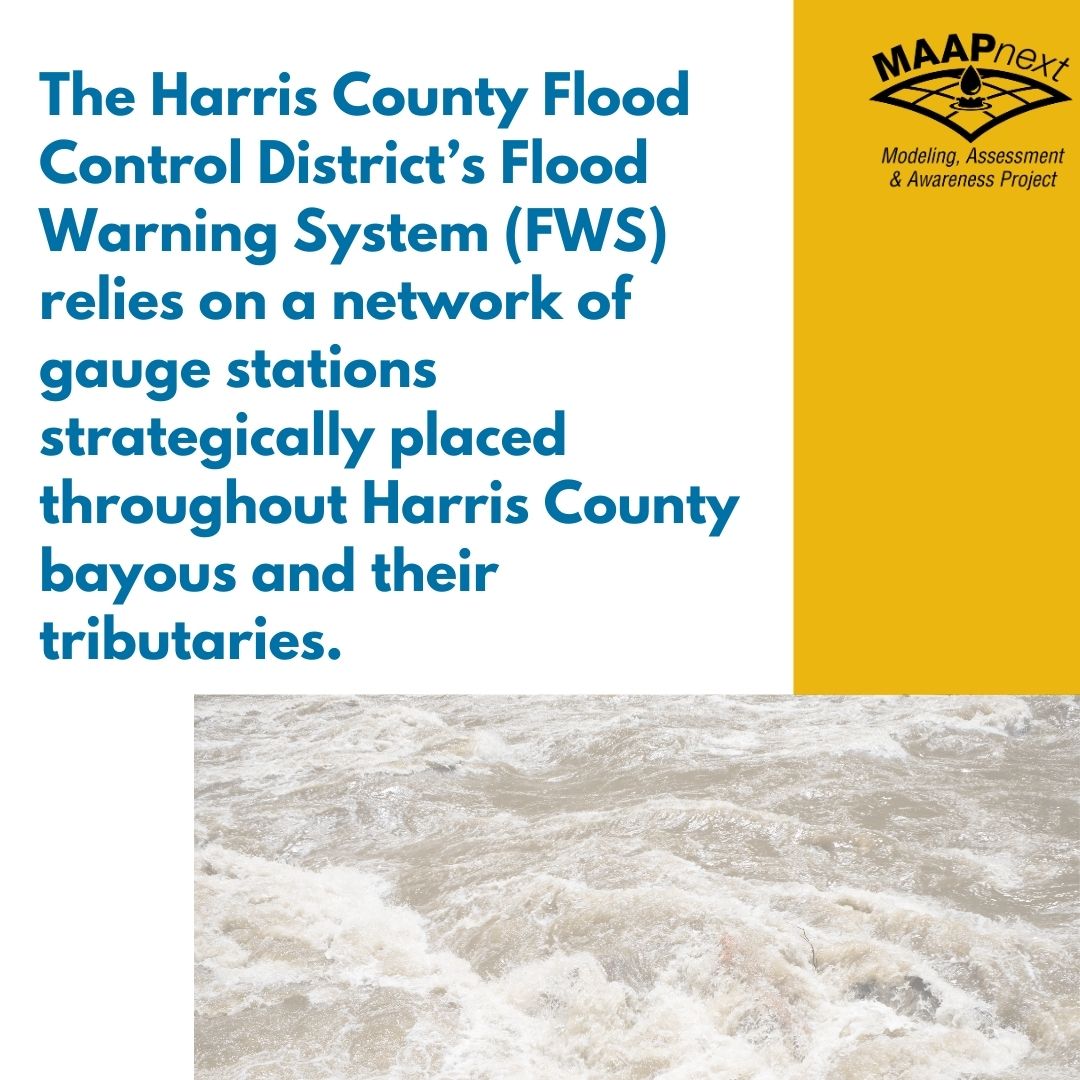
The Harris County Flood Control District’s Flood Warning System (FWS) relies on a network of gauge stations strategically placed throughout Harris County bayous and their tributaries. Check it out at //www.harriscountyfws.org/

The Harris County Flood   Control District’s Flood Warning System (FWS) relies on a network of gauge stations strategically placed throughout Harris County bayous and their tributaries.
Check it out at //www.harriscountyfws.org/
MAAPnext (@maapnext) 's Twitter Profile Photo

If you live in an area with low or moderate flood risk, you are 5 times more likely to experience flood than a fire in your home over the next 30 years. Identify your risk according to FEMA’s Flood Map Service Center at msc.fema.gov/portal/search

If you live in an area with low or moderate flood risk, you are 5 times more likely to experience flood than a fire in your home over the next 30 years.
Identify your risk according to <a href="/FEMA/">FEMA</a>’s Flood Map Service Center at msc.fema.gov/portal/search
MAAPnext (@maapnext) 's Twitter Profile Photo

Hurricane season starts on May 15 in the north Pacific and June 1 in the Atlantic and the Caribbean. It ends on November 30. Before hurricane season each year, make sure you and your family are prepared by planning ahead. #HurricaneReadyHarrisCounty #MAAPnext

MAAPnext (@maapnext) 's Twitter Profile Photo

When a storm's maximum sustained winds reach 74 mph, it is called a hurricane. With a 1 to 5 rating, or category scale, the Saffir-Simpson Hurricane Wind Scale is based on a hurricane's maximum sustained winds

MAAPnext (@maapnext) 's Twitter Profile Photo

It can flood anywhere in Harris County, and it can happen fast. Check out the following video to learn more about understanding your risk!

MAAPnext (@maapnext) 's Twitter Profile Photo

The National Hurricane Center and the Central Pacific Hurricane Center track continuous movements of tropical cyclones. Stay aware, at nhc.noaa.gov #HurricaneSeasonHarrisCounty #BePrepared

MAAPnext (@maapnext) 's Twitter Profile Photo

In Harris County, hurricanes not only bring extreme winds but also widespread flooding. But with the right preparation and knowledge, we can keep ourselves and our loved ones safe. #HurricaneSeasonHarrisCounty #BePrepared

MAAPnext (@maapnext) 's Twitter Profile Photo

The Discover Floods – Educator’s Guide is a series of teacher-led activities that correlate with the educational standards of most state and can enhance students’ knowledge on water resources and Flood Preparedness. Download it at projectwet.org/sites/default/… #MAAPnext #BePrepared

MAAPnext (@maapnext) 's Twitter Profile Photo

In Harris County, the cost of not having flood insurance is often far greater than the cost of annual flood insurance premiums.

MAAPnext (@maapnext) 's Twitter Profile Photo

The major hazards associated with hurricanes are: · storm surge and storm tide · heavy rainfall and inland flooding · high winds · rip currents · tornadoes

MAAPnext (@maapnext) 's Twitter Profile Photo

It can flood anywhere in Harris County, and it can happen fast. Check out the following video to learn more about understanding your risk!