Greg Wilson (@joke2power) 's Twitter Profile
Greg Wilson

@joke2power

Writer, organizer, producer. Opinions & jokes are my own.

ID: 172954545

calendar_today31-07-2010 01:35:08

441,441K Tweet

2,2K Followers

4,4K Following

European Democrats (@democrats_eu) 's Twitter Profile Photo

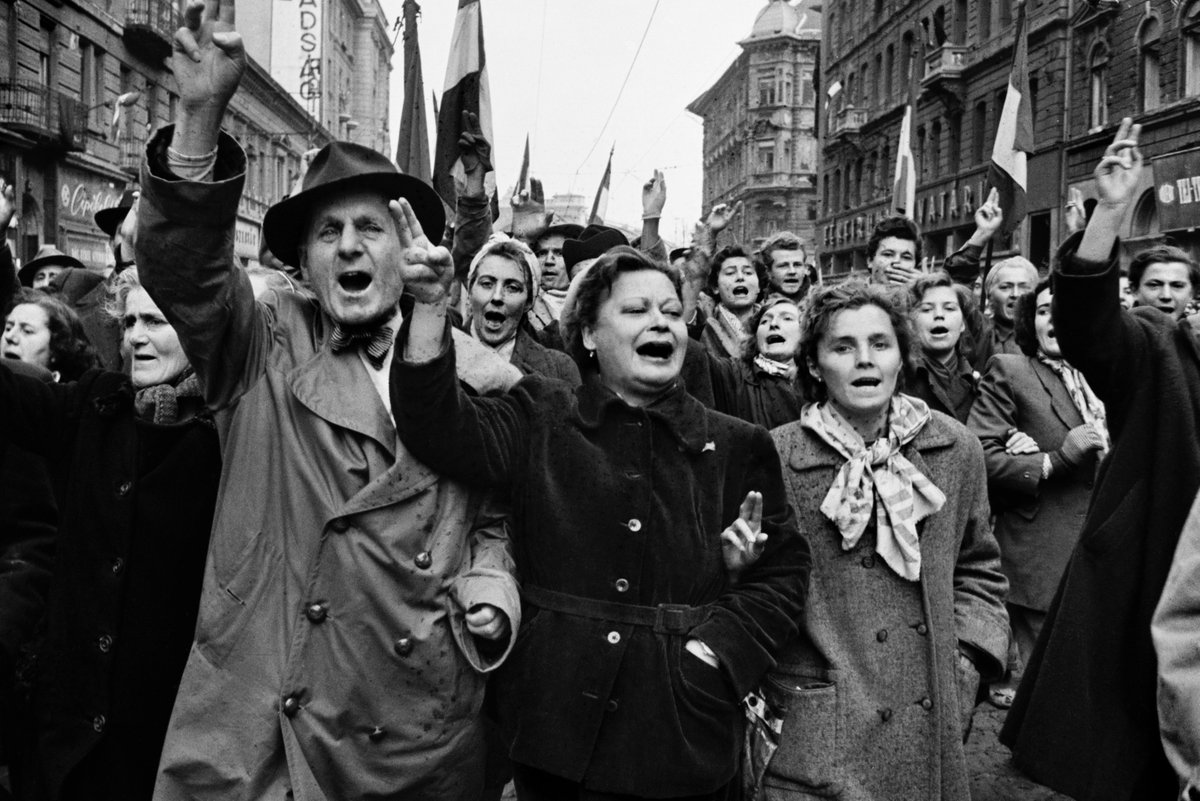
“Ruszkik haza! Russian go home,” echoes through the streets of Budapest as citizens celebrate the victory of Tisza over Orbán. A historic moment that pushes back the plans of Putin, Trump and Xi Jinping to use Hungary to weaken the European Union. Hungarians have taken their

Zoltan Pardi (@pardizoltan) 's Twitter Profile Photo

Hey Europe, Thank you for putting relentlessly up with us! For never ever giving up on us! We are truly grateful as ever! Hungary forever 🇭🇺 🇪🇺 ❤️

Furkan Gözükara (@gozukarafurkan) 's Twitter Profile Photo

A revealing moment. Donald Trump openly admits he ordered the destruction of a major civilian bridge in Iran purely out of spite because Iranian officials embarrassed him in the press. The White House is treating a catastrophic war like a petty reality TV show.

Zack Beauchamp (zackbeauchamp@bsky.social) (@zackbeauchamp) 's Twitter Profile Photo

I've seen a lot of takes that Orbán's defeat means that he was never an authoritarian in the first place. This is completely wrong — and, in fact, betrays a complete misunderstanding of both Hungarian politics and modern authoritarianism. Here's why.

Zack Beauchamp (zackbeauchamp@bsky.social) (@zackbeauchamp) 's Twitter Profile Photo

Hungary under Orbán was not a classic fascist or monarchical regime. It was a species of what political scientists call "competitive authoritarianism" — where elections are generally free, meaning not formally rigged, but held under extremely unfair conditions.

Zack Beauchamp (zackbeauchamp@bsky.social) (@zackbeauchamp) 's Twitter Profile Photo

Competitive authoritarian regimes do repression differently. Instead of locking up critics or stuffing ballot boxes, they use softer tools to suppress the opposition — like buying up media, rigging campaign finance rules, and gerrymandering,

Zack Beauchamp (zackbeauchamp@bsky.social) (@zackbeauchamp) 's Twitter Profile Photo

Hungary under Orbán was one of the most effective such regimes in the world. The Fidesz government developed an incredibly sophisticated system for marginalizing the opposition, including controlling 80-90 percent of media. The article below has details. journalofdemocracy.org/articles/how-v…


Zack Beauchamp (zackbeauchamp@bsky.social) (@zackbeauchamp) 's Twitter Profile Photo

But every competitive authoritarian regime, even the most effective one, has a fail case: that their characteristic corruption and incompetence overwhelms their ability to control information, breeding a massive public backlash.

Zack Beauchamp (zackbeauchamp@bsky.social) (@zackbeauchamp) 's Twitter Profile Photo

That's what happened in Hungary. Under Orbán, Hungary became arguably the poorest country and indisputably the most corrupt in Europe. Birthrates were low, and outmigration enormous. More and more Hungarians felt like they had no future under Fidesz.

Zack Beauchamp (zackbeauchamp@bsky.social) (@zackbeauchamp) 's Twitter Profile Photo

Under such conditions, the competitive authoritarian has two choices. They can retreat to a harder authoritarianism — annulling election and deploying security forces to control dissent. But if they don't have the repressive capacity to do that, they have to concede defeat.

Zack Beauchamp (zackbeauchamp@bsky.social) (@zackbeauchamp) 's Twitter Profile Photo

This is where Orbán found himself. That he chose to concede defeat does not annul the fact that he had built an authoritarian regime of a particular kind; it just means he realized he no lacked good options for staying. And the regime could actually survive Magyar's victory.

Zack Beauchamp (zackbeauchamp@bsky.social) (@zackbeauchamp) 's Twitter Profile Photo

The Fidesz regime is deeply entrenched across the Hungarian government: courts, bureaucracy, regulators, tax agencies, even cultural organizations were all part of it. If Magyar does not use his power to enact sweeping constitution changes, much of that system could survive.

Zack Beauchamp (zackbeauchamp@bsky.social) (@zackbeauchamp) 's Twitter Profile Photo

Orbán's best bet for regime survival — for returning to power — wasn't staging a doomed January 6-style putsch in the face of overwhelming defeat. It was retreating, and doing everything he can to preserve regime elements from the outside.

Zack Beauchamp (zackbeauchamp@bsky.social) (@zackbeauchamp) 's Twitter Profile Photo

Whether that will happen depends on how skilled Péter Magyar and his allies prove to be at wielding power. Understood properly, today is not the end of an authoritarian regime but the first step in a much longer unwinding.