Ford Foundation Gallery (@ford_gallery) 's Twitter Profile
Ford Foundation Gallery

@ford_gallery

Innovative space for art & programs in the @FordFoundation Center for Social Justice

ID: 1022672979992436736

linkhttps://linktr.ee/fordfoundationgallery calendar_today27-07-2018 02:40:13

340 Tweet

666 Takipçi

101 Takip Edilen
Ford Foundation Gallery (@ford_gallery) 's Twitter Profile Photo

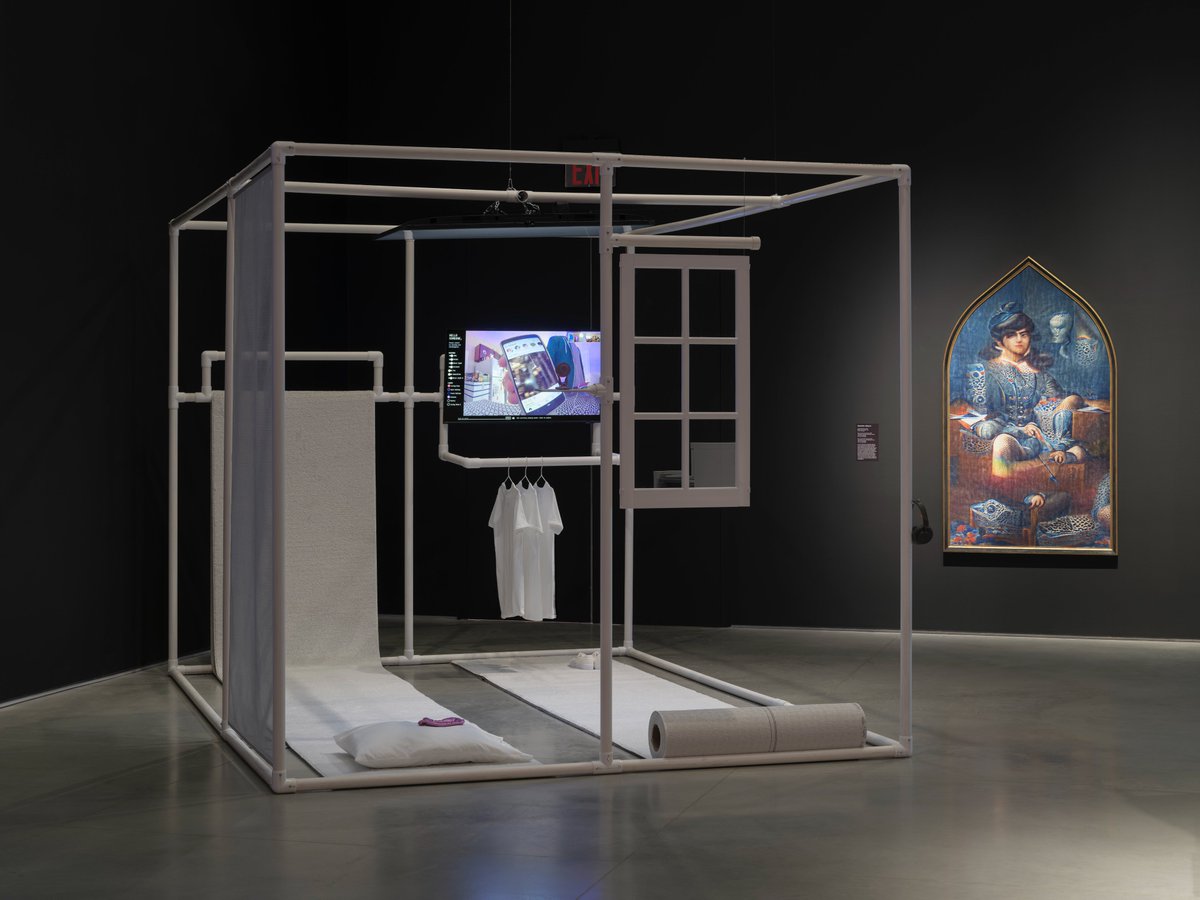
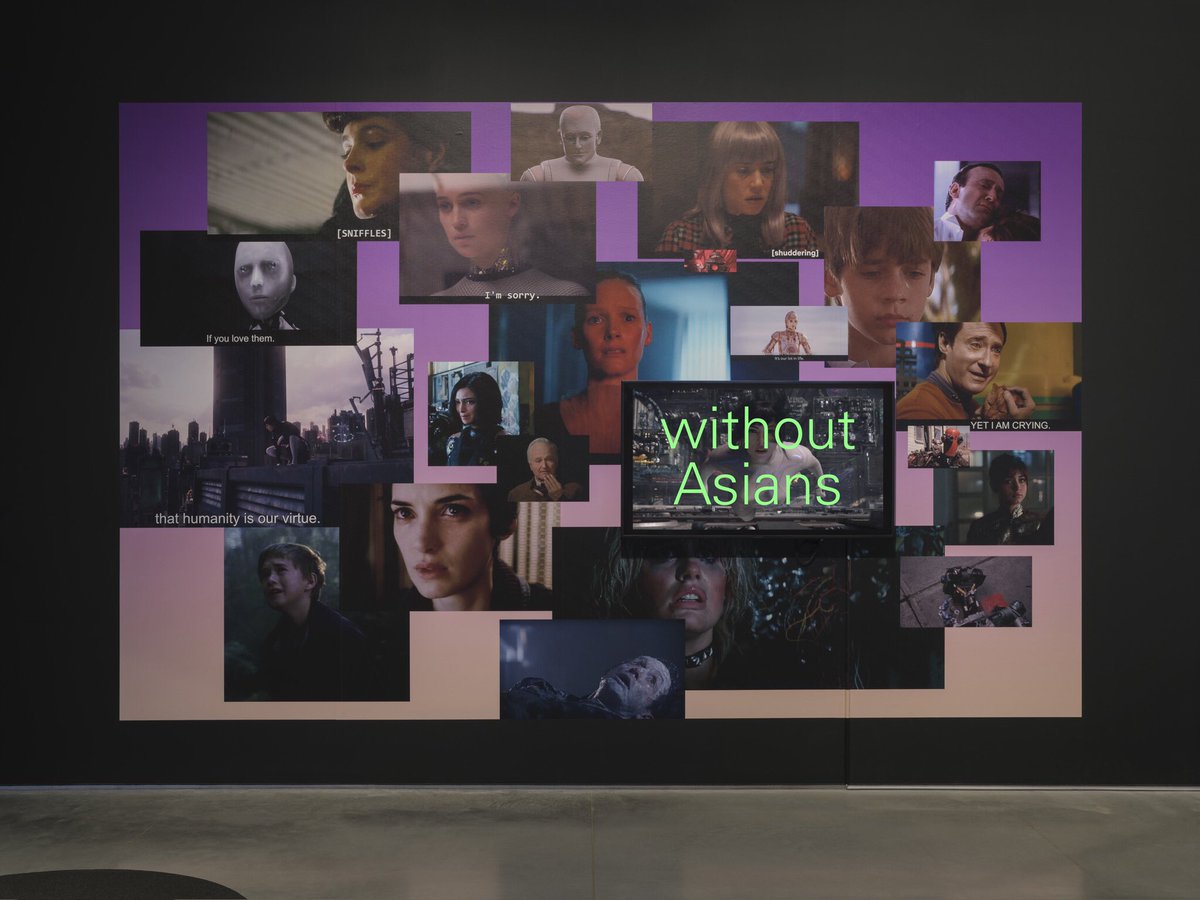
Astria Suparak’s “Sympathetic White Robots (White Robot Tears version)” disrupts media representations of AI that extract Asian visual cultures even as they omit Asian characters, showing us openings for imagining other futures.

Astria Suparak’s “Sympathetic White Robots (White Robot Tears version)” disrupts media representations of AI that extract Asian visual cultures even as they omit Asian characters, showing us openings for imagining other futures.
Ford Foundation Gallery (@ford_gallery) 's Twitter Profile Photo

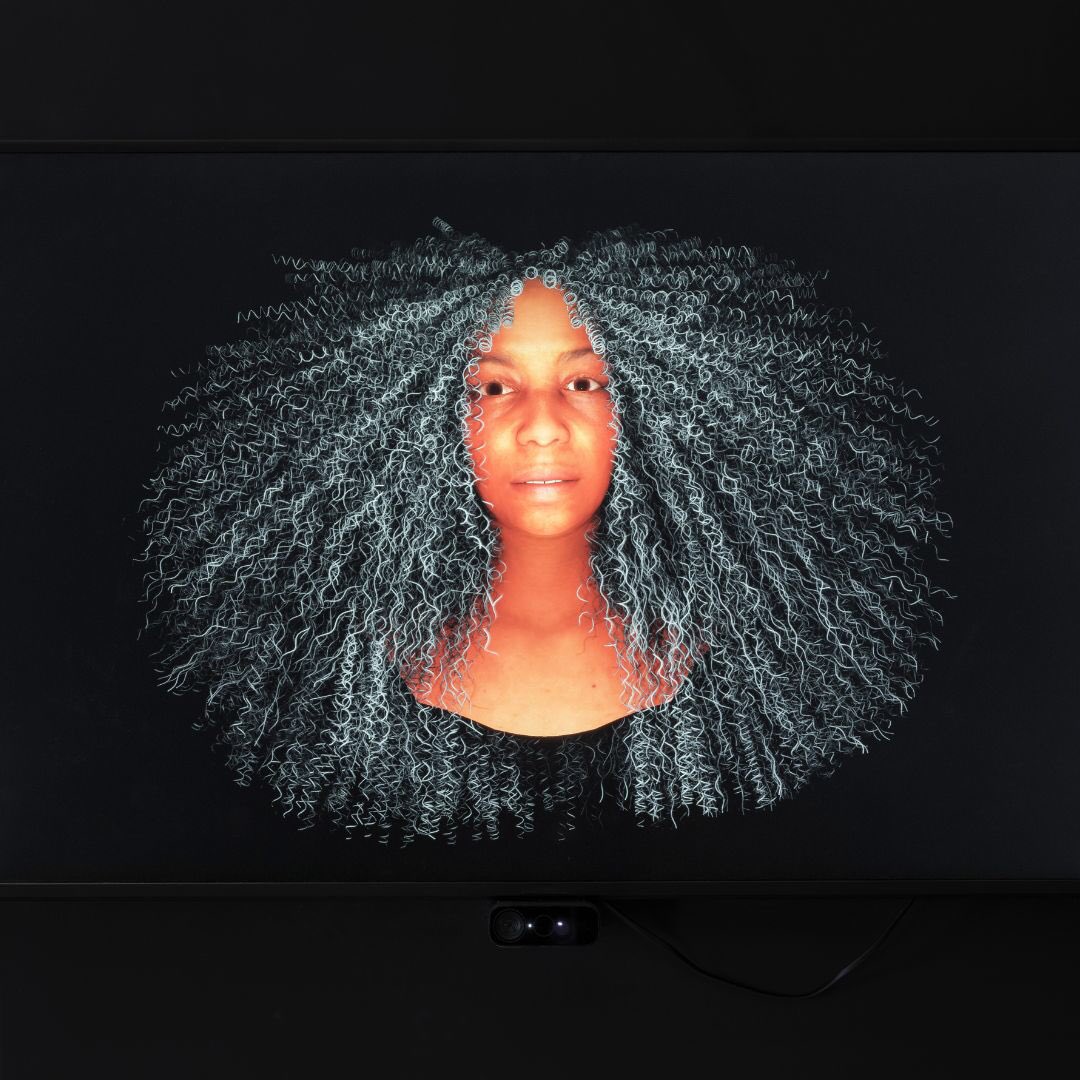
In Stephanie Dinkins’ “Not the Only One” (“N’TOO”), oral histories from three generations of women from the artist’s family are used to train an AI that tells a “multigenerational memoir of a Black American family.” “N’TOO” is on view now in “What Models Make Worlds.”

In Stephanie Dinkins’ “Not the Only One” (“N’TOO”), oral histories from three generations of women from the artist’s family are used to train an AI that tells a “multigenerational memoir of a Black American family.” “N’TOO” is on view now in “What Models Make Worlds.”
Ford Foundation Gallery (@ford_gallery) 's Twitter Profile Photo

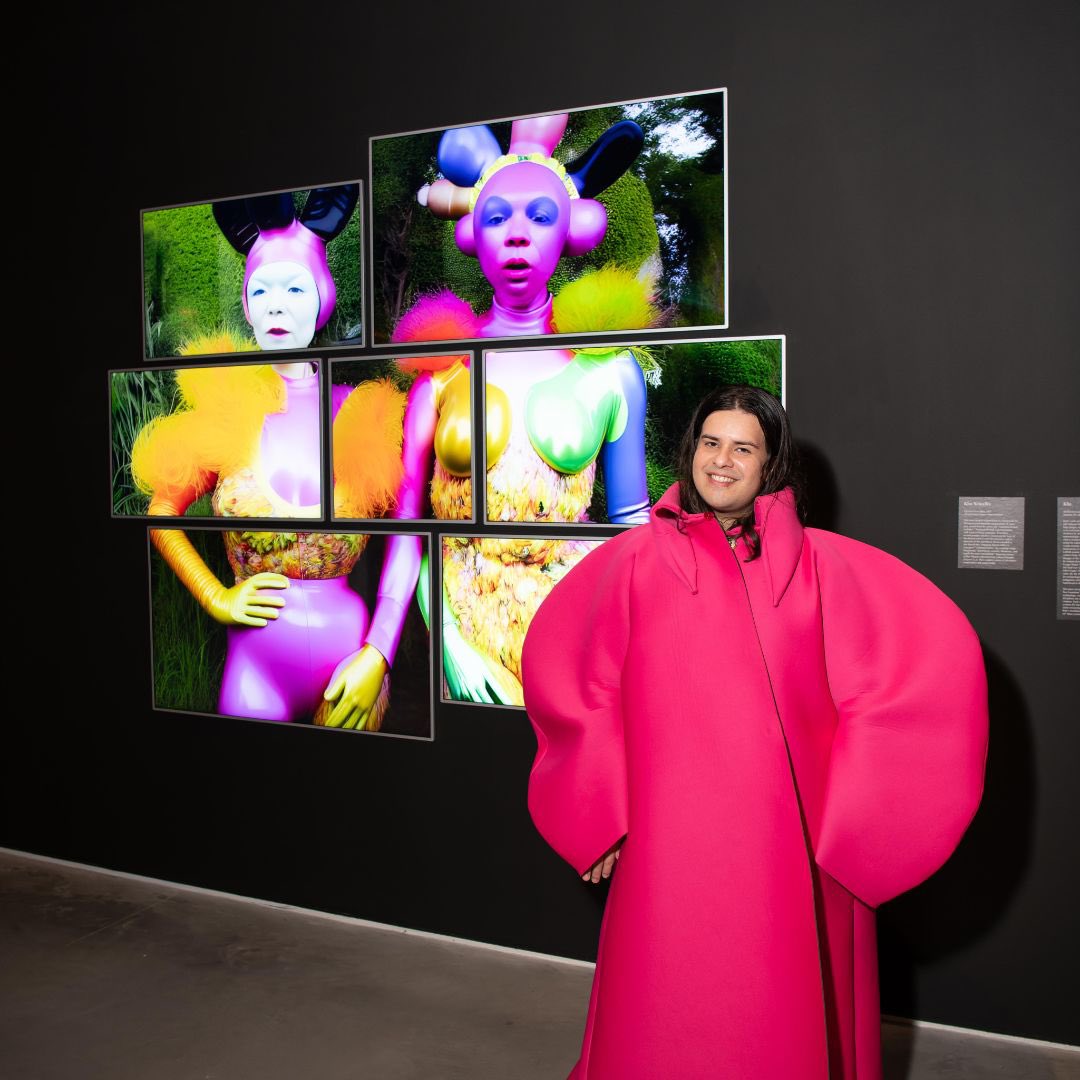
In Kira Xonorika’s “Teleport Us to Mars'' teleportation becomes a vehicle for beaming us toward “multidimensional ecologies.” Subverting a text-to-image generator’s biased training, the artist conjures alternative visions of time and space. On view in “What Models Make Worlds.”

In Kira Xonorika’s “Teleport Us to Mars'' teleportation becomes a vehicle for beaming us toward “multidimensional ecologies.” Subverting a text-to-image generator’s biased training, the artist conjures alternative visions of time and space. On view in “What Models Make Worlds.”
Ford Foundation Gallery (@ford_gallery) 's Twitter Profile Photo

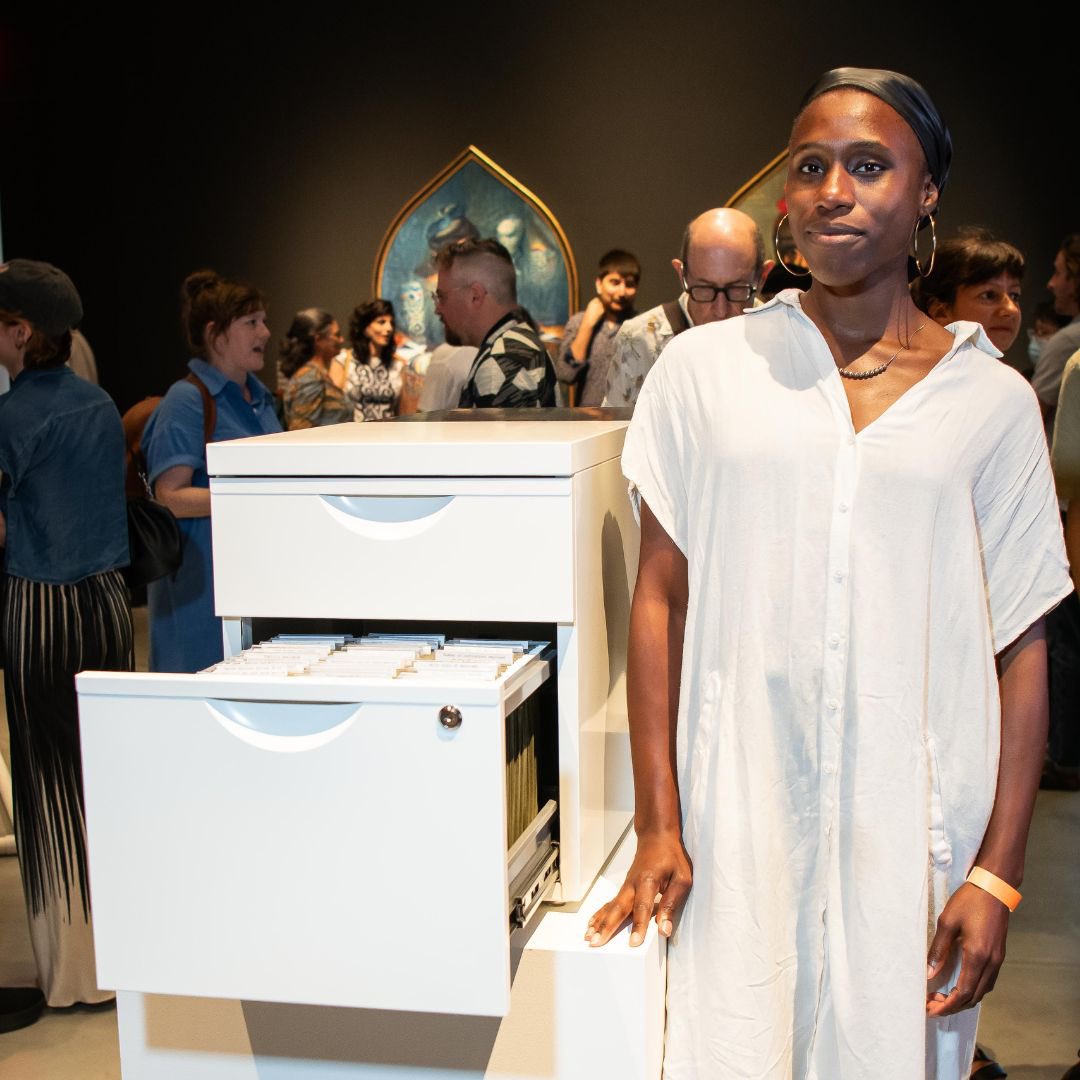
In the “Library of Missing Datasets” Mimi Ọnụọha assembles the blank spaces in a sprawling datascape to show what data collection processes exclude. The vacant folders catalog what the artist calls “empty spaces where no data live." On view now in "What Models Make Worlds."

In the “Library of Missing Datasets” Mimi Ọnụọha assembles the blank spaces in a sprawling datascape to show what data collection processes exclude. The vacant folders catalog what the artist calls “empty spaces where no data live." On view now in "What Models Make Worlds."
Ford Foundation Gallery (@ford_gallery) 's Twitter Profile Photo

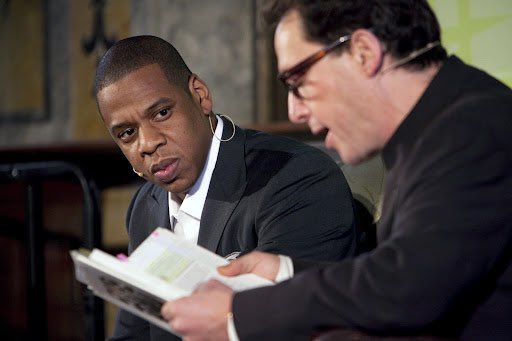
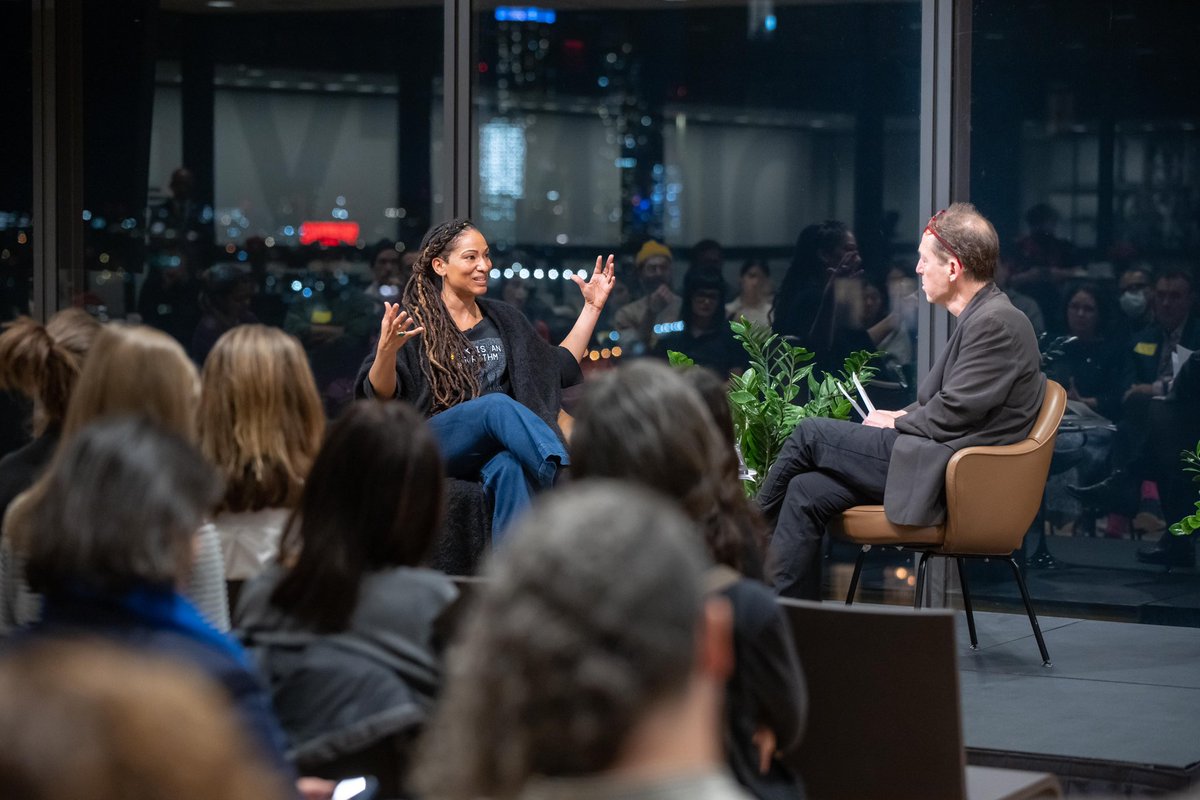
Join us on Monday, November 20 from 6-8pm in collaboration with Oxy Live! for a fireside chat with Ruja Benjamin (Ruha Benjamin) and Paul Holdengräber (Paul Holdengraber) about ethics in AI. RSVP to attend: …onversationruhaandpaul.splashthat.com.
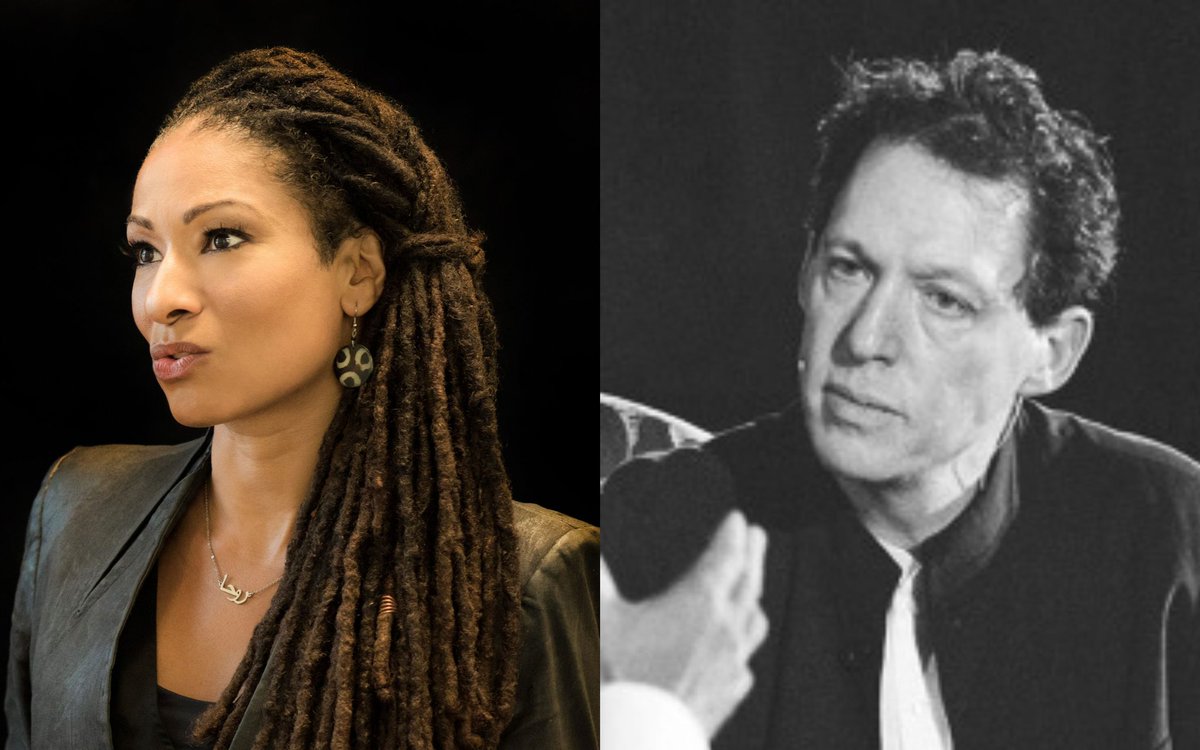
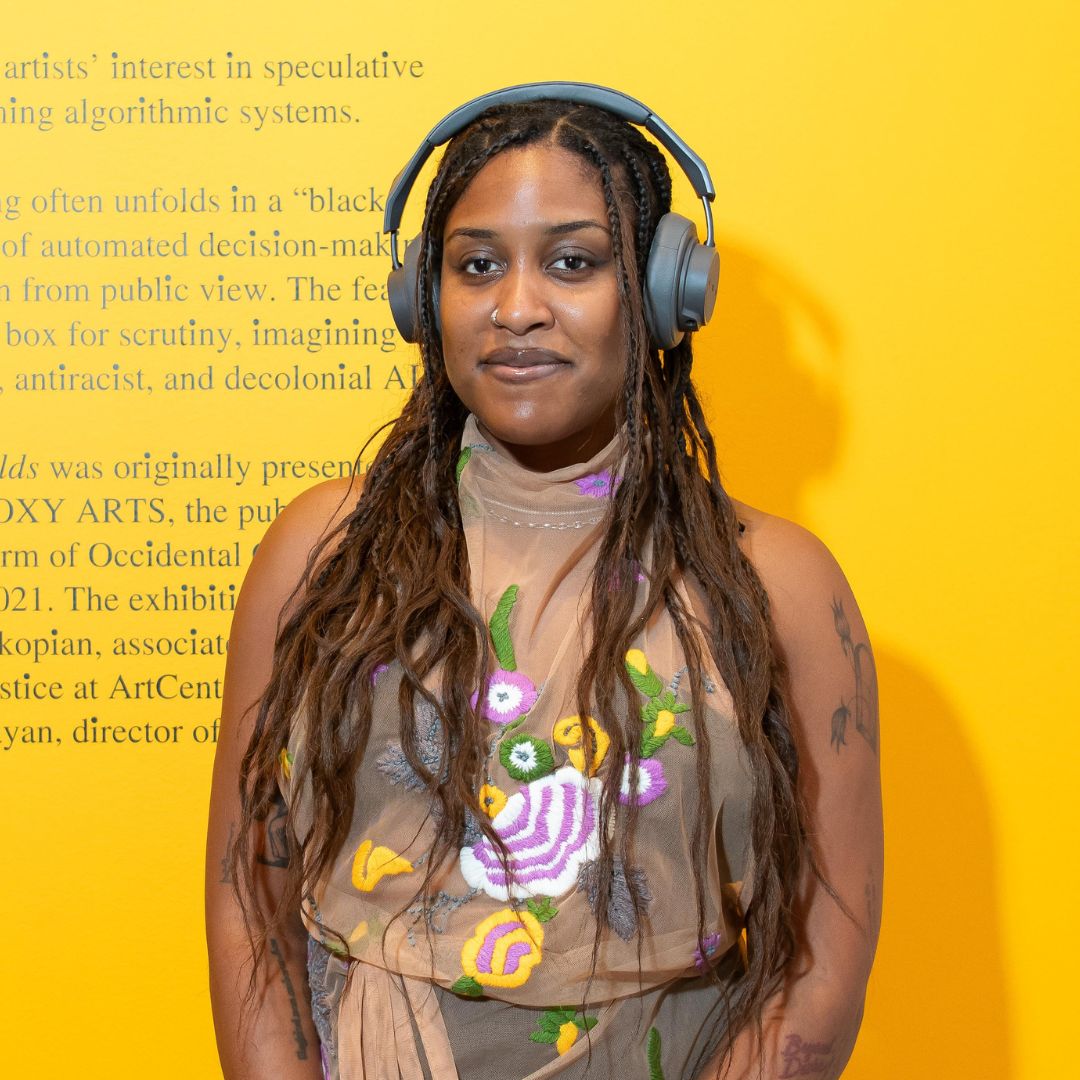
Join us on Monday, November 20 from 6-8pm in collaboration with Oxy Live! for a fireside chat with Ruja Benjamin (<a href="/ruha9/">Ruha Benjamin</a>) and Paul Holdengräber (<a href="/holdengraber/">Paul Holdengraber</a>) about ethics in AI. RSVP to attend: …onversationruhaandpaul.splashthat.com.
Ford Foundation Gallery (@ford_gallery) 's Twitter Profile Photo

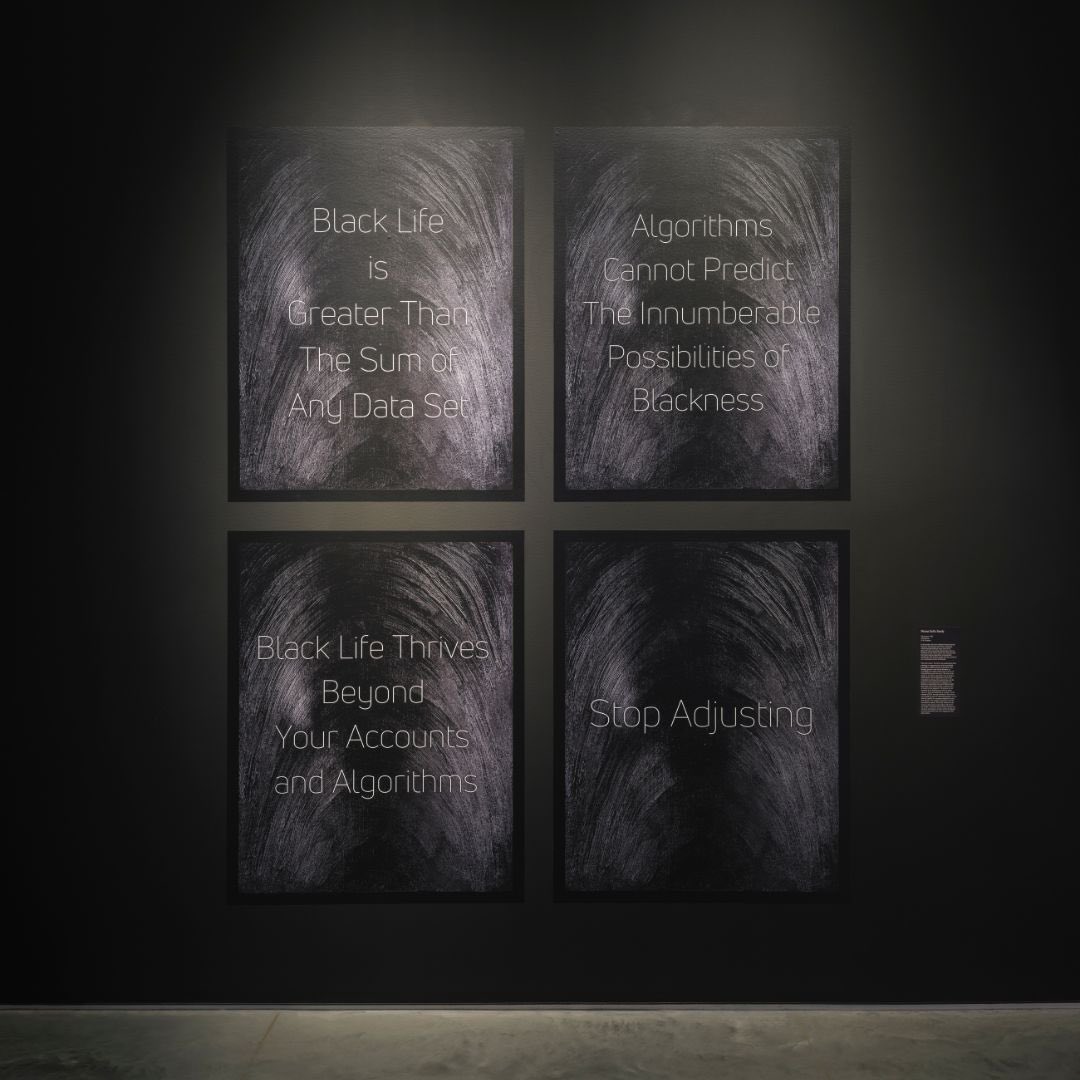
Artist Mandy Harris Williams' “In Discriminate” shows how algorithms pervade contemporary life, and reminds us, “it is an algorithm’s precise job, calling, and duty to discriminate...the algorithms discriminate so we don’t have to.” Featured now in “What Models Make Worlds.”

Artist Mandy Harris Williams' “In Discriminate” shows how algorithms pervade contemporary life, and reminds us, “it is an algorithm’s precise job, calling, and duty to discriminate...the algorithms discriminate so we don’t have to.” Featured now in “What Models Make Worlds.”
Ford Foundation Gallery (@ford_gallery) 's Twitter Profile Photo

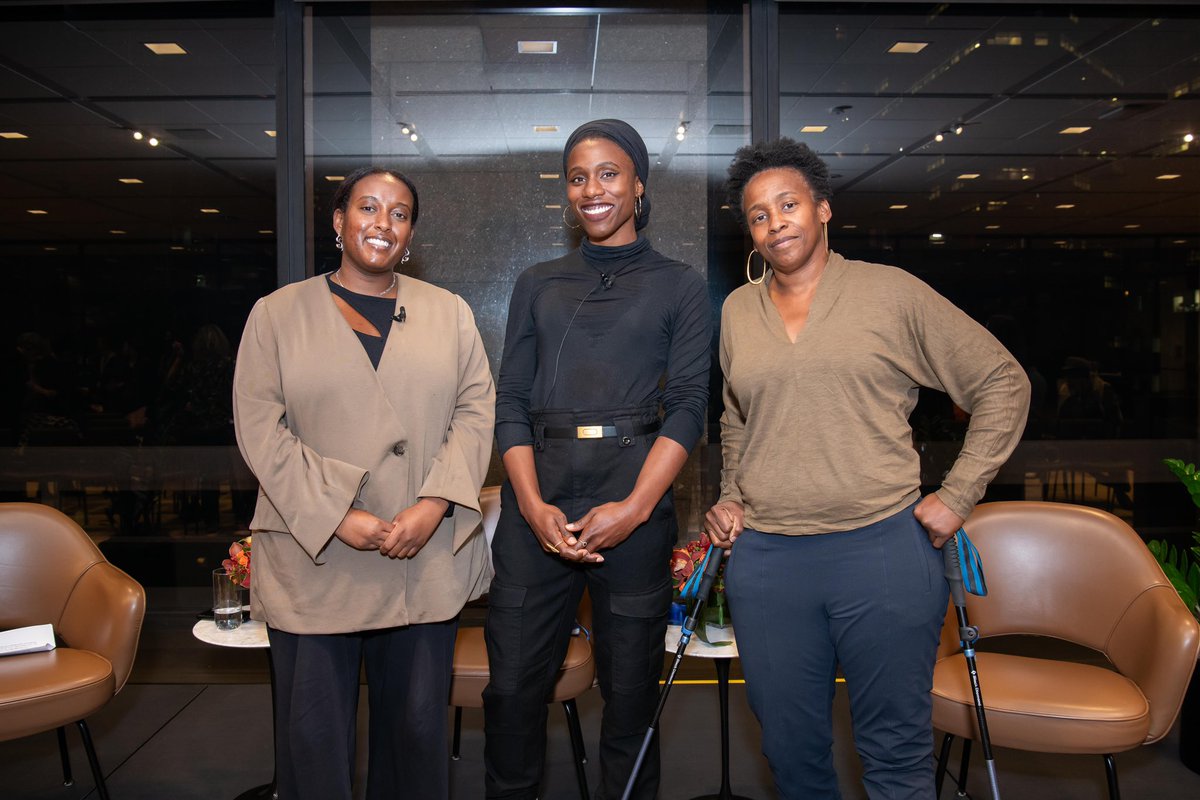
Thanks to all who joined us Tuesday for an illuminating artists’ talk with Stephanie Dinkins and Mimi Ọnụọha. They spoke about their works “N’TOO” and “Library of Missing Datasets” currently featured in “What Models Make Worlds” in conversation with moderator Salome Asega.

Thanks to all who joined us Tuesday for an illuminating artists’ talk with Stephanie Dinkins and Mimi Ọnụọha. They spoke about their works “N’TOO” and “Library of Missing Datasets” currently featured in “What Models Make Worlds” in conversation with moderator Salome Asega.
Ford Foundation Gallery (@ford_gallery) 's Twitter Profile Photo

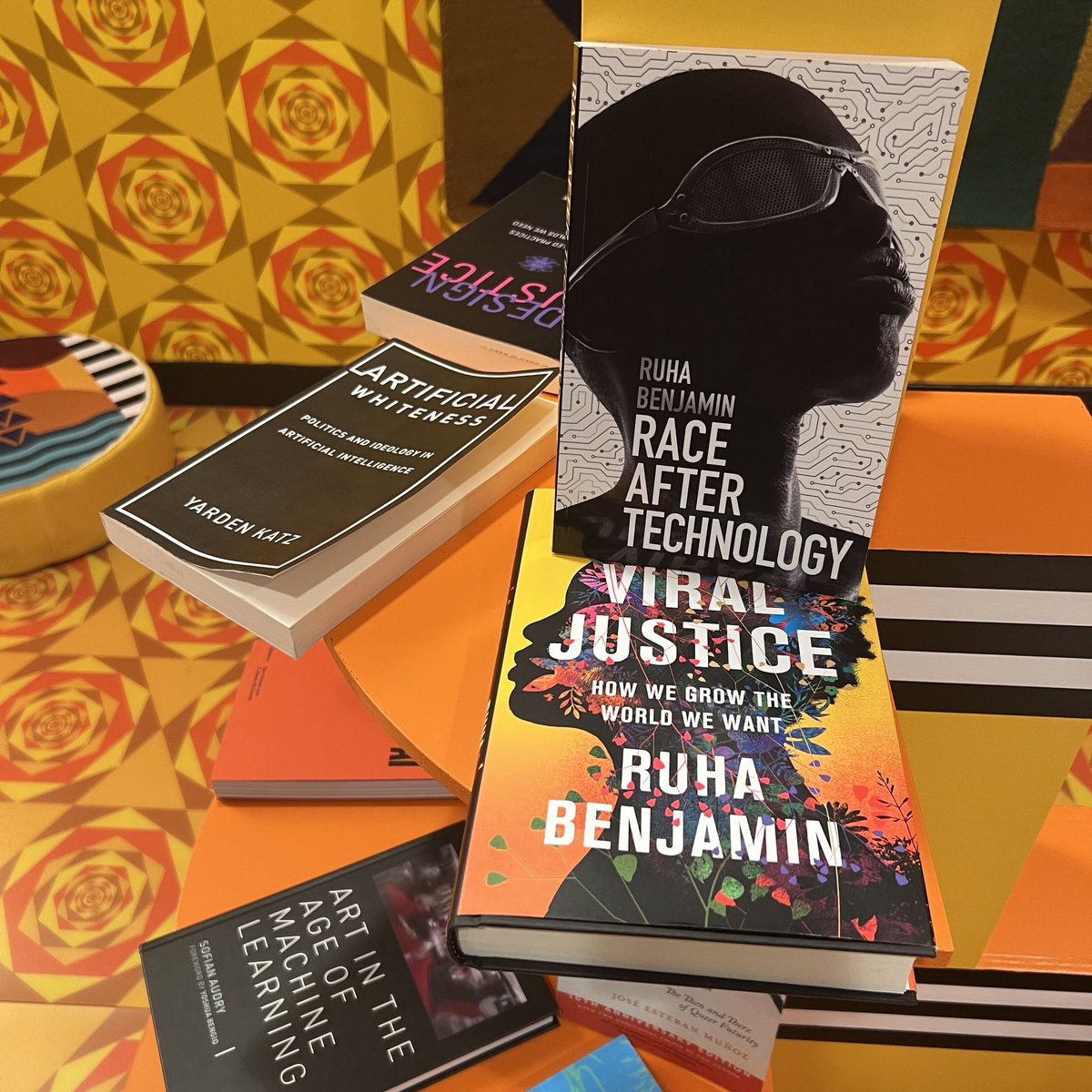
“Race After Technology” and “Viral Justice” by Professor Ruha Benjamin are a few texts featured on the “What Models Make Worlds” reading list. Join us on Nov. 20th, 6-8pm, to discuss ethics in AI with Professor Benjamin and Paul Holdengräber …onversationruhaandpaul.splashthat.com

“Race After Technology” and “Viral Justice” by Professor Ruha Benjamin are a few texts featured on the “What Models Make Worlds” reading list. Join us on Nov. 20th, 6-8pm, to discuss ethics in AI with Professor Benjamin and Paul Holdengräber …onversationruhaandpaul.splashthat.com
Ford Foundation Gallery (@ford_gallery) 's Twitter Profile Photo

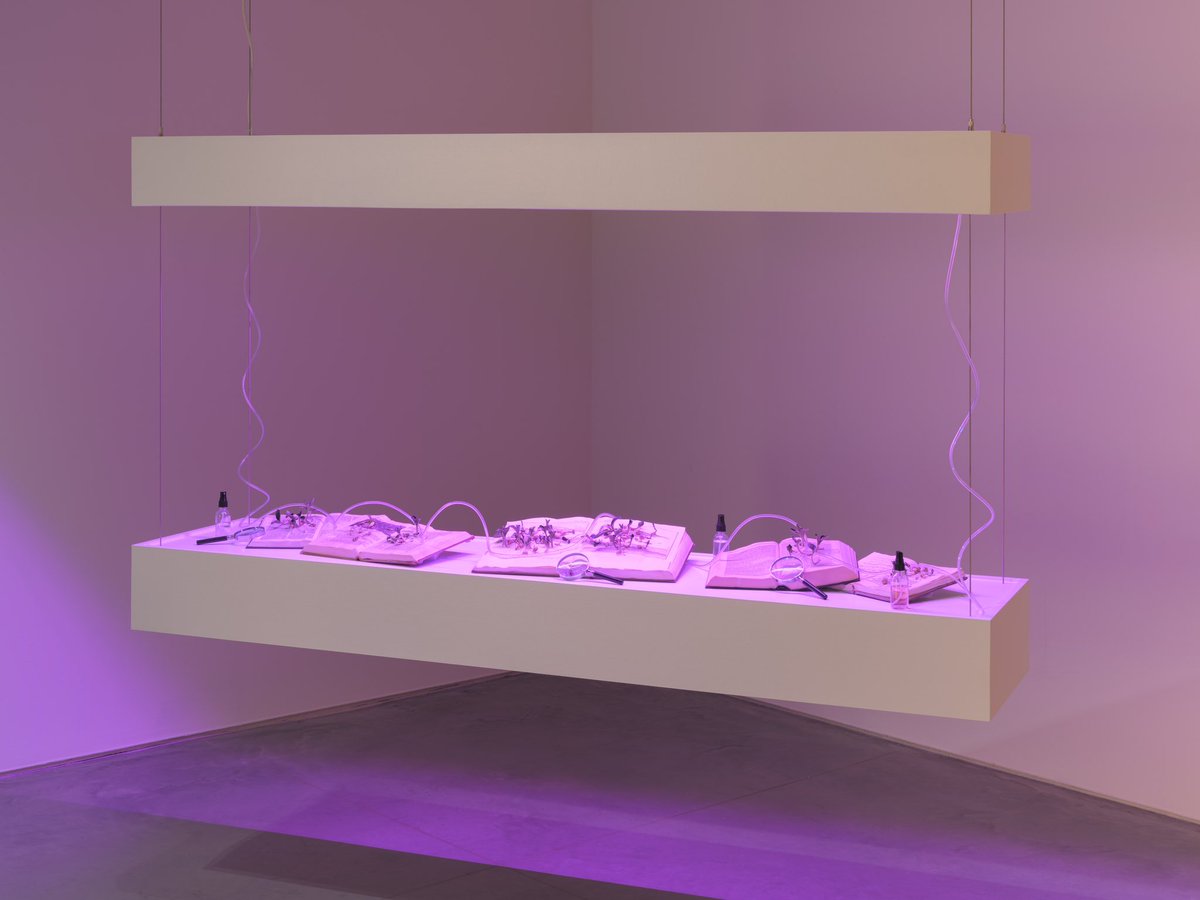
In Aroussiak Gabrielian’s “Botanic Attunement,” the pages of books of Western thought have been seeded with leafy, intertwining plants, attuning the visitor to the complexity of plant life in contrast with Western knowledge systems’ hierarchies. On view until December 9.

In Aroussiak Gabrielian’s “Botanic Attunement,” the pages of books of Western thought have been seeded with leafy, intertwining plants, attuning the visitor to the complexity of plant life in contrast with Western knowledge systems’ hierarchies. On view until December 9.
Ford Foundation Gallery (@ford_gallery) 's Twitter Profile Photo

“Curator of Public Curiosity,” Paul Holdengäber returns to the Ford Foundation for a fireside chat with Professor Ruha Benjamin about ethics in AI on Nov. 20th, 6-8pm. …onversationruhaandpaul.splashthat.com

“Curator of Public Curiosity,” Paul Holdengäber returns to the Ford Foundation for a fireside chat with Professor Ruha Benjamin about ethics in AI on Nov. 20th, 6-8pm. 
…onversationruhaandpaul.splashthat.com
Ford Foundation Gallery (@ford_gallery) 's Twitter Profile Photo

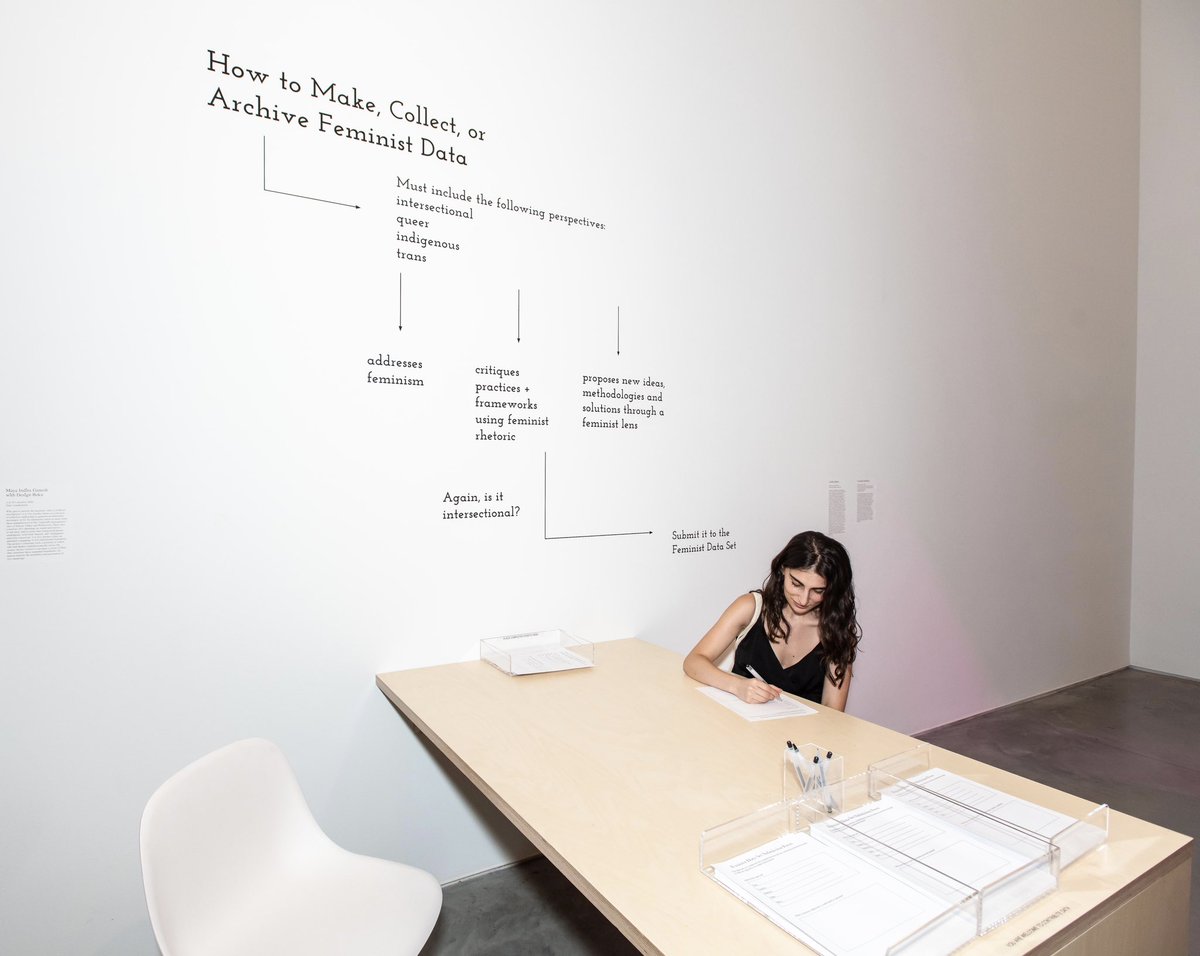
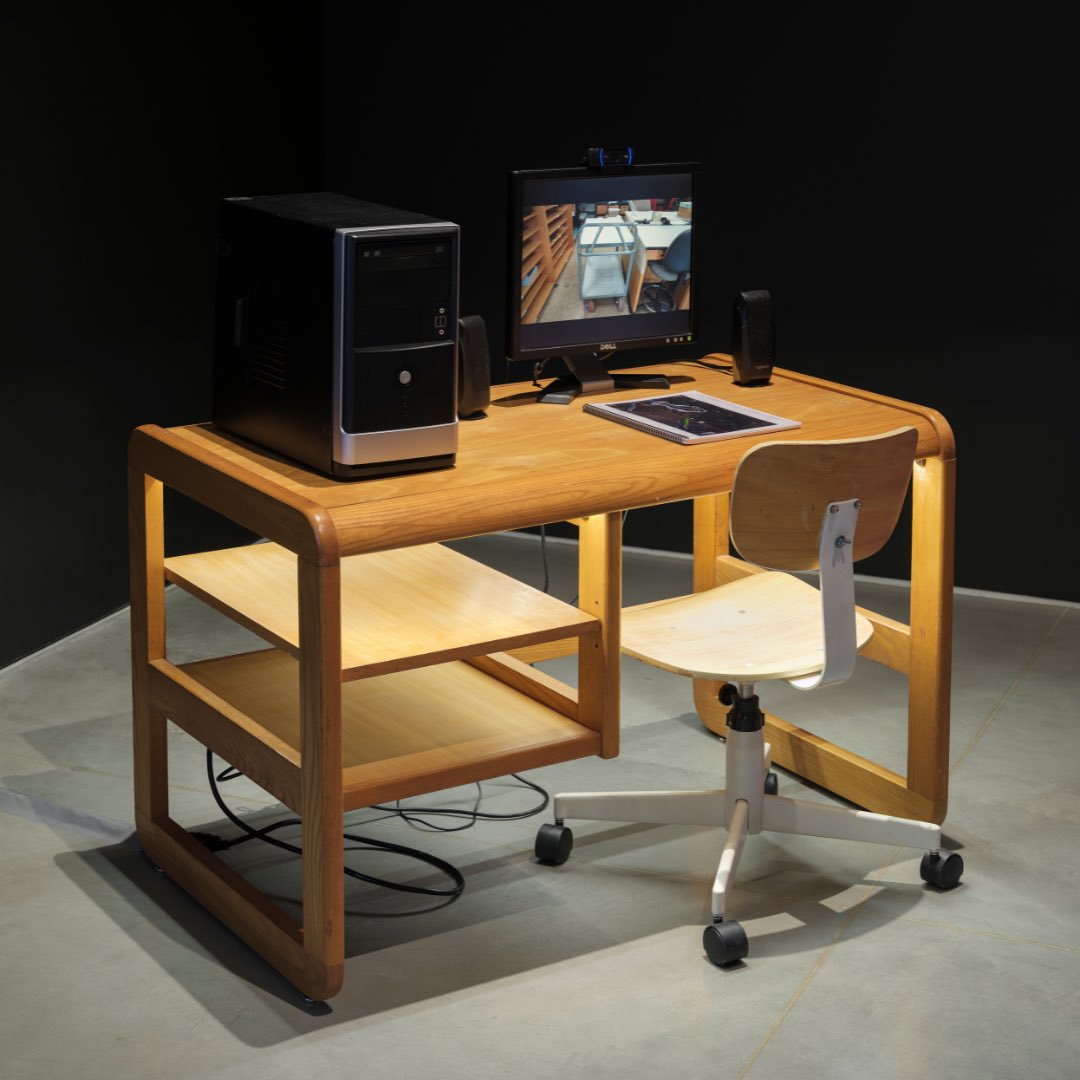
Given data’s growing role in coding planetary futures, what would it look like to code alternative futures through intersectional feminist approaches to data? Caroline Sinders’ Feminist Data Set imagines other possibilities for AI. On view now in “What Models Make Worlds.”

Given data’s growing role in coding planetary futures, what would it look like to code alternative futures through intersectional feminist approaches to data? Caroline Sinders’ Feminist Data Set imagines other possibilities for AI. On view now in “What Models Make Worlds.”
Ford Foundation Gallery (@ford_gallery) 's Twitter Profile Photo

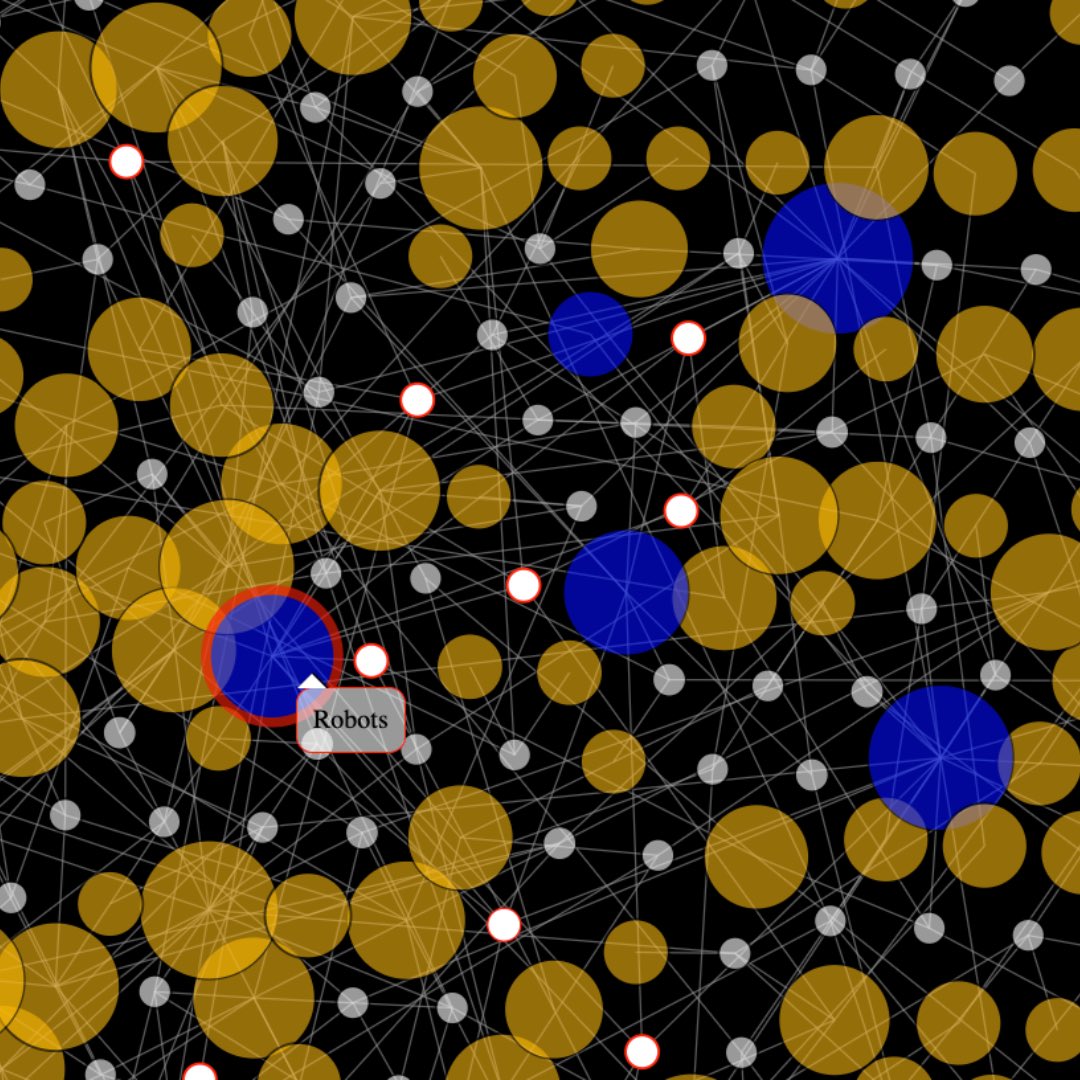
What is AI? And who gets to answer this question? Through “A is For Another,” Maya Indira Ganesh with Design Beku create an alternate map of AI generated through collective authorship, expanding AI’s potential meanings. On view now in "What Models Make Worlds."

What is AI? And who gets to answer this question? Through “A is For Another,” Maya Indira Ganesh with Design Beku create an alternate map of AI generated through collective authorship, expanding AI’s potential meanings. On view now in "What Models Make Worlds."
Ford Foundation Gallery (@ford_gallery) 's Twitter Profile Photo

Kite’s work “Makȟóčheowápi Akézaptaŋ (Fifteen Maps)” addresses how AI can replicate the logics of colonialism, and imagines possibilities for Indigenous epistemologies of AI. It draws from Kite’s research on Cruger Island. On view in "What Models Make Worlds" until December 9.

Kite’s work “Makȟóčheowápi Akézaptaŋ (Fifteen Maps)” addresses how AI can replicate the logics of colonialism, and imagines possibilities for Indigenous epistemologies of AI. It draws from Kite’s research on Cruger Island. On view in "What Models Make Worlds" until December 9.
Ford Foundation Gallery (@ford_gallery) 's Twitter Profile Photo

In the series of prints “The Groove,” Niama Safia Sandy redresses how technologies like facial recognition target and surveil Black life and communities, imagining futures otherwise. “The Groove” is on view now in “What Models Make Worlds”

In the series of prints “The Groove,” Niama Safia Sandy redresses how technologies like facial recognition target and surveil Black life and communities, imagining futures otherwise. “The Groove” is on view now in “What Models Make Worlds”
Ford Foundation Gallery (@ford_gallery) 's Twitter Profile Photo

Thank you so much to all who joined us last week for a fascinating and timely fireside chat with Ruha Benjamin and Paul Holdengräber. Their conversation on ethics and AI shed light on some of the pressing issues explored by artists across “What Models Make Worlds.”

Thank you so much to all who joined us last week for a fascinating and timely fireside chat with Ruha Benjamin and Paul Holdengräber. Their conversation on ethics and AI shed light on some of the pressing issues explored by artists across “What Models Make Worlds.”
Ford Foundation Gallery (@ford_gallery) 's Twitter Profile Photo

Don’t miss your last chance to see “What Models Make Worlds”! All guests visiting the Ford Foundation Gallery are required to pre-register for admission to the exhibition. Register here: bit.ly/WMMWadmissionf…

Don’t miss your last chance to see “What Models Make Worlds”! All guests visiting the Ford Foundation Gallery are required to pre-register for admission to the exhibition. Register here: bit.ly/WMMWadmissionf…
Ford Foundation Gallery (@ford_gallery) 's Twitter Profile Photo

Algorithmic Justice League’s founder Dr. Joy Buolamwini reads in a collective voice, resisting speech recognition systems’ bias and silencing. Register at the link in our bio to see What Models Make Worlds in its last week.

Algorithmic Justice League’s founder Dr. Joy Buolamwini reads in a collective voice, resisting speech recognition systems’ bias and silencing. Register at the link in our bio to see What Models Make Worlds in its last week.
Ford Foundation Gallery (@ford_gallery) 's Twitter Profile Photo

As “What Models Make Worlds: Critical Imaginaries of AI” comes to a close, we reflect on the words of Dr. Joy Buolamwini–“technology should serve all of us. Not just the privileged few.” May these artists’ powerful visions continue to inspire us all to build such a world.

As “What Models Make Worlds: Critical Imaginaries of AI” comes to a close, we reflect on the words of Dr. Joy Buolamwini–“technology should serve all of us. Not just the privileged few.” May these artists’ powerful visions continue to inspire us all to build such a world.