Mounir IDRASSI (@idrassi) 's Twitter Profile
Mounir IDRASSI

@idrassi

PGP: 607E 5A7A D030 D38E 5E5C 2CA5 02C3 0AE9 0FAE 4A6F, #VeraCrypt author, IDRIX founder, AM Crypto founder

ID: 1049087734361591808

linkhttps://amcrypto.jp calendar_today08-10-2018 00:03:01

96 Tweet

93 Followers

31 Following

Mounir IDRASSI (@idrassi) 's Twitter Profile Photo

For those who enjoy sci-fi novels, the mysterious Horizon Alpha AI LLM model is amazing at crafting compelling stories. Below is such example that I enjoyed. It is a sweeping, lyrical meditation on collapse and rebirth.

Mounir IDRASSI (@idrassi) 's Twitter Profile Photo

🟥 She vanished. On purpose. Maybe. A red umbrella. A staged video. A detective chasing absence instead of clues. “Turn Me Off: The Juliette Marin Case” is a mystery about ghosts, art, family, and the lies we tell to come back on our own terms. Read it. Stay for the twist. 👇

Mounir IDRASSI (@idrassi) 's Twitter Profile Photo

I published a new paper (IACR ePrint 2026/053) on kleptography risk in FIPS 204 ML-DSA. In key-replicated/escrowed deployments, a malicious signer can exfiltrate kilobytes per signature, signatures verify normally. Paper: eprint.iacr.org/2026/053 Code: github.com/idrassi/mldsa-…

Daniel J. Bernstein (@hashbreaker) 's Twitter Profile Photo

Interested in compiler bugs? Here's one for x86 in e.g. gcc-14.2.0 -O1 -m32: void foo(const void *x) { if (isnan(*(float *) x)) printf("%x\n",*(int *) x); } int main() { int u = 0x7f987654; printf("%x\n",u); foo(&u); return 0; } (using math.h, stdio.h). Workaround: volatile.

Mounir IDRASSI (@idrassi) 's Twitter Profile Photo

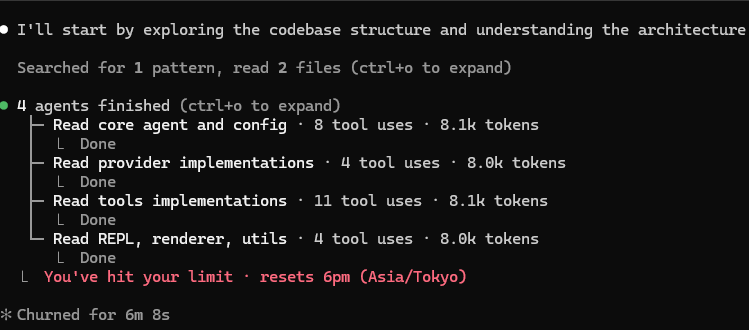
Issue is real: didn't use Claude for 1 week, just tried it to review a small codebase, and boom...limit is hit!! How come QA didn't catch this?

Issue is real: didn't use Claude for 1 week, just tried it to review a small codebase, and boom...limit is hit!! 

How come QA didn't catch this?
Nadim Kobeissi (Moved to Bluesky) (@kaepora) 's Twitter Profile Photo

I spent the evening looking into quantum computing timelines as a non-expert in quantum computing. Here is what I’ve learned: We currently have machines with ~1,000–1,500 physical qubits at error rates around 10⁻³, and Google’s algorithm requires ~500,000 physical qubits