Gabriel Cassol (@gabrielcassol_) 's Twitter Profile
Gabriel Cassol

@gabrielcassol_

Meteorologist | B.S. '19 & M.S. '22 Meteorology @UFPel | Opinions are my own.

ID: 179486439

calendar_today17-08-2010 12:12:08

100,100K Tweet

2,2K Followers

568 Following

Amelia Urquhart 🏳️‍⚧️ (@ameliaurquhart_) 's Twitter Profile Photo

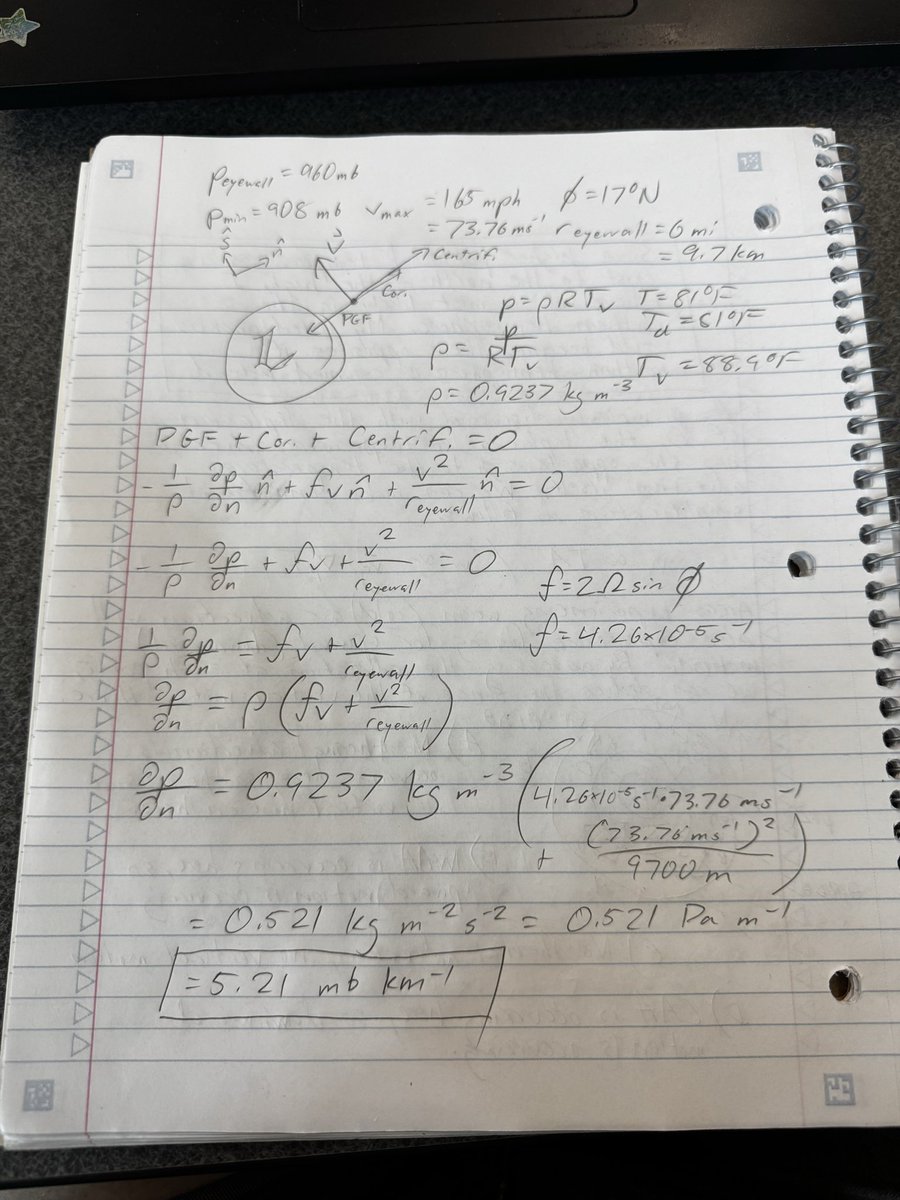
Through gradient wind balance and ignoring the effects of friction, Melissa’s eye radius and max wind speed implies a pressure gradient of 5.21 mb/km (8.38 mb/mi). If this pressure gradient was over Norman, the pressure would drop from 972 mb at the NWC to 949 mb in downtown.

Through gradient wind balance and ignoring the effects of friction, Melissa’s eye radius and max wind speed implies a  pressure gradient of 5.21 mb/km (8.38 mb/mi). If this pressure gradient was over Norman, the pressure would drop from 972 mb at the NWC to 949 mb in downtown.
Sam Brandt (@sambrandt99) 's Twitter Profile Photo

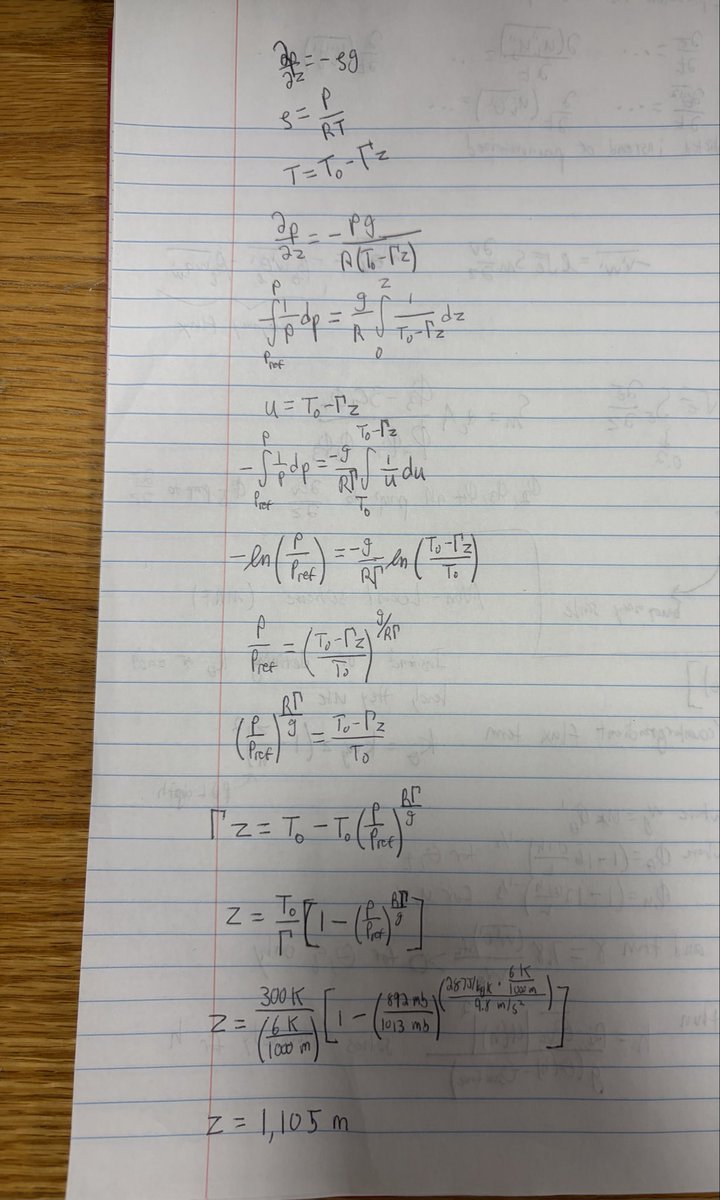
892 mb at sea level is absurd. You would need to climb to 1.1 km (3600 ft) above sea level to experience the same pressure on a normal day. A slab of air 1.1 km thick was essentially removed from the column above the Melissa’s center.

892 mb at sea level is absurd. You would need to climb to 1.1 km (3600 ft) above sea level to experience the same pressure on a normal day. A slab of air 1.1 km thick was essentially removed from the column above the Melissa’s center.
Peter Forister ⚡️🌪️⚡️ (@forecaster25) 's Twitter Profile Photo

The Sentinel-2 satellite captured this image of Melissa's eye at peak intensity. 10m pixel resolution - one of the best satellite images ever captured of a hurricane of this intensity. Image from 16z this morning.

The Sentinel-2 satellite captured this image of Melissa's eye at peak intensity. 10m pixel resolution - one of the best satellite images ever captured of a hurricane of this intensity.

Image from 16z this morning.
Sigma Meteorologia (@smeteorologia) 's Twitter Profile Photo

Evolução fascinante dos mesovórtices do Furacão Melissa Na animação é possível ter uma visualização centrada no olho do Furacão Melissa em seu auge (categoria 5) durante o dia 28/10/2025, permitindo-nos observar a evolução dos mesovórtices. Créditos: CIRA

Gabriel Cassol (@gabrielcassol_) 's Twitter Profile Photo

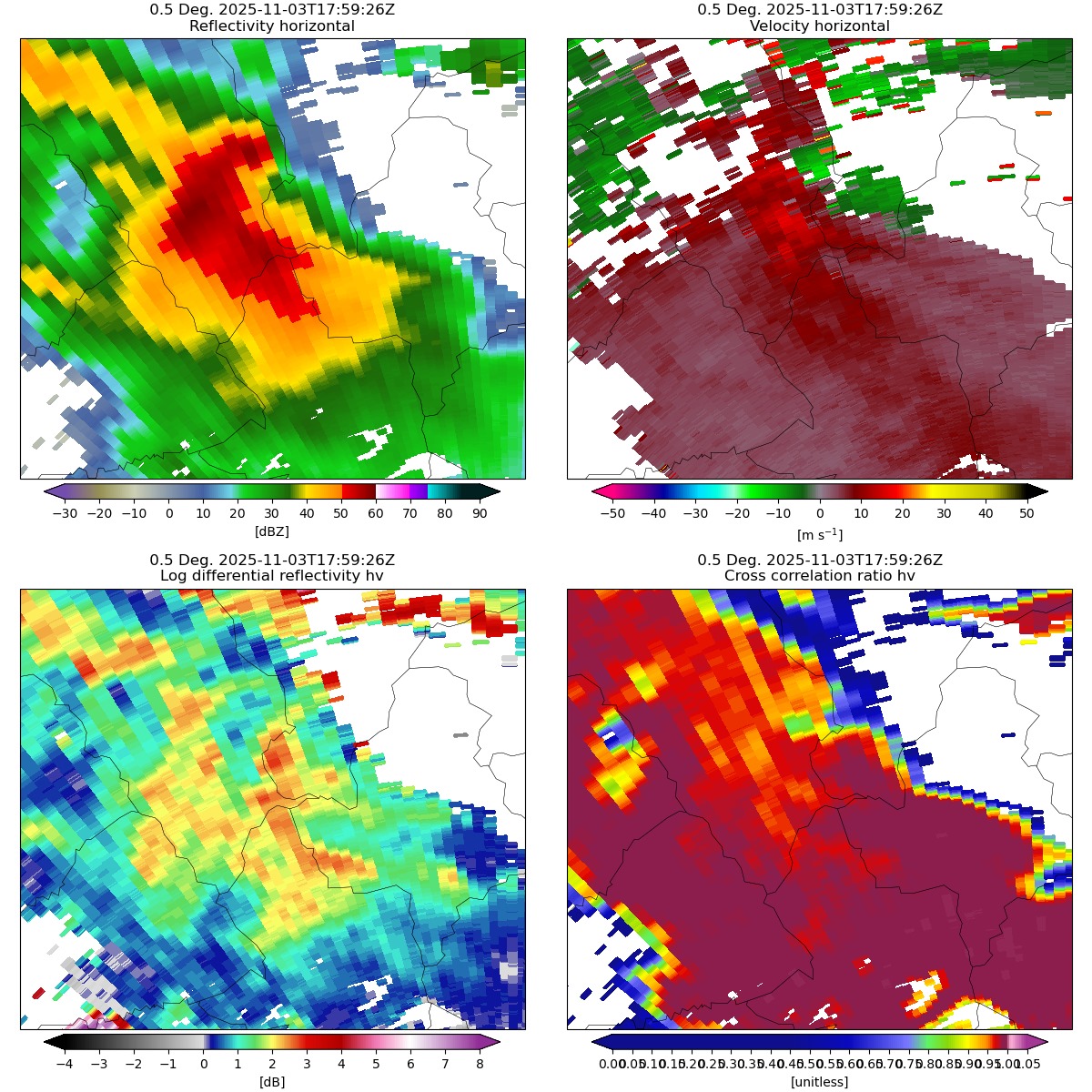
Classic supercell leftmover in the Alto Vale do Itajaí region of Santa Catarina this afternoon. A weather station recorded a gust of 80.5 km/h. Mesocyclone clearly visible on radar.

Classic supercell leftmover in the Alto Vale do Itajaí region of Santa Catarina this afternoon. A weather station recorded a gust of 80.5 km/h. Mesocyclone clearly visible on radar.
Sigma Meteorologia (@smeteorologia) 's Twitter Profile Photo

⚠️Simulação em alta resolução dos modelos regionais WRF indica elevado potencial para tempo severo entre sexta (07) e sábado (08/11) em parte do RS, SC, PR, MS e SP. 📲 Para mais detalhes, acesse a nossa plataforma: sigmameteorologia.com/sigmaweb

Vitor Goede 🇺🇦 (@goedetds) 's Twitter Profile Photo

A tornado has been found to have hit the interior of Itaiopolis, in my home state of Santa Catarina last monday. Apart from aerial imagery, SDC-SC's Lontras radar was able to pick up the tornadic circulation plus a TDS.

A tornado has been found to have hit the interior of Itaiopolis, in my home state of Santa Catarina last monday. Apart from aerial imagery, SDC-SC's Lontras radar was able to pick up the tornadic circulation plus a TDS.
Sigma Meteorologia (@smeteorologia) 's Twitter Profile Photo

🌪️ Diferentes simulações em alta resolução indicam risco elevado para supercélulas com potencial tornádico entre o sul do PY, oeste do PR e extremo sul do MS entre tarde e noite desta sexta-feira (07/11). 📲 Para mais detalhes, acesse a nossa plataforma: sigmameteorologia.com/sigmaweb

Sigma Meteorologia (@smeteorologia) 's Twitter Profile Photo

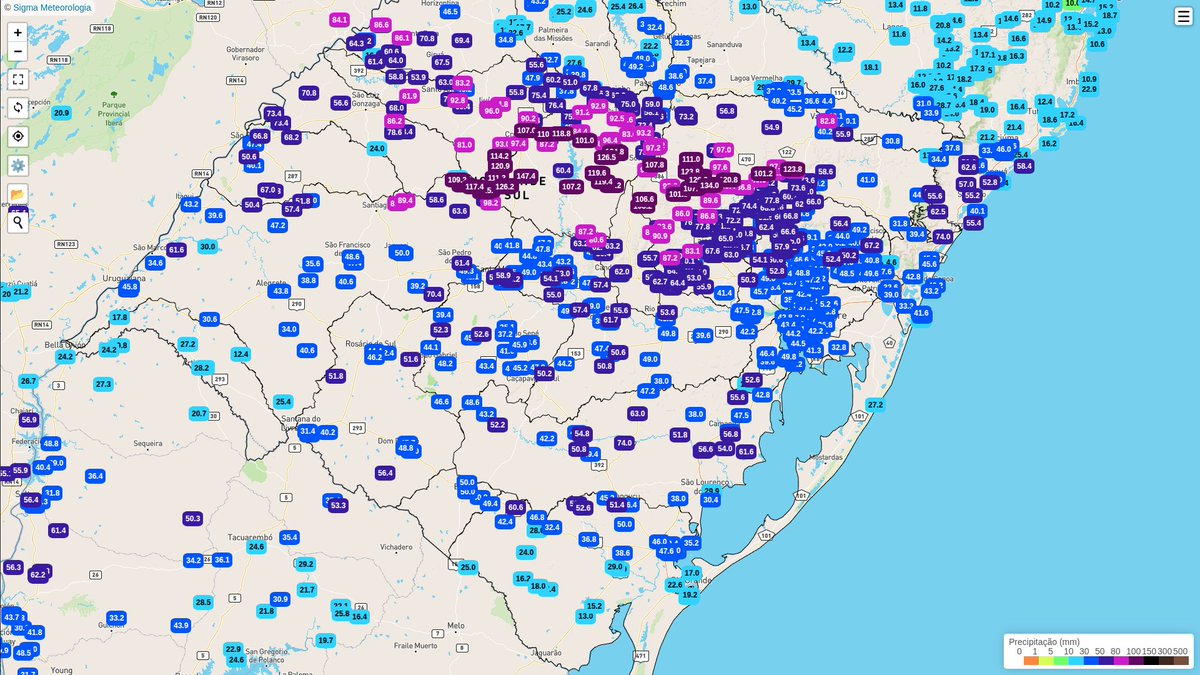
🌧️ Acumulados de chuva no RS superam os 100 mm no norte do estado, alguns pontos já se aproximam dos 150 mm, volumes observados apenas nesta sexta-feira (07/11). 📲 Para mais detalhes, acesse: sigmameteorologia.com/sigmaweb/stati…

🌧️ Acumulados de chuva no RS superam os 100 mm no norte do estado, alguns pontos já se aproximam dos 150 mm, volumes observados apenas nesta sexta-feira (07/11).

📲 Para mais detalhes, acesse: sigmameteorologia.com/sigmaweb/stati…
PREVOTS (@prevots_svr) 's Twitter Profile Photo

Pelo menos 8 tornados foram identificados em SC e PR na última sexta-feira. O tornado mais significativo, que atingiu Rio Bonito do Iguaçu, recebeu classificação *preliminar* de F4 no nosso banco de dados com base nos danos na cidade. Vamos atualizar os dados nos próximos dias.

Pelo menos 8 tornados foram identificados em SC e PR na última sexta-feira. O tornado mais significativo, que atingiu Rio Bonito do Iguaçu, recebeu classificação *preliminar* de F4 no nosso banco de dados com base nos danos na cidade. Vamos atualizar os dados nos próximos dias.
wxKobold (@wxkobold) 's Twitter Profile Photo

From 2025/06/29, an incredible animation of two outflow boundaries colliding and initiating some VERY explosive but short-lived convection. Top-down view on the left, cross-sectional view to the right (cutting plane is the thick white line in the left panel)!

Vitor Goede 🇺🇦 (@goedetds) 's Twitter Profile Photo

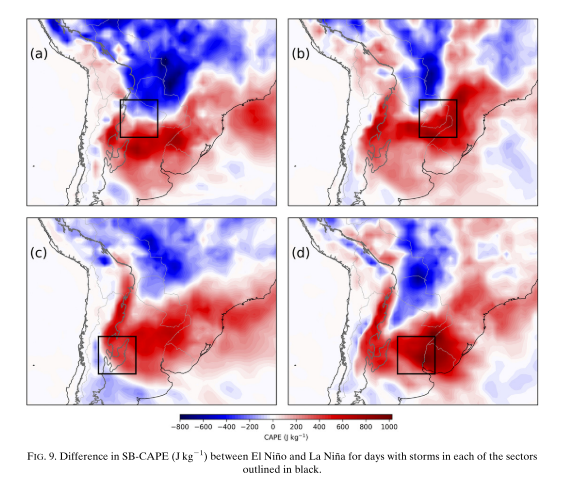
El nino tends favor all things that severe storms like: more baroclinicity e stronger storm systems, greater moisture advection from the amazon, more instability, and more wind shear. This however is more noticeable over the upper part of the La Plata Basin (NE AR, UY, PY, BR). +

El nino tends favor all things that severe storms like: more baroclinicity e stronger storm systems, greater moisture advection from the amazon, more instability, and more wind shear. This however is more noticeable over the upper part of the La Plata Basin (NE AR, UY, PY, BR). +
Vitor Goede 🇺🇦 (@goedetds) 's Twitter Profile Photo

Quick QLCS drill bit this morning in Pelotas, Rio Grande do Sul, Brazil. The Cangucu radar processor is rotten, and the volumes are almost useless, but it seems like the spin up occurred in the bookend of the QLCS.