Gabo Reyes M. (@gaboreyes84) 's Twitter Profile
Gabo Reyes M.

@gaboreyes84

Cognitive Scientist & Philosopher researching Metacognition and Consciousness

ID: 1036225348512493569

calendar_today02-09-2018 12:12:30

1,1K Tweet

238 Takipçi

250 Takip Edilen

Stefano Palminteri (@stepalminteri.bsky.social) (@stepalminteri) 's Twitter Profile Photo

Will huge sample sizes (alone) solve psychology problems (as for example it is claimed they solved behavioural genetics problems)? This classic article clearly illustrate that "not quite". It start from recognising a key difference between psychology and physics 1/n

Will huge sample sizes (alone) solve psychology problems (as for example it is claimed they solved behavioural genetics problems)? This classic article clearly illustrate that "not quite". It start from recognising a key difference between psychology and physics  1/n
Neuroskeptic 🇺🇦 (@neuro_skeptic) 's Twitter Profile Photo

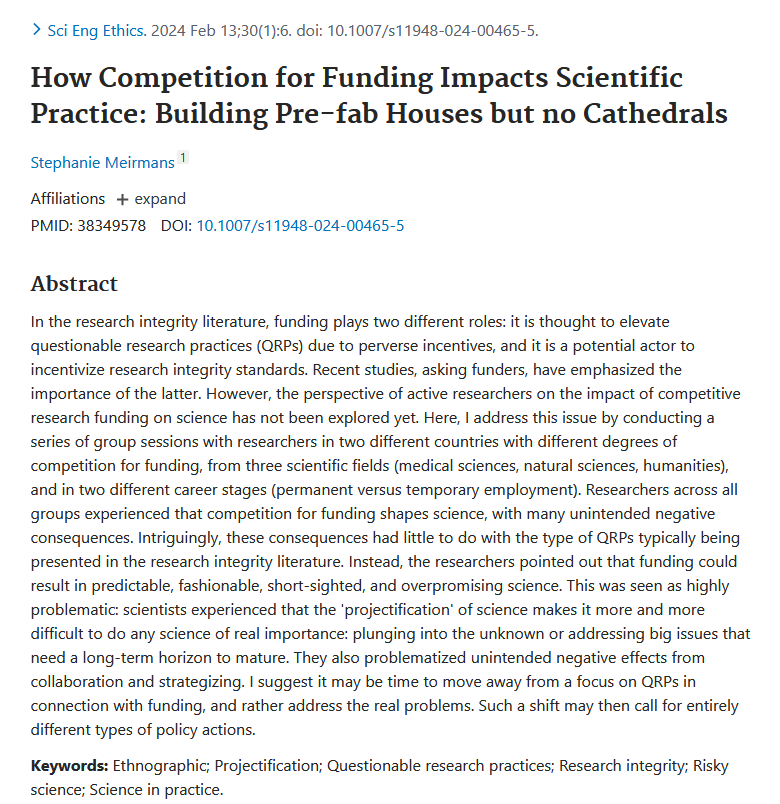
How Competition for Funding Impacts Scientific Practice - "Predictable, fashionable, short-sighted, and overpromising science." pubmed.ncbi.nlm.nih.gov/38349578/

How Competition for Funding Impacts Scientific Practice - "Predictable, fashionable, short-sighted, and overpromising science." pubmed.ncbi.nlm.nih.gov/38349578/
Science Advancement and Outreach (@saoscience) 's Twitter Profile Photo

"The Scientific Study of Consciousness Cannot and Should Not Be Morally Neutral" ➡️ "...the use of nonhuman animals in the scientific study of consciousness introduces a direct conflict between scientific relevance and ethics" #ScienceTwitter #ethics journals.sagepub.com/doi/10.1177/17…

Doby Rahnev (@dobyrahnev) 's Twitter Profile Photo

For the record, I no longer think that the "Bayesian brain" should be regarded as a specific hypothesis (which is what I was arguing against). I now see "Bayesian brain" as a framework, which is not in itself falsifiable. It's a useful framework, as long as it's seen as such.

Stanislas Dehaene @standehaene.bsky.social (@standehaene) 's Twitter Profile Photo

New manuscript from the lab! What is the neural code for reading? Through simulations of convolutional neural networks, we propose a new hypothesis on how, in literate brains, neurons encode written letters and their relative positions within the word. arxiv.org/abs/2403.06159

Nature Human Behaviour (@naturehumbehav) 's Twitter Profile Photo

Across a series of experiments and simulations, Ma, @MartinMWiener et al. show that time is a feature of visual processing that is intrinsic to perceptual experience and closely linked to the probability of recalling an image (memorability). nature.com/articles/s4156…

NeuroUC (@neurouc) 's Twitter Profile Photo

A multimodal interface for speech perception: the role of the left superior temporal sulcus in social cognition and autism oxfordjournals.altmetric.com/details/163075… neuroCICS Maëva Michon Patricia Soto-Icaza

Maëva Michon (@maevamichon) 's Twitter Profile Photo

📢 PAPER ALERT 🤓 So proud of this one written with my friends and colleagues Leonie Kausel and Patricia Soto-Icaza . Thanks Francisco Aboitiz LaNCE for your unconditional support. #brain #neuroscience #socialcognition #autism #pSTS doi.org/10.1093/cercor…

Decision Neuroscience and Neuroeconomics Papers (@decisionneurop) 's Twitter Profile Photo

Neural Signatures of Evidence Accumulation Encode Subjective Perceptual Confidence Independent of Performance journals.sagepub.com/doi/10.1177/09…

Stanislas Dehaene @standehaene.bsky.social (@standehaene) 's Twitter Profile Photo

The French Scientific Council for Education regularly publishes syntheses of scientific findings. We translated some of them in English, Spanish and other languages. More to come, but here are the first ones on the science of reading: reseau-canope.fr/conseil-scient…

Stanislas Dehaene @standehaene.bsky.social (@standehaene) 's Twitter Profile Photo

We have updated this manuscript -- a new and very precise hypothesis about how visual neurons get recycled for visual word recognition when we learn to read arxiv.org/pdf/2403.06159

Doby Rahnev (@dobyrahnev) 's Twitter Profile Photo

This was a really fun project. If you have never heard of Anton Syndrome or anosognosia but are interested in subjective perception, you're in for a treat. Great work by Matthias Michel, Yi Gao, Matan Mazor, and Isaiah Kletenik.

Matthias Michel (@matthiasmichel_) 's Twitter Profile Photo

In this new preprint @smfleming and I present a theory of the functions and evolution of conscious vision. This is a big project: osf.io/preprints/psya…. We'd love to get your comments!

In this new preprint @smfleming and I present a theory of the functions and evolution of conscious vision. This is a big project: osf.io/preprints/psya…. We'd love to get your comments!
Penguin Argentina (@penguinlibrosar) 's Twitter Profile Photo

El nuevo libro de Samanta Schweblin, desde el 1 de marzo en librerías 🙌✨😍 Magnéticos e irresistibles. En cada uno de los cuentos de El buen mal, Samanta Schweblin nos abduce a otra dimensión donde quedamos en contacto íntimo con sus personajes y encandilados por la tragedia.
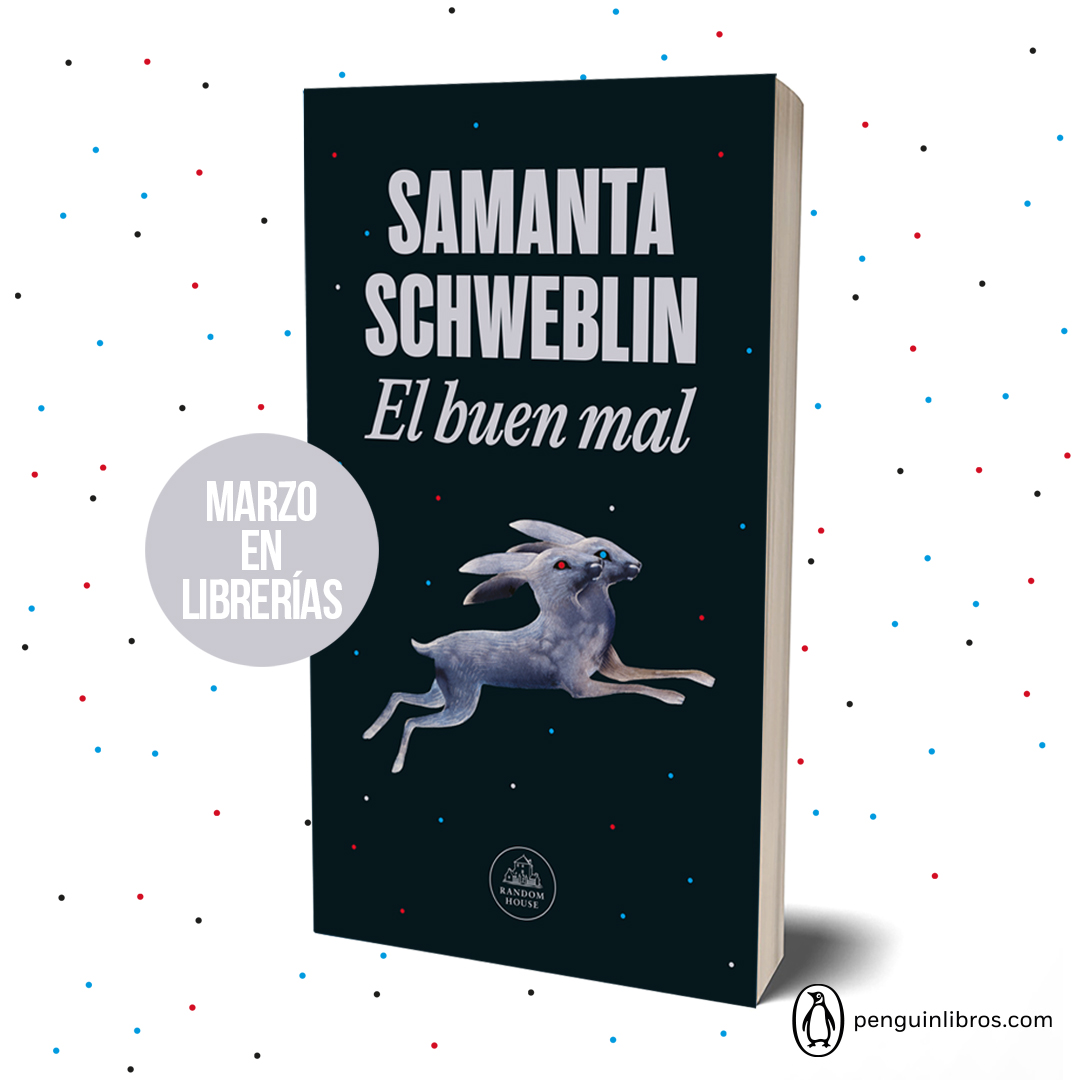
El nuevo libro de <a href="/sschweblin/">Samanta Schweblin</a>, desde el 1 de marzo en librerías 🙌✨😍

Magnéticos e irresistibles. En cada uno de los cuentos de El buen mal, Samanta Schweblin nos abduce a otra dimensión donde quedamos en contacto íntimo con sus personajes y encandilados por la tragedia.