Transmon Qubit (@freefallframe) 's Twitter Profile
Transmon Qubit

@freefallframe

Physics enthusiast. Currently reading Scott Aaronson’s Quantum Information lecture notes and Anthony Zee’s Group Theory in a Nutshell for Physicists.

ID: 1256118885658566656

calendar_today01-05-2020 07:11:11

438 Tweet

290 Followers

2,2K Following

Yaashaa Golovanov (@golovanov_ammoc) 's Twitter Profile Photo

Some people are on an eternal quest to attain intellectual monkhood, and oftentimes I see them succeeding in their mission. I am deeply indebted to such lucid expositors; case in point, I named AMMOC in honor of Arnold and Marsden because their scientific works shaped my life.

Some people are on an eternal quest to attain intellectual monkhood, and oftentimes I see them succeeding in their mission. I am deeply indebted to such lucid expositors; case in point, I named AMMOC in honor of Arnold and Marsden because their scientific works shaped my life.
Sundar Pichai (@sundarpichai) 's Twitter Profile Photo

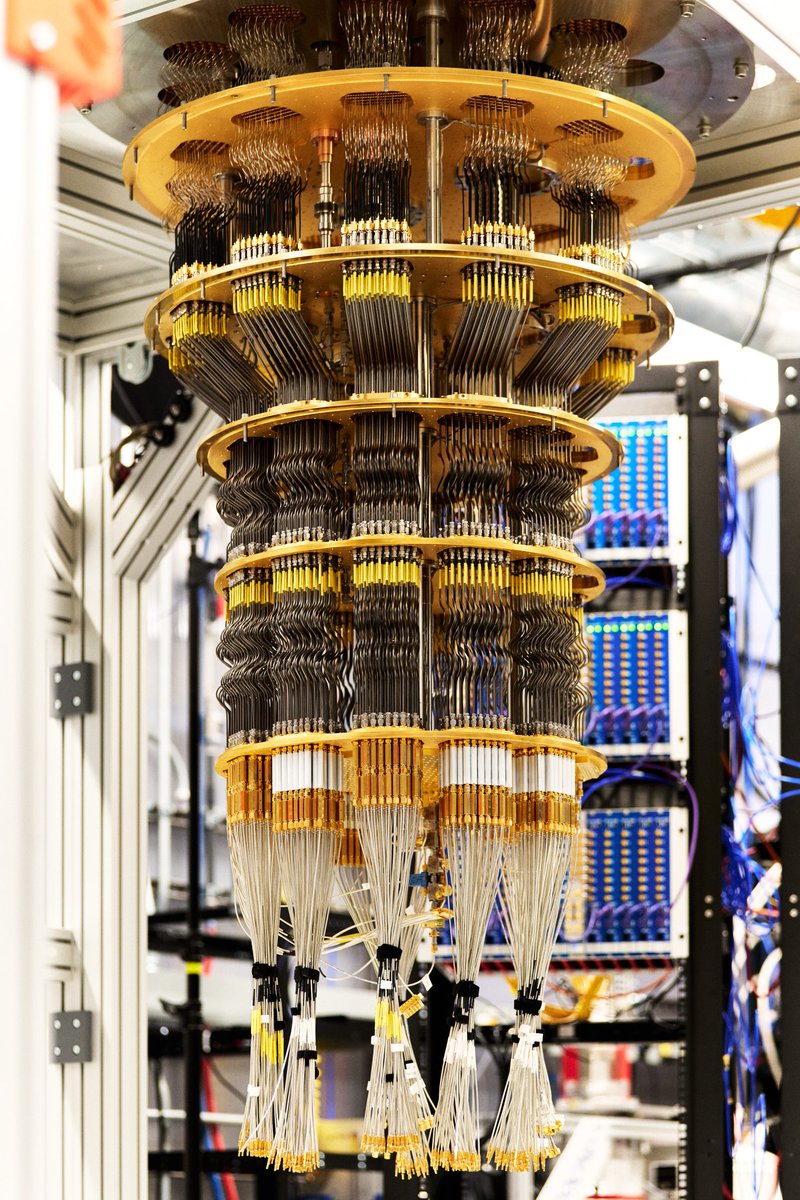
New breakthrough quantum algorithm published in nature today: Our Willow chip has achieved the first-ever verifiable quantum advantage. Willow ran the algorithm - which we’ve named Quantum Echoes - 13,000x faster than the best classical algorithm on one of the world's fastest

New breakthrough quantum algorithm published in <a href="/Nature/">nature</a> today: Our Willow chip has achieved the first-ever verifiable quantum advantage.

Willow ran the algorithm - which we’ve named Quantum Echoes - 13,000x faster than the best classical algorithm on one of the world's fastest
Google AI (@googleai) 's Twitter Profile Photo

Today, we’re announcing a major breakthrough that marks a significant step forward in the world of quantum computing. For the first time in history, our teams at Google Quantum AI demonstrated that a quantum computer can successfully run a verifiable algorithm, 13,000x faster than

Robin Kothari (@robinkothari) 's Twitter Profile Photo

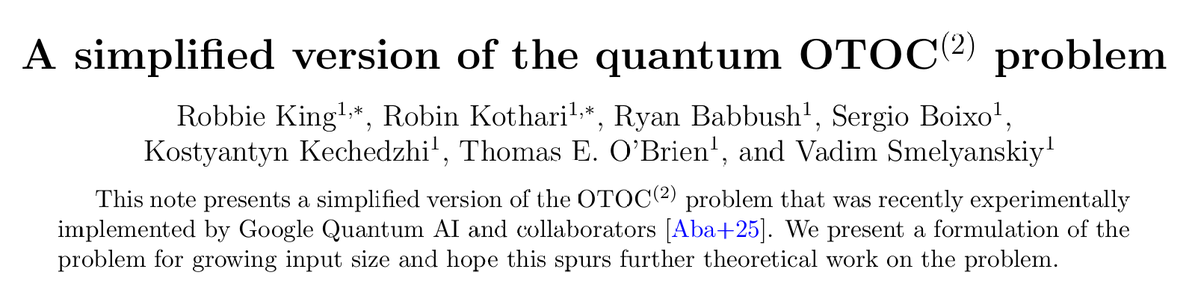
Are you a computer scientist and don't know what an OTOC is, but want to understand the problem solved in the nature paper by Google Quantum AI? We wrote a 2-page note that explains the motivation and presents a simplified version of the problem for arbitrary input size.

Are you a computer scientist and don't know what an OTOC is, but want to understand the problem solved in the <a href="/Nature/">nature</a> paper by <a href="/GoogleQuantumAI/">Google Quantum AI</a>? We wrote a 2-page note that explains the motivation and presents a simplified version of the problem for arbitrary input size.
John Preskill (@preskill) 's Twitter Profile Photo

When and how will quantum computing broadly benefit humanity? Despite exhilarating recent progress, we still don’t know. Here my friend Jens Eisert and I assess the current status and the challenges ahead. We are optimistic about the quantum future, but there’s a lot of work to

Martin Bauer (@martinmbauer) 's Twitter Profile Photo

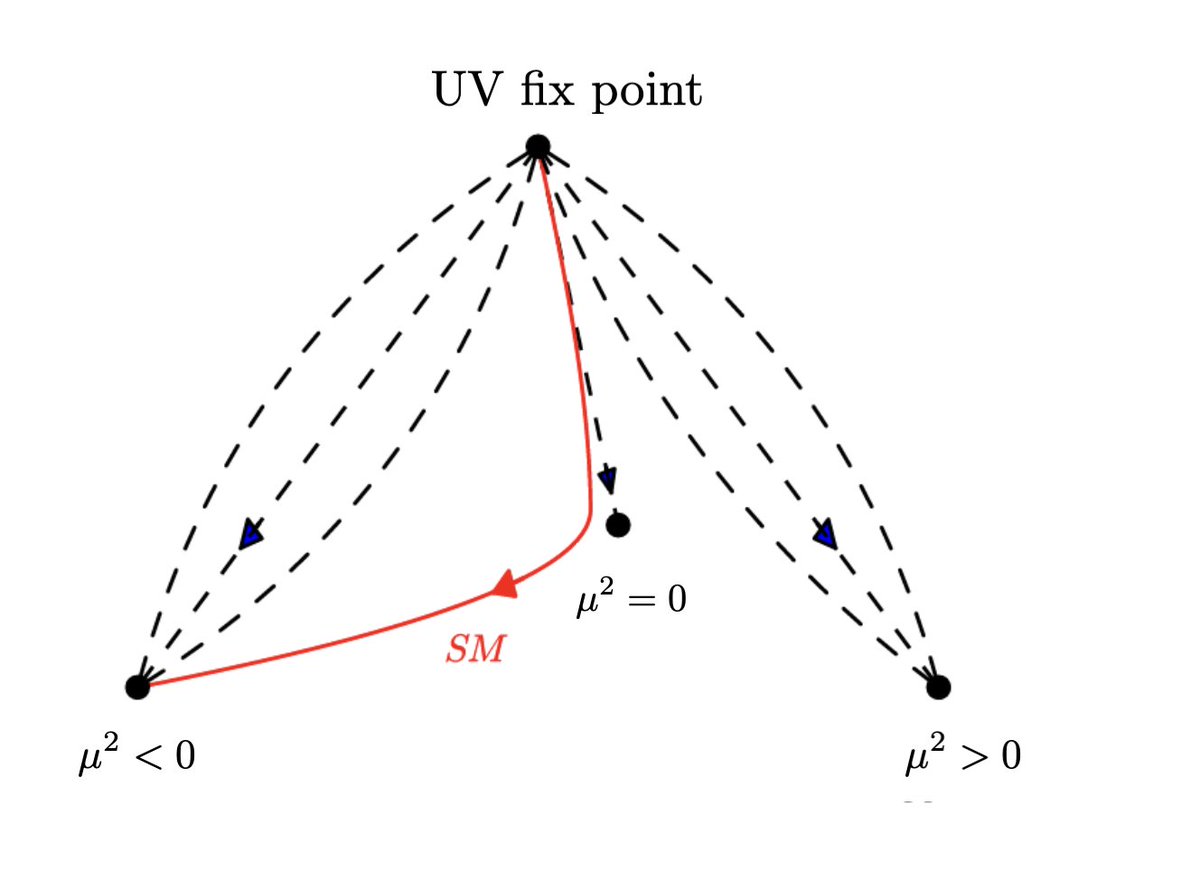
The hierarchy problem (finetuning) of the Standard Model of particle physics is often presented as the question 'why the weak scale is so much smaller than the Planck scale' But there is also a geometric interpretation that can be understood with little maths (but a lot of

The hierarchy problem (finetuning) of the Standard Model of particle physics is often presented as the question 'why the weak scale is so much smaller than the Planck scale' 

But there is also a geometric interpretation that can be understood with little maths (but a lot of
Ash Jogalekar (@curiouswavefn) 's Twitter Profile Photo

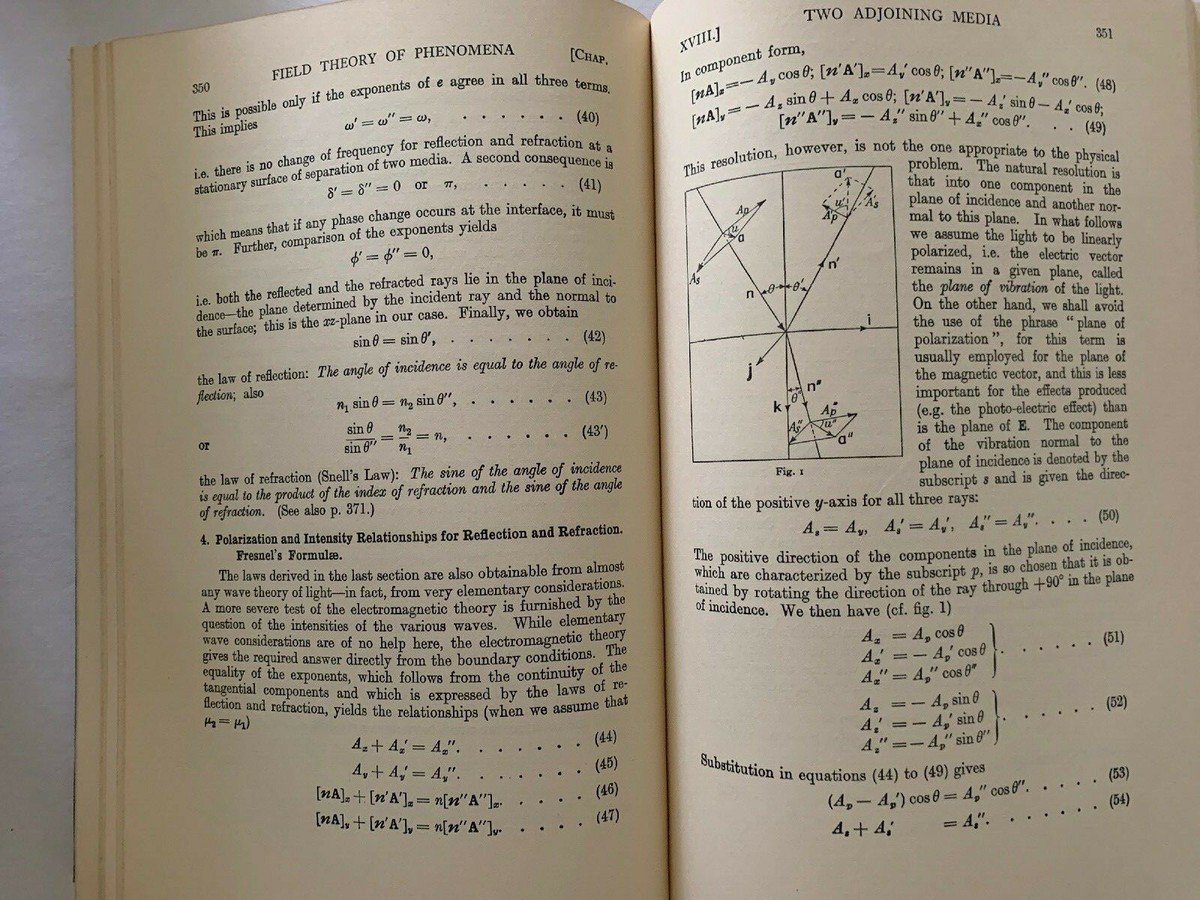
"The most important book I studied at Winchester College was perhaps Joos's Theoretical Physics...it was mostly where I learned physics altogether. So it gave me, I think, a very good taste of what physics is about." - Freeman Dyson

"The most important book I studied at Winchester College was perhaps Joos's Theoretical Physics...it was mostly where I learned physics altogether. So it gave me, I think, a very good taste of what physics is about." - Freeman Dyson
Didier 'Dirac's ghost' Gaulin (@diracghost) 's Twitter Profile Photo

The Clay Institute just dropped a couple of great lectures on Millennium Prize problems, amongst them, a great presentation on 'Yang Mills and the Mass Gap' by Field medalist Martin Hairer, 'P vs NP' by Avi Wigderson ++ 🔗👇👇👇👇👇

The Clay Institute just dropped a couple of great lectures on Millennium Prize problems, amongst them, a great presentation on 'Yang Mills and the Mass Gap' by Field medalist Martin Hairer, 'P vs NP' by Avi Wigderson ++ 

🔗👇👇👇👇👇
Martin (@martinmrmar) 's Twitter Profile Photo

Really love studying math as a hobby purely for my personal enjoyment. No one to rush me, no deadlines, no homework, no tests.. just pure math that I enjoy in my spare time 😎💪

Really love studying math as a hobby purely for my personal enjoyment. No one to rush me, no deadlines, no homework, no tests.. just pure math that I enjoy in my spare time 😎💪
conditional neuroconvergence (@rieszspieces) 's Twitter Profile Photo

my differential topology professor explaining what a riemannian metric is today: "the way you'd explain it to an elementary schooler is that a riemannian metric on M is a symmetric 2-tensor on the cotangent bundle"

Yaashaa Golovanov (@golovanov_ammoc) 's Twitter Profile Photo

“It is in this continuous effort to articulate the inarticulable, to define what is yet unclear, that the particular dynamics of mathematical work (and perhaps as well all creative intellectual work) is perhaps found.”

adithya (@00aleph00) 's Twitter Profile Photo

My favorite books to self study pure math!! When I was in undergrad, I spent a lot of time self-studying pure math. But I wasted a lot of time because I didn't have a roadmap. So here's a list of my favorite books, videos, and problem sets that you can use to self-study many

My favorite books to self study pure math!!

When I was in undergrad, I spent a lot of time self-studying pure math. But I wasted a lot of time because I didn't have a roadmap. 

So here's a list of my favorite books, videos, and problem sets that you can use to self-study many
Urs Schreiber (@ursschreiber) 's Twitter Profile Photo

1/6 Cold 2D electron liquids in transverse magnetic fields so strong and fine-tuned that there are exactly an integer (generally: rational) number of flux quanta per electron exhibit a "topologically ordered" ground state where vortices are anyons. This is famous. But now...

Google Quantum AI (@googlequantumai) 's Twitter Profile Photo

Congratulations to the finalists of the XPRIZE Quantum Applications competition. These 7 teams demonstrate the potential to pioneer quantum algorithms that can outperform classical computers and solve real-world problems. goo.gle/4iQtk95

Lean (@leanprover) 's Twitter Profile Photo

Professor Terence Tao analyzes how Erdős Problem 1026 was solved "through an interesting combination of existing literature, online collaboration, and AI tools." The conjecture was first proven in Lean using Harmonic's Aristotle. Further patterns discovered via

Professor Terence Tao analyzes how Erdős Problem 1026 was solved "through an interesting combination of existing literature, online collaboration, and AI tools."

The conjecture was first proven in Lean using <a href="/HarmonicMath/">Harmonic</a>'s Aristotle. Further patterns discovered via