feynman-solutions (@feynmansol) 's Twitter Profile
feynman-solutions

@feynmansol

Looking at progress in understanding quantum phenomena - quantum gravity, black holes, condensed matter, particles, molecular dynamics. Also, quantum computing.

ID: 1400978789149122562

calendar_today05-06-2021 00:54:14

1,1K Tweet

220 Followers

1,1K Following

Jens Eisert (@jenseisert) 's Twitter Profile Photo

Over the recent weeks and months, John Preskill and I sat down to think about where we are in quantum computing. While the noisy intermediate-scale quantum (#NISQ) era — a term coined by John in 2018 — is just unfolding as we speak, the time seems right to look ahead to the next
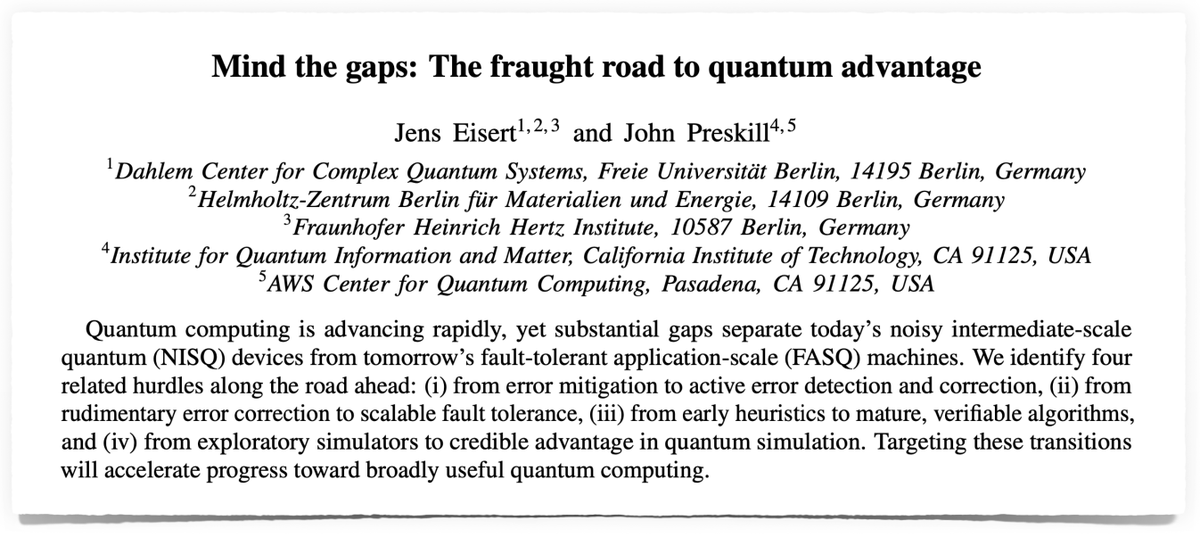

Over the recent weeks and months, <a href="/preskill/">John Preskill</a> and I sat down to think about where we are in quantum computing. While the noisy intermediate-scale quantum (#NISQ) era — a term coined by John in 2018 — is just unfolding as we speak, the time seems right to look ahead to the next
Science Magazine (@sciencemagazine) 's Twitter Profile Photo

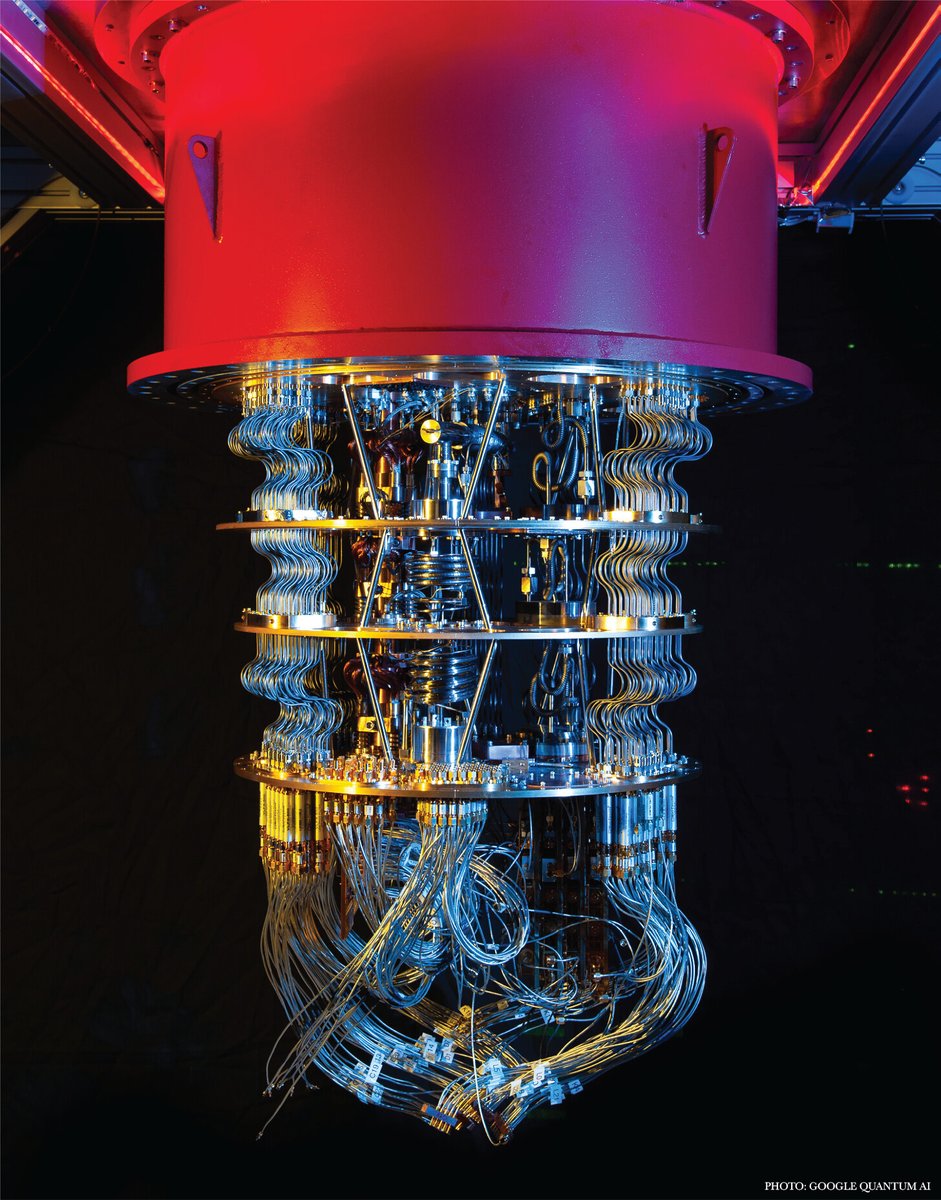
Large-scale quantum processors are beginning to uncover new physical phenomena. Learn more in a new #SciencePerspective: scim.ag/48nwWMw

Large-scale quantum processors are beginning to uncover new physical phenomena.

Learn more in a new #SciencePerspective: scim.ag/48nwWMw
Edward Frenkel (@edfrenkel) 's Twitter Profile Photo

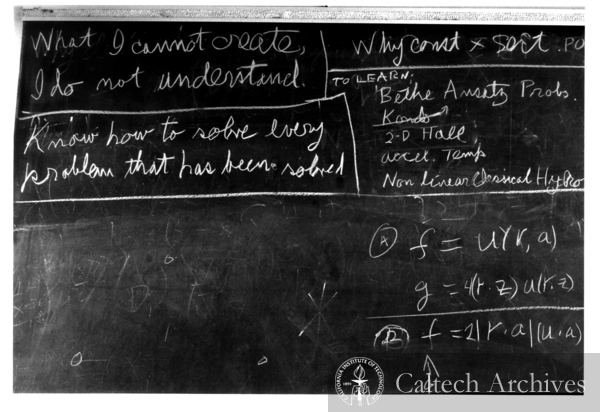
When Richard Feynman died in 1988, his last blackboard bore a curious note to himself: “To learn: Bethe Ansatz.” The Bethe Ansatz, introduced by Hans Bethe in 1931, is a method for finding the spectra of Hamiltonians in quantum integrable systems such as the Heisenberg magnet.

When Richard Feynman died in 1988, his last blackboard bore a curious note to himself: “To learn: Bethe Ansatz.” The Bethe Ansatz, introduced by Hans Bethe in 1931, is a method for finding the spectra of Hamiltonians in quantum integrable systems such as the Heisenberg magnet.
PRX Quantum (@prx_quantum) 's Twitter Profile Photo

Topological and geometric insights into logical gate construction lead to a parallelizable universal logical gate set for quantum low-density parity-check codes. Learn more: go.aps.org/4a7llSZ

Topological and geometric insights into logical gate construction lead to a parallelizable universal logical gate set for quantum low-density parity-check codes.

Learn more: go.aps.org/4a7llSZ
John Preskill (@preskill) 's Twitter Profile Photo

Here's the video of my talk on December 10 at Q2B Silicon Valley, reviewing recent progress in quantum computing. youtube.com/watch?v=_UoJFy…

Quanta Magazine (@quantamagazine) 's Twitter Profile Photo

Even without a satellite picture, we can tell that the Earth is round. It’s enough to take certain distance and angle measurements on the ground. In general, this is true of many 2D surfaces. But there are some special exceptions that have taken over 100 years to crack.

Google Quantum AI (@googlequantumai) 's Twitter Profile Photo

The XPRIZE Quantum Applications competition is looking for teams turning quantum ideas into practical applications. See what qualified the 2025 Phase I finalists and what to expect as Phase II and wildcard entries open ↓ goo.gle/3NAEYti

Ihtesham Ali (@ihtesham2005) 's Twitter Profile Photo

🚨BREAKING: Someone compiled every math and science course from Stanford, MIT, Berkeley, IIT and Harvard in one place. You can learn: - Quantum Mechanics, General Relativity, String Theory - Complex Analysis, Algebraic Geometry, Topology - Astrophysics, Quantum Field Theory,

🚨BREAKING: Someone compiled every math and science course from Stanford, MIT, Berkeley, IIT and Harvard in one place.

You can learn:

- Quantum Mechanics, General Relativity, String Theory
- Complex Analysis, Algebraic Geometry, Topology
- Astrophysics, Quantum Field Theory,
Quanta Magazine (@quantamagazine) 's Twitter Profile Photo

For over 30 years, complexity theorists have identified problems where quantum computers surpass classical ones. But there's a broader class of problems that they've barely begun to study, whose inputs and outputs aren't ordinary strings of bits, but are themselves inherently

For over 30 years, complexity theorists have identified problems where quantum computers surpass classical ones. But there's a broader class of problems that they've barely begun to study, whose inputs and outputs aren't ordinary strings of bits, but are themselves inherently
Condensed Matter Theory Center (@condensed_the) 's Twitter Profile Photo

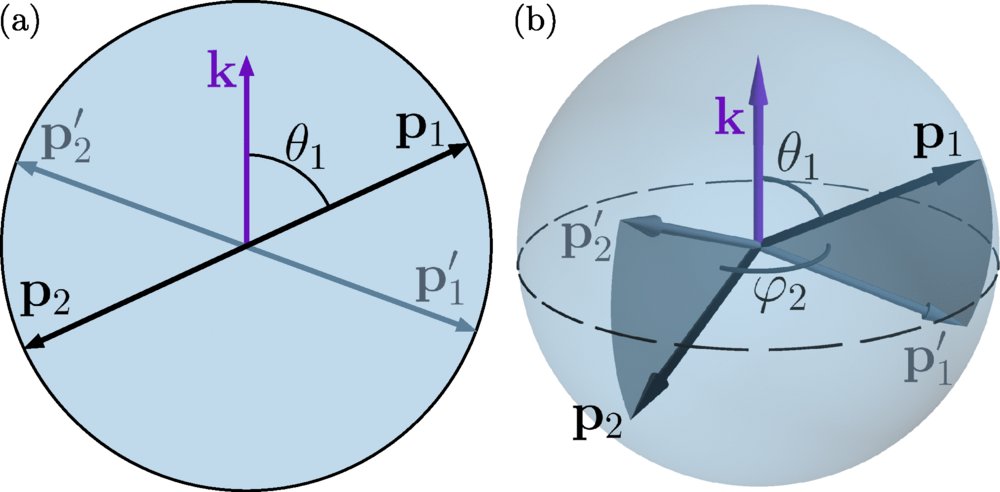
Seth Musser and Johannes Hofmann obtain the remarkable result that even three dimensional Fermi liquids are in fact 'tomographic' with longlived nonhydrodynamic modes contrary to prior beliefs, leading to slow odd parity relaxation journals.aps.org/prresearch/abs…

Seth Musser and Johannes Hofmann obtain the remarkable result that even three dimensional Fermi liquids are in fact 'tomographic' with longlived nonhydrodynamic modes contrary to prior beliefs, leading to slow odd parity relaxation 
journals.aps.org/prresearch/abs…
Cambridge University (@cambridge_uni) 's Twitter Profile Photo

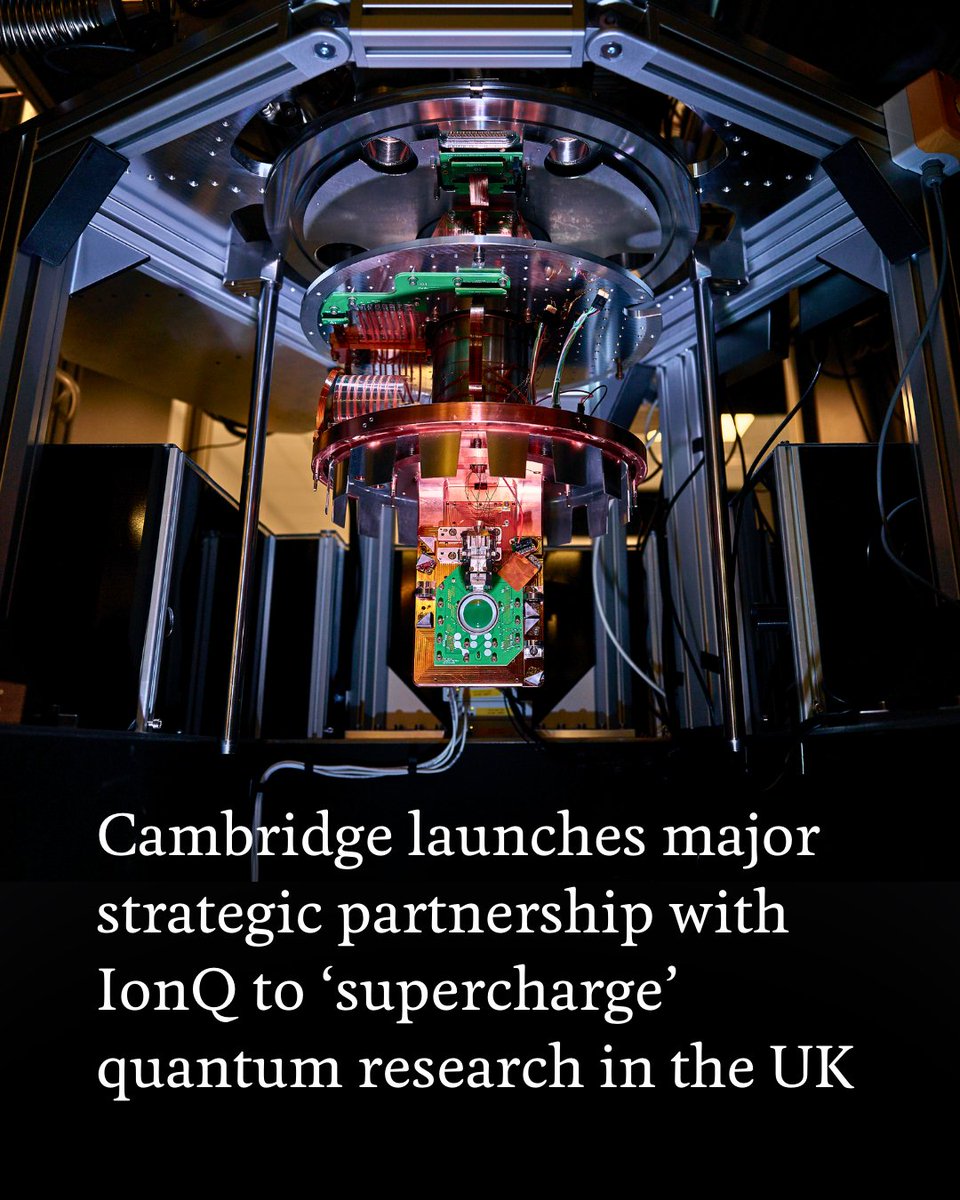
Cambridge will be home to the UK's most powerful quantum computer, as part of a major new partnership with quantum technology company IonQ. The partnership will support research, innovation, and skills development, and cement Cambridge and the UK as a world leader in

Cambridge will be home to the UK's most powerful quantum computer, as part of a major new partnership with quantum technology company <a href="/IonQ_Inc/">IonQ</a>.

The partnership will support research, innovation, and skills development, and cement Cambridge and the UK as a world leader in
The Prohuman (@theprohumanai) 's Twitter Profile Photo

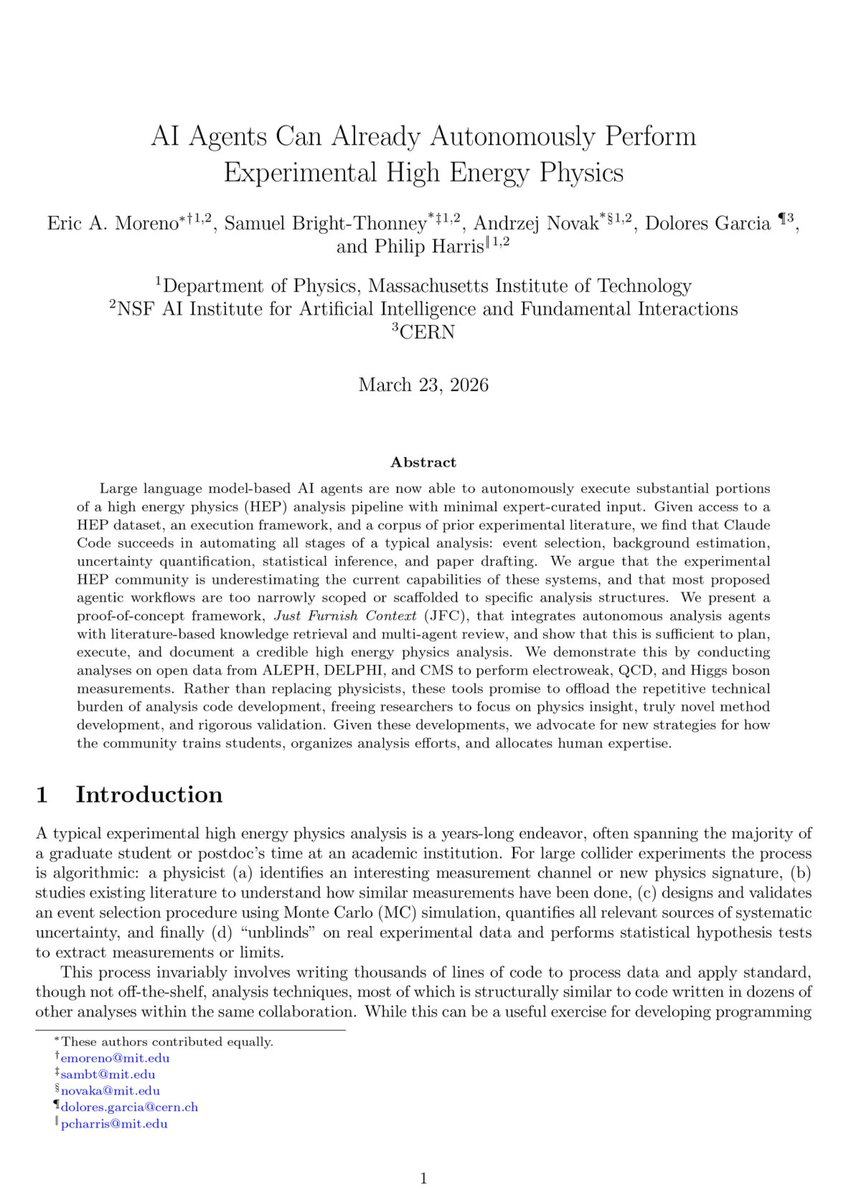
🚨BREAKING: This paper should terrify every Physics PhD student. AI agents just ran a full particle physics experiment. Alone. No human in the loop. Researchers tested whether LLM-based AI agents could autonomously execute a complete high energy physics analysis pipeline. Not

🚨BREAKING: This paper should terrify every Physics PhD student.

AI agents just ran a full particle physics experiment. Alone. No human in the loop.

Researchers tested whether LLM-based AI agents could autonomously execute a complete high energy physics analysis pipeline.

Not
Berkeley Lab (@berkeleylab) 's Twitter Profile Photo

Berkeley Lab research spans the #quantum landscape, from qubits to computing systems. 7 ways we are advancing the quantum frontier ⬇️ newscenter.lbl.gov/2025/04/23/sev… #DiscoveryToDelivery Molecular Foundry Berkeley Lab Computing Sciences Area U.S. Department of Energy

Quanta Magazine (@quantamagazine) 's Twitter Profile Photo

58 years after it first appeared, string theory remains the most popular candidate for the “theory of everything.” This is much to the chagrin of its rather vocal critics. Natalie Wolchover reports: quantamagazine.org/are-strings-st…

Google Quantum AI (@googlequantumai) 's Twitter Profile Photo

Google Quantum AI is expanding to include neutral atom research with our superconducting program. Complementary paths will accelerate our mission to build a large-scale, error-corrected quantum computer—an engineering challenge we are excited to tackle. goo.gle/40TycSV