
Fariha Kamal (@farihakamal2011) 's Twitter Profile
Fariha Kamal

@farihakamal2011

principal economist @uscensusbureau | former senior economist @WhiteHouseCEA | alumna @mtholyoke @SyracuseU
All opinions my own.

ID: 914107155464278017

linkhttps://sites.google.com/view/farihakamal calendar_today30-09-2017 12:38:23

79 Tweet

211 Followers

126 Following

AEA Journals (@aeajournals) 's Twitter Profile Photo

Forthcoming in AEJ: Applied Economics: "Rising Import Tariffs, Falling Exports: When Modern Supply Chains Meet Old-Style Protectionism" by Kyle Handley, Fariha Kamal, and Ryan Monarch. aeaweb.org/articles?id=10…

Scott Lincicome (@scottlincicome) 's Twitter Profile Photo

"Rising Import Tariffs, Falling Exports: When Modern Supply Chains Meet Old-Style Protectionism" via AEA Journals tl;dr: US tariffs on *imports* mean lower US *exports* (one reason why tariffs don't reduce trade deficits) aeaweb.org/articles?id=10…
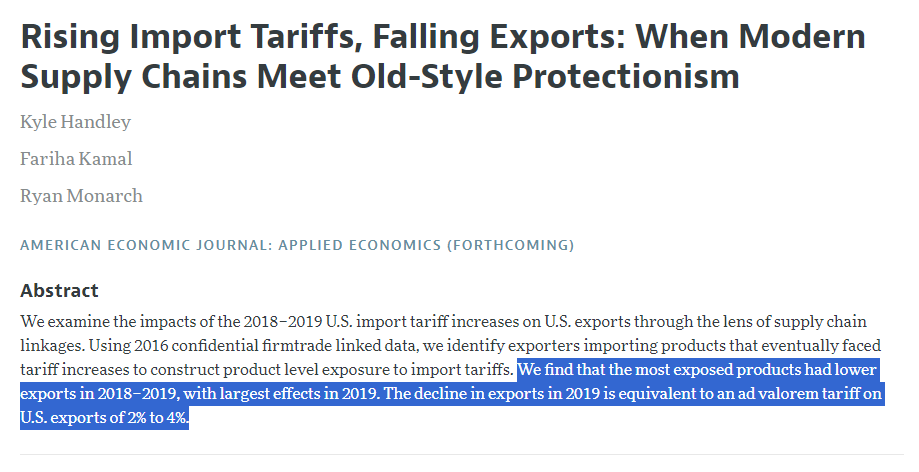

"Rising Import Tariffs, Falling Exports: When Modern Supply Chains Meet Old-Style Protectionism" via <a href="/AEAjournals/">AEA Journals</a> 

tl;dr: US tariffs on *imports* mean lower US *exports* (one reason why tariffs don't reduce trade deficits)
aeaweb.org/articles?id=10…
Kyle Handley (@kylelhandley) 's Twitter Profile Photo

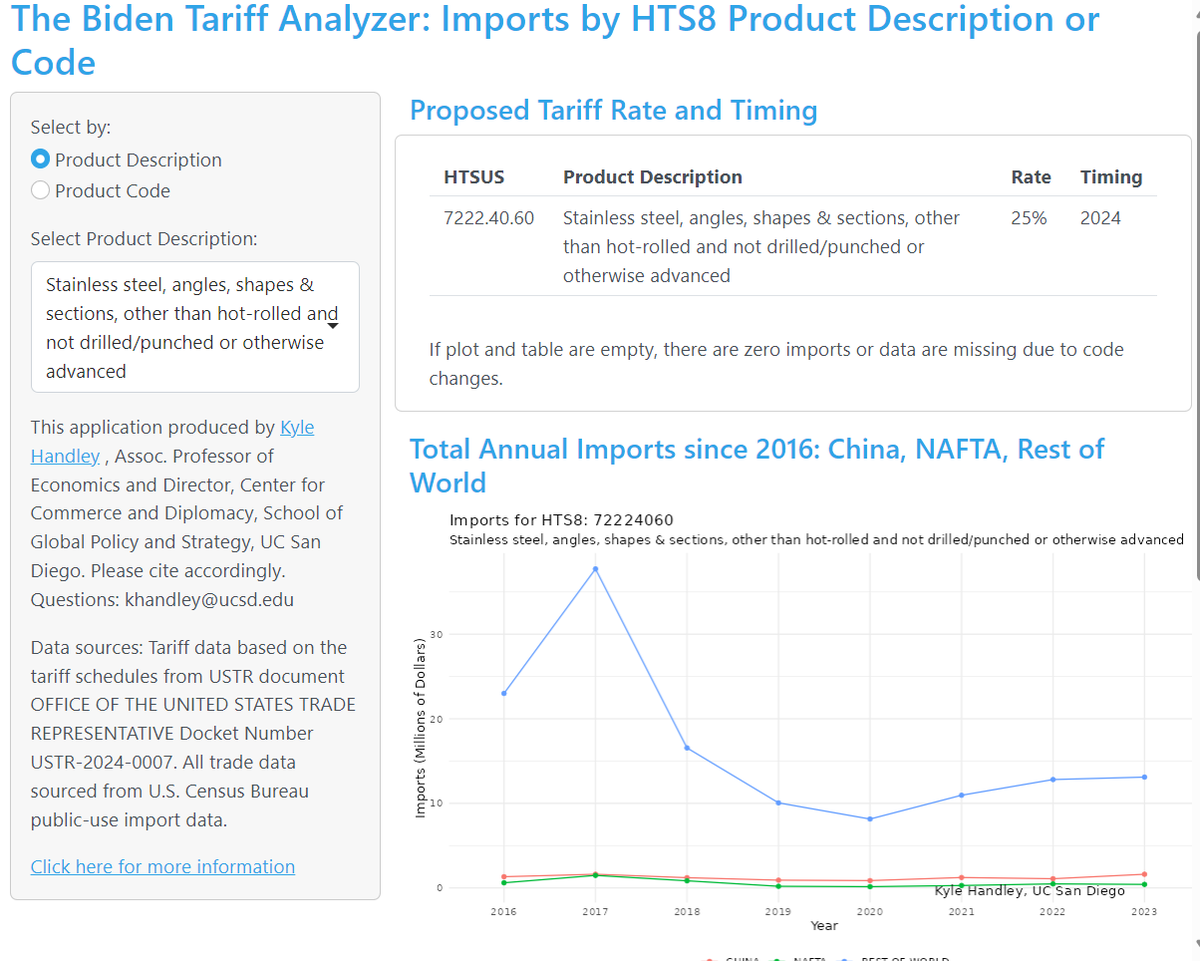
I made the Biden Tariff Analyzer for all the new tariffs. Please share. You can look up a tariffed product by code or description, get the new rate, phase-in, trade flows since 2016 and top suppliers. 1/ kylehandley.shinyapps.io/BidenTariffAna…

I made the Biden Tariff Analyzer for all the new tariffs. Please share. You can look up a tariffed product by code or description, get the new rate, phase-in, trade flows since 2016 and top suppliers. 1/
kylehandley.shinyapps.io/BidenTariffAna…
Council of Economic Advisers Archived (@whcea46archive) 's Twitter Profile Photo

Yesterday, the CEA published a blog post about the U.S. comparative advantage in digitally-enabled services exports. 1/ whitehouse.gov/cea/written-ma…

Council of Economic Advisers Archived (@whcea46archive) 's Twitter Profile Photo

The rapid growth of digital services requires consideration in domestic & international regulatory regimes. The U.S. is poised to lead the growth in intangible flows since the digitally-enabled services sector is one of the highest-paying & innovative segments of the economy. 6/

Jared Bernstein Archived (@econjared46) 's Twitter Profile Photo

Good to see this @WhiteHouseCEA blog elevated. Using tariffs to replace the inc tax would increase inflation & invite deep economic distortions that benefit the wealthy and harm low- and middle-income Americans. finance.yahoo.com/news/the-white… politico.com/newsletters/we…

Scott Lincicome (@scottlincicome) 's Twitter Profile Photo

By popular demand, here's an updated list of studies showing the economic harms of Trump-era tariffs AND an interactive version of our flowchart showing how tariffs work: "Americans Paid for the Trump Tariffs—and Would Do So Again" cato.org/blog/americans… via Cato Institute
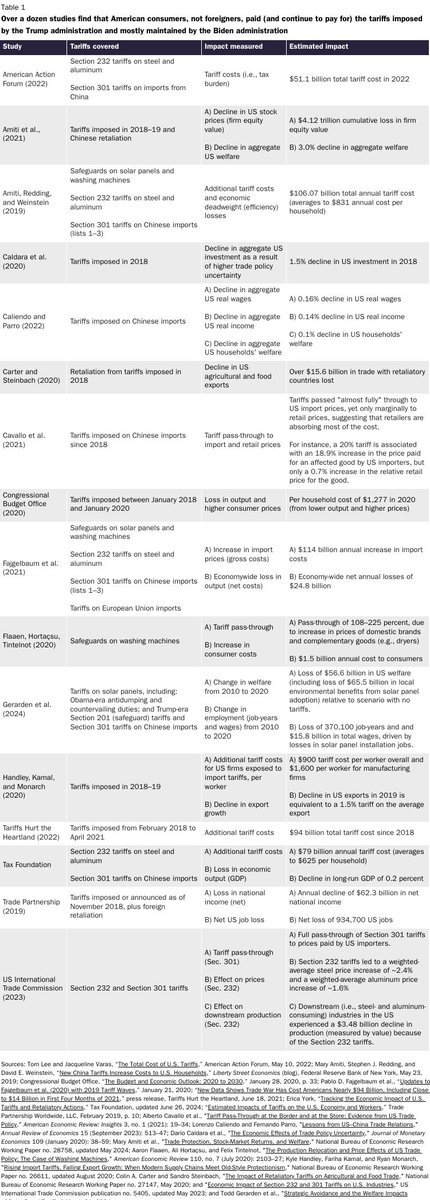

By popular demand, here's an updated list of studies showing the economic harms of Trump-era tariffs AND an interactive version of our flowchart showing how tariffs work:
"Americans Paid for the Trump Tariffs—and Would Do So Again" cato.org/blog/americans… via <a href="/CatoInstitute/">Cato Institute</a>
Brian Albrecht (@briancalbrecht) 's Twitter Profile Photo

You, a genius reasoning from accounting identities: “Tariffs raise GDP by reducing imports.” Me, a humble reader of economics research: “Tariffs seem to reduce exports.” aeaweb.org/articles?id=10…

Inu Manak (@inumanak) 's Twitter Profile Photo

My latest-- on why trade is a win for the U.S. economy: "trade in goods support half of all jobs in the economy, and almost three-quarters of those jobs are at firms that both export and import goods" detroitnews.com/story/opinion/… via The Detroit News


Fariha Kamal (@farihakamal2011) 's Twitter Profile Photo

Firms that both export and import goods employ more than half of all U.S. manufacturing workers and their share has grown over time. Check out the📢newly released 2022 BDS-Goods Traders📢for more statistics on the relationship between trade and jobs.

Firms that both export and import goods employ more than half of all U.S. manufacturing workers and their share has grown over time. Check out the📢newly released 2022 BDS-Goods Traders📢for more statistics on the relationship between trade and jobs.
Inu Manak (@inumanak) 's Twitter Profile Photo

This election, tariffs have come up often. With Americans feeling the pinch in their pocket books, tariffs would not only raise costs (especially on the poorest), but also undercut jobs that rely on trade— including auto manufacturers. detroitnews.com/story/opinion/…

Fariha Kamal (@farihakamal2011) 's Twitter Profile Photo

A closer look at "Why broad-based import tariffs can hurt exports and manufacturing jobs" in today's Briefing Book. Takeaway: U.S. manufacturers rely on imported inputs and contribute disproportionately to overall exports and manufacturing job growth.

Kevin Rinz (@kevinrinz) 's Twitter Profile Photo

We’ve heard lots of (dubious) tariff talk over the course of this campaign. Fariha Kamal brings some key facts today in Briefing Book: not that many firms trade in goods, but they represent most jobs, and many of those jobs are at firms that both export and import
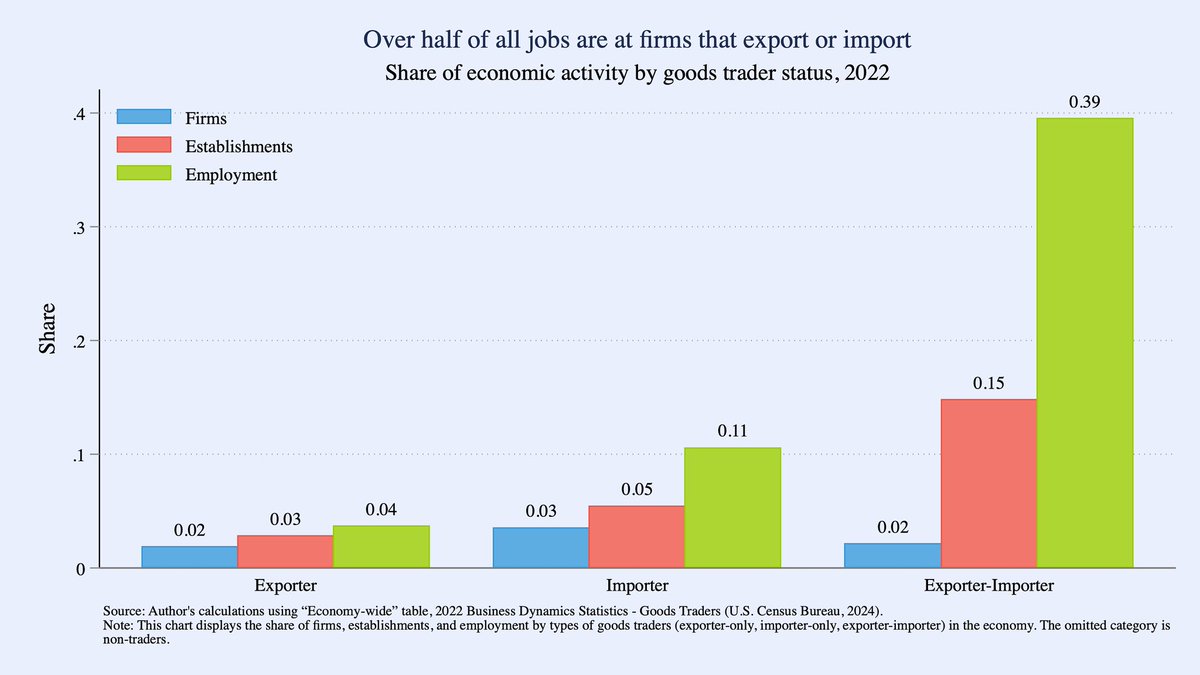
We’ve heard lots of (dubious) tariff talk over the course of this campaign. <a href="/farihakamal2011/">Fariha Kamal</a> brings some key facts today in <a href="/Briefing_Book/">Briefing Book</a>: not that many firms trade in goods, but they represent most jobs, and many of those jobs are at firms that both export and import
FedResearch (@fedresearch) 's Twitter Profile Photo

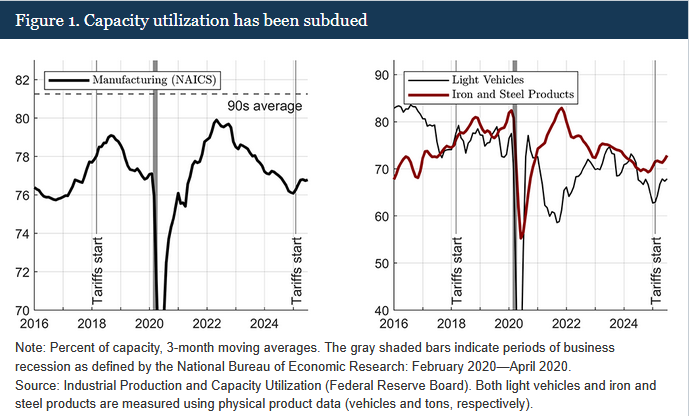
Capacity utilization in manufacturing has been subdued, suggesting potential for tariffs to boost production in existing factories. (1/3) federalreserve.gov/econres/notes/… #FEDSNote #EconTwitter

Capacity utilization in manufacturing has been subdued, suggesting potential for tariffs to boost production in existing factories. (1/3) federalreserve.gov/econres/notes/… #FEDSNote #EconTwitter