Fellowship & Fairydust (@fandfmagazine) 's Twitter Profile
Fellowship & Fairydust

@fandfmagazine

Inspiring faith and creativity and exploring the arts through a spiritual lens.

ID: 862300088013651969

linkhttp://www.fellowshipandfairydust.com calendar_today10-05-2017 13:35:36

69,69K Tweet

667 Takipçi

410 Takip Edilen

Andrew Snyder (@andrewnsnyder) 's Twitter Profile Photo

"Many children make up, or begin to make up, imaginary languages. I have been at it since I could write. But I have never stopped." - Tolkien, Letter 131

"Many children make up, or begin to make up, imaginary languages. I have been at it since I could write. But I have never stopped."

- Tolkien, Letter 131
Andrew Snyder (@andrewnsnyder) 's Twitter Profile Photo

"After all, I believe that legends and myths are largely made of 'truth', and indeed present aspects of it that can only be received in this mode; and long ago certain truths and modes of this kind were discovered and must always reappear." - Tolkien, Letter 131

"After all, I believe that legends and myths are largely made of 'truth', and indeed present aspects of it that can only be received in this mode; and long ago certain truths and modes of this kind were discovered and must always reappear."

- Tolkien, Letter 131
Tolkien Universe (@tolkienzone) 's Twitter Profile Photo

“For still there are so many things That I have never seen: In every wood in every spring There is a different green.” — J. R. R. Tolkien

“For still there are so many things
That I have never seen:
In every wood in every spring
There is a different green.”
— J. R. R. Tolkien
Chadwise (@tolkienworldg) 's Twitter Profile Photo

In The Return of the King, the intense retreat from Osgiliath was edited very differently in an earlier version of the film. Initially, the whole sequence was meant to cut back and forth with Gandalf and Pippin arriving at Minas Tirith coincidentally at the exact same time the

LOTR Universe (@lotrmiddlearth) 's Twitter Profile Photo

In the Return of the King Extended Edition, we see Saruman and Gríma die at Isengard but this scene is completely different in the books. In Tolkien’s canon, Saruman survives and later brings ruin to the Shire, leading to the “Scouring of the Shire,” one of the most important

Boze the Library Owl 😴🧙‍♀️ (@sketchesbyboze) 's Twitter Profile Photo

The great secret of the classics is that, despite their reputation for being boring & antiquated, they are often beautiful and hilarious and devastatingly perceptive, to the degree that people continue to read them for centuries. You will have a richer life for having read them.

WikiVictorian (@wikivictorian) 's Twitter Profile Photo

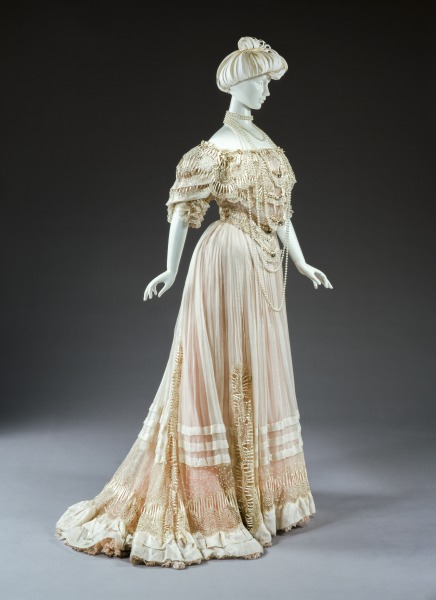
Wedding dress of silk satin and with a sprig of artificial flowers, designed and made by Meynier, France, early 1908. Victoria & Albert Museum.

Wedding dress of silk satin and with a sprig of artificial flowers, designed and made by Meynier, France, early 1908. Victoria & Albert Museum.
Chadwise (@tolkienworldg) 's Twitter Profile Photo

The Battle of Helm’s Deep is one of cinema’s most legendary sequences, but the real battle was off-screen. Filmed over four gruelling months (mostly at night in a rugged New Zealand quarry), the cast and crew endured relentless artificial rain, freezing temperatures, and 14+

Mary Shurtleff (@mshurtleffwrite) 's Twitter Profile Photo

I hate so much that "clean" movies are associated with children. Like I'm sorry but I don't think being sensitive to violence is childish nor is lacking the desire to be a third wheel in someone's makeout session.

LOTR Universe (@lotrmiddlearth) 's Twitter Profile Photo

The scene where Gríma stabs Saruman in the back has a surprising bit of behind-the-scenes truth behind it. During filming, Peter Jackson asked Sir Christopher Lee how someone would realistically react to being stabbed from behind. Lee then explained the exact sound and physical

Boze the Library Owl 😴🧙‍♀️ (@sketchesbyboze) 's Twitter Profile Photo

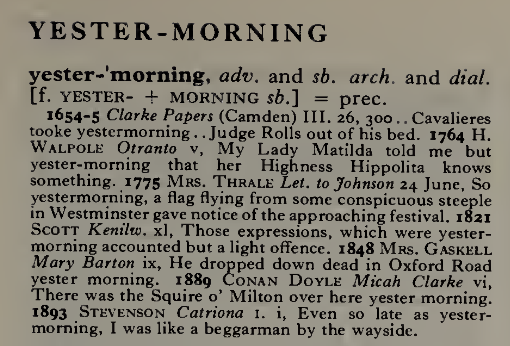
The Oxford English Dictionary lists “yester-morning” as an archaic word first recorded in 1654-55. Ma’am, your two-year-old is speaking seventeenth-century English.

The Oxford English Dictionary lists “yester-morning” as an archaic word first recorded in 1654-55. Ma’am, your two-year-old is speaking seventeenth-century English.
Wylfċen (@wylfcen) 's Twitter Profile Photo

This child is channeling the ancients. Believe it or not, English used to have this word. We also said “yesternight” for last night, “ereyesterday” for the day before yesterday, and “overmorrow” for the day after tomorrow. (Old English: gestrenæht, ærgestradæg, ofermorgen.)