Himal Roka 🧬 (@himalroka2) 's Twitter Profile
Himal Roka 🧬

@himalroka2

RNA Biologist | Genetic Medicine | Interested in AI in Biology 🧪

ID: 1124637441909055488

calendar_today04-05-2019 11:30:35

117 Tweet

147 Followers

894 Following

Arc Institute (@arcinstitute) 's Twitter Profile Photo

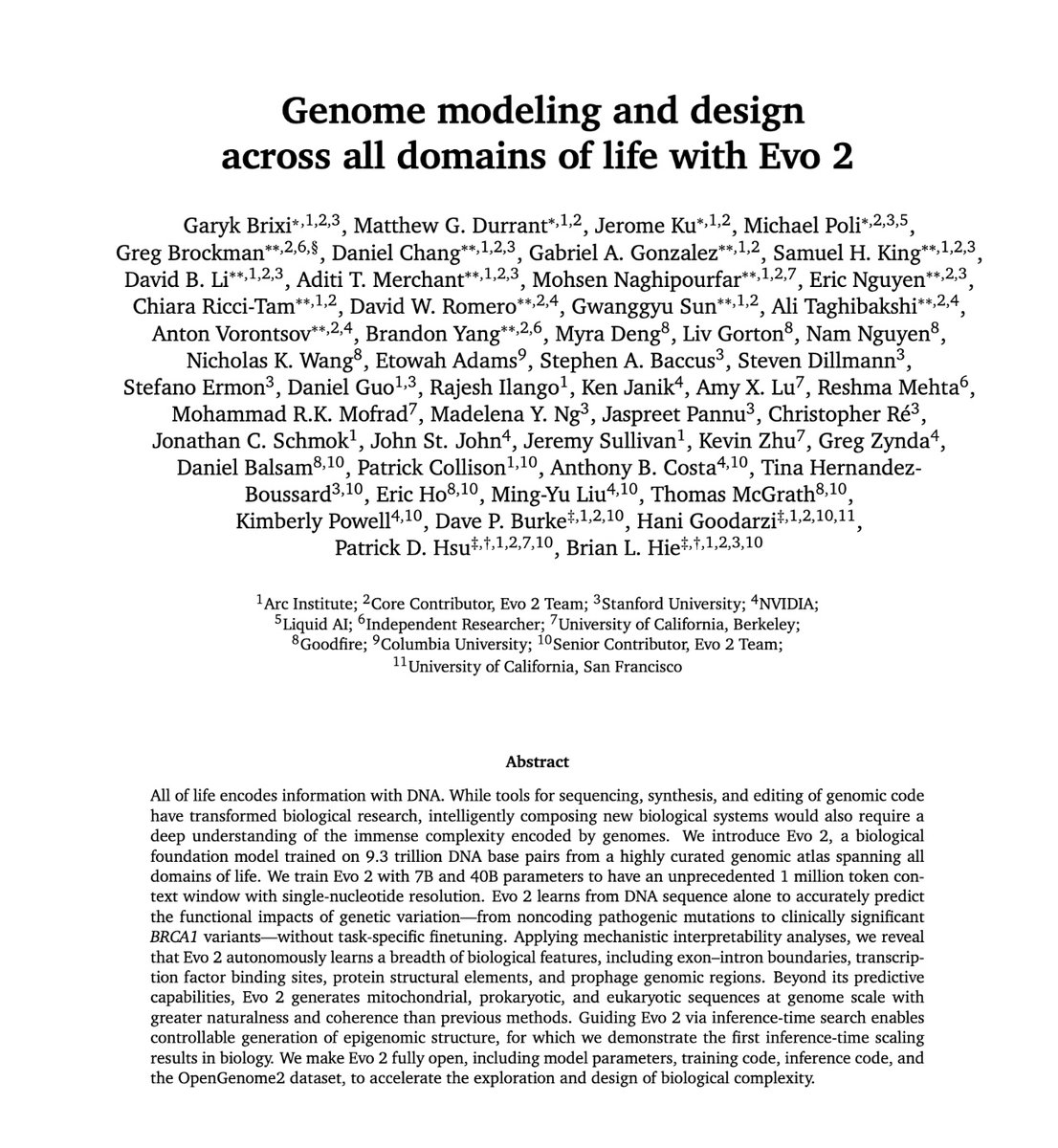
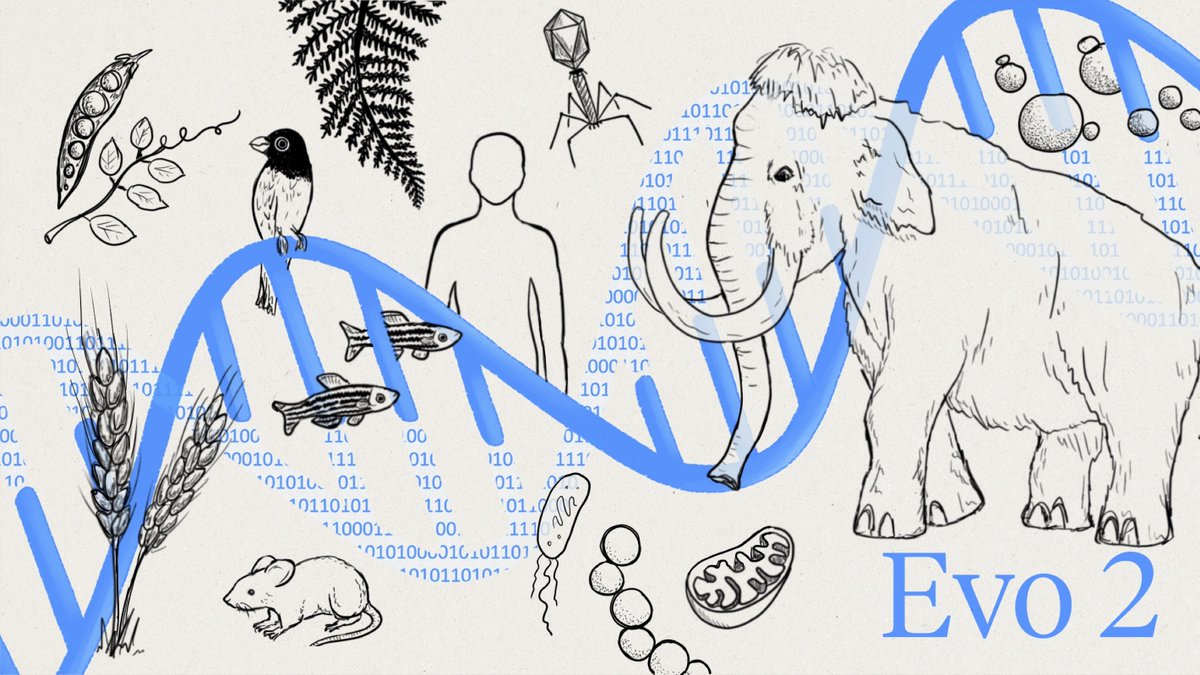
Announcing Evo 2: The largest publicly available, AI model for biology to date, capable of understanding and designing genetic code across all three domains of life. arcinstitute.org/manuscripts/Ev…

Announcing Evo 2: The largest publicly available, AI model for biology to date, capable of understanding and designing genetic code across all three domains of life. arcinstitute.org/manuscripts/Ev…
Eric Topol (@erictopol) 's Twitter Profile Photo

Just published Science Magazine On fixing the NIH 15% cap "The consequences of failing to do so—reduced research capacity, weakened scientific competitiveness, and increased financial strain on institutions—are simply too dire to ignore." science.org/doi/10.1126/sc…


Just published <a href="/ScienceMagazine/">Science Magazine</a> 
On fixing the NIH 15% cap
"The consequences of failing to do so—reduced research capacity, weakened scientific competitiveness, and increased financial strain on institutions—are simply too dire to ignore."
science.org/doi/10.1126/sc…
David R. Liu (@davidrliu) 's Twitter Profile Photo

Last night I was honored to receive the 2025 #BreakthroughPrize in the Life Sciences, reflecting the efforts of many students, collaborators, doctors, and patients in labs around the world. I hope this 4-minute excerpt can inspire when science needs public support more than ever.

Anshul Kundaje (anshulkundaje@bluesky) (@anshulkundaje) 's Twitter Profile Photo

Organoid experts - can you point me to some papers that show that they can now be used or hypothesize how they could be used in the future as substitutes for animal studies for testing drugs? I'm trying to understand how many of the new FDA proposals are based on actual evidence

Anshul Kundaje (anshulkundaje@bluesky) (@anshulkundaje) 's Twitter Profile Photo

I had a similar experience with this N of 1 Why current deep learning sequence models of gene expression struggle to predict counterfactual effects of variants on expression. platform.futurehouse.org/trajectories/9… Also asked for suggestions for improvements platform.futurehouse.org/trajectories/4…

Niko McCarty 🧫 (@nikomccarty) 's Twitter Profile Photo

We made a huge poster that illustrates all of the major genome editing tools in one place. You can download a copy for free from the Asimov Press website. press.asimov.com/articles/crisp…

Chan Zuckerberg Biohub Network (@czbiohub) 's Twitter Profile Photo

🚫 No dyes. No bleaching. šŸ”¬ Just AI + label-free microscopy = vivid virtually stained images New in Nature Machine Intelligence: A deep learning model that enables robust virtual staining across microscopes, cell types & conditions. #CZBiohubSF Shalin Mehta explains:


Grace Edmonds (@gracekc) 's Twitter Profile Photo

Can we use RNA to insert kilobases of DNA into the human genome, opening up a new way to engineer cells or treat disease? Excited to share our latest work turning a retrotransposon (a ā€œjumping geneā€ with an RNA intermediate) from songbirds into a genome editing tool. 🧵 (1/7)

Jason Shepherd (@jasonsynaptic) 's Twitter Profile Photo

The NIH has decided that scientists can only submit 6 grants a year. OK. But you need a score that’s < 10% at least to get funded. Meaning, at best, 1 out of 10 grants you submit will have a chance (YMMV of course). 🫠

Anne Carpenter, PhD (@drannecarpenter) 's Twitter Profile Photo

Have $10M and want to cure some diseases? It costs ~$1B to invent a new medicine…but $10M buys you Project Encore, to see if ANY existing drug might be repurposed for ~100 diseases that have no treatments. Contact me - be a hero for desperate patients! docs.google.com/document/d/1dM…

Have $10M and want to cure some diseases?

It costs ~$1B to invent a new medicine…but $10M buys you Project Encore, to see if ANY existing drug might be repurposed for ~100 diseases that have no treatments.

Contact me - be a hero for desperate patients!
docs.google.com/document/d/1dM…
Prachee Avasthi (@pracheeac) 's Twitter Profile Photo

*Note also no *APCs* at hybrid journals so those journals will be an option if publishing a paywalled article along with associated fees, which is a bummer

Sofia Sanchez (@sofiasbio) 's Twitter Profile Photo

🧬 šŸ€ Gene-edited four-leaf clovers??? There is only one four-leaf clover for every 5,076 three-leaf clovers. So far, we only know that the gene responsible for this rare trait is recessive for the quadruploid plants, and that luckĀ favors warm conditions, approximately

🧬 šŸ€ Gene-edited four-leaf clovers???

There is only one four-leaf clover for every 5,076 three-leaf clovers. 

So far, we only know that the gene responsible for this rare trait is recessive for the quadruploid plants, and that luckĀ favors warm conditions, approximately
William A. Wallace, Ph.D. (@drwilliamwallac) 's Twitter Profile Photo

Chemistry writes the story of life. Every cell, every second, it tells it again - powered by molecular design. At the core of this process lies the citric acid cycle, the central hub of metabolism. Here, acetyl-CoA derived from carbohydrates, fats, or proteins enters a precise

Dr. Shelby (@shelbynewsad) 's Twitter Profile Photo

We're running a Compound Research Day on Rapid in vivo Iteration in SF in late Feb. In vivo evidence is already arguably the core bottleneck to drug development. This will intensify in a world where we have orders of magnitude more drugs to screen. From safety to efficacy to

We're running a <a href="/CompoundVC/">Compound</a> Research Day on Rapid in vivo Iteration in SF in late Feb. 

In vivo evidence is already arguably the core bottleneck to drug development. This will intensify in a world where we have orders of magnitude more drugs to screen. From safety to efficacy to
Rahul Satija (@satijalab) 's Twitter Profile Photo

Excited to share VIPerturb-seq! New tech from my lab which aims to improve the cost, data quality, and efficiency of single-cell CRISPR screens so that they are accessible to any lab - even at genome-wide scale Preprint and 🧵 (1/): biorxiv.org/content/10.648…

Patrick Hsu (@pdhsu) 's Twitter Profile Photo

Delighted to share new Arc Institute work from our group on AI-accelerated lab-in-the-loop, in Science Magazine today One of the most remarkable things about biology is that it's digital. DNA, RNA, proteins: these are all sequences, and their function is directly encoded in
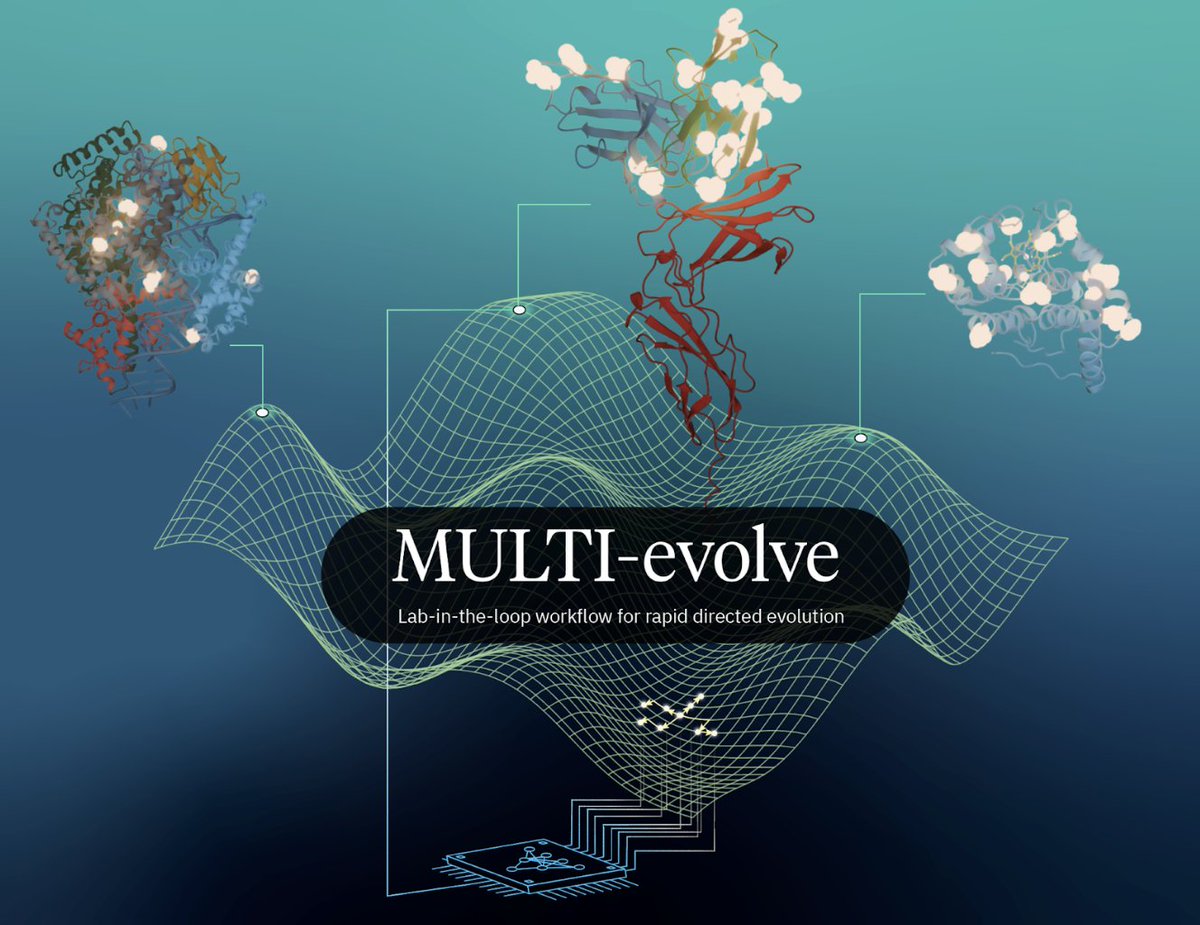
Delighted to share new <a href="/arcinstitute/">Arc Institute</a> work from our group on AI-accelerated lab-in-the-loop, in <a href="/ScienceMagazine/">Science Magazine</a> today

One of the most remarkable things about biology is that it's digital. DNA, RNA, proteins: these are all sequences, and their function is directly encoded in
Dingchang Lin (@dingchanglin) 's Twitter Profile Photo

🚨 Today in nature, we report GEMINI—a genetically encoded intracellular memory device that writes cellular dynamics into tree-ring-like fluorescent patterns within cytoplasmic protein assemblies.[1/n] nature.com/articles/s4158…

🚨 Today in <a href="/Nature/">nature</a>, we report GEMINI—a genetically encoded intracellular memory device that writes cellular dynamics into tree-ring-like fluorescent patterns within cytoplasmic protein assemblies.[1/n]
nature.com/articles/s4158…
Garyk Brixi (@garykbrixi) 's Twitter Profile Photo

Evo 2 is out in Nature today, showing that genome language models can predict and design across the full complexity of life, from phages to eukaryotes. A few surprises from the project, including how ignoring trillions of nucleotides was key to getting a good model. 🧵

Evo 2 is out in Nature today, showing that genome language models can predict and design across the full complexity of life, from phages to eukaryotes.

A few surprises from the project, including how ignoring trillions of nucleotides was key to getting a good model. 🧵
Danny Arends (@dannyarends) 's Twitter Profile Photo

Our paper in nature today 🄳 We tracked 6,438 mice from puberty to death and mapped the genetics of *when* you die, not just whether a gene associates with lifespan. nature.com/articles/s4158… 59 loci. Two decades of data. Thread šŸ‘‡ #Longevity #Aging #Genetics #Healthspan