BenjaminBroadway (@_benbroadway) 's Twitter Profile
BenjaminBroadway

@_benbroadway

PhD Student at the Institute of Cancer Research. Molecular Biologist and Biochemist.

ID: 1267054854536605696

calendar_today31-05-2020 11:26:49

59 Tweet

47 Followers

175 Following
John Gibbons 🇵🇸 (@think_or_swim) 's Twitter Profile Photo

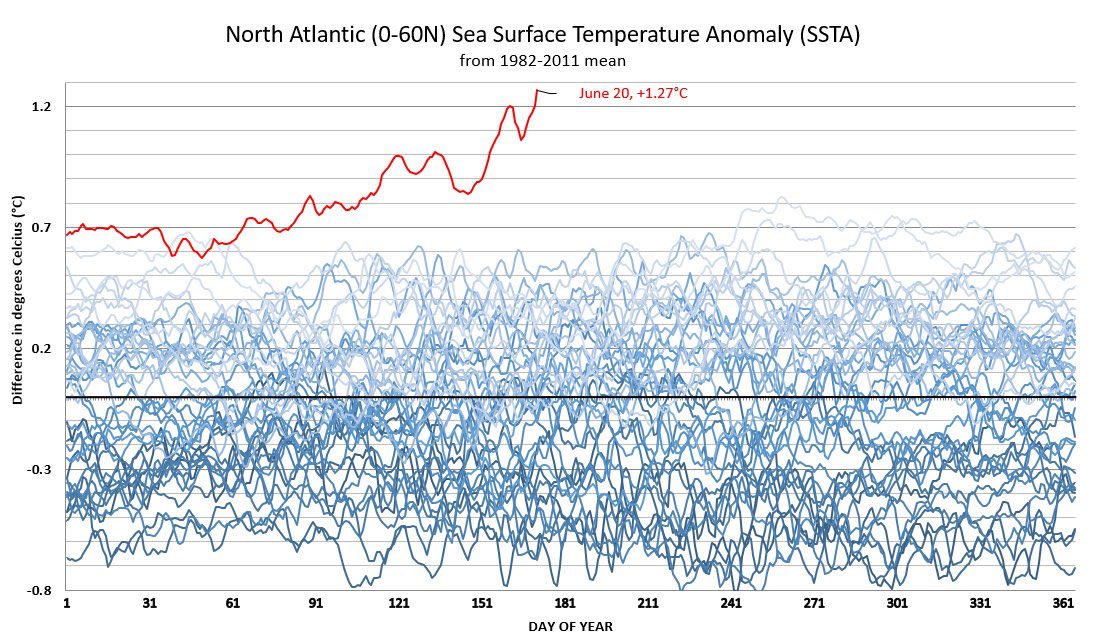
This is absolutely bananas. There is NOTHING like this on the instrumental record. Its likely impact is probably immeasurable. But is it leading our news bulletins & on newspaper front pages? Nope.

This is absolutely bananas. 

There is NOTHING like this on the instrumental record. Its likely impact is probably immeasurable. 

But is it leading our news bulletins & on newspaper front pages? 

Nope.
David R. Liu (@davidrliu) 's Twitter Profile Photo

Three of the more costly and frequently used reagents in molecular biology are rolling circle amplification (RCA) mix, chemically competent MachOne (or other E. coli) cells, and Gibson assembly mix. Postdoc Julian Willis—who is starting his own lab in the UK soon—developed

BenjaminBroadway (@_benbroadway) 's Twitter Profile Photo

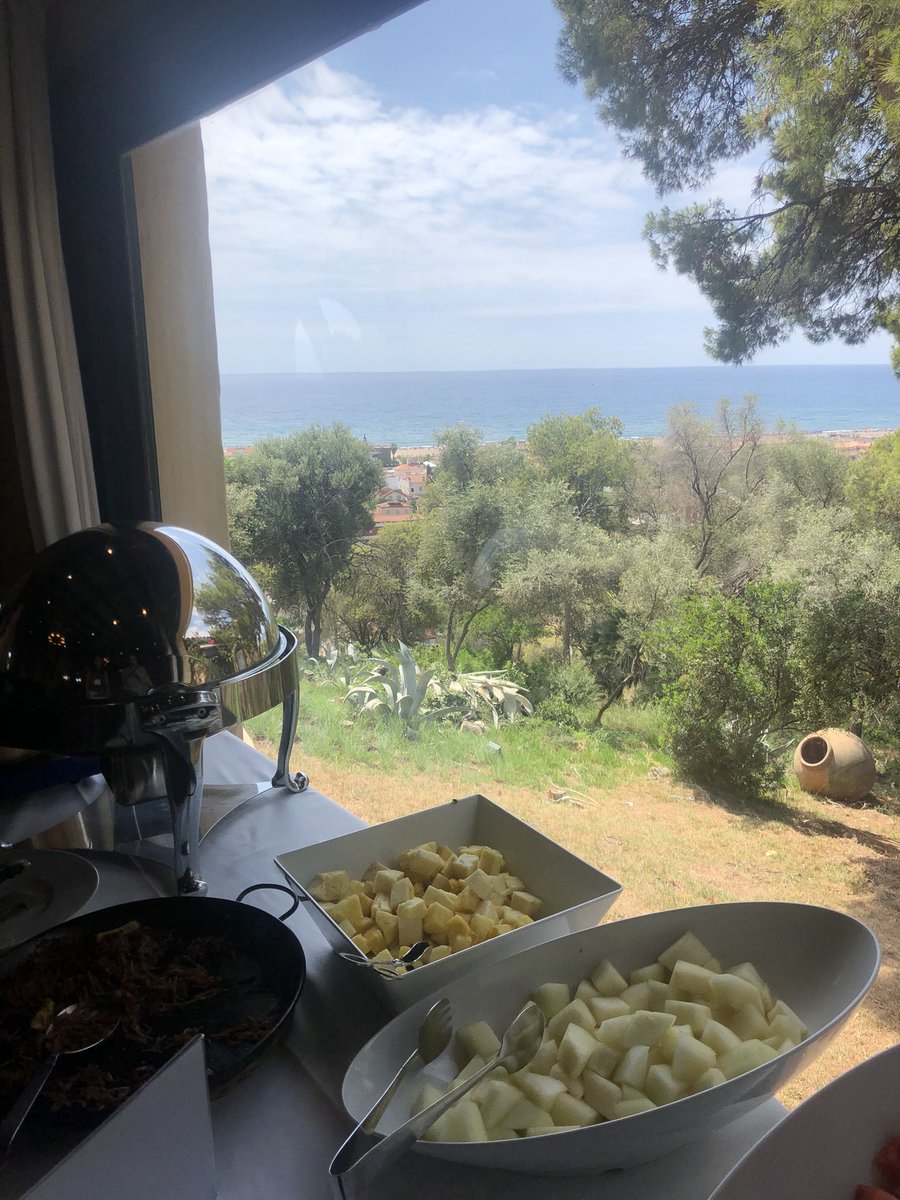
Happy to have been able to share my PhD work at the Gordon Research Council Wnt meeting! A fantastic time meeting new faces and swimming at the beach, I will be back.

Happy to have been able to share my PhD work at the Gordon Research Council Wnt meeting! 

A fantastic time meeting new faces and swimming at the beach, I will be back.
Jayoung Ryu (@jayoungr) 's Twitter Profile Photo

Excited to share our work introducing BEAN🫘, a pipeline that greatly improves the power of CRISPR base editing screens🚀! BEAN utilizes surrogate per-gRNA editing outcomes, identifying coding & noncoding variants impacting LDL cholesterol uptake. 📰medrxiv.org/content/10.110… (1/)

Excited to share our work introducing BEAN🫘, a pipeline that greatly improves the power of CRISPR base editing screens🚀!

BEAN utilizes surrogate per-gRNA editing outcomes, identifying coding & noncoding variants impacting LDL cholesterol uptake.
📰medrxiv.org/content/10.110… (1/)
Prof. Nikolai Slavov (@slavov_n) 's Twitter Profile Photo

Nnaopores can discriminate the 20 proteinogenic amino acids! That is good progress! A next step is extending this discrimination to complex mixtures containing other small molecules, e.g., metabolites.

Nnaopores can discriminate the 20 proteinogenic amino acids!

That is good progress!   

A next step is extending this discrimination to complex mixtures containing other small molecules, e.g., metabolites.
Gene Investing w/Anthony 🧬 (@geneinvesting) 's Twitter Profile Photo

BREAKING NEWS: OH SHIT! HISTORY HAS BEEN MADE! Vertex and CRISPR Therapeutics Announce Authorization of the First CRISPR/Cas9 Gene-Edited Therapy, CASGEVY™ (exagamglogene autotemcel), by the United Kingdom MHRA $CRSP $VRTX #CRISPR businesswire.com/news/home/2023…

David R. Liu (@davidrliu) 's Twitter Profile Photo

In a major milestone for science, for medicine, and for patients, the world’s first CRISPR drug has been approved in the UK. “A new treatment for sickle-cell disease and transfusion-dependent β-thalassemia has been authorised by the Medicines and Healthcare products Regulatory

John Evans (@john_evans3) 's Twitter Profile Photo

Excited to share that UK regulators have cleared the clinical trial application for BEAM-302 as a potential treatment for alpha-1 antitrypsin deficiency! We are on track to initiate the trial in the first half of 2024. globenewswire.com/news-release/2…

Bel (@annabelbasford) 's Twitter Profile Photo

Very happy to share my first first author paper and also #MyFirstChemSci as Chemical Science pick of the week! Huge thanks to everyone involved!!

BenjaminBroadway (@_benbroadway) 's Twitter Profile Photo

I had a fantastic time contributing to this review on the emerging parallels between tankyrase and PARP1/2! Congrats to all the authors and if you are interested in enzyme regulation, then please check out the manuscript! Sebastian Guettler Lab Matt Jessop Katy Miller

Biology+AI Daily (@biologyaidaily) 's Twitter Profile Photo

Rapid in silico directed evolution by a protein language model with EVOLVEpro Science Magazine • A breakthrough in protein engineering, EVOLVEpro combines protein language models (PLMs) with active learning to deliver up to 100-fold improvements in protein properties with

Rapid in silico directed evolution by a protein language model with EVOLVEpro <a href="/ScienceMagazine/">Science Magazine</a> 

• A breakthrough in protein engineering, EVOLVEpro combines protein language models (PLMs) with active learning to deliver up to 100-fold improvements in protein properties with
Soumendranath Bhakat (@bhakatsoumendr1) 's Twitter Profile Photo

Boltz-1: Failure of the structure paradigm I asked whether the Boltz-1 (AF3) implementation could predict protein conformations necessary for cryptic pocket openings and accurately determine ligand binding poses (blue: crystal, silver: Boltz-1). The answer is NO. Similar to

Boltz-1: Failure of the structure paradigm

I asked whether the Boltz-1 (AF3) implementation could predict protein conformations necessary for cryptic pocket openings and accurately determine ligand binding poses (blue: crystal, silver: Boltz-1). The answer is NO. Similar to
Frank Noe (@franknoeberlin) 's Twitter Profile Photo

Super excited to preprint our work on developing a Biomolecular Emulator (BioEmu): Scalable emulation of protein equilibrium ensembles with generative deep learning from Microsoft Research AI for Science. #ML #AI #NeuralNetworks #Biology #AI4Science biorxiv.org/content/10.110…

Elliot Hershberg (@elliothershberg) 's Twitter Profile Photo

Extremely clever new NGS tech from Roche 🧬 If it's hard to discriminate between nucleic acids accurately with a nanopore, why not synthesize a new polymer off a DNA template that is easier to sequence? It's an intuitively simple idea, but took *a ton* of creative nucleic acid

FutureHouse (@futurehousesf) 's Twitter Profile Photo

Today, FutureHouse is launching the FutureHouse Platform, bringing the first-ever superintelligent scientific AI agents to scientists everywhere via a web interface and API. The Platform is launching with four agents, each with their own specialization: