Emily Nicol (@em_nicol) 's Twitter Profile
Emily Nicol

@em_nicol

PhD candidate at the Queensland Academy of Sport & Griffith University | Tackling life one tumble turn at a time |

ID: 937902994137407489

calendar_today05-12-2017 04:34:34

28 Tweet

158 Followers

61 Following

Emily Nicol (@em_nicol) 's Twitter Profile Photo

Tumble turns are fun, but now it is time for a new adventure. I am very excited to say that I will be heading up to the Gold Coast to complete a PhD in breaststroke biomechanics later… instagram.com/p/BmNt2IZHD7g/…

Emily Nicol (@em_nicol) 's Twitter Profile Photo

First journal article is in print! Swimming turns are super cool. Please follow the link to give the article a read #maketurnsgreatagain #underwaterworkfordays tandfonline.com/eprint/CtPRgsk…

First journal article is in print! 

Swimming turns are super cool. Please follow the link to give the article a read #maketurnsgreatagain #underwaterworkfordays 

tandfonline.com/eprint/CtPRgsk…
Emily Nicol (@em_nicol) 's Twitter Profile Photo

PSA: @katiemcgibbon finished data collection for her PhD today! Cannot wait for her to reveal all of the secrets to pacing.

Emily Nicol (@em_nicol) 's Twitter Profile Photo

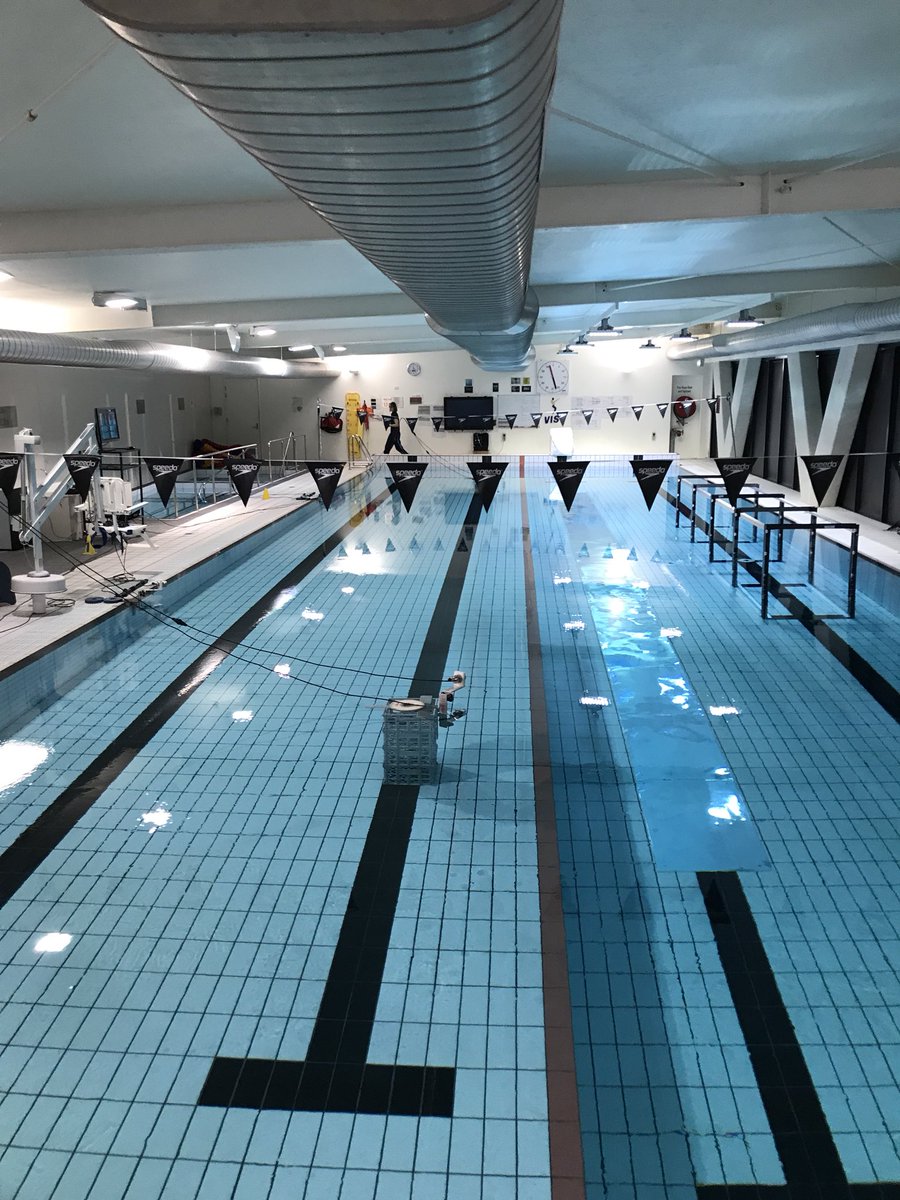
Breaststroke is unique amongst the four competitive strokes. It is characterised by discontinuous propulsive phases, underwater limb recoveries and long glide times. The discontinuity of propulsive phases gives rise to a multitude of potential temporal patterns. #ESSTC20 1/6

Breaststroke is unique amongst the four competitive strokes. It is characterised by discontinuous propulsive phases, underwater limb recoveries and long glide times. The discontinuity of propulsive phases gives rise to a multitude of potential temporal patterns. #ESSTC20 1/6
Emily Nicol (@em_nicol) 's Twitter Profile Photo

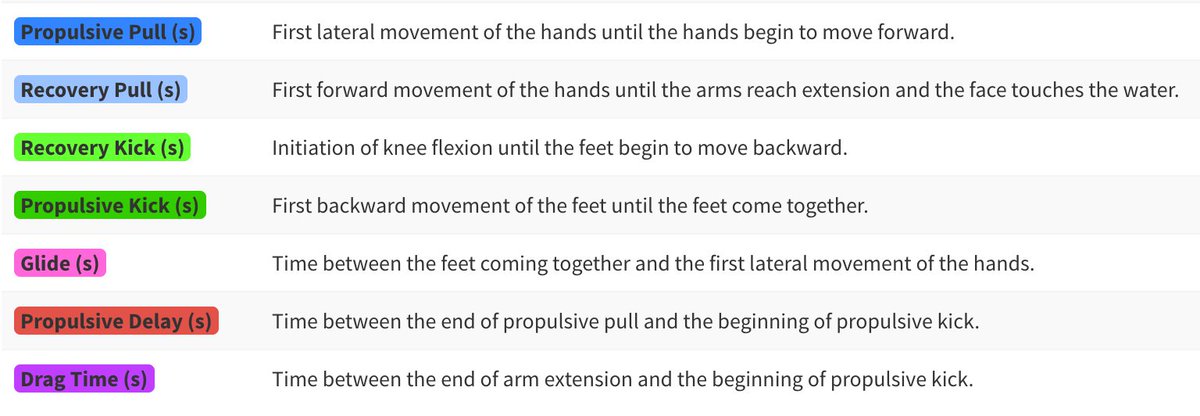
This study aimed to identify the temporal patterns used in the 100 m breaststroke WR swims. Based on the stroke phase model developed by Chollet et al. (2004) six time points within the stroke cycle were digitised and used to calculate seven temporal parameters. #ESSTC20 2/6

This study aimed to identify the temporal patterns used in the 100 m breaststroke WR swims. Based on the stroke phase model developed by Chollet et al. (2004) six time points within the stroke cycle were digitised and used to calculate seven temporal parameters. #ESSTC20 2/6
Emily Nicol (@em_nicol) 's Twitter Profile Photo

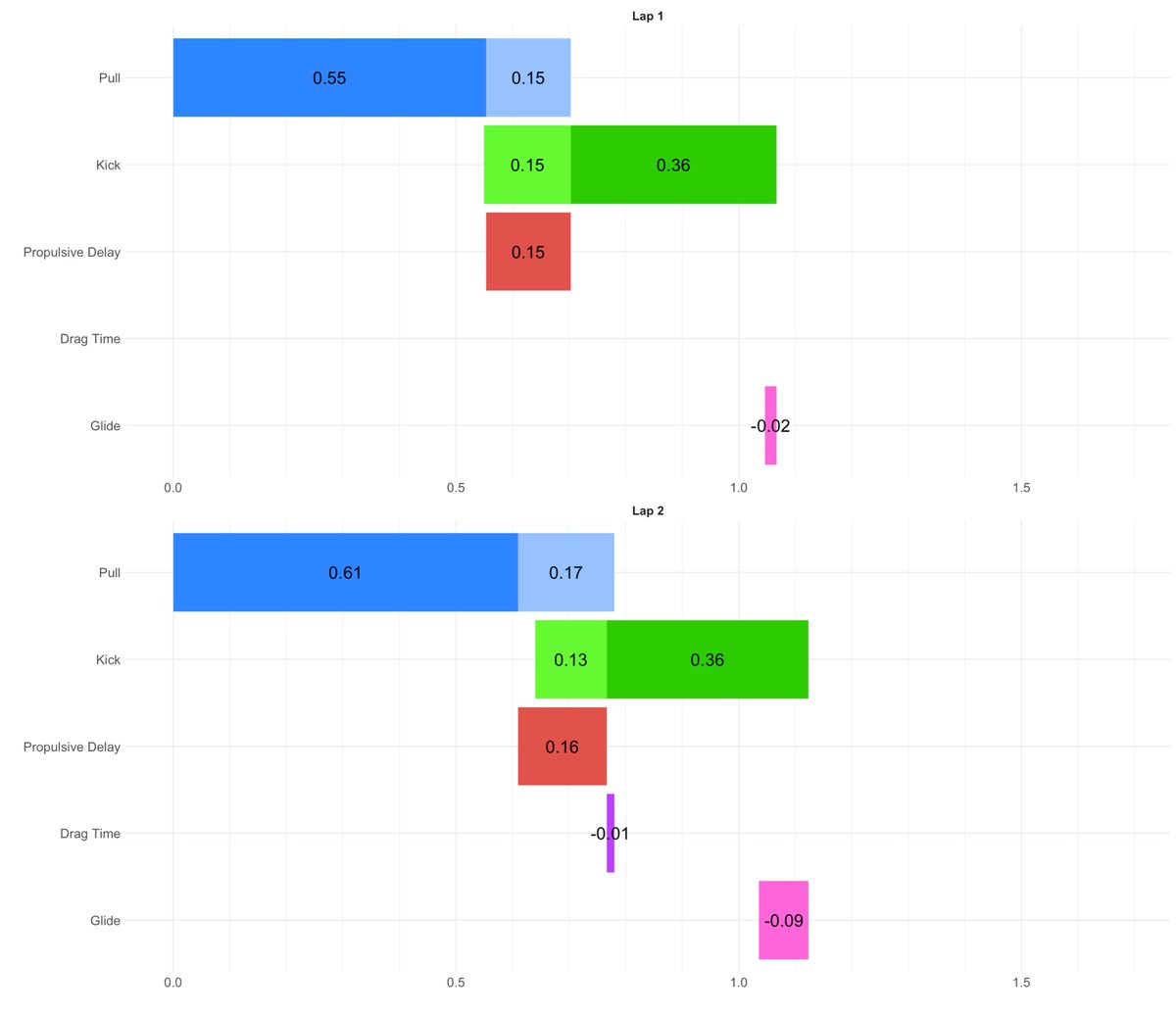
The male 100 m WR swim was characterised by a negative glide time on laps one and two. The swim was also characterised by zero to 0.01s drag time. This indicated that the upper limbs reached a streamline position at the same time that leg propulsion commenced. #ESSTC20 3/6

The male 100 m WR swim was characterised by a negative glide time on laps one and two. The swim was also characterised by zero to 0.01s drag time. This indicated that the upper limbs reached a streamline position at the same time that leg propulsion commenced. #ESSTC20 3/6
Emily Nicol (@em_nicol) 's Twitter Profile Photo

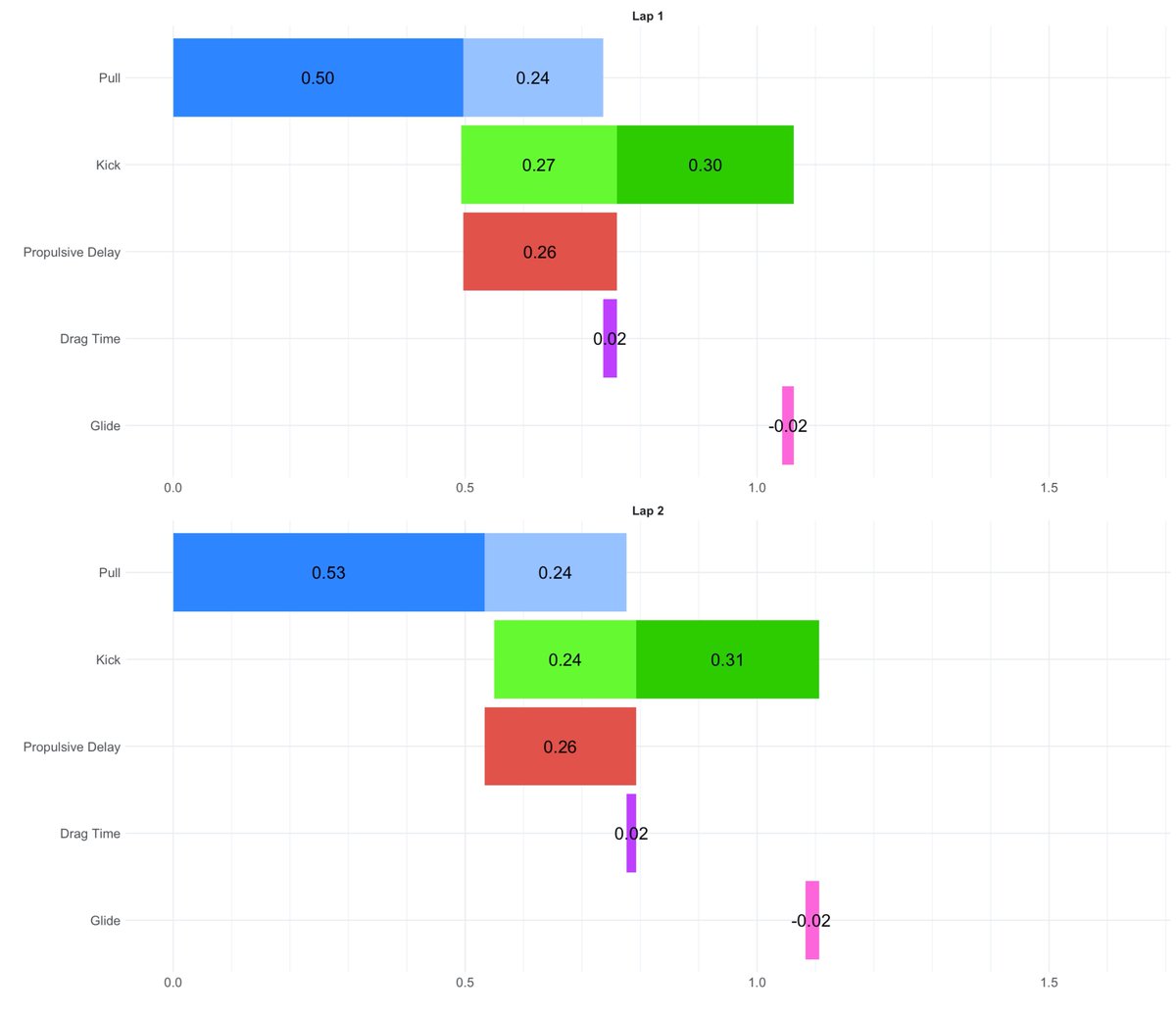
The female 100 m WR swim was also characterised by a negative glide time during laps one and two. Temporal patterns were similar between laps one and two with the largest differences occurring to propulsive pull and recovery kick. #ESSTC20 4/6

The female 100 m WR swim was also characterised by a negative glide time during laps one and two. Temporal patterns were similar between laps one and two with the largest differences occurring to propulsive pull and recovery kick. #ESSTC20 4/6
Emily Nicol (@em_nicol) 's Twitter Profile Photo

Several temporal differences were apparent between the male and female 100 m swims. Notably, the time spent in recovery phases was shorter in the male swim. This resulted in a reduced propulsive delay and a shorter period of deceleration during the stroke cycle. #ESSTC20 5/6

Several temporal differences were apparent between the male and female 100 m swims. Notably, the time spent in recovery phases was shorter in the male swim. This resulted in a reduced propulsive delay and a shorter period of deceleration during the stroke cycle. #ESSTC20 5/6
Emily Nicol (@em_nicol) 's Twitter Profile Photo

WR swims were characterised by small glide and drag times. Reducing these deceleration phases may partially explain the record outcome of each race. Temporal analysis may be used in future to understand how timing patterns influence breaststroke performance. #ESSTC20 6/6

WR swims were characterised by small glide and drag times. Reducing these deceleration phases may partially explain the record outcome of each race. 
Temporal analysis may be used in future to understand how timing patterns influence breaststroke performance. #ESSTC20 6/6
Emily Nicol (@em_nicol) 's Twitter Profile Photo

Watch this space: An insight into the velocity profiles of elite breaststroke swimmers coming your way very soon #PhDLife #3DKinematics

Watch this space: An insight into the velocity profiles of elite breaststroke swimmers coming your way very soon #PhDLife #3DKinematics
Aaron Balloch (@asballoch) 's Twitter Profile Photo

FINAL chance to complete Western Australian Institute of Sport short swimming survey seeking to understand athlete/coach/scientist views' on sprint freestyle technique. Use link or scan QR code below uwa.qualtrics.com/jfe/form/SV_db… Koji Honda Elaine Tor Jess Corones Simon Pearson Emily Nicol Victoria Brackley

FINAL chance to complete <a href="/InsideWAIS/">Western Australian Institute of Sport</a> short swimming survey seeking to understand athlete/coach/scientist views' on sprint freestyle technique. Use link or scan QR code below  uwa.qualtrics.com/jfe/form/SV_db… <a href="/kojiehonda/">Koji Honda</a> <a href="/elainetor13/">Elaine Tor</a> <a href="/jess_corones/">Jess Corones</a> <a href="/simonpearson_nz/">Simon Pearson</a> <a href="/Em_Nicol/">Emily Nicol</a> <a href="/VicBrackley/">Victoria Brackley</a>
Emily Nicol (@em_nicol) 's Twitter Profile Photo

Very excited to have the first instalment of my PhD research published in Sports Biomechanics! Please follow the link below to find out more about the temporal patterns of elite breaststroke swimmers in competition. tandfonline.com/eprint/VJPQCTN…

Emily Nicol (@em_nicol) 's Twitter Profile Photo

‘Stroke Kinematics, Temporal Patterns, Neuromuscular Activity, Pacing and Kinetics in Elite Breaststroke Swimming: A Systematic Review’ is now live courtesy of Sports Medicine Please head to sportsmedicine-open.springeropen.com/articles/10.11… to read more into all things breaststroke biomechanics.

‘Stroke Kinematics, Temporal Patterns, Neuromuscular Activity, Pacing and Kinetics in Elite Breaststroke Swimming: A Systematic Review’ is now live courtesy of <a href="/SportsMedicineJ/">Sports Medicine</a> 

Please head to sportsmedicine-open.springeropen.com/articles/10.11… to read more into all things breaststroke biomechanics.
Emily Nicol (@em_nicol) 's Twitter Profile Photo

Ever wondered how dryland strength-power measures relate to propulsive velocity in elite breaststroke swimmers? Please head to journals.humankinetics.com/view/journals/… to find out more, courtesy of Int'l Journal of Sports Physiology and Performance

Ever wondered how dryland strength-power measures relate to propulsive velocity in elite breaststroke swimmers? Please head to journals.humankinetics.com/view/journals/… to find out more, courtesy of <a href="/IJSPPjournal/">Int'l Journal of Sports Physiology and Performance</a>