Dr Thomas Kevin Swift (@drtkswift) 's Twitter Profile
Dr Thomas Kevin Swift

@drtkswift

Senior Economist at ICIS. Former NABE president. Author of “A History of American Business Cycles”. Views are my own. E: [email protected]

ID: 781839530693361664

calendar_today30-09-2016 12:54:05

4,4K Tweet

1,1K Takipçi

16 Takip Edilen

Dr Thomas Kevin Swift (@drtkswift) 's Twitter Profile Photo

NFIB reported that its Small Business Optimism Index rose a larger than expected 1.7 points to 100.3 in July, its highest in five months. The index remains above its 52-year average of 98.

NFIB reported that its Small Business Optimism Index rose a larger than expected 1.7 points to 100.3 in July, its highest in five months. The index remains above its 52-year average of 98.
Dr Thomas Kevin Swift (@drtkswift) 's Twitter Profile Photo

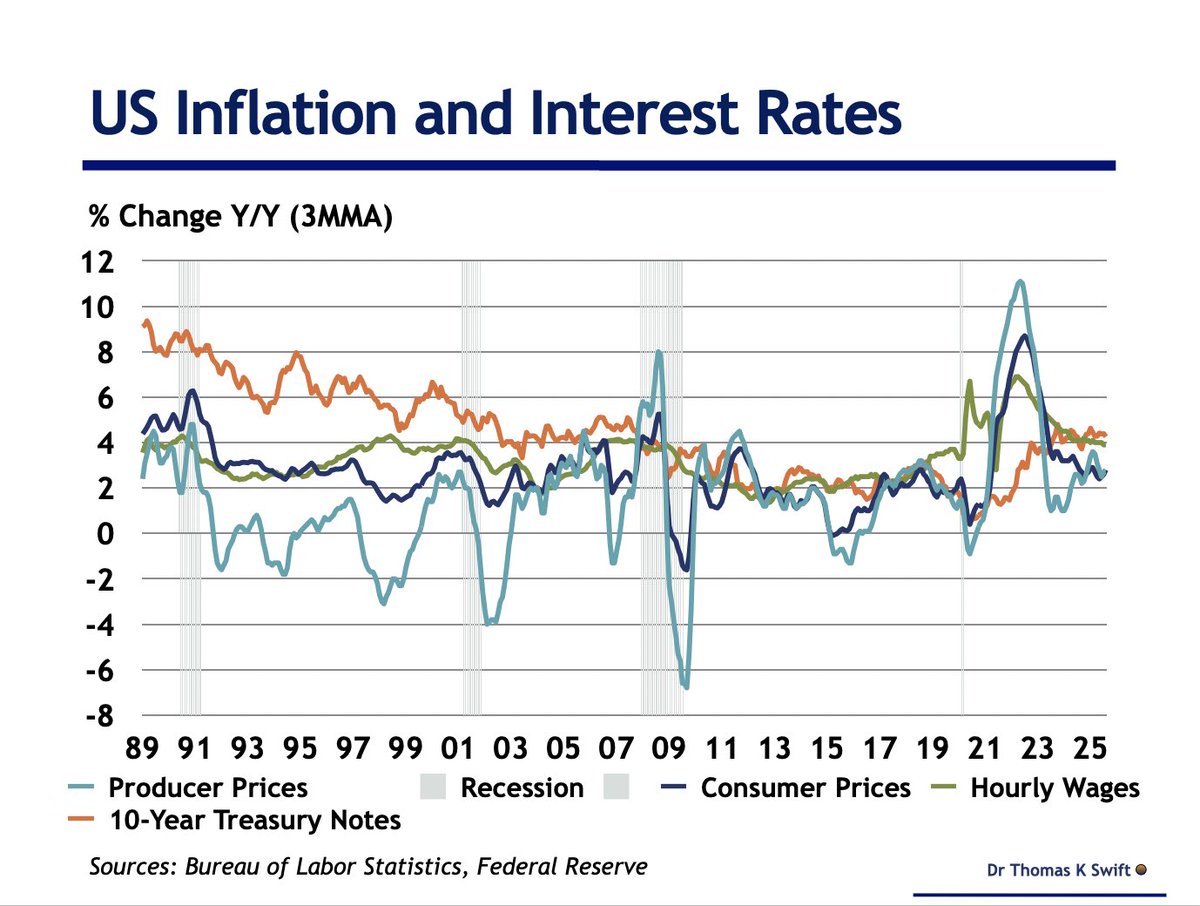
The consumer price index increased 0.2% in July, a pace right in line with expectations and the same as last month. This follows a 0.3% rise in June, and over the last 12 months, headline CPI increased 2.7% y/y. Shelter prices rose 0.2% during July and energy prices declined.

Dr Thomas Kevin Swift (@drtkswift) 's Twitter Profile Photo

Our first regional Fed survey for August manufacturing and it was positive. The New York Fed reported that business activity rose modestly in New York during August with the headline general business conditions index rising 6.4 points to +11.9. New orders and shipments increased.

Our first regional Fed survey for August manufacturing and it was positive. The New York Fed reported that business activity rose modestly in New York during August with the headline general business conditions index rising 6.4 points to +11.9. New orders and shipments increased.
Dr Thomas Kevin Swift (@drtkswift) 's Twitter Profile Photo

Retail sales rose 0.7% in July and follow a 0.9% gain in June. The largest increases were seen in sales at motor vehicle & parts dealers and furniture & home furniture stores.

Retail sales rose 0.7% in July and follow a 0.9% gain in June. The largest increases were seen in sales at motor vehicle & parts dealers and furniture & home furniture stores.
Dr Thomas Kevin Swift (@drtkswift) 's Twitter Profile Photo

Headline capacity utilization for industry moved down 0.2 points to 77.5% in July, a rate that is 2.1 percentage points below its long-run (1972–2024) average. During July, operating rates fell in manufacturing, mining, and utilities.

Headline capacity utilization for industry moved down 0.2 points to 77.5% in July, a rate that is 2.1 percentage points below its long-run (1972–2024) average. During July, operating rates fell in manufacturing, mining, and utilities.
Dr Thomas Kevin Swift (@drtkswift) 's Twitter Profile Photo

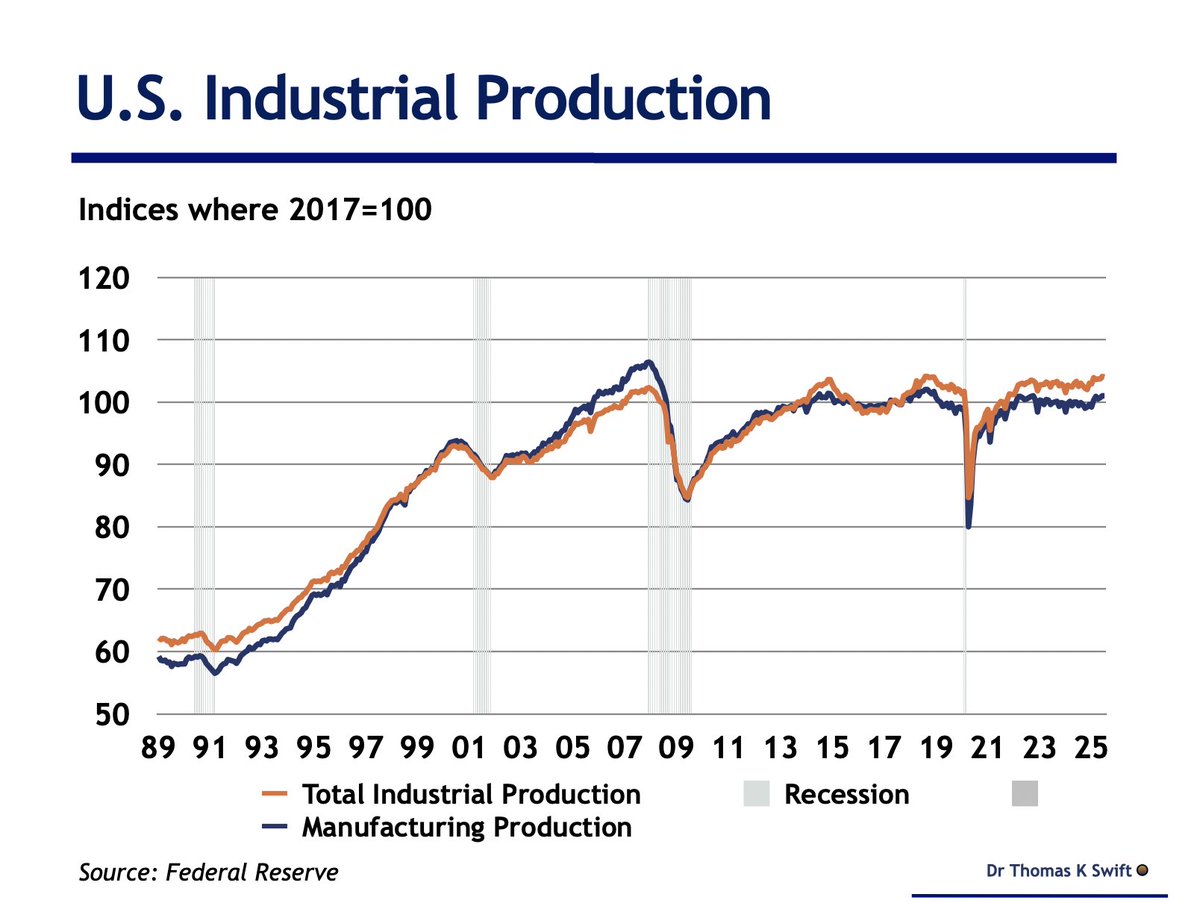
industrial production (IP) eased 0.1% in July, missing expectations of a flat reading but following an upwardly revised 0.4% rise in June. At 104.0% of its 2017 average, total IP in July was 1.4% y/y. Manufacturing output was unchanged after a 0.3% gain in June.

industrial production (IP) eased 0.1% in July, missing expectations of a flat reading but following an upwardly revised 0.4% rise in June. At 104.0% of its 2017 average, total IP in July was 1.4% y/y. Manufacturing output was unchanged after a 0.3% gain in June.
Dr Thomas Kevin Swift (@drtkswift) 's Twitter Profile Photo

The housing report was mixed with housing surprising to the upside, reaching a 1.43-million-unit pace in July. But the gain was largely centered in multi-family housing. Moreover, building permits declined for a fourth month.

The housing report was mixed with housing surprising to the upside, reaching a 1.43-million-unit pace in July. But the gain was largely centered in multi-family housing. Moreover, building permits declined for a fourth month.
Dr Thomas Kevin Swift (@drtkswift) 's Twitter Profile Photo

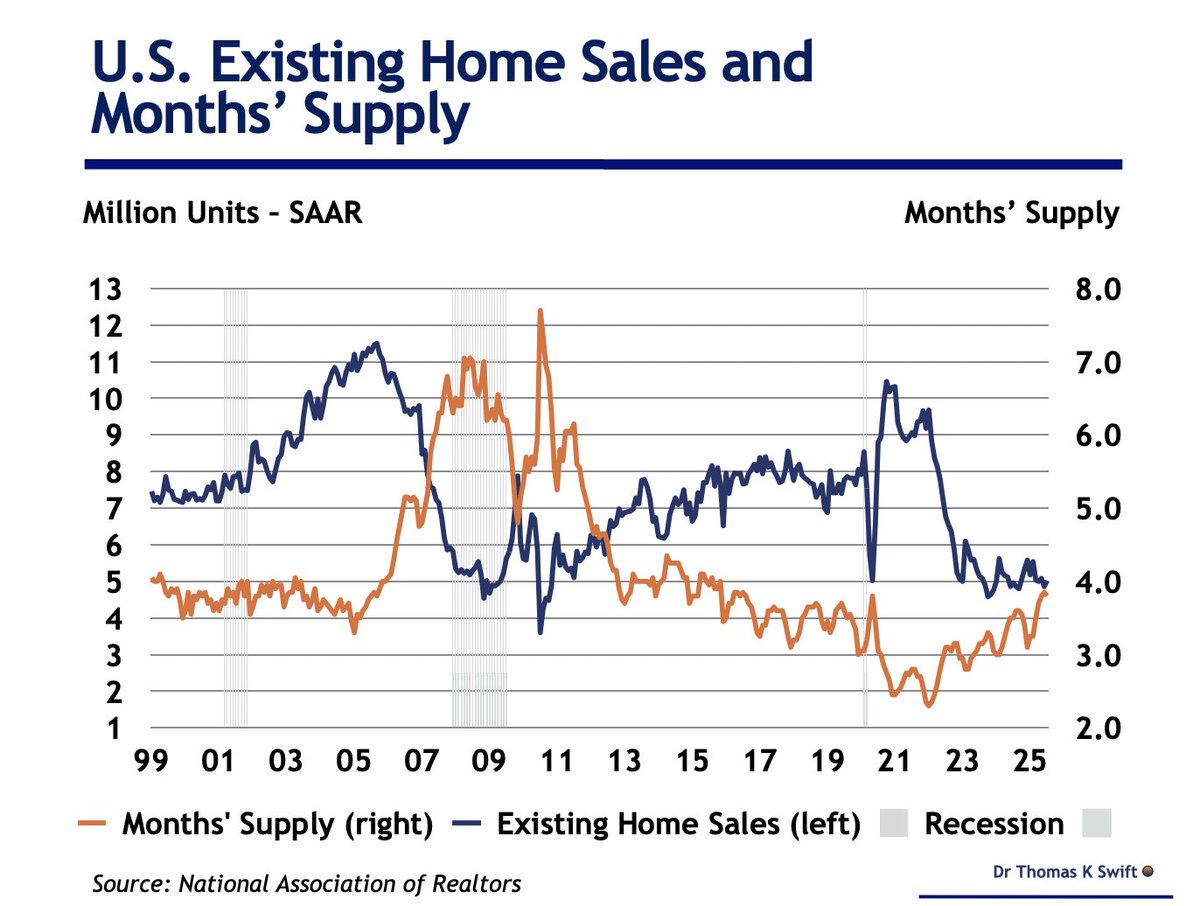
US existing home sales rose 2.0% to a 4.01-million-unit pace in July. Sales rose in the Northeast, South, and West but declined in the Midwest. During the month, the inventory of homes for sale rose to 1.55 million units, a 4.6 months’ supply at the current sales pace.

US existing home sales rose 2.0% to a 4.01-million-unit pace in July. Sales rose in the Northeast, South, and West but declined in the Midwest. During the month, the inventory of homes for sale rose to 1.55 million units, a 4.6 months’ supply at the current sales pace.
Dr Thomas Kevin Swift (@drtkswift) 's Twitter Profile Photo

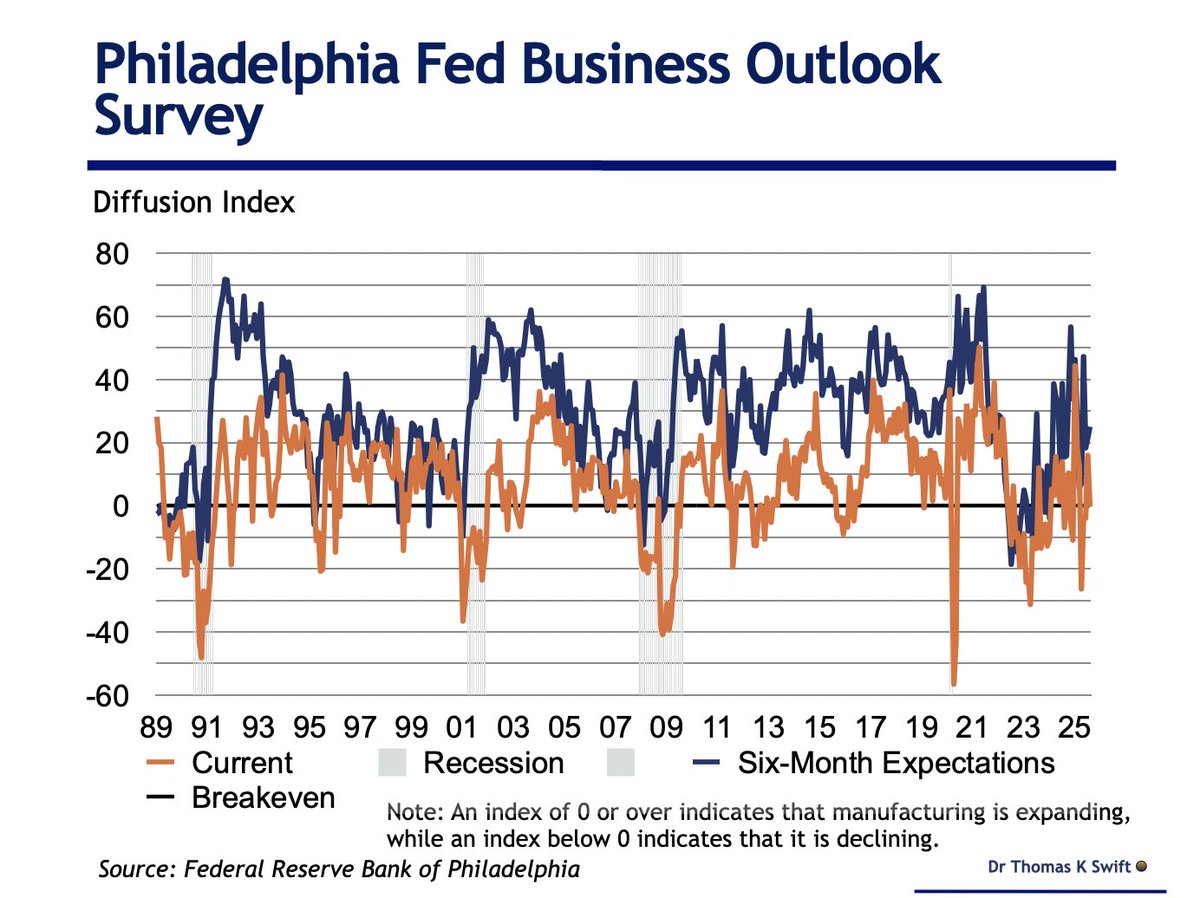
Our second regional Fed manufacturing survey for August and it was slightly negative. The Philadelphia Fed reported that manufacturing activity in the region weakened this month. The current general activity index fell 16.4 points to a slightly negative -0.3 reading.

Our second regional Fed manufacturing survey for August and it was slightly negative. The Philadelphia Fed reported that manufacturing activity in the region weakened this month. The current general activity index fell 16.4 points to a slightly negative -0.3 reading.
Dr Thomas Kevin Swift (@drtkswift) 's Twitter Profile Photo

New homes sales, after rebounding in June, edged down 0.6% to a 652K-unit-pace in July. Sales in the Midwest and South were soft and sales in the West improved. Sales in the Northeast were flat. The inventory of homes for sale also edged down. Inventories remain high.

New homes sales, after rebounding in June, edged down 0.6% to a 652K-unit-pace in July. Sales in the Midwest and South were soft and sales in the West improved. Sales in the Northeast were flat. The inventory of homes for sale also edged down. Inventories remain high.
Dr Thomas Kevin Swift (@drtkswift) 's Twitter Profile Photo

Our fourth regional Fed survey for August manufacturing and it was soft. The Richmond Fed reported that Fifth District manufacturing activity remained soft in August. The composite manufacturing index rose to -7 in August from -20 in July. This is still in negative territory.

Our fourth regional Fed survey for August manufacturing and it was soft. The Richmond Fed reported that Fifth District manufacturing activity remained soft in August. The composite manufacturing index rose to -7 in August from -20 in July. This is still in negative territory.
Dr Thomas Kevin Swift (@drtkswift) 's Twitter Profile Photo

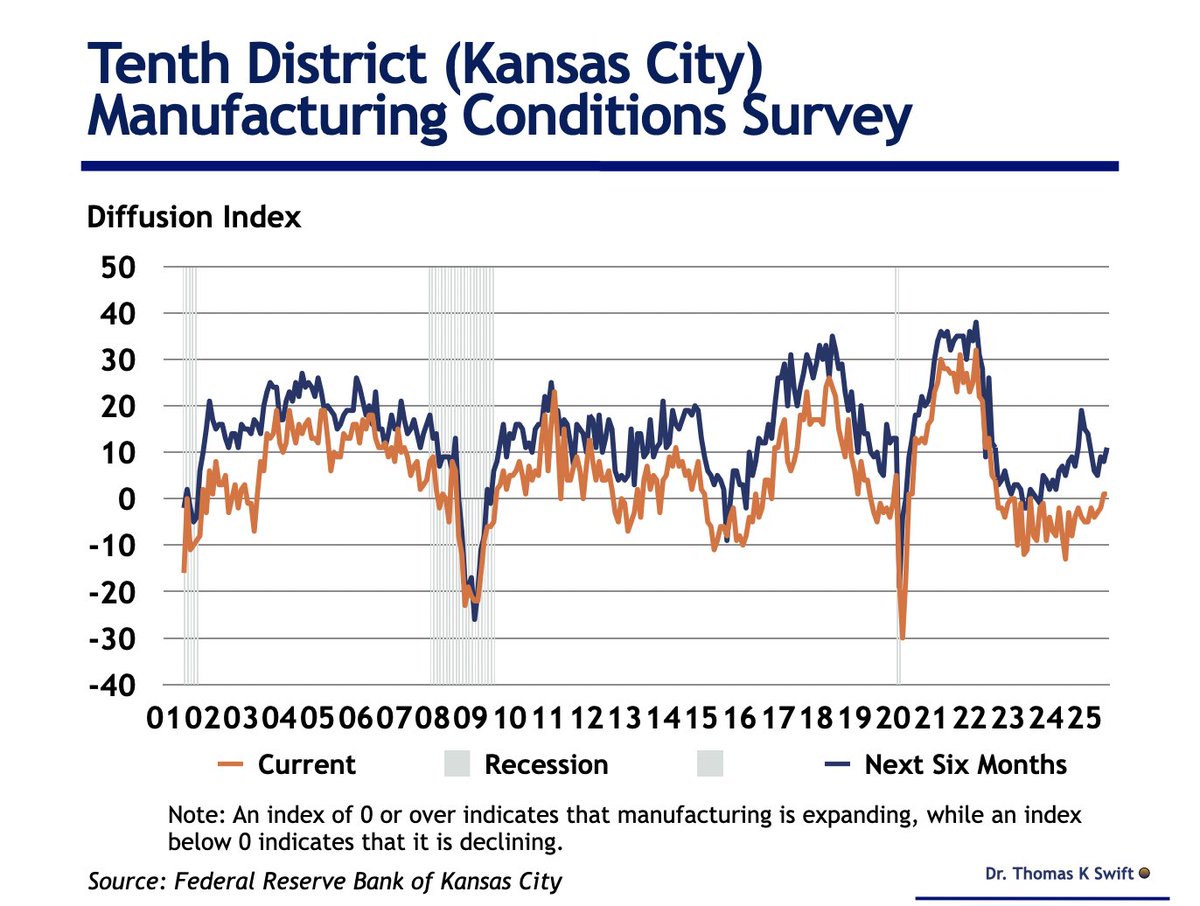
The Kansas City Fed reported that during August its composite index of current conditions was unchanged at 1 in August. Production ticked up from -3 to 0 and the employment index increased modestly from -11 to 0.

The Kansas City Fed reported that during August its composite index of current conditions was unchanged at 1 in August. Production ticked up from -3 to 0 and the employment index increased modestly
from -11 to 0.
Dr Thomas Kevin Swift (@drtkswift) 's Twitter Profile Photo

Real consumer spending rose an expected 0.3% in July, an improvement from the 0.1% rise in June, and a 0.2% set-back in May. Spending rose sharply for durable goods and also rose for non-durable goods and services. Real consumer spending was up 2.1% y/y. Americans love to shop!

Real consumer spending rose an expected 0.3% in July, an improvement from the 0.1% rise in June, and a 0.2% set-back in May. Spending rose sharply for durable goods and also rose for non-durable goods and services. Real consumer spending was up 2.1% y/y. Americans love to shop!
Dr Thomas Kevin Swift (@drtkswift) 's Twitter Profile Photo

If I was limited to one chart to illustrate the state of the US economy this would be it. Industrial production edged down, largely due to weather. Non-farm payrolls edged up, real personal income less transfer payments featured a solid gain, and business sales improved.

If I was limited to one chart to illustrate the state of the US economy this would be it. Industrial production edged down, largely due to weather. Non-farm payrolls edged up, real personal income less transfer payments featured a solid gain, and business sales improved.
Dr Thomas Kevin Swift (@drtkswift) 's Twitter Profile Photo

Something is amiss in the Windy City. The Chicago PMI declined a larger-than-expected 5.6 points to 41.5 in August. This marks the 21st month of a contractionary reading.

Something is amiss in the Windy City. The Chicago PMI declined a larger-than-expected 5.6 points to 41.5 in August. This marks the 21st month of a contractionary reading.
Dr Thomas Kevin Swift (@drtkswift) 's Twitter Profile Photo

After a surprise 0.1% decline in the PPI yesterday, the Bureau of Labor Statistics (BLS) reported that CPI rose a larger-than-expected 0.4% in August. The shelter component was the largest factor in this gain.

After a surprise 0.1% decline in the PPI yesterday, the Bureau of Labor Statistics (BLS) reported that CPI rose a larger-than-expected 0.4% in August. The shelter component was the largest factor in this gain.
Dr Thomas Kevin Swift (@drtkswift) 's Twitter Profile Photo

During August, retail sales rose 0.6% and follows a solid 0.7% gain in July. Gains across segments were widespread. There was weakness in furniture & home furnishing stores, health & personal care stores, department stores, and miscellaneous retailers.

During August, retail sales rose 0.6% and follows a solid 0.7% gain in July. Gains across segments were widespread. There was weakness in furniture & home furnishing stores, health & personal care stores, department stores, and miscellaneous retailers.
Dr Thomas Kevin Swift (@drtkswift) 's Twitter Profile Photo

US industrial production rose 0.1% in August, partially offsetting a 0.4% decline in July. Mining output moved up 0.9% percent while that for utilities decreased 2.0%. Manufacturing output rose 0.2% in August after edging down 0.1% in July.

US industrial production rose 0.1% in August, partially offsetting a 0.4% decline in July. Mining output moved up 0.9% percent while that for utilities decreased 2.0%. Manufacturing output rose 0.2% in August after edging down 0.1% in July.
Dr Thomas Kevin Swift (@drtkswift) 's Twitter Profile Photo

Despite production edging up, headline capacity utilization for all industry was stable at 77.4% in August, a rate that is 2.2 percentage points below its long-run (1972–2024) average.

Despite production edging up, headline capacity utilization for all industry was stable at 77.4% in August, a rate that is 2.2 percentage points below its long-run (1972–2024) average.
Dr Thomas Kevin Swift (@drtkswift) 's Twitter Profile Photo

US existing home sales eased 0.2% to a 4.00-million-unit pace in August. Dales rose in the Midwest and West but retreated in the Northeast and South. Inventories of homes for sale fell 1.3% to 1.53 million. Months’ supply was stable at a near normal 4.6 months.

US existing home sales eased 0.2% to a 4.00-million-unit pace in August. Dales rose in the Midwest and West but retreated in the Northeast and South. Inventories of homes for sale fell 1.3% to 1.53 million. Months’ supply was stable at a near normal 4.6 months.