
Dr. Matthew C - Cardiothoracic Surgeon (@dr_matthew_c) 's Twitter Profile
Dr. Matthew C - Cardiothoracic Surgeon

@dr_matthew_c

Making high quality surgical training available to all junior residents and medical students

ID: 1684181049658736642

linkhttps://www.youtube.com/@PulseswithDocMason calendar_today26-07-2023 12:37:24

364 Tweet

152 Followers

199 Following
Dr. Matthew C - Cardiothoracic Surgeon (@dr_matthew_c) 's Twitter Profile Photo

Prioritize self-directed learning. For the first time in surgical history, residents have access to simulators, online cases, skill trackers, and AI feedback tools yet many still wait for someone else to tell them what to practice. The ones who win will seek out reps, track

Dr. Matthew C - Cardiothoracic Surgeon (@dr_matthew_c) 's Twitter Profile Photo

The only opinion that matters is your own. In surgery, you’ll cross people no matter what you do. Most won’t remember by next week. The ones who do? Usually fighting their own insecurity. Generate respect for your work, not work for your respect.

Dr. Matthew C - Cardiothoracic Surgeon (@dr_matthew_c) 's Twitter Profile Photo

Surgical simulation builds two kinds of confidence: Mental — trusting that every repetition rewires your fear response. Physical — building muscle memory so deep it overrides hesitation. Practice is the bridge between “I hope I can” and “I know I can.”

Dr. Matthew C - Cardiothoracic Surgeon (@dr_matthew_c) 's Twitter Profile Photo

The best way to master a procedure is to write down the steps, but only if you care about actually mastering it When you write it out, you are forced to turn vague desciprtions into exact physical moves. When you have to write instructions so clear that an intern who has never

Dr. Matthew C - Cardiothoracic Surgeon (@dr_matthew_c) 's Twitter Profile Photo

You aren’t passionate about suturing. You’re passionate about solving problems under pressure. The tools will change, staplers, robots, AI ,all of it. But what won’t change is your ability to adapt, to think, to act. That’s what makes a surgeon, not the scalpel.

Dr. Matthew C - Cardiothoracic Surgeon (@dr_matthew_c) 's Twitter Profile Photo

How I’m using AI to train like I have a board of surgical mentors: -Pick 3–5 pioneer surgeons in the procedure I want to learn -Feed their talks and conference presentations into AI -Turn their principles into a table: indication, setup, exposure, key moves, common errors,

Dr. Matthew C - Cardiothoracic Surgeon (@dr_matthew_c) 's Twitter Profile Photo

If you want to improve your surgical skills, film your simulations from your POV and you'll find out -Which 3 parts eat 40% of your case time -Exposures you're forcing instead of creating -Instrument economy gaps costing you minutes You cant' fix what you can't see. One camera

Dr. Matthew C - Cardiothoracic Surgeon (@dr_matthew_c) 's Twitter Profile Photo

Imposter syndrome is just your brain with a data deficiency If you haven’t sewn 100 perfect anastomoses in a sim, your brain is right to be anxious in the theater. Anxiety is just your biology acknowledging a lack of proof. You don't need a meditation. You need a personal log

Dr. Matthew C - Cardiothoracic Surgeon (@dr_matthew_c) 's Twitter Profile Photo

When you film your simulations and actually review them, you leapfrog your peers because you can see: 1) where things broke down—at 0.5× speed 2) where your struggle under pressure 3) why those struggles keep repeating 4) how to correct them before someone else even gets that

Dr. Matthew C - Cardiothoracic Surgeon (@dr_matthew_c) 's Twitter Profile Photo

The fastest way to earn trust in surgical training isn’t being the most skilled resident. It’s being the one your seniors never have to double-check. Skill catches attention once. Reliability earns you oppurtunities— again and again.

Dr. Matthew C - Cardiothoracic Surgeon (@dr_matthew_c) 's Twitter Profile Photo

More residents lose credibility from excuses than errors. More lose opportunity from blame-shifting than lack of skill. More lose trust from denial than honesty. Being a standout trainee starts with ownership, even when it wasn’t your fault.

Dr. Matthew C - Cardiothoracic Surgeon (@dr_matthew_c) 's Twitter Profile Photo

If you’re stuck in training, practice something. Anything. Knot tying. Suturing. Dissection. Decision-making. Case prep. Waiting won’t make you better , repetition will. Every day you train without supervision is one step closer to independence.

Dr. Matthew C - Cardiothoracic Surgeon (@dr_matthew_c) 's Twitter Profile Photo

Subtle reminder: you’re supposed to feel overwhelmed in training. That knot in your stomach means you’re leveling up. Every moment of uncertainty is proof you’re expanding your limits. Reflect after every case, fix one thing, get 1% better.

Dr. Matthew C - Cardiothoracic Surgeon (@dr_matthew_c) 's Twitter Profile Photo

Clear weekly skill goals --> Daily deliberate practice --> Honest feedback --> Push harder when it gets easy That’s how competence becomes confidence. Comfort never taught precision.

Dr. Matthew C - Cardiothoracic Surgeon (@dr_matthew_c) 's Twitter Profile Photo

Your training changes the moment you see screwups as your most personalized lessons. Every delayed decision, every misplaced suture maps your growth curve. You just need to learn how to read it

Dr. Matthew C - Cardiothoracic Surgeon (@dr_matthew_c) 's Twitter Profile Photo

There’s no audience when you do late night simulations, no applause for another run‑through, and no likes for your practice session. You just stack reps: cold starts on the box trainer, dry‑runs of tomorrow’s case, mental rehearsals on the commute, and video reviews that expose

Dr. Matthew C - Cardiothoracic Surgeon (@dr_matthew_c) 's Twitter Profile Photo

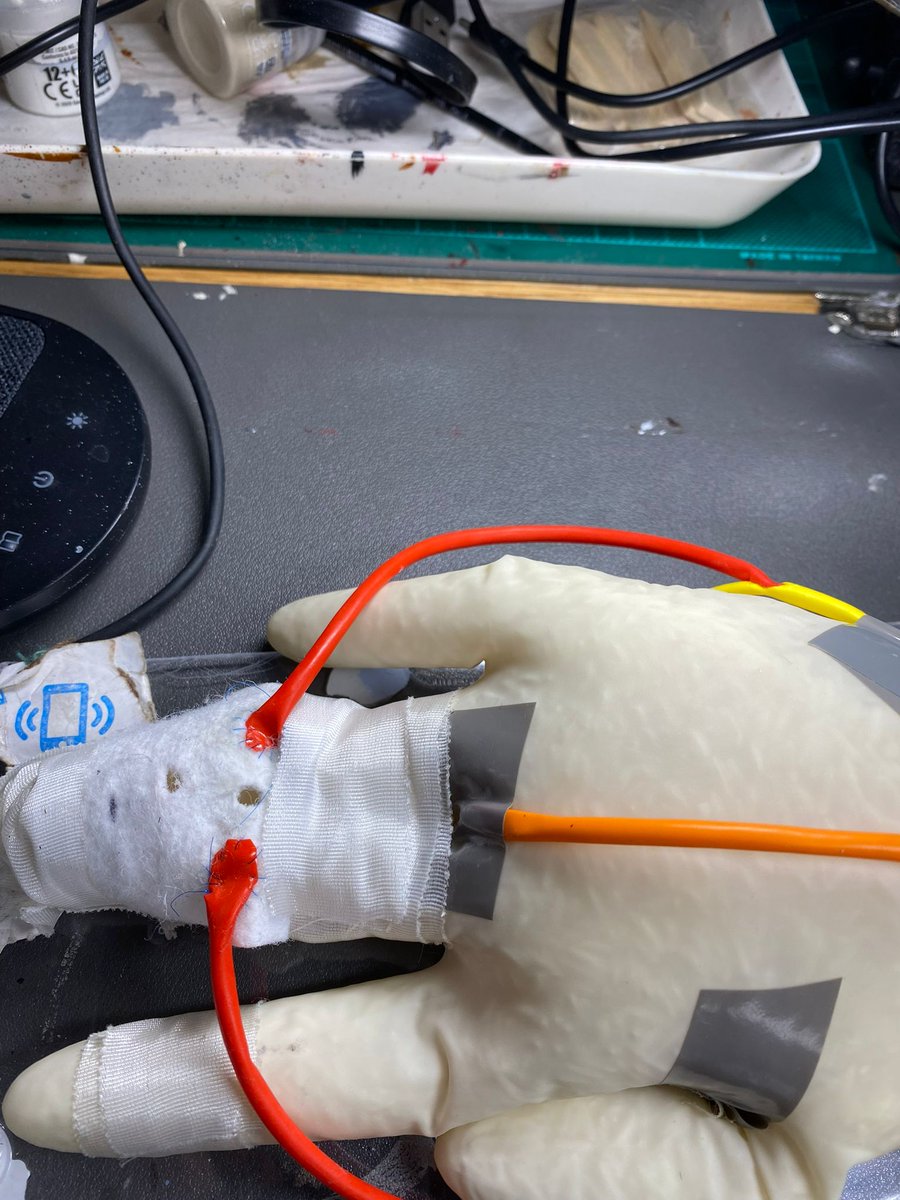
Stop ignoring low‑cost setups just because they’re not the theater or nobody’s watching. Do this: -Build a simple foam or box trainer for one core skill. -Set a clear target (time and accuracy) and track every rep. -Record your practice and ask seniors for specific feedback.

Stop ignoring low‑cost setups just because they’re not the theater or nobody’s watching.

Do this:
-Build a simple foam or box trainer for one core skill.
-Set a clear target (time and accuracy) and track every rep.
-Record your practice and ask seniors for specific feedback.
Dr. Matthew C - Cardiothoracic Surgeon (@dr_matthew_c) 's Twitter Profile Photo

If you roll a die 1000x, you’re likely to get “lucky.” If you practice a surgical skill at home 1000x, you’re likely to be called “talented.” Most trainees never do that volume, and that’s exactly why you’ll stand out.