Stan Cohen (@stan_cohen37) 's Twitter Profile
Stan Cohen

@stan_cohen37

Former Head of KS3 English in England. Now Head of English for a group of schools in Ontario.

ID: 735480721398239233

calendar_today25-05-2016 14:40:43

845 Tweet

331 Followers

532 Following

Brett Benson (@mrbensonnms) 's Twitter Profile Photo

“Because, but, so” works not because it’s cute but because it aligns with how memory and understanding actually form. Retrieval. Elaboration. Generation. The science behind these 3 small words and how I use it in the wild to make expert thinking accessible. 🔗👇

“Because, but, so” works not because it’s cute but because it aligns with how memory and understanding actually form.

Retrieval. Elaboration. Generation.

The science behind these 3 small words and how I use it in the wild to make expert thinking accessible. 🔗👇
Stan Cohen (@stan_cohen37) 's Twitter Profile Photo

“…ask not whether the learner is ready to understand a piece of knowledge; ask whether a piece of knowledge is ready to be understood by the learner.” What an incredibly powerful shift in mindset: design lessons so that all students can learn.

“…ask not whether the learner is ready to understand a piece of knowledge; ask whether a piece of knowledge is ready to be understood by the learner.” 

What an incredibly powerful shift in mindset: design lessons so that all students can learn.
David Didau (@daviddidau) 's Twitter Profile Photo

*NEW* the ‘Just tell them’ trap Telling students stuff is sensible. But if you’re *just* telling them, you’re not actually teaching. open.substack.com/pub/daviddidau…

Stan Cohen (@stan_cohen37) 's Twitter Profile Photo

The more I think about the requirements for learning the more I think that AI has no place in the process. AI is very likely to be the future. Those who use it well will probably be better off. But using AI well relies on knowledge of the topic - that needs to be built first.

Teacher2Teacher (@teacher2teacher) 's Twitter Profile Photo

You can't pull your Ss up out of the learning pit – but you CAN encourage them to embrace the struggle! Here's how T Mrs. Hunter reminds them that learning is just on the other side:
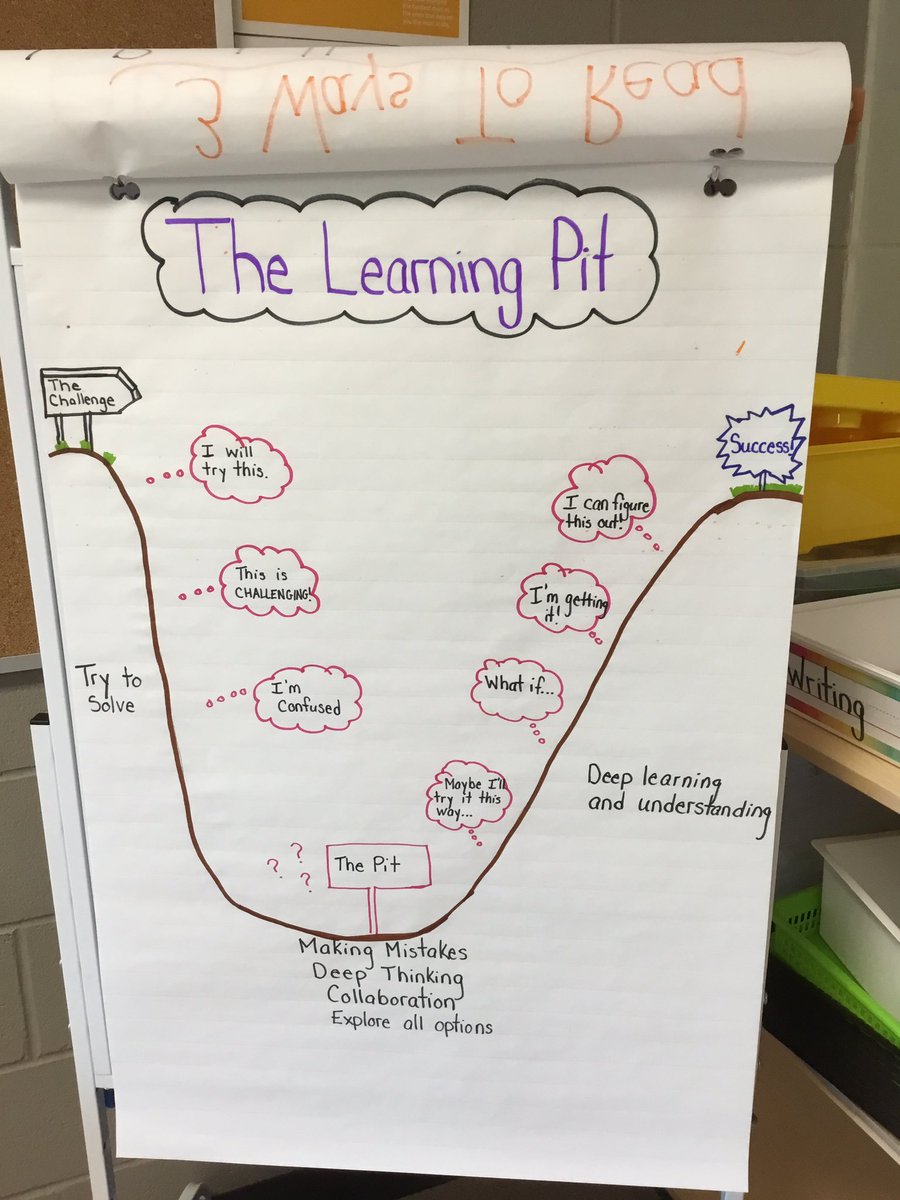

You can't pull your Ss up out of the learning pit – but you CAN encourage them to embrace the struggle!

Here's how T <a href="/MrsHunter_OAK/">Mrs. Hunter</a> reminds them that learning is just on the other side:
Paul A. Kirschner (@p_a_kirschner) 's Twitter Profile Photo

Make the Connection When you really want something to “stick”, there are good neuropsychological arguments for putting a pen – or a stylus – in students’ hands. kirschnered.nl/2025/12/01/mak…

David Didau (@daviddidau) 's Twitter Profile Photo

We love to say we’re building a ‘love of reading’. The evidence suggests we’re doing no such thing. Pleasure doesn’t lead to fluent reading; fluency makes pleasure possible. Reading for pleasure should be an outcome, not a curricular aim. Trying to teach enjoyment is missing the

We love to say we’re building a ‘love of reading’. The evidence suggests we’re doing no such thing. Pleasure doesn’t lead to fluent reading; fluency makes pleasure possible. Reading for pleasure should be an outcome, not a curricular aim. Trying to teach enjoyment is missing the
Alex Quigley (@alexjquigley) 's Twitter Profile Photo

“Feedback is not a single moment in the lesson; it’s the engine that drives adaptive teaching.” ‘Feedback: The engine room of adaptive teaching’ Via EEF Corinne Settle educationendowmentfoundation.org.uk/news/engine-ro…

Doug Lemov (@doug_lemov) 's Twitter Profile Photo

Students who regularly experience "sustained cognitive activity"--focused, directed, uninterrupted thinking, reading and writing--during the school day develop better "cognitive endurance" that is, they learn to productively focus on tasks for longer. teachlikeachampion.org/blog/on-attent…

Tom Bennett OBE (@tombennett71) 's Twitter Profile Photo

Interesting review, a few years old now. Trauma-informed approaches are very popular right now, but sadly there is still a dearth of substantial evidence that they actually work as described. Trauma itself is real, and devastating, but there is a tendency for some practitioners

Interesting review, a few years old now. Trauma-informed approaches are very popular right now, but sadly there is still a dearth of substantial evidence that they actually work as described. Trauma itself is real, and devastating, but there is a tendency for some practitioners
Brendan Lee (@learnwithmrlee) 's Twitter Profile Photo

Why do some students seem to “get it” faster than others, even when we teach them the same lesson? It is not about effort. It is not about strategies. It is about knowledge. Natalie Wexler explains why knowledge works like mental Velcro. When students have background knowledge, new


Kathy Rice (@kathy_rice) 's Twitter Profile Photo

We need to get comfortable with leaning into the anxiety, otherwise we make things worse. We need to learn how to deal with it. Not avoid it altogether.

Daniel Buck, “Youngest Old Man in Ed Reform” (@mrdanielbuck) 's Twitter Profile Photo

I want to shake the edu-establishment by the shoulders and shout NOT ALL ANXIETY IS BAD “Math anxiety” “Test anxiety” “Exam stress” Yeah. Stress helps you focus. It means you care. Dealing with it builds resilience Protecting students from all anxiety will make neurotic adults

Doug Lemov (@doug_lemov) 's Twitter Profile Photo

Daniel Buck, “Youngest Old Man in Ed Reform” Kelly Mcgonigal’s book The Upside of Stress discusses this extensively. 1) moderate stress is necessary to optimize learning. Too much stress can hurt but zero stress reduces learning 2) stress inoculates. the way to get better at handling heavy stress is to be exposed to

Tom Bennett OBE (@tombennett71) 's Twitter Profile Photo

Children grow by being exposed to medium levels of stress, and being supported to a) deal with the objects of the stress, b) find ways to solve it, and c) cope with the experience of feeling it. Too much stress overwhelms and discourages. Too little and students don’t care, and

Stan Cohen (@stan_cohen37) 's Twitter Profile Photo

Everyone involved in education needs to read this. “You’re transferring the cognitive work itself and not the load. With offloading, you still think, and the artefact (tool) supports you. With outsourcing, the system thinks, and you consume the result. That distinction matters”.