

Nikos Karagiannidis
@dbfunctor
Senior Data Zookeeper | Lead Data Engineer @Chubb | prev. Principal Data Architect @Cosmote | I solve business problems with data solutions - Views are my own
ID: 783016960175005696
http://oradwstories.blogspot.com 03-10-2016 18:52:45
136 Tweet
81 Takipçi
564 Takip Edilen








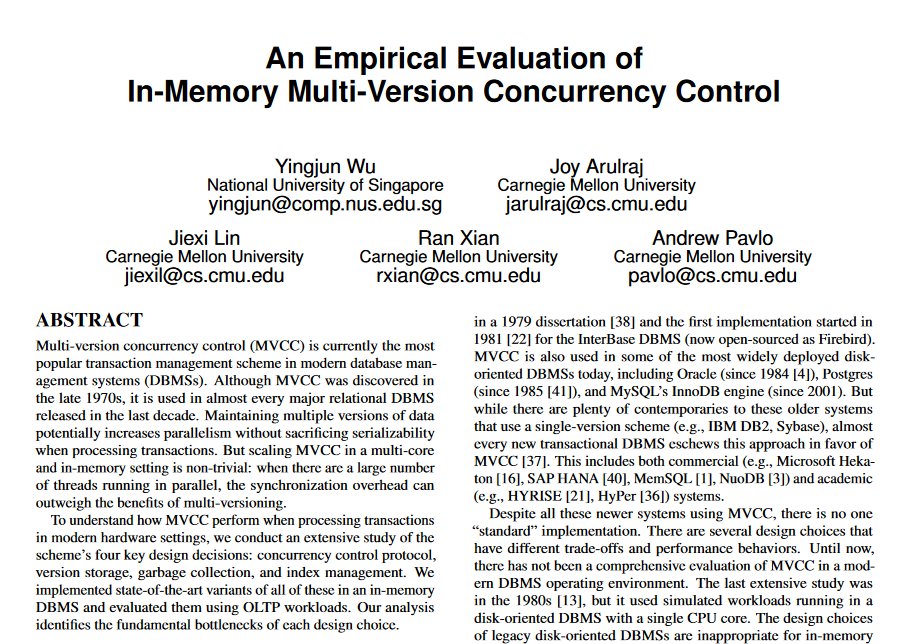
Want to learn how database concurrency control really works? Check out this paper from Yingjun Wu 🤘 and Andy Pavlo (@andypavlo.bsky.social)! It dives deep into the most widely used type of concurrency control today: multi-version concurrency control (MVCC). The basic idea behind MVCC is for a database


Elizabeth Garrett Christensen (Elizabeth Garrett Christensen): Window Functions for Data Analysis with Postgres postgr.es/p/6Df

I am thrilled to announce that my book, Functional Design and Architecture, has just been released by Manning Publications! FINALLY RELEASED!!! 😃😃😃😄😊😊❤️❤️❤️❤️❤️❤️ This has been a long journey, and I sincerely hope this book will make a significant contribution to the functional

The first two videos for CMU Database Group's latest seminar series on Database Building Blocks are now posted. You should start off with Andrew Lamb's fantastic introductory overview to ApacheDataFusion: youtube.com/watch?v=iJhRbD…

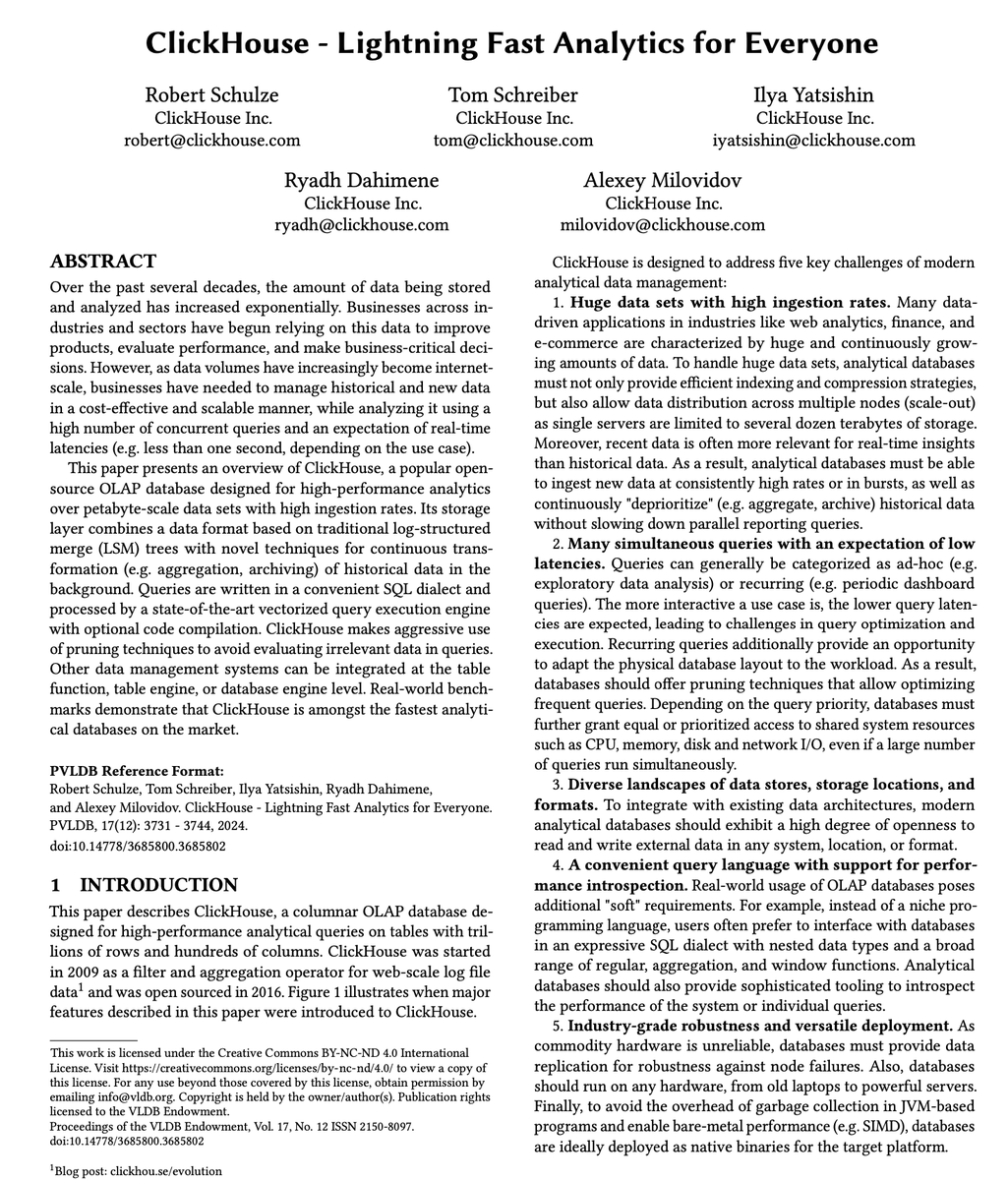
This paper covering the internals and architecture of ClickHouse is one of the best in database architecture that I read in 2024. Some great insights on SIMD and Multicore parallelisation of the query processing layer, query compilation based on LLVM, the various data


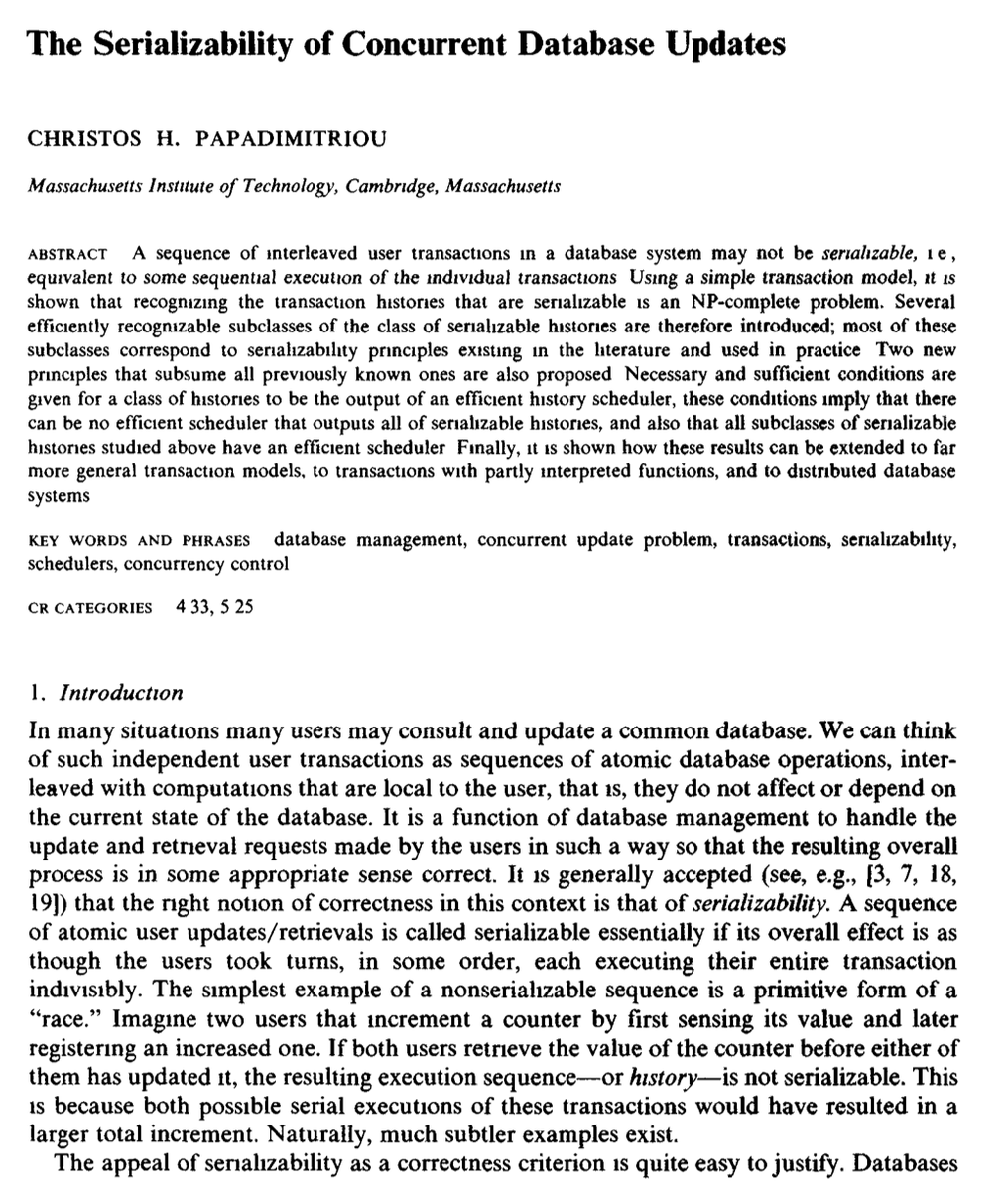
Nice blogpost by Murat Demirbas (Distributolog) on the foundational treatment of serializability theory in databases from Chapter 2 of the book Concurrency Control and Recovery in Database Systems (1987) by Bernstein, Hadzilacos, and Goodman. I started reading the post and after a bit of



James Noble excerpt from a longer paper Ensuring safety for powerful learned systems requires a fundamentally different foundation based on mathematically provable constraints on the acts an AI may perform. Such a foundation must rest on a simple principle: we should never trust an AI’s
