Cledison Marcos da Silva (@cledisonmarcos) 's Twitter Profile
Cledison Marcos da Silva

@cledisonmarcos

Stellar structure and evolution, astronomical transients, young stars, brown dwarfs, disks and exoplanets are my interests in science.

ID: 1571176832749248515

calendar_today17-09-2022 16:39:06

1,1K Tweet

53 Followers

508 Following
Xavi Bros (@xavi_bros) 's Twitter Profile Photo

EE Cephei is a long period eclipsing variable star (5,6 years). It’s a “disk-occulting system” with irregular eclipses caused by a star and a disc of gas & dust too. Here is the current V filter light curve obtained by R.Casas (red dots) & myself (blue dots, Anysllum observatory)

EE Cephei is a long period eclipsing variable star (5,6 years). It’s a “disk-occulting system” with irregular eclipses caused by a star and a disc of gas & dust too.
Here is the current V filter light curve obtained by R.Casas (red dots) & myself (blue dots, Anysllum observatory)
NASA Universe (@nasauniverse) 's Twitter Profile Photo

How will our upcoming Pioneer satellite Pandora help us learn about the atmospheres of worlds outside our solar system? By observing planets and stars simultaneously! It'll study stars' spotty surfaces to separate the signal of a planet from its host star: go.nasa.gov/4bhjyv2

Unistellar (@unistellar) 's Twitter Profile Photo

This year, YOU played a role in defending Earth 🌍 Diving into the 2025 discoveries made by the incredible Unistellar community with the The SETI Institute with our third highlight ! Citizen Science Highlight #3: Planetary Defense🌍 8 new main-belt shape models were created with

William Harwood (@cbs_spacenews) 's Twitter Profile Photo

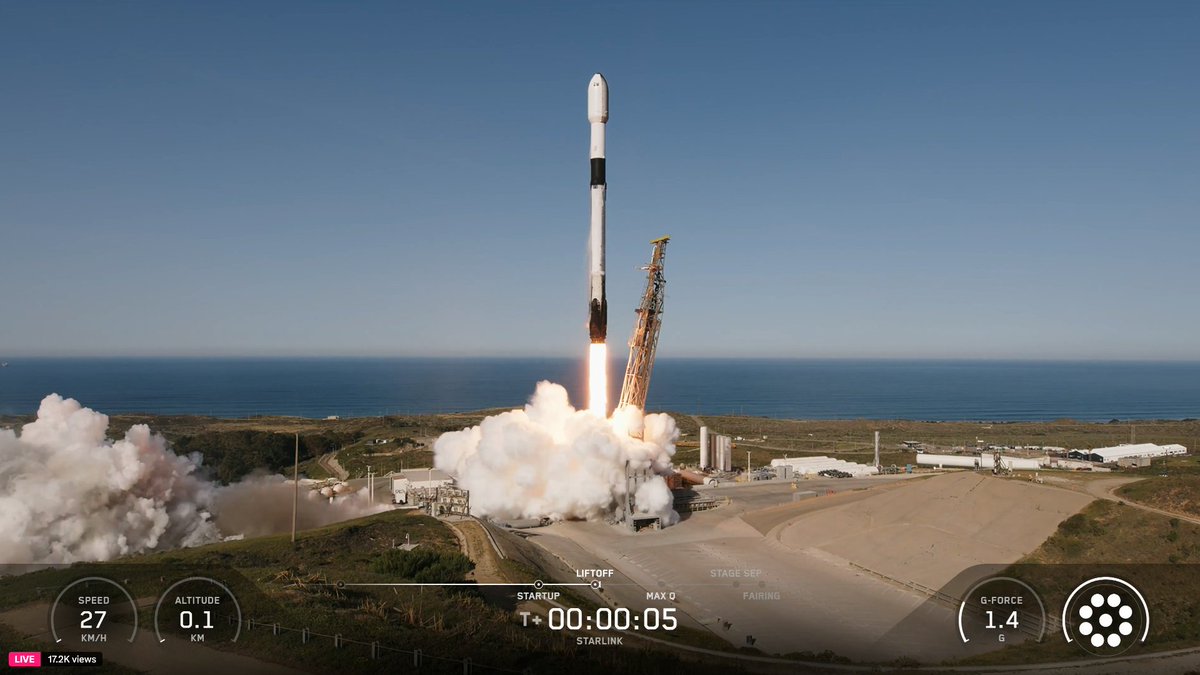
F9/Starlink 17-19: SpaceX launched 25 more Starlink internet satellites from California this morning, the first of two planned Falcon 9 flights today; liftoff from pad 4E at Vandenberg SFB came as 12:53pm EST (1753 UTC); another Starlink flight, this one with 29 satellites, is

F9/Starlink 17-19: SpaceX launched 25 more Starlink internet satellites from California this morning, the first of two planned Falcon 9 flights today; liftoff from pad 4E at Vandenberg SFB came as 12:53pm EST (1753 UTC); another Starlink flight, this one with 29 satellites, is
AAS Nova (@aasnova) 's Twitter Profile Photo

How Many Kilonovae Will Rubin Observatory Help Us Spot? The upcoming Vera C. Rubin Observatory Legacy Survey of Space and Time will detect an astonishing number of transients — including kilonovae from colliding neutron stars. aasnova.org/2026/02/04/how…

NASA Universe (@nasauniverse) 's Twitter Profile Photo

Did you know the lithium in your cell phone battery might have been created in a type of stellar explosion called a nova? A study suggests that the lithium found in our solar system and Milky Way comes from these cosmic events. go.nasa.gov/3OnRqNx #BatteryDay

Nereide (@nereide) 's Twitter Profile Photo

🧵1/5 On 29 June 2025, the ASAS-SN detected a supernova in NGC 1637 at ≈ 39–40 Mly. One team searched old archive images & found the star that exploded: the first published detection of a supernova progenitor candidate by #JWST. Full paper here➡️iopscience.iop.org/article/10.384…

🧵1/5
On 29 June 2025, the ASAS-SN detected a supernova in NGC 1637 at ≈ 39–40 Mly. 

One team searched old archive images & found the star that exploded: the first published detection of a supernova progenitor candidate by #JWST.

Full paper here➡️iopscience.iop.org/article/10.384…
Corey S. Powell (@coreyspowell) 's Twitter Profile Photo

Astronomers have discovered 11 more moons around Saturn, bringing its total to 285--by far the most of any planet in the solar system. The true number may be unknowable, if you count every ring particle as its own little moon. minorplanetcenter.net/mpec/K26/K26F1…

Astronomers have discovered 11 more moons around Saturn, bringing its total to 285--by far the most of any planet in the solar system.

The true number may be unknowable, if you count every ring particle as its own little moon.

minorplanetcenter.net/mpec/K26/K26F1…
AAS Nova (@aasnova) 's Twitter Profile Photo

I Survived a Type Ia Supernova, and All I Got Was This Kick Velocity @Astrobites's Mckenzie Ferrari reports on an investigation of a runaway star that may have survived its companion going supernova. aasnova.org/2026/03/17/i-s…

The SETI Institute (@setiinstitute) 's Twitter Profile Photo

SETI Institute meteor astronomer Peter Jenniskens reports that Sunday night's fireball just west of the San Francisco Bay Area was captured by the CAMS camera networks in Sunnyvale (Jim Albers) and at Lick Observatory (Bryant Grigsby). The meteor first appeared at 8:18:20 pm

NASA Universe (@nasauniverse) 's Twitter Profile Photo

NASA Dreaming of worlds beyond our solar system? The Exoplanet Watch citizen science project invites you to search for and confirm new worlds — all you need is a telescope or a smartphone! go.nasa.gov/4tfnIco

<a href="/NASA/">NASA</a> Dreaming of worlds beyond our solar system? The Exoplanet Watch citizen science project invites you to search for and confirm new worlds — all you need is a telescope or a smartphone! go.nasa.gov/4tfnIco