Rebekah Loving (@bound_to_love) 's Twitter Profile
Rebekah Loving

@bound_to_love

I’m a weird, energetic, Hawai‘i girl
Mother & Wife
Computational biology, math, algorithms, software
PhD Candidate @ Caltech

ID: 1064373131500937216

calendar_today19-11-2018 04:21:44

53 Tweet

172 Takipçi

118 Takip Edilen

Lior Pachter (@lpachter) 's Twitter Profile Photo

In a new work led by Rebekah Loving, joint with Ali Mortazavi and his lab, we introduce a method based on kallisto for accurate quantification of Oxford Nanopore or PacBio long-read RNA-seq, and demonstrate its accuracy with numerous comparisons and benchmarks 1/🧵 biorxiv.org/content/10.110…

Lior Pachter (@lpachter) 's Twitter Profile Photo

Long-read sequencing has been transformative for genome sequencing and transcript (isoform) discovery, but read depth, constrained by cost, has limited its use for quantification. That has changed in the past few years. And error rates have dropped. 2/ x.com/geertvangeest/…

Lior Pachter (@lpachter) 's Twitter Profile Photo

We decided to adapt kallisto, which Delaney Sullivan has recently updated and improved in many ways, for long-read quantification. Rebekah Loving figured out that several modifications and improvement, especially w.r.t fragment lengths were needed. x.com/lpachter/statu… 3/

Lior Pachter (@lpachter) 's Twitter Profile Photo

We needed a controlled dataset to benchmark on, so the Ali Mortazavi lab generated the ideal testbed: Illumina and Oxford Nanopore sequenced libraries with and without exome capture (to yield more reads from exons). And of course biological replicates for each. 4/
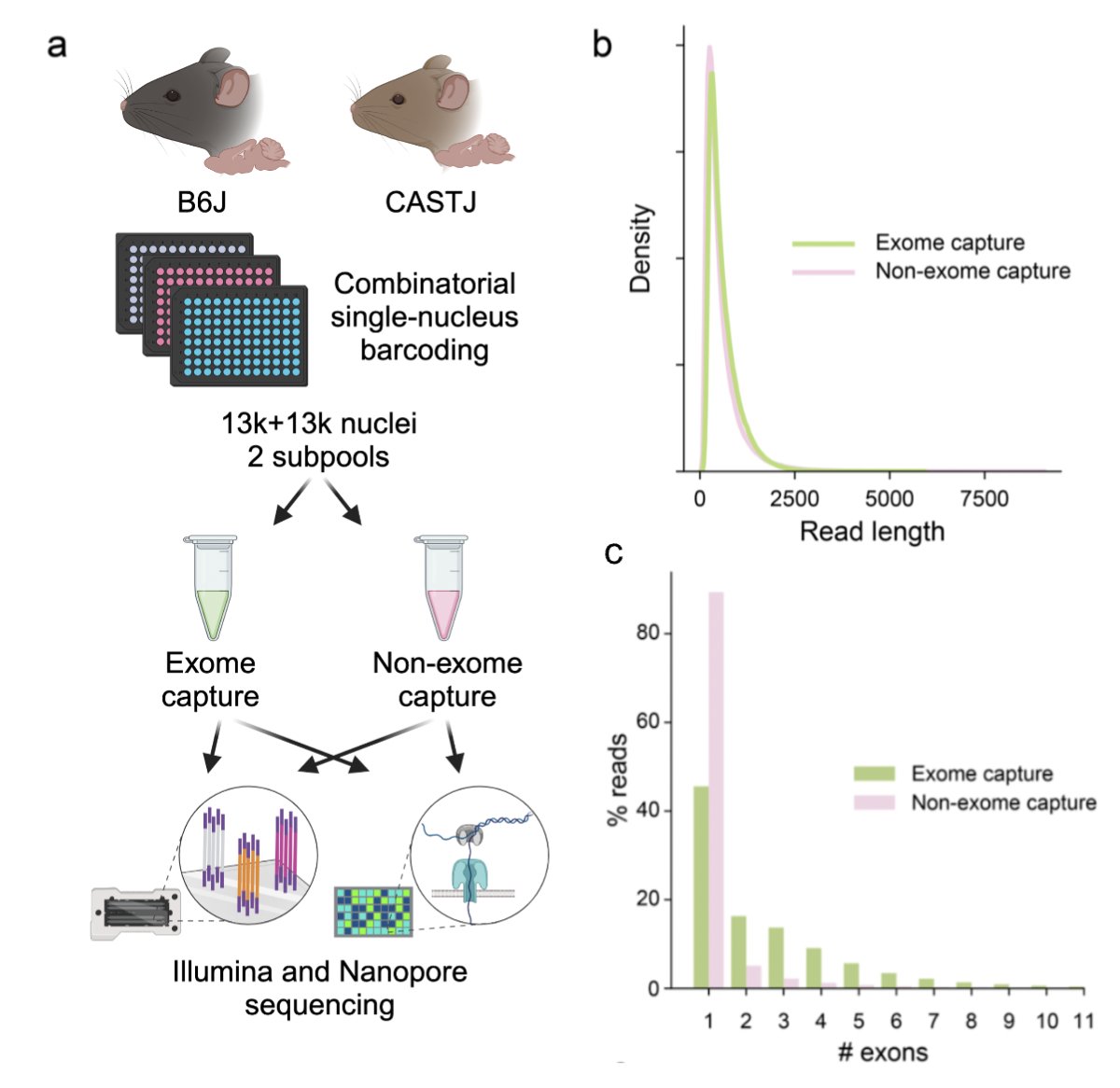
We needed a controlled dataset to benchmark on, so the <a href="/calizavi/">Ali Mortazavi</a> lab generated the ideal testbed: <a href="/illumina/">Illumina</a>  and <a href="/nanopore/">Oxford Nanopore</a> sequenced libraries with and without exome capture (to yield more reads from exons). And of course biological replicates for each. 4/
Lior Pachter (@lpachter) 's Twitter Profile Photo

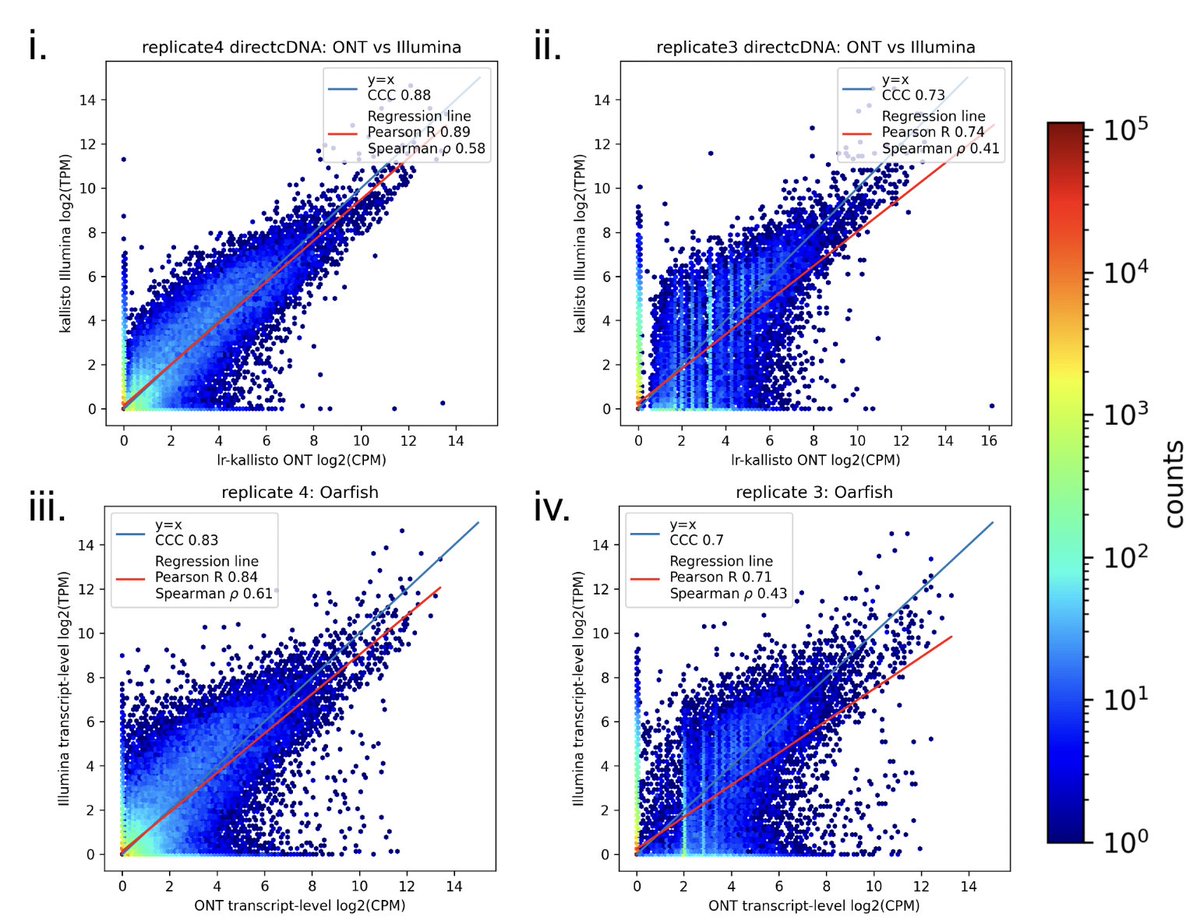
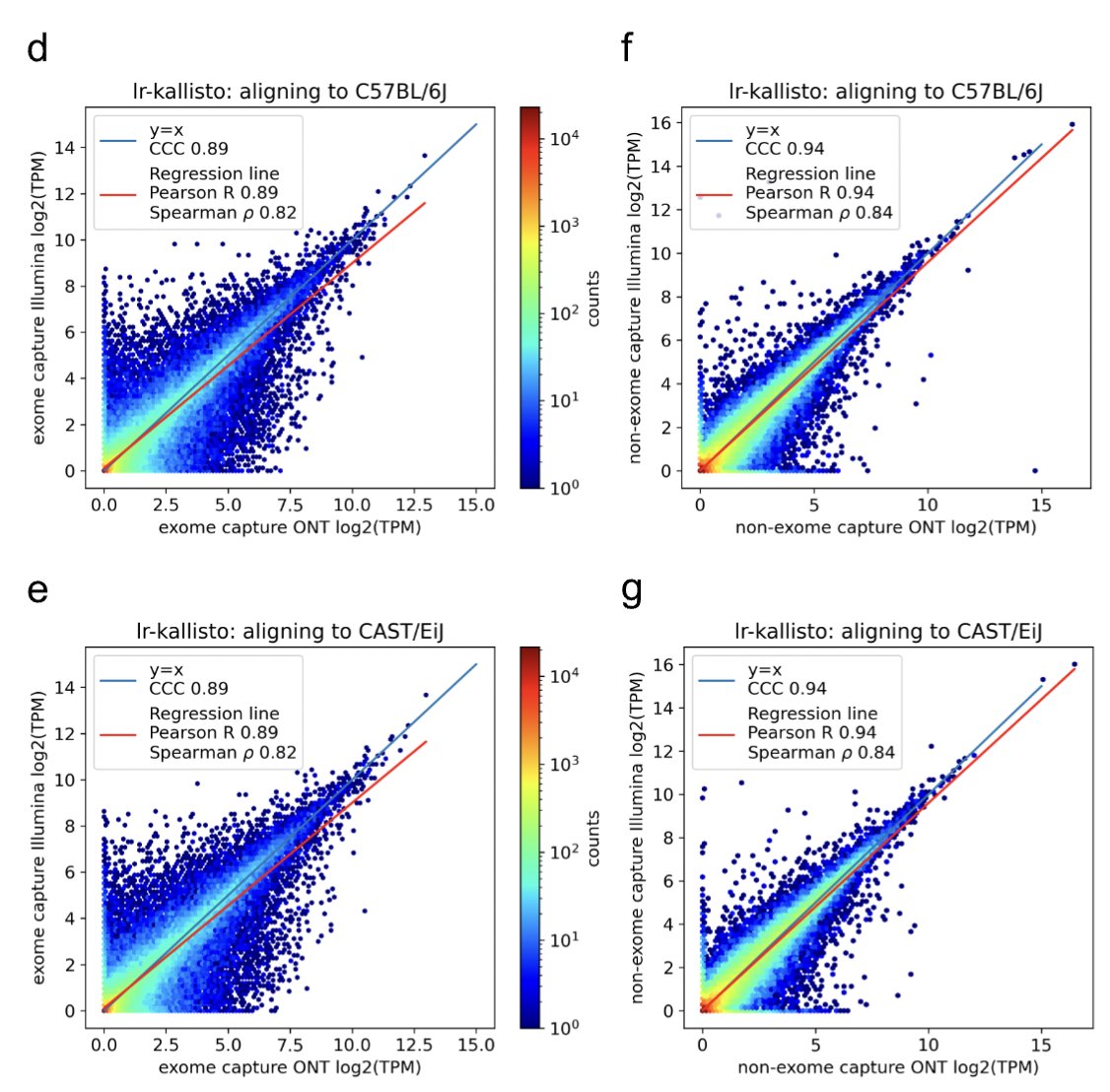
The main result (Fig. 1) is that long-read quantification with lr-kallisto is consistent with kallisto short-read quantification. The CCC (concordance correlation coefficients) are extremely high, demonstrating both high quality data and high accuracy quantification 5/

The main result (Fig. 1) is that long-read quantification with lr-kallisto is consistent with kallisto short-read quantification. The CCC (concordance correlation coefficients) are extremely high, demonstrating both high quality data and high accuracy quantification 5/
Lior Pachter (@lpachter) 's Twitter Profile Photo

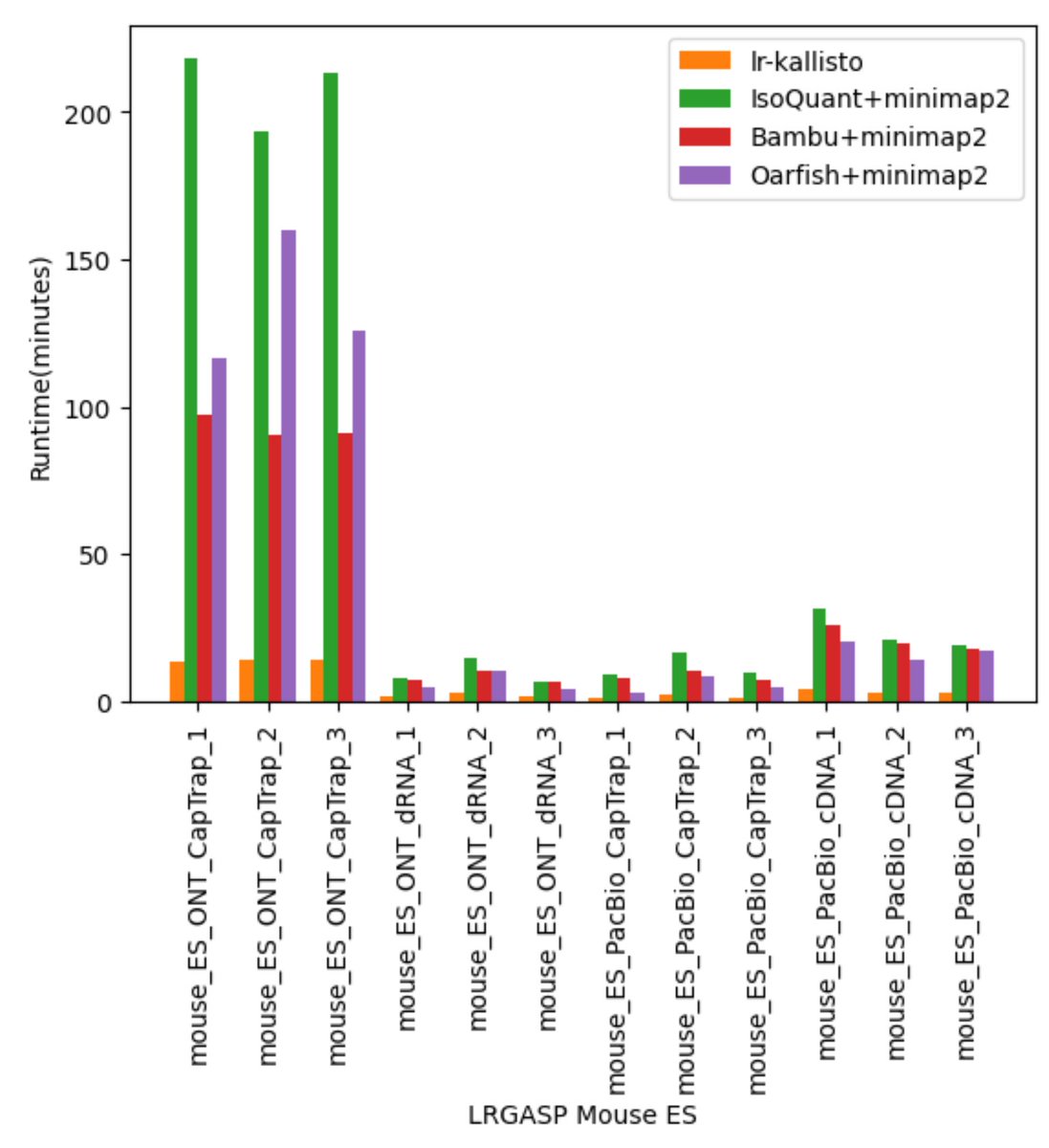
We benchmarked some other tools that have recently been developed for long-read quantification, including Bambu, Oarfish, and IsoQuant. lr-kallisto is faster and more accurate. 6/

We benchmarked some other tools that have recently been developed for long-read quantification, including Bambu, Oarfish, and IsoQuant. lr-kallisto is faster and more accurate. 6/
Lior Pachter (@lpachter) 's Twitter Profile Photo

We also performed extensive benchmarking on the amazing #LRGASP resource that was recently published... x.com/anaconesa/stat… 7/

Lior Pachter (@lpachter) 's Twitter Profile Photo

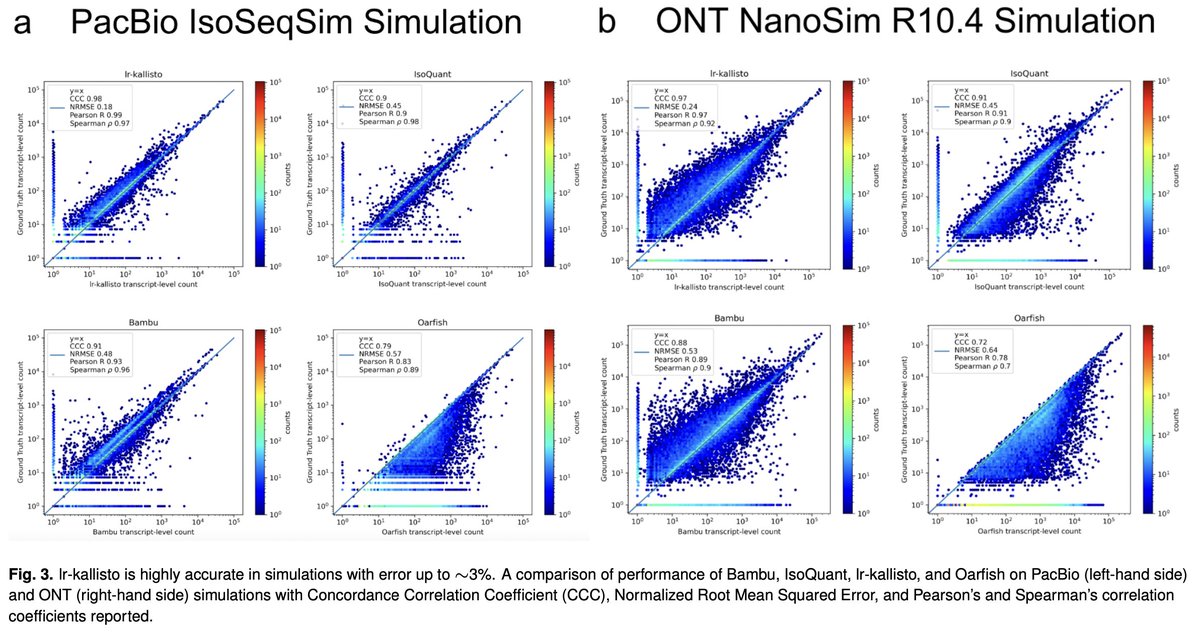
... and we performed numerous benchmarks on simulated data. These benchmarks corroborated our results on experimental data, and provided information on performance limits. In particular, lr-kallisto performance starts to degrade at very high error rates. 8/

... and we performed numerous benchmarks on simulated data. These benchmarks corroborated our results on experimental data, and provided information on performance limits. In particular, lr-kallisto performance starts to degrade at very high error rates. 8/
Lior Pachter (@lpachter) 's Twitter Profile Photo

We also tested lr-kallisto on the main dataset used in the recent Oarfish preprint (the HCT116 cell line w/ Illumina and ONT), and succeeded in replicating the Oarfish results while showing that lr-kallisto outperforms Oarfish. 9/

We also tested lr-kallisto on the main dataset used in the recent Oarfish preprint (the HCT116 cell line w/ Illumina and ONT), and succeeded in replicating the Oarfish results while showing that lr-kallisto outperforms Oarfish. 9/
Lior Pachter (@lpachter) 's Twitter Profile Photo

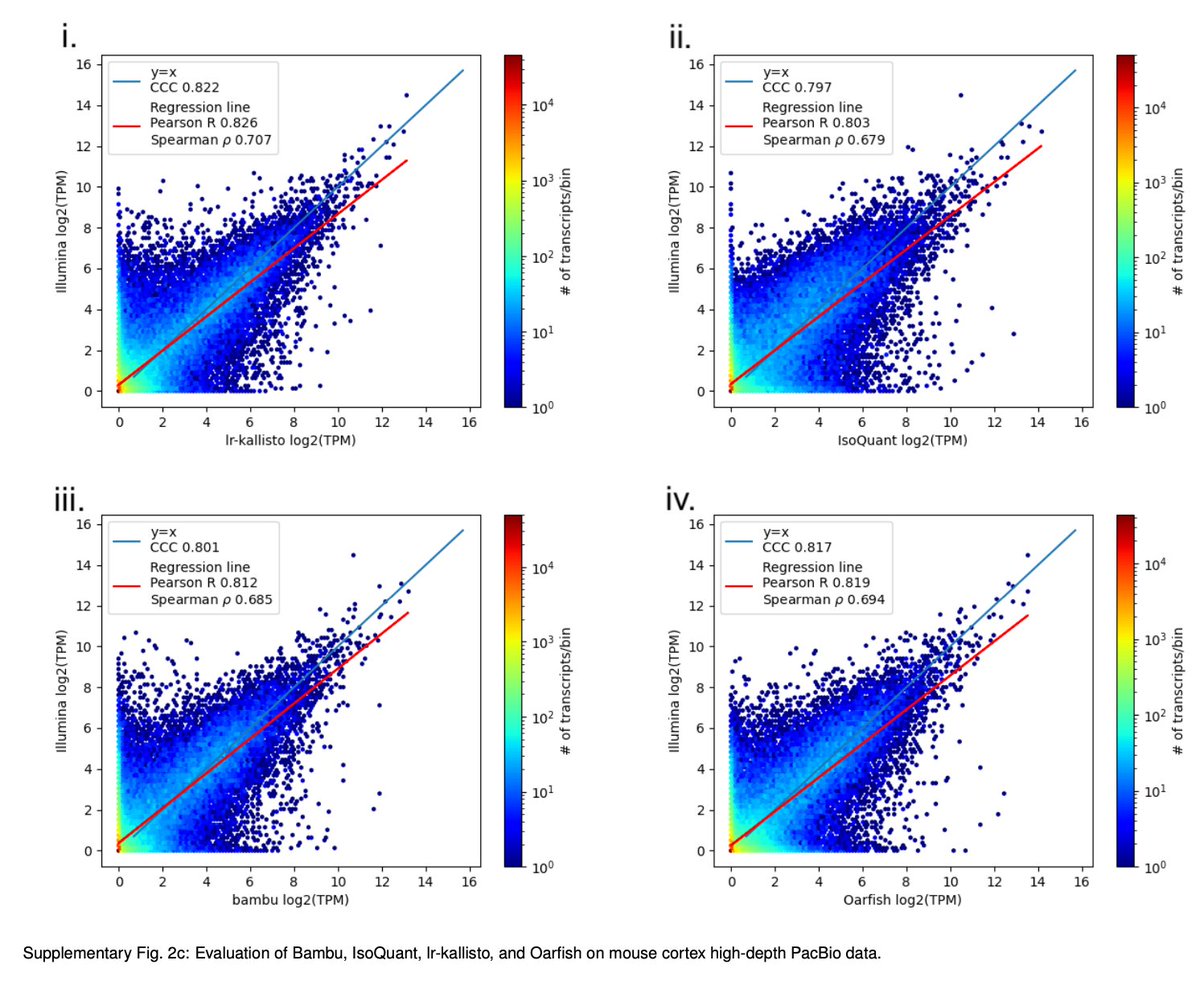
lr-kallisto also performed well on a PacBio dataset which was Illumina sequenced as well, albeit with less performance gain because the long-read data has a very high error rate (12.4%). 10/

lr-kallisto also performed well on a <a href="/PacBio/">PacBio</a> dataset which was Illumina sequenced as well, albeit with less performance gain because the long-read data has a very high error rate (12.4%).  10/
Lior Pachter (@lpachter) 's Twitter Profile Photo

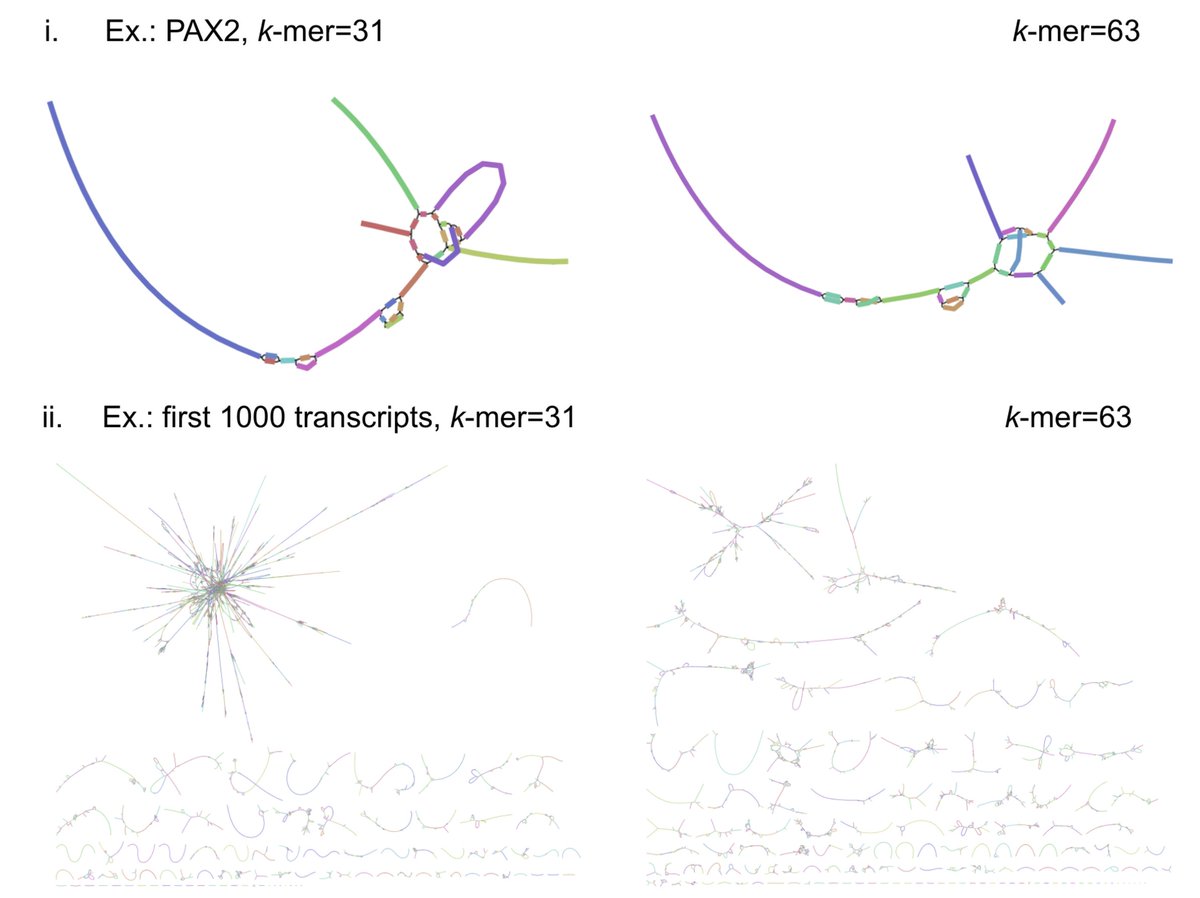
The preprint has detailed analyses not just demonstrating performance but also examining why lr-kallisto performs well and how it can be optimized. Tl;dr, longer k-mers in the transcriptome de Bruijn graph can be helpful. 11/

The preprint has detailed analyses not just demonstrating performance but also examining why lr-kallisto performs well and how it can be optimized. Tl;dr, longer k-mers in the transcriptome de Bruijn graph can be helpful. 11/
Lior Pachter (@lpachter) 's Twitter Profile Photo

Many thanks to Barbara Wold, who also supervised the work, and the team from Ali Mortazavi lab team from UC Irvine who did exceptional work generating the matched ONT and Illumina data. An incredible accomplishment by Rebekah Loving! x.com/MarissaKawehi/… 12/

Lior Pachter (@lpachter) 's Twitter Profile Photo

The mantra that spatial transcriptomics is about location, location, location is catchy, but what does it really mean? We have just posted biorxiv.org/content/10.110…, work of Kayla Jackson et al., that describes the concordex method for identifying spatial homogeneous regions. 1/🧵

Nature Methods (@naturemethods) 's Twitter Profile Photo

biVI models the biophysical processes generating nascent and mature single-cell transcriptomes using variational autoencoders. Maria Carilli Gennady Gorin Yongin Choi Lior Pachter nature.com/articles/s4159…
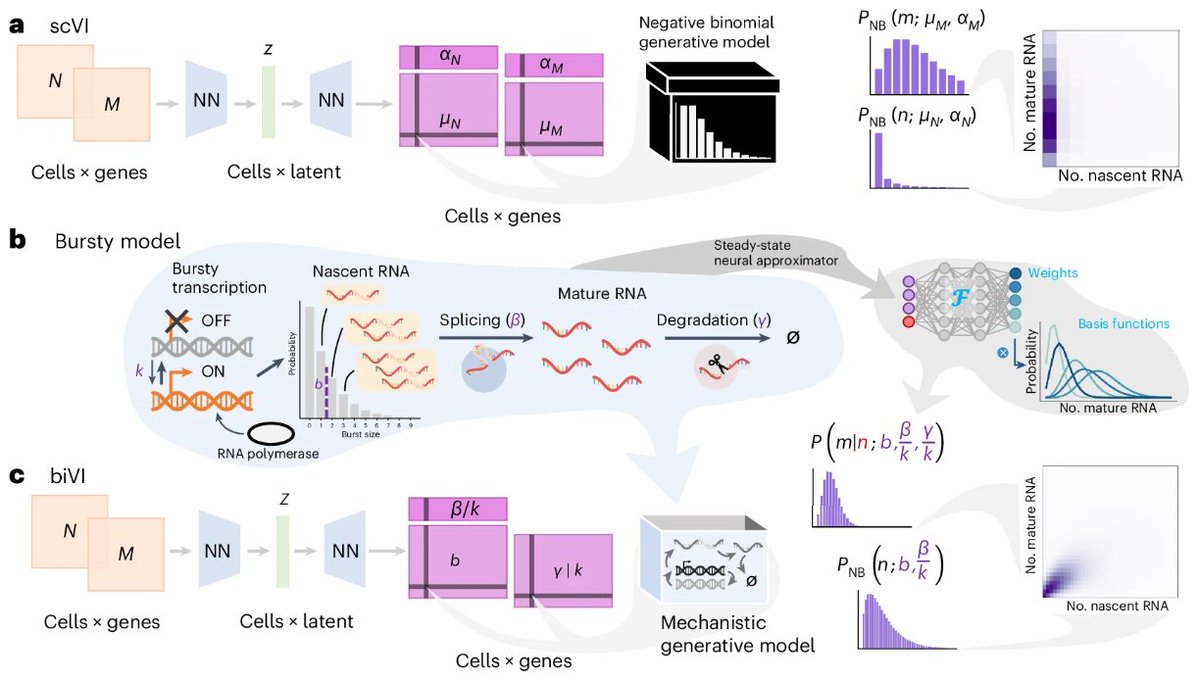

biVI models the biophysical processes generating nascent and mature single-cell transcriptomes using variational autoencoders. 
<a href="/MariaCarilli/">Maria Carilli</a> <a href="/GorinGennady/">Gennady Gorin</a> <a href="/funion10/">Yongin Choi</a> <a href="/lpachter/">Lior Pachter</a> 

nature.com/articles/s4159…
Columbia - Irving Institute for Cancer Dynamics (@cancer_dynamics) 's Twitter Profile Photo

We are excited to welcome Dr. Lambda Moses, our new Postdoctoral Research Scientist! She specializes in spatial-omics data analysis and software development. In the bianca dumitrascu group, Lambda focuses on computational biology, single-cell genomics, and statistical bioinformatics.
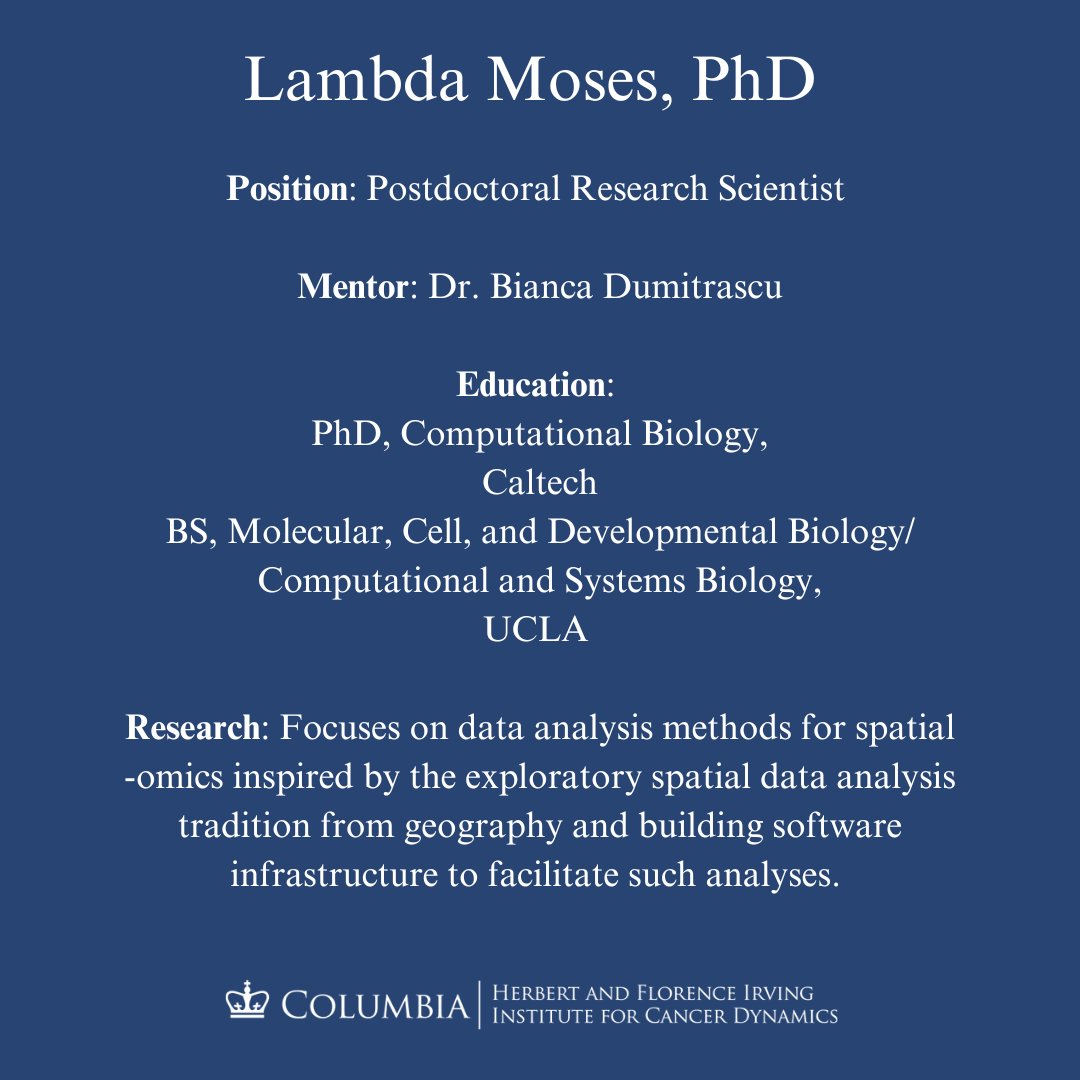
We are excited to welcome Dr. Lambda Moses, our new Postdoctoral  Research Scientist! She specializes in spatial-omics data analysis and  software development. In the <a href="/bidumit/">bianca dumitrascu</a> group, Lambda focuses on  computational biology, single-cell genomics, and statistical  bioinformatics.
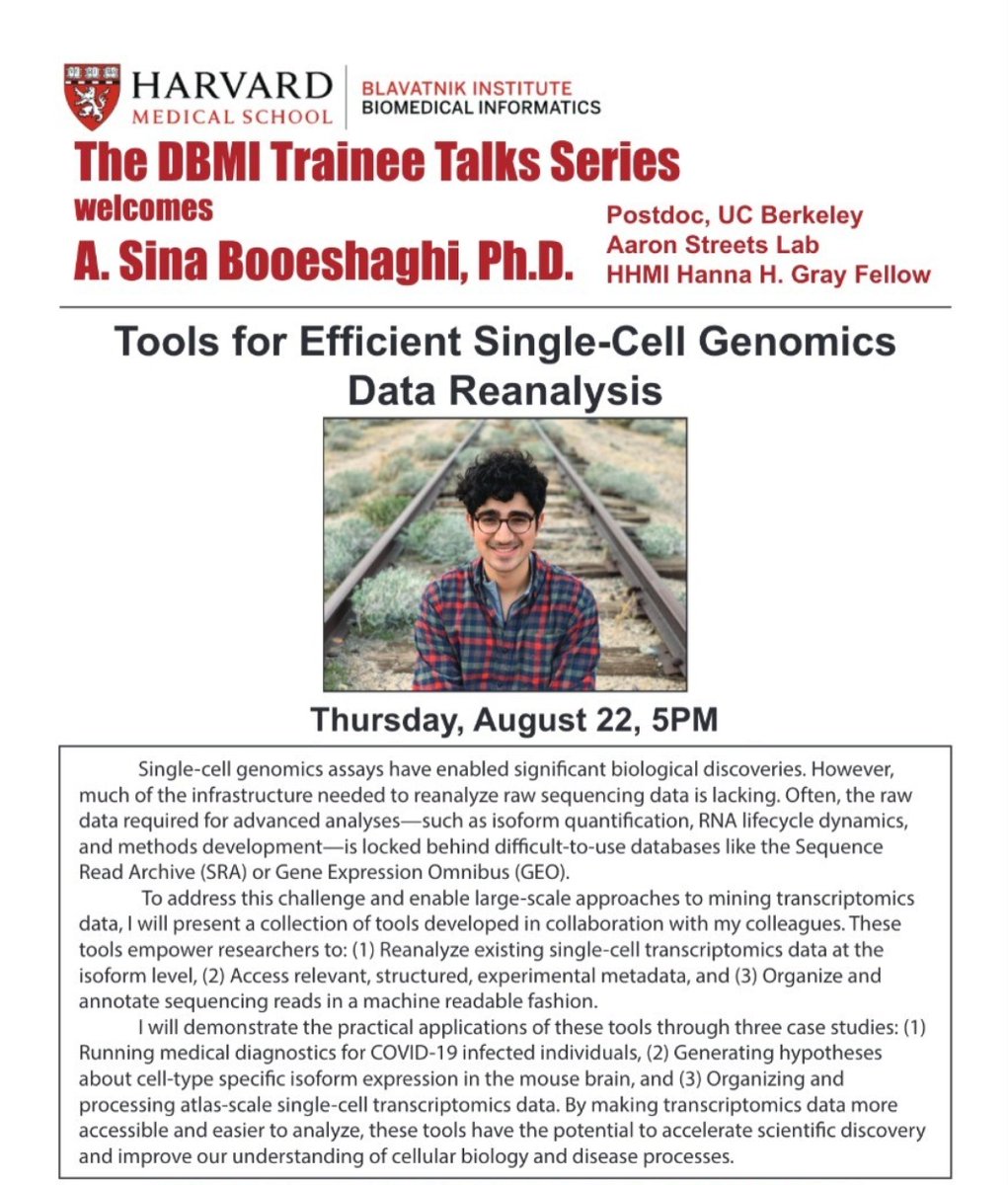
sina (@sinabooeshaghi) 's Twitter Profile Photo

I'm giving a talk this Thursday at 5p at Harvard Medical School in the Dept. of Biomedical Informatics. If you are in the area and would like to attend in person- please DM me.

I'm giving a talk this Thursday at 5p at Harvard Medical School in the Dept. of Biomedical Informatics. If you are in the area and would like to attend in person- please DM me.
Gennady Gorin (@goringennady) 's Twitter Profile Photo

☛ scRNA-seq is solved, we're moving on to multiomics and ML ☛ forgot to mention, DE for sc is just DE for bulk, we don't have a way to use cell-level info ☛ also DE for bulk requires normalization and every method gives different results; try a bunch and see if they agree