Asif Rahman (@axrahman) 's Twitter Profile
Asif Rahman

@axrahman

Investor | Adjunct Professor | Exited Founder | @DukeU

ID: 255236155

calendar_today20-02-2011 23:33:55

62 Tweet

119 Followers

657 Following

Asif Rahman (@axrahman) 's Twitter Profile Photo

If your model relies on multiple expansion in 2025, you’re relying on hope more than strategy. There are 4 major drivers of return in PE: 1. Revenue Growth 2. Margin Expansion 3. Leverage 4. Multiple Expansion Of those 4 levers, 2 are in your control and 2 aren’t. The 2

Asif Rahman (@axrahman) 's Twitter Profile Photo

A mid-market portco unlocked $200,000+ without cutting headcount or raising prices. It’s one of my favorite kind of wins. It has nothing to do with “big strategy” decks and everything to do with operational precision. We ran a vendor acceptance analysis on the company’s

Asif Rahman (@axrahman) 's Twitter Profile Photo

In PE, waiting for data is normal. In tech, waiting for data costs you momentum. As I’ve made the transition from PE to tech, I’ve noticed the fastest operators tend to be the ones who know how to work with data before it’s perfectly packaged. So I don’t wait for data

Asif Rahman (@axrahman) 's Twitter Profile Photo

For years, PE-backed companies carried a stigma in credit underwriting. They were seen as “over-leveraged” or high-risk, all because the balance sheet showed debt. But there’s a huge problem with that view. It completely ignores how private equity actually works. At the

Asif Rahman (@axrahman) 's Twitter Profile Photo

A controller at a lower middle market told me she spends an hour a day manually reconciling transactions. Every single day. One hour a day. Five days a week. Fifty-two weeks a year. That’s ~260 hours of manual categorization annually. At a $120K salary, that’s ~$12,000/year of

Asif Rahman (@axrahman) 's Twitter Profile Photo

If you want to understand the operational health of a portfolio company, don’t start with the income statement. Start with the close process. A controller told me she spends an hour a day manually reconciling transactions. Can you imagine spending an hour a day analyzing

Asif Rahman (@axrahman) 's Twitter Profile Photo

A lot of people in private equity think moving into tech means you’ll finally get a “better lifestyle.” I’ll tell you the truth upfront. I work more now than I ever did in PE. But it’s less about hours and more about structure. In private equity, your entire workflow is

Asif Rahman (@axrahman) 's Twitter Profile Photo

Since launching our PE channel, I’ve had the privilege of connecting with over 100 firms (from the deal teams finding the alpha to the operating partners building it). The common thread among all of our conversations was that things are moving faster than ever and the real alpha

Since launching our PE channel, I’ve had the privilege of connecting with over 100 firms (from the deal teams finding the alpha to the operating partners building it).

The common thread among all of our conversations was that things are moving faster than ever and the real alpha
Asif Rahman (@axrahman) 's Twitter Profile Photo

“The hardest part of post-acquisition integration is choosing the right software” is the biggest misconception in PE. The hardest part is getting people to actually change how they work. Even if you invest in best-in-class tools, you can still struggle to move the needle

Asif Rahman (@axrahman) 's Twitter Profile Photo

Most PE value creation plans have great strategy. But they still fail because the first step never actually happens. On paper, the plans look perfect. - Revenue growth initiatives - Margin expansion targets - Tech modernization - Operational efficiency goals The deck is

Asif Rahman (@axrahman) 's Twitter Profile Photo

Annual planning across a PE portfolio comes down to one thing: Forcing trade-offs. When you have 20 portfolio companies, the process usually starts the same way. You look at last year’s EBITDA, then at this year’s target, and see how to bridge the gap between the 2. For

Asif Rahman (@axrahman) 's Twitter Profile Photo

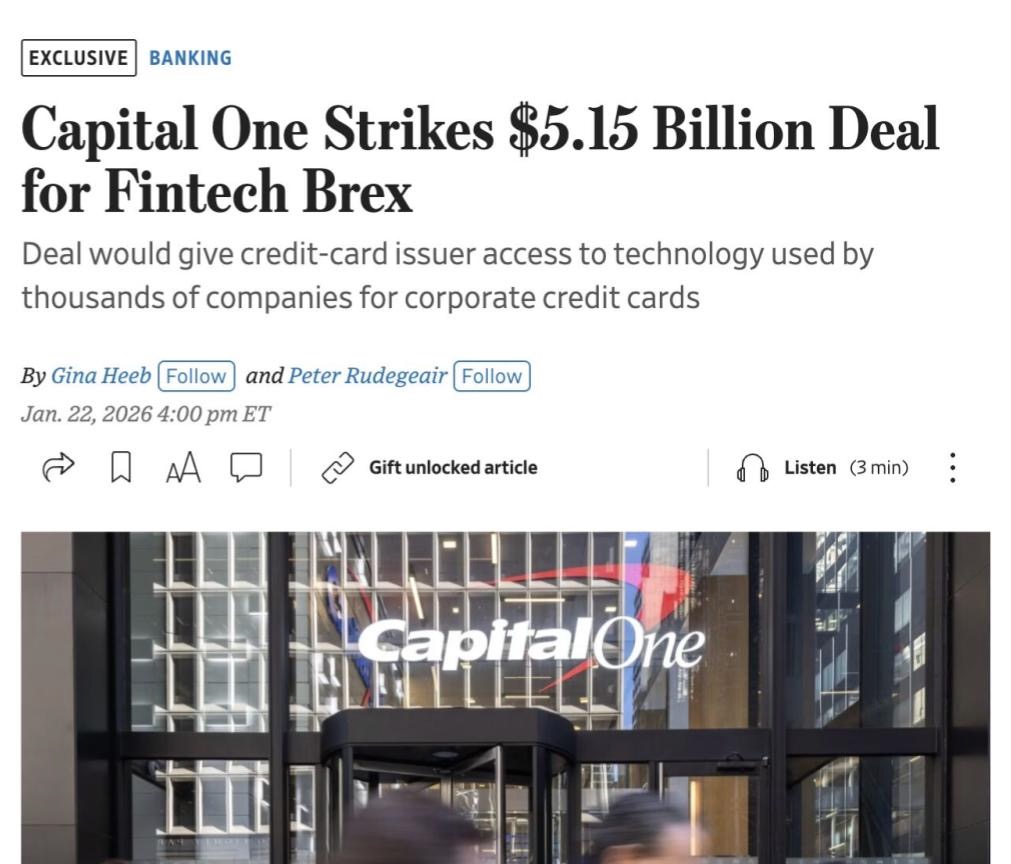
Two weeks ago, Brex and Capital One announced an agreement for Capital One to acquire Brex for $5.15 billion. This is the largest bank-fintech deal in recent history. I've spent the last two weeks thinking about what this means for the PE firms and portfolio companies I work

Two weeks ago, Brex and Capital One announced an agreement for Capital One to acquire Brex for $5.15 billion. This is the largest bank-fintech deal in recent history.

I've spent the last two weeks thinking about what this means for the PE firms and portfolio companies I work
Asif Rahman (@axrahman) 's Twitter Profile Photo

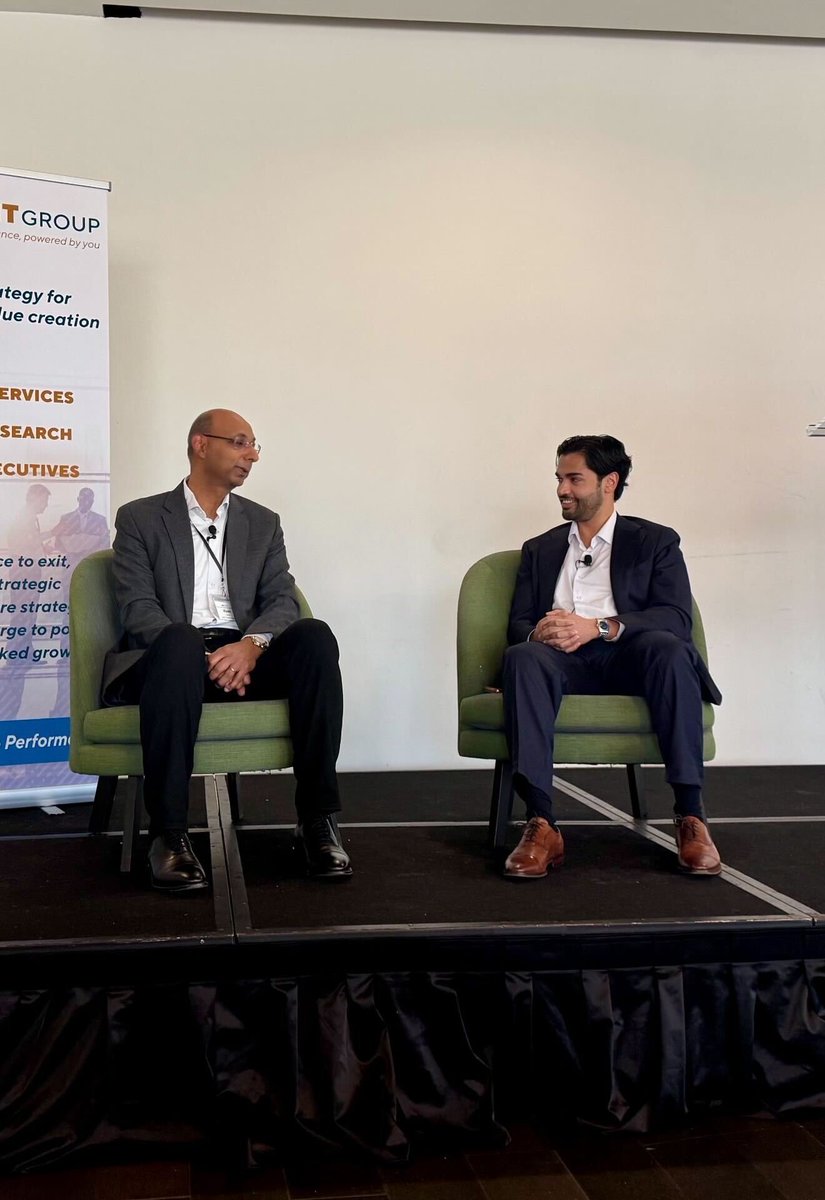
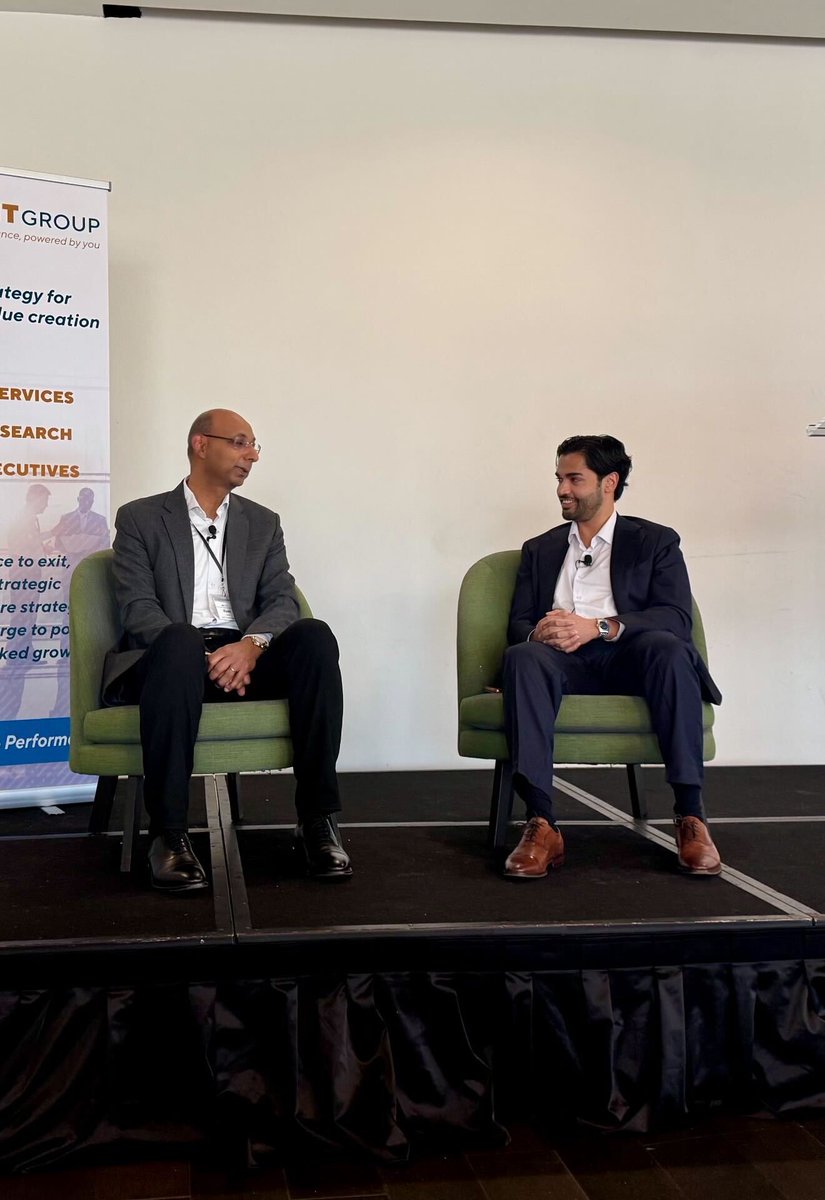
I moderated a fireside chat yesterday morning with Vivek Mohindra, Special Advisor to Dell's Vice Chair & COO and former Operating Partner at TPG, in front of a group of Austin-based PE operating partners, CFOs, and portfolio executives. One question I asked: what separates a

I moderated a fireside chat yesterday morning with Vivek Mohindra, Special Advisor to Dell's Vice Chair & COO and former Operating Partner at TPG, in front of a group of Austin-based PE operating partners, CFOs, and portfolio executives.

One question I asked: what separates a
Asif Rahman (@axrahman) 's Twitter Profile Photo

You can believe this, or the facts. Brex launched its PE channel from 0 to 1 less than a year ago and we’ve successfully closed well over $100 million and signed numerous partnerships with tier 1 funds. To be fair, this is true: Executing this play is much harder than simply

Asif Rahman (@axrahman) 's Twitter Profile Photo

In 2015, a typical PE deal needed 5% annual EBITDA growth to generate a 2.5x return over five years. Today, that same deal needs 12%. That's from Bain's Global PE Report, and it's not a typo. The required EBITDA growth to hit target returns more than doubled. Here's what

In 2015, a typical PE deal needed 5% annual EBITDA growth to generate a 2.5x return over five years. Today, that same deal needs 12%.

That's from Bain's Global PE Report, and it's not a typo. The required EBITDA growth to hit target returns more than doubled.

Here's what
Asif Rahman (@axrahman) 's Twitter Profile Photo

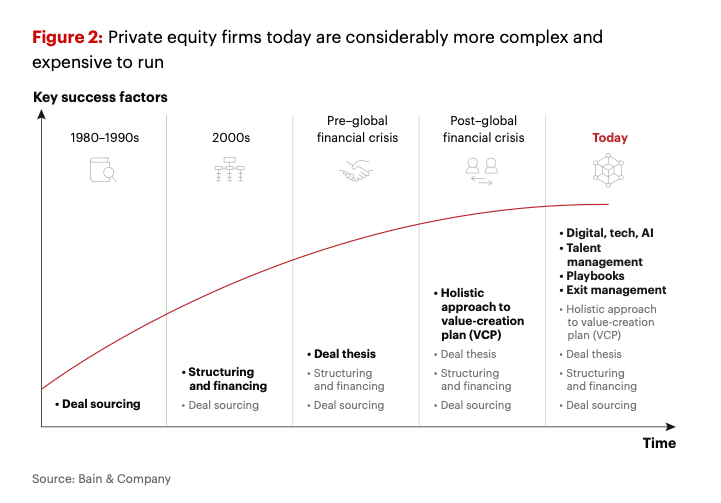
Bain's report shows private equity firms need 12% annual EBITDA growth to hit target returns, up from 5% a decade ago. This chart explains how you actually get there. In the 1980s, you could win in PE with deal sourcing alone. By the 2000s, add structuring and financing.

Bain's report shows private equity firms need 12% annual EBITDA growth to hit target returns, up from 5% a decade ago. This chart explains how you actually get there.

In the 1980s, you could win in PE with deal sourcing alone. By the 2000s, add structuring and financing.
Pedro Franceschi (@pedroh96) 's Twitter Profile Photo

I’m incredibly proud to share that OpenAI chose Brex to power their global spend and financial operations. When you're building at the frontier of AI and scaling global teams and infrastructure at an unprecedented pace like OpenAI is, Finance can't be the thing that slows you

Asif Rahman (@axrahman) 's Twitter Profile Photo

I’m calling it now: 2026 is going to be the year of operating leverage. It’s why I believe operator-heavy funds will outperform investor-only funds over the next cycle. For years, returns could be driven by: - Cheap leverage - Multiple expansion - Aggressive underwriting

I’m calling it now: 2026 is going to be the year of operating leverage. 

It’s why I believe operator-heavy funds will outperform investor-only funds over the next cycle. 

For years, returns could be driven by:

- Cheap leverage
- Multiple expansion
- Aggressive underwriting
Asif Rahman (@axrahman) 's Twitter Profile Photo

Last week at the PCG Value Creation Summit, we spent most of the day on AI. But we closed on something that caught the room off guard: employee ownership. I moderated a fireside with Anne Arlinghaus (co-head of KKR Capstone) and Edouard Felenbok (Managing Director at Ownership

Last week at the PCG Value Creation Summit, we spent most of the day on AI. But we closed on something that caught the room off guard: employee ownership.

I moderated a fireside with Anne Arlinghaus (co-head of KKR Capstone) and Edouard Felenbok (Managing Director at Ownership
Asif Rahman (@axrahman) 's Twitter Profile Photo

Last week I sat in a room where the operating leaders from firms including KKR, Veritas, CD&R, and Welsh Carson were all saying the same three things. That almost never happens. The PCG Value Creation Summit in New York ran eight hours of panels on AI, finance transformation,