niszoig (@kartikc14) 's Twitter Profile
niszoig

@kartikc14

ID: 1177919974490329089

linkhttp://kartikchincholikar.github.io calendar_today28-09-2019 12:16:28

424 Tweet

67 Takipçi

593 Takip Edilen
hardmaru (@hardmaru) 's Twitter Profile Photo

Amazing that Jürgen Schmidhuber gave this talk back in 2012, months before AlexNet paper was published. In 2012, many things he discussed, people just considered to be funny and a joke, but the same talk now would be considered at the center of AI debate and controversy. Full talk:

Denny Zhou (@denny_zhou) 's Twitter Profile Photo

Slides for my lecture “LLM Reasoning” at Stanford CS 25: dennyzhou.github.io/LLM-Reasoning-… Key points: 1. Reasoning in LLMs simply means generating a sequence of intermediate tokens before producing the final answer. Whether this resembles human reasoning is irrelevant. The crucial


Peyman Milanfar (@docmilanfar) 's Twitter Profile Photo

Very proud of our team. This feature deploys a model that is both the largest image-2-image model we've ever put in Pixel; and also the first diffusion model we’ve ever run inside the Pixel Camera.

Phillip Isola (@phillip_isola) 's Twitter Profile Photo

Over the past year, my lab has been working on fleshing out theory/applications of the Platonic Representation Hypothesis. Today I want to share two new works on this topic: Eliciting higher alignment: arxiv.org/abs/2510.02425 Unpaired rep learning: arxiv.org/abs/2510.08492 1/9

David Fritsche (@davidfritsche) 's Twitter Profile Photo

Gary Marcus Gary’s right — “distribution shift” is one of AI’s biggest unsolved problems. In simple terms, it means this: when an AI system is trained on one type of data but then encounters something even slightly different in the real world, its performance often collapses. It’s like

Andrej Karpathy (@karpathy) 's Twitter Profile Photo

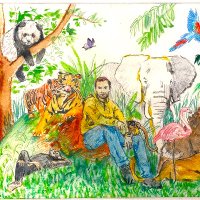
I quite like the new DeepSeek-OCR paper. It's a good OCR model (maybe a bit worse than dots), and yes data collection etc., but anyway it doesn't matter. The more interesting part for me (esp as a computer vision at heart who is temporarily masquerading as a natural language

Sebastian Raschka (@rasbt) 's Twitter Profile Photo

Dileep George I know it’s popular to hate tokenizers, but visual representations (which are also tokenized) bring a lot of messiness as well. Aspect ratios, cropping, resolution, brightness, etc. Sure, models learn to deal with that but it requires lots of data to make them robust wrt these.

Shayne Longpre (@shayneredford) 's Twitter Profile Photo

Q2: Which languages actually help each other during training? And how much? 🌟Answer: We measure this empirically. We built a 38×38 transfer matrix, or 1,444 language pairs—the largest such resource to date. We highlight the top 5 most beneficial source languages for each

Q2: Which languages actually help each other during training? And how much?

🌟Answer: We measure this empirically. We built a 38×38 transfer matrix, or 1,444 language pairs—the largest such resource to date.

We highlight the top 5 most beneficial source languages for each
Ravid Shwartz Ziv (@ziv_ravid) 's Twitter Profile Photo

A new episode of The Information Bottleneck podcast!🎙️ This week we talked with Randall Balestriero (Randall Balestriero), assistant professor at Brown University, about Joint Embedding Predictive Architectures (JEPA) 🥳🥳🥳
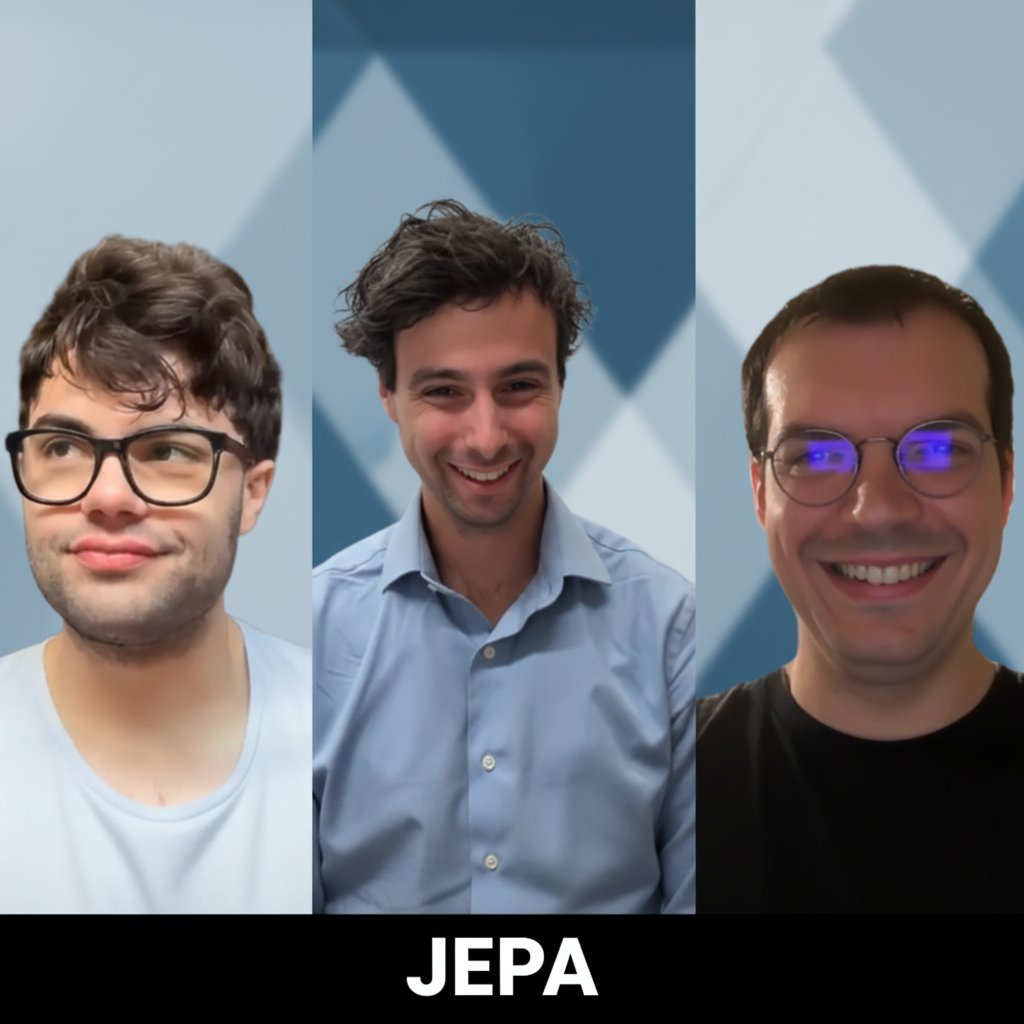
A new episode of The Information Bottleneck podcast!🎙️
This week we talked with Randall Balestriero (<a href="/randall_balestr/">Randall Balestriero</a>),  assistant professor at Brown University, about Joint Embedding Predictive Architectures (JEPA) 🥳🥳🥳

Marko Njegomir (@markonjegomir) 's Twitter Profile Photo

Elon Musk Grok Elon, you once posted that Jürgen Schmidhuber invented everything. New Grok imagine, as a truthseeking AI, seems to agree that a lot of people are standing on the shoulders of giants. Credit where credit is due.

Mike Taylor-Cai (@m1ket) 's Twitter Profile Photo

Building fully native Android apps is so easy! 1. Install Android Studio 2. Open Android Studio and start a blank project 3. Install Google Antigravity 4. Point Google Antigravity at the folder created by Android Studio 5. Set the agent to Gemini 3 Flash and tell Google Antigravity what you