
Niall Clifford (@almactuary) 's Twitter Profile
Niall Clifford

@almactuary

ALM, Asset Allocation, Investment Strategy, Solvency II and Capital & Risk Optimisation/Management Actuary

ID: 988442930

linkhttp://www.linkedin.com/in/niallclifford calendar_today04-12-2012 09:49:28

15,15K Tweet

563 Followers

4,4K Following

Jurrien Timmer (@timmerfidelity) 's Twitter Profile Photo

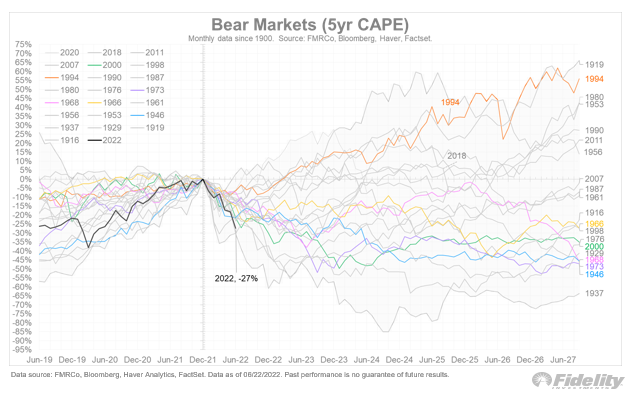
While the S&P 500's price drawdown is 25%, the valuation drawdown is worse. If not for positive earnings growth, the SPX would be down at least 30% today. The chart below shows the 5yr CAPE ratio for all bear markets since 1900, and illustrates how fast this reset has been.

While the S&P 500's price drawdown is 25%, the valuation drawdown is worse. If not for positive earnings growth, the SPX would be down at least 30% today. The chart below shows the 5yr CAPE ratio for all bear markets since 1900, and illustrates how fast this reset has been.
Jurrien Timmer (@timmerfidelity) 's Twitter Profile Photo

Pain comparison: Here we see the P/E compression during the current cycle and the 1994 Fed cycle. Then and now, the 2-year yield offers a good guide for valuation. We appear close, but with the Fed’s terminal point (and therefore the 2-yr) a moving target, we are not quite there.

Pain comparison: Here we see the P/E compression during the current cycle and the 1994 Fed cycle. Then and now, the 2-year yield offers a good guide for valuation. We appear close, but with the Fed’s terminal point (and therefore the 2-yr) a moving target, we are not quite there.
Jurrien Timmer (@timmerfidelity) 's Twitter Profile Photo

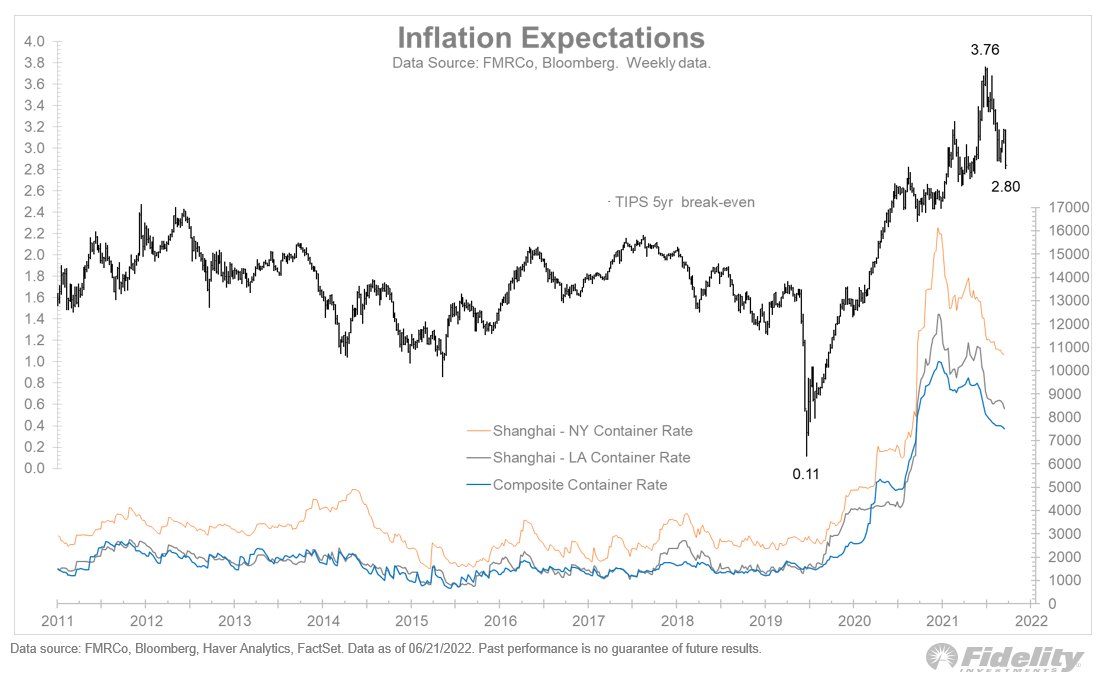
Inflation has been red hot, but in the TIPS market at least, inflation expectations are falling. Perhaps we are getting closer to pricing in the end of this cycle. That would suggest a peaking 2-year yield and a bottoming P/E ratio.

Inflation has been red hot, but in the TIPS market at least, inflation expectations are falling. Perhaps we are getting closer to pricing in the end of this cycle. That would suggest a peaking 2-year yield and a bottoming P/E ratio.
Jurrien Timmer (@timmerfidelity) 's Twitter Profile Photo

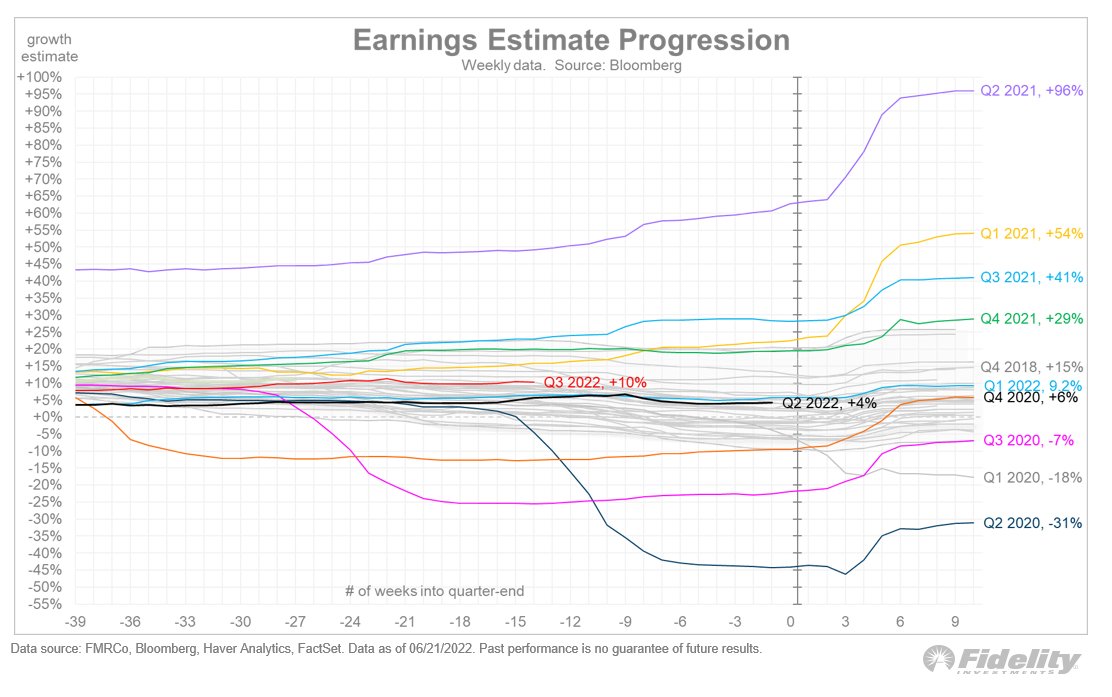
All eyes on earnings: While the valuation reset has been swift, we know that the fwd P/E is only as good as the E. With earnings estimates holding up (but with Q2 earnings season just a few weeks away), skepticism is mounting that earnings might be the next shoe to drop.

All eyes on earnings: While the valuation reset has been swift, we know that the fwd P/E is only as good as the E. With earnings estimates holding up (but with Q2 earnings season just a few weeks away), skepticism is mounting that earnings might be the next shoe to drop.
Jurrien Timmer (@timmerfidelity) 's Twitter Profile Photo

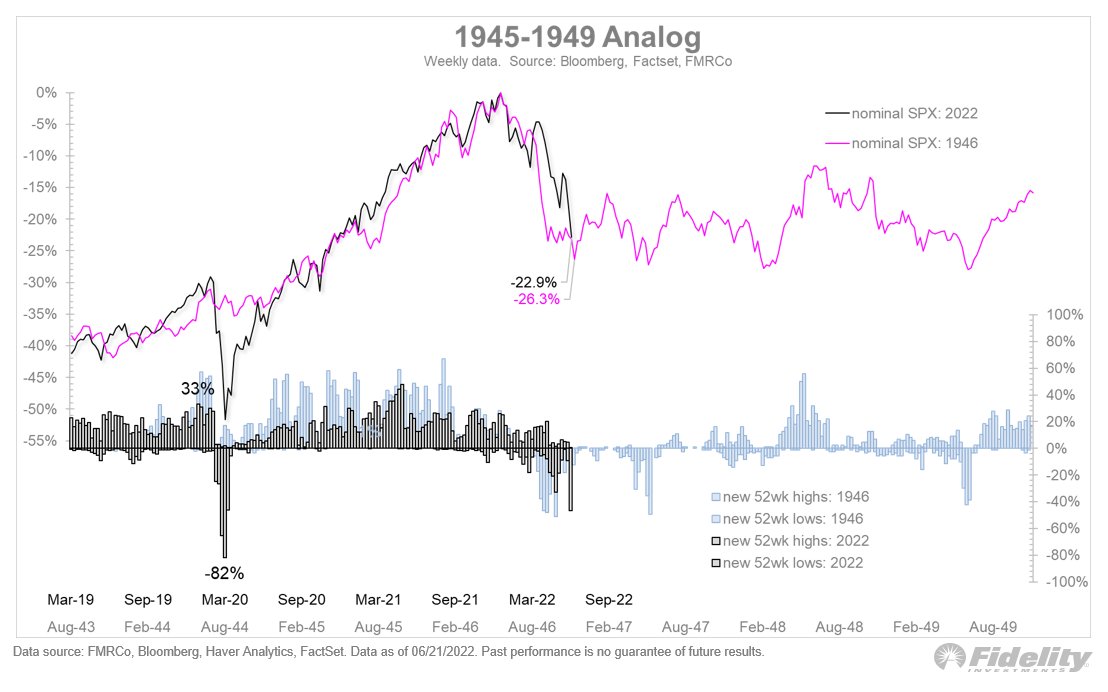
Even though earnings often don't crater during inflation, valuation does. The chart below shows the 1940s post-WWII analog. The SPX fell 26% even though earnings held up, and in the process the P/E ratio fell from 22x in 1946 to 5x in 1949.

Even though earnings often don't crater during inflation, valuation does. The chart below shows the 1940s post-WWII analog. The SPX fell 26% even though earnings held up, and in the process the P/E ratio fell from 22x in 1946 to 5x in 1949.
Jurrien Timmer (@timmerfidelity) 's Twitter Profile Photo

Market breadth suggests that earnings estimates may see more downgrades than upgrades in the coming months. The chart below shows the percentage of stocks above their 200-day moving average plotted against the revisions index (upgrades as a % of all revisions) h/t veeramuthu 🧵

Market breadth suggests that earnings estimates may see more downgrades than upgrades in the coming months. The chart below shows the percentage of stocks above their 200-day moving average plotted against the revisions index (upgrades as a % of all revisions) h/t <a href="/macrobond/">veeramuthu</a> 🧵
Jurrien Timmer (@timmerfidelity) 's Twitter Profile Photo

Recently, I illustrated how today's Fed cycle has some resemblance to the 1994 cycle. Are we now departing from that playbook in terms of the correlation between the P/E ratio and the 2-year yield?

Recently, I illustrated how today's Fed cycle has some resemblance to the 1994 cycle. Are we now departing from that playbook in terms of the correlation between the P/E ratio and the 2-year yield?
Charlie Bilello (@charliebilello) 's Twitter Profile Photo

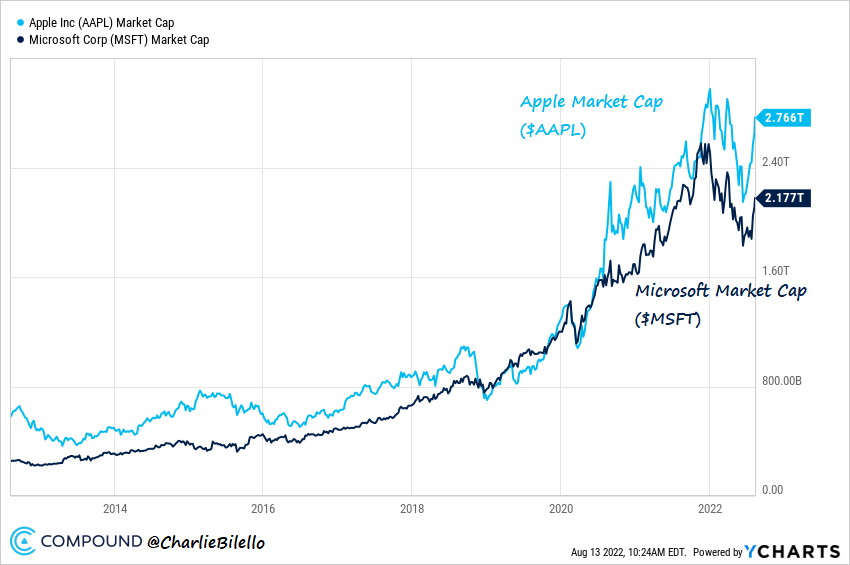
At $4.94 trillion, the market cap of Apple & Microsoft is now $1.75 trillion higher than the combined market value of all the companies in the Russell 2000 ($3.19 trillion). $AAPL $MSFT Data via YCharts

At $4.94 trillion, the market cap of Apple &amp; Microsoft is now $1.75 trillion higher than the combined market value of all the companies in the Russell 2000 ($3.19 trillion).

$AAPL $MSFT

Data via <a href="/ycharts/">YCharts</a>
Jurrien Timmer (@timmerfidelity) 's Twitter Profile Photo

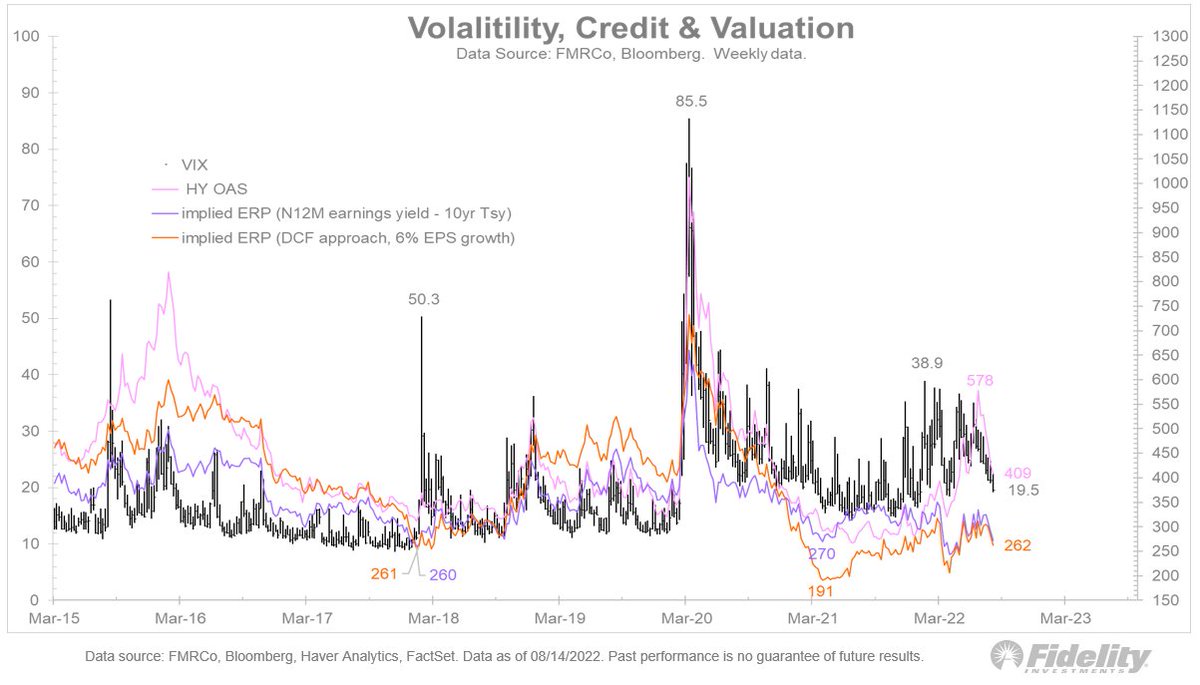
With the P/E ratio rising, it is no surprise that the equity-risk premium is falling. It is down to 262 bps after rising from 191 bps a year ago and hitting around 320 bps in June.

With the P/E ratio rising, it is no surprise that the equity-risk premium is falling. It is down to 262 bps after rising from 191 bps a year ago and hitting around 320 bps in June.
Lisa Abramowicz (@lisaabramowicz1) 's Twitter Profile Photo

The stock rally is broadening as the S&P gains 15% from its 2022 low in mid-June. All 11 sectors rose to start Q3. The share of S&P stocks closing above their 50-day moving averages recently surpassed 93%, the highest level since the summer of 2020. wsj.com/articles/more-…

Lisa Abramowicz (@lisaabramowicz1) 's Twitter Profile Photo

The fundamentals are less impressive. With earnings almost done, operating margins are tracking ahead of Q1's but energy stocks account for 90% of the upside. Other sectors have seen margin declines, like staples, info tech & communication services: Wells Fargo's Chris Harvey

Jurrien Timmer (@timmerfidelity) 's Twitter Profile Photo

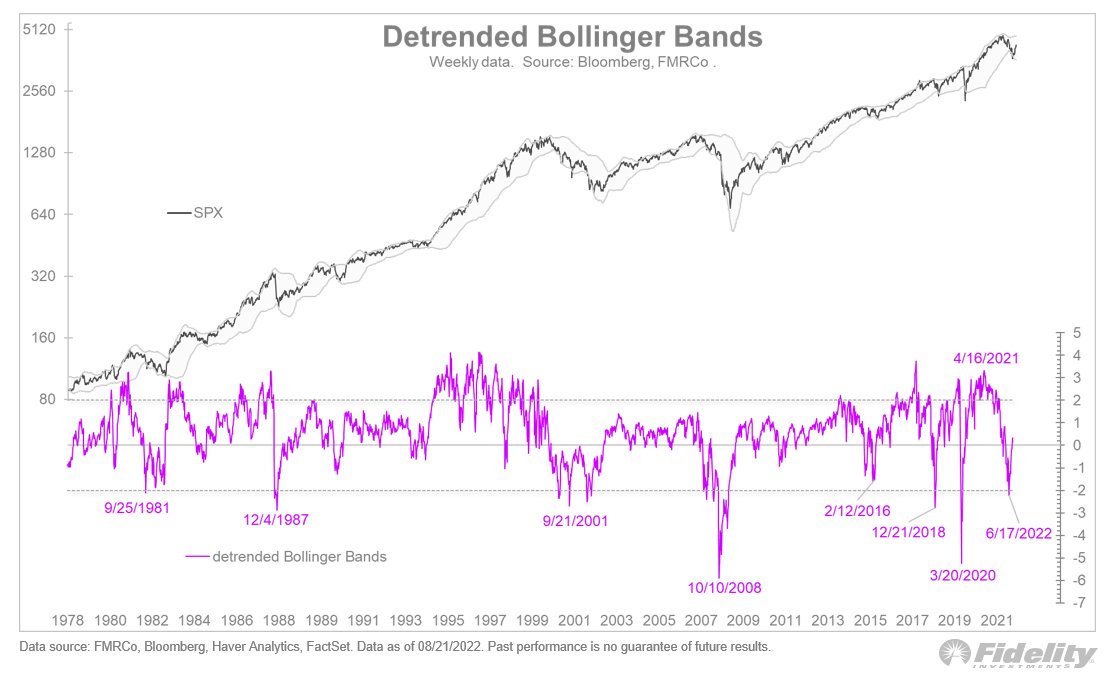
Back on trend: After reaching moderately oversold levels in June, the stock market is now back to “neutral” from a trend-deviation perspective. This chart shows detrended Bollinger Bands (i.e., the number of standard deviations above/below the moving average).

Back on trend: After reaching moderately oversold levels in June, the stock market is now back to “neutral” from a trend-deviation perspective. This chart shows detrended Bollinger Bands (i.e., the number of standard deviations above/below the moving average).
Jurrien Timmer (@timmerfidelity) 's Twitter Profile Photo

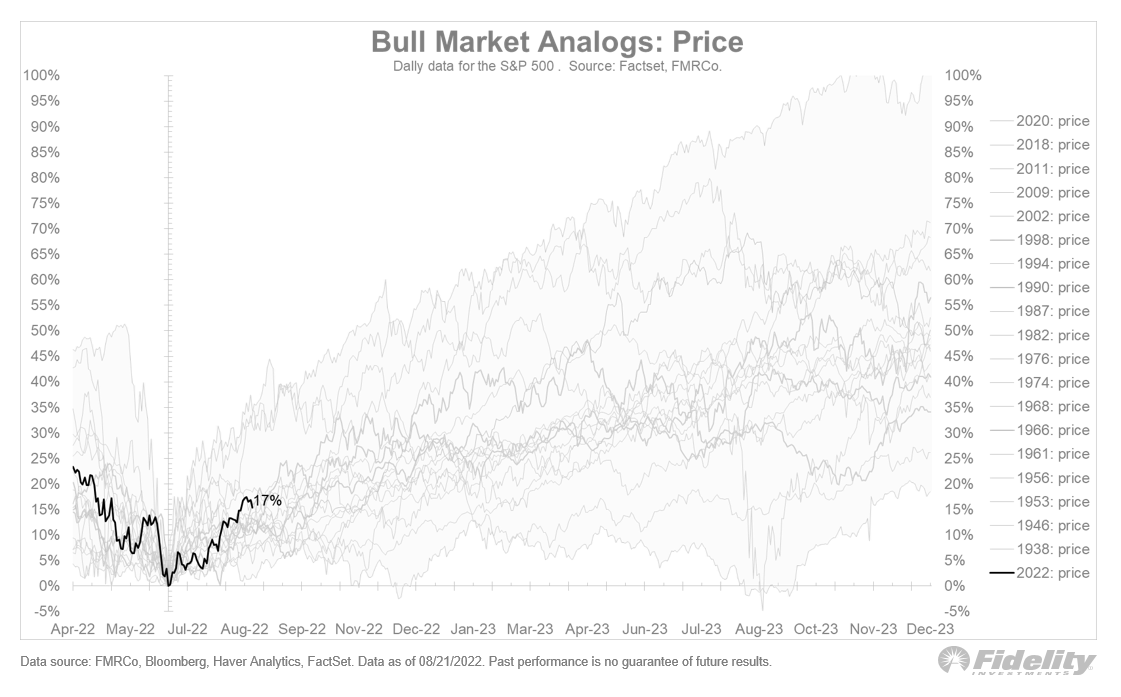
Let's give the stock-market surge some historical perspective: If this is a new cyclical bull market, and not merely a bear-market rally, it looks middle-of-the-road in terms of its duration and magnitude.

Let's give the stock-market surge some historical perspective: If this is a new cyclical bull market, and not merely a bear-market rally, it looks middle-of-the-road in terms of its duration and magnitude.
Jurrien Timmer (@timmerfidelity) 's Twitter Profile Photo

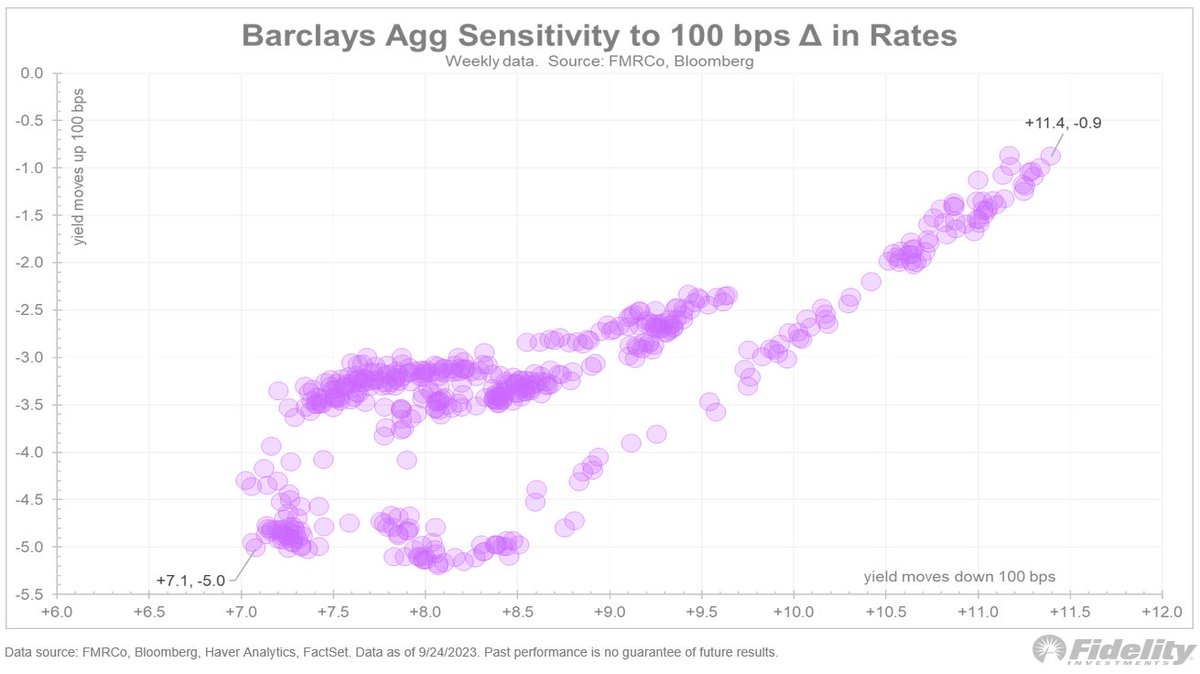
With every tick higher in yields (and lower in duration), the risk-reward of owning Treasuries improves. The scatter plot below shows the expected return for the Barclays Aggregate index if the yield goes up 100 bps (horizontal) or down 100 bps (vertical). We were at the lower

With every tick higher in yields (and lower in duration), the risk-reward of owning Treasuries improves. The scatter plot below shows the expected return for the Barclays Aggregate index if the yield goes up 100 bps (horizontal) or down 100 bps (vertical). We were at the lower
Jurrien Timmer (@timmerfidelity) 's Twitter Profile Photo

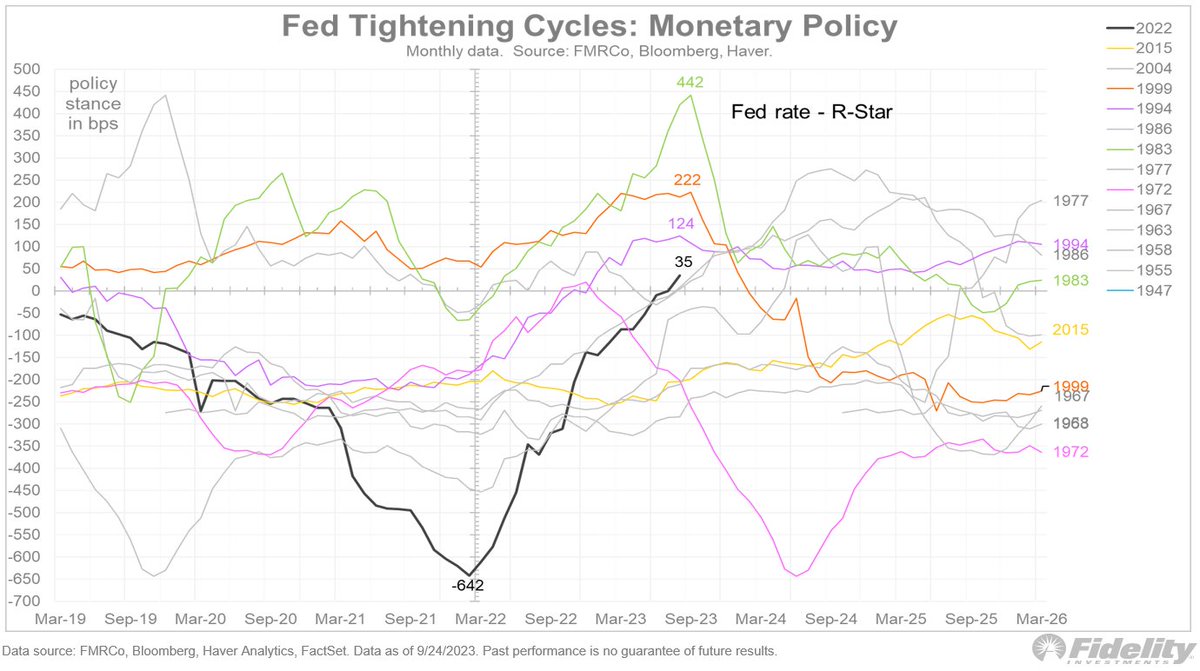
If we believe the TIPS market (which expects inflation to return to the 2.5% zone and stay there), the Fed is now as restrictive as it has ever gotten during a tightening cycle (in line with the 2000 dot-com cycle). In the chart, I subtract nominal R-Star (real R-Star plus the

If we believe the TIPS market (which expects inflation to return to the 2.5% zone and stay there), the Fed is now as restrictive as it has ever gotten during a tightening cycle (in line with the 2000 dot-com cycle). In the chart, I subtract nominal R-Star (real R-Star plus the
Jurrien Timmer (@timmerfidelity) 's Twitter Profile Photo

Has the Fed gone too far? That depends on how you view inflation. The TIPS market, in essence, says inflation is all but tamed—making the Fed quite restrictive. However, if I use actual inflation, instead of expected inflation (core-PCE vs. TIPS), the Fed is barely above neutral,

Has the Fed gone too far? That depends on how you view inflation. The TIPS market, in essence, says inflation is all but tamed—making the Fed quite restrictive. However, if I use actual inflation, instead of expected inflation (core-PCE vs. TIPS), the Fed is barely above neutral,
Jurrien Timmer (@timmerfidelity) 's Twitter Profile Photo

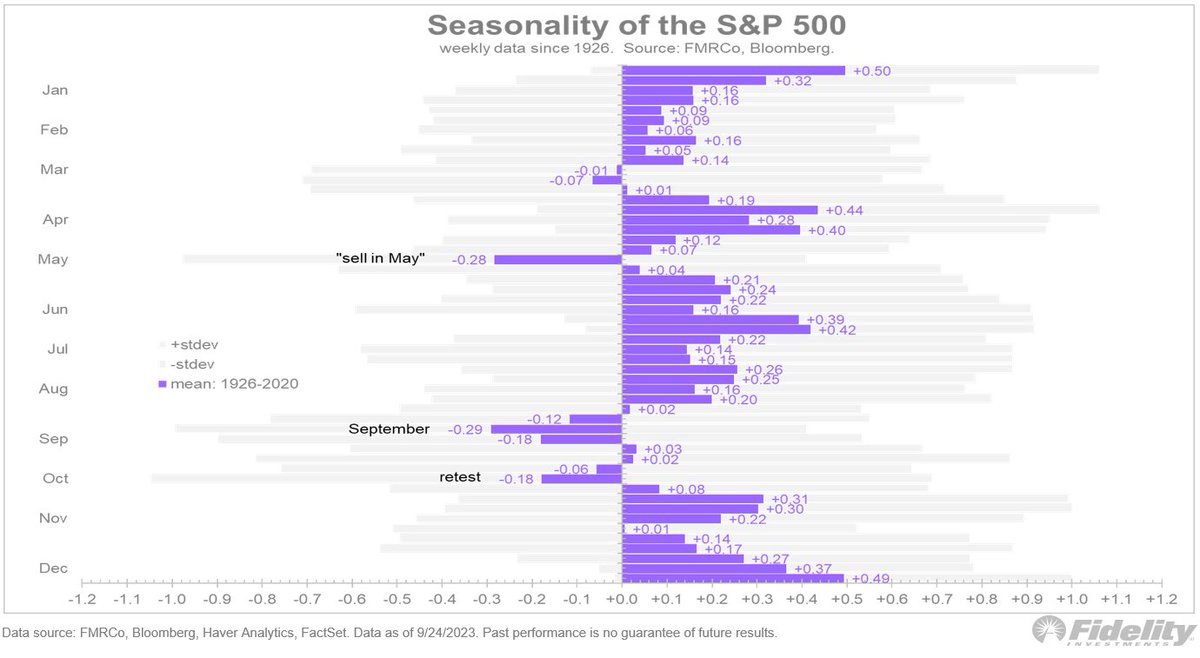
This would be happening at a time when seasonal patterns are at their worst. The seasonal nadir for stocks is only a few more weeks away. /END

This would be happening at a time when seasonal patterns are at their worst. The seasonal nadir for stocks is only a few more weeks away. /END
Jurrien Timmer (@timmerfidelity) 's Twitter Profile Photo

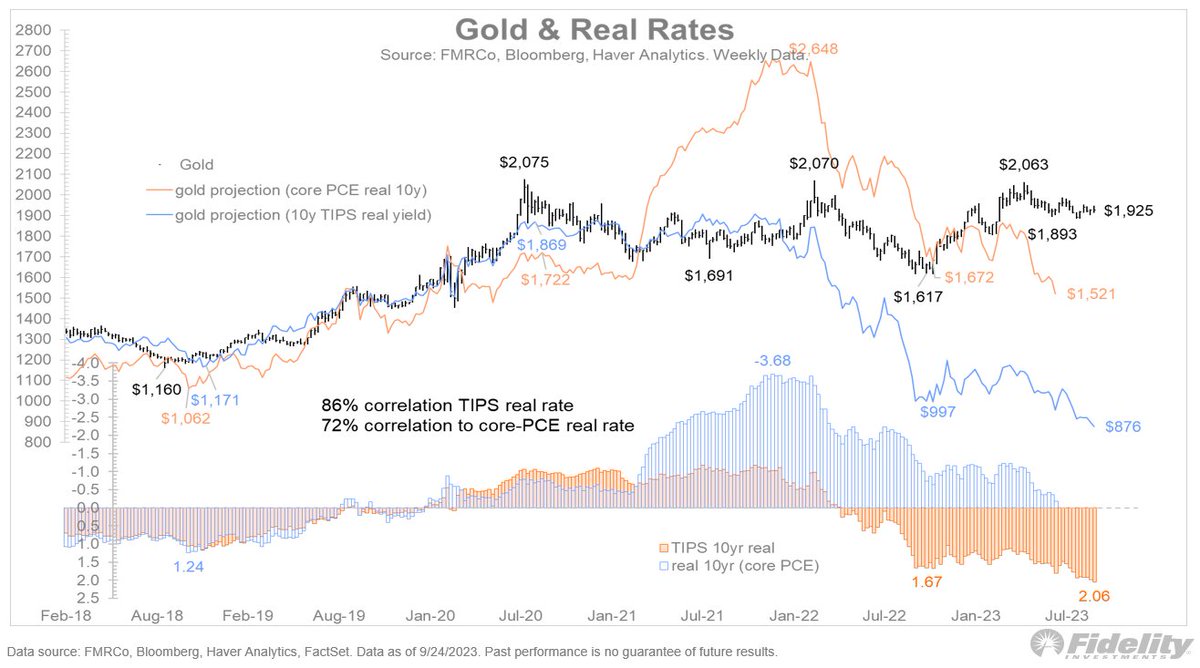
Gold thrives on monetary inflation and falling real rates, and right now both drivers are moving in the other direction. Gold has not budged, even though real rates have swung from -2% to +2%. With the 5-year TIPS real rate at +2.35%, the next big move is potentially lower

Gold thrives on monetary inflation and falling real rates, and right now both drivers are moving in the other direction. Gold has not budged, even though real rates have swung from -2% to +2%. With the 5-year TIPS real rate at +2.35%, the next big move is potentially lower
steph pomboy (@spomboy) 's Twitter Profile Photo

While everyone is focused on the back-up in Treasury yields, the Junk Bond yield has shot up to 9.25% (highest since last November). Corporate debt service is exploding, as revenue withers.