Algorithmic Health (@alghealth) 's Twitter Profile
Algorithmic Health

@alghealth

Evidence-Based AI for Better Health

ID: 826216199319072768

linkhttp://www.algorithmichealth.ai calendar_today30-01-2017 23:51:07

98 Tweet

44 Takipçi

740 Takip Edilen
Gabriel Peyré (@gabrielpeyre) 's Twitter Profile Photo

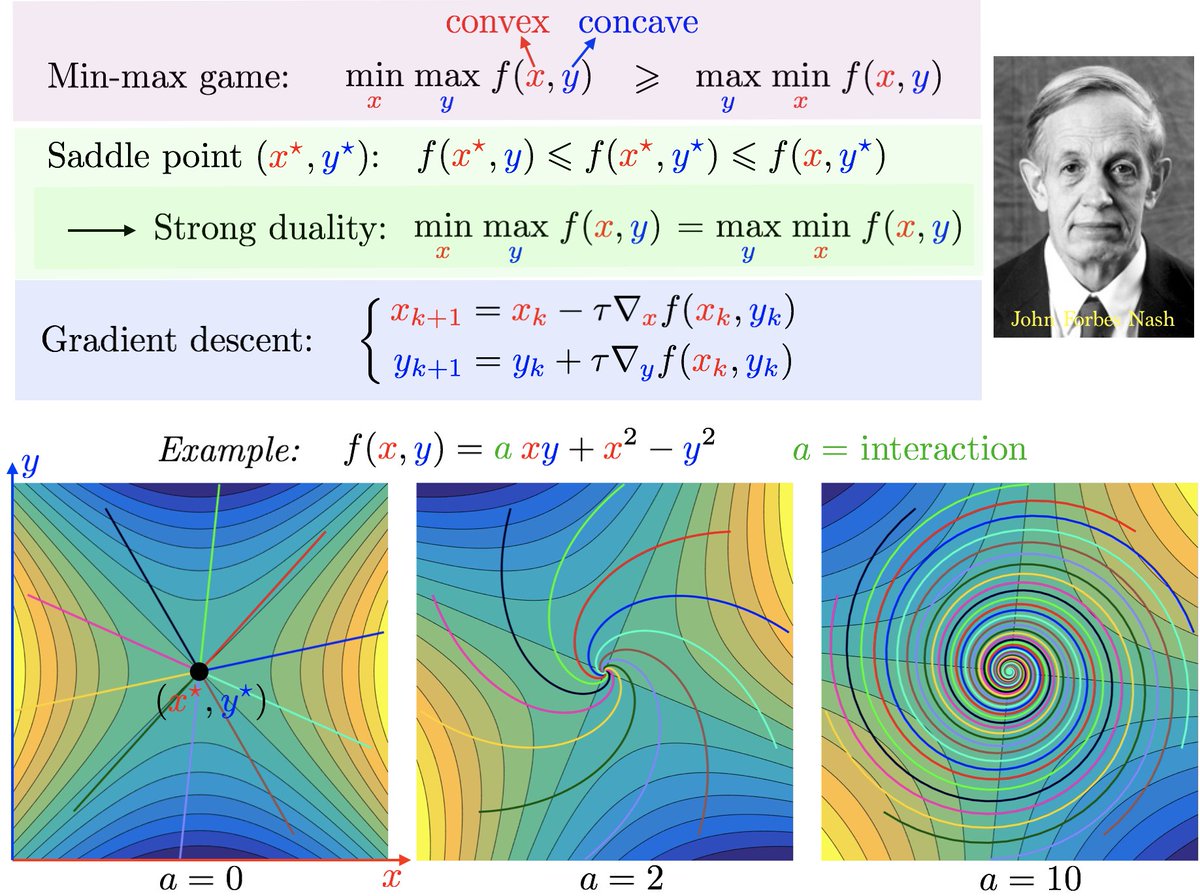
Gradient descent is inefficient to find saddle point (Nash equilibrium) for min-max games, because of spiralling behaviour. Beware when training your GANs … en.wikipedia.org/wiki/Nash_equi… en.wikipedia.org/wiki/Generativ…

Gradient descent is inefficient to find saddle point (Nash equilibrium) for min-max games, because of spiralling behaviour. Beware when training your GANs …  en.wikipedia.org/wiki/Nash_equi… en.wikipedia.org/wiki/Generativ…
Juliet Usher-Smith (@julietu_s) 's Twitter Profile Photo

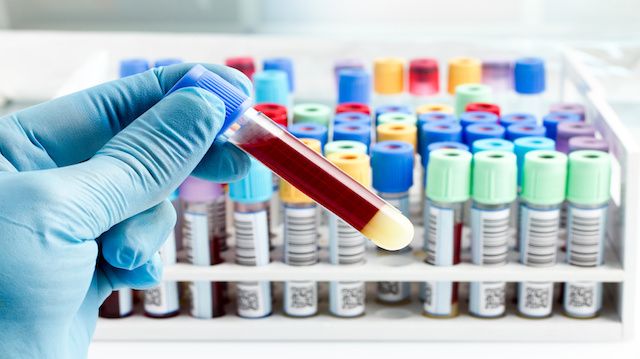
See our paper validating risk models for bowel cancer just published nature.com/articles/bjc20…. Several models based on routinely collected data have good discrimination. Next step - do they improve efficiency of screening? PCU Prevention Group Primary Care Cancer Group
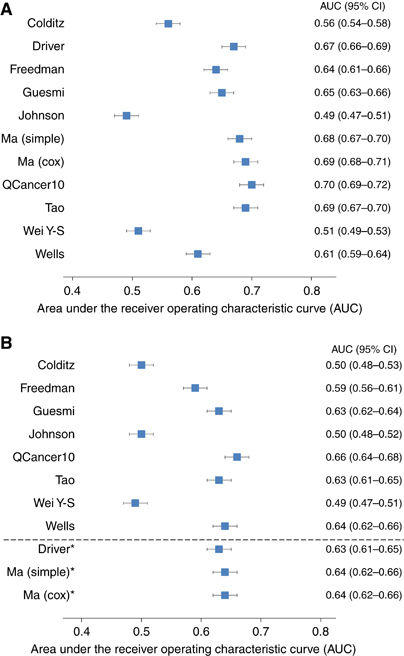
See our paper validating risk models for bowel cancer just published nature.com/articles/bjc20…. Several models based on routinely collected data have good discrimination. Next step - do they improve efficiency of screening? <a href="/PCU_Prevention/">PCU Prevention Group</a> <a href="/PCUCancerGrp/">Primary Care Cancer Group</a>
Jack O'Sullivan (@drjackosullivan) 's Twitter Profile Photo

Pleased to report our new publication: Overtesting and undertesting in primary care: a systematic review and meta-analysis bmjopen.bmj.com/content/8/2/e0…

Pleased to report our new publication: Overtesting and undertesting in primary care: a systematic review and meta-analysis
bmjopen.bmj.com/content/8/2/e0…
Numenta 🧠 (@numenta) 's Twitter Profile Photo

Computer scientist, neuroscientist, & author of the paper "Could a Neuroscientist Understand a Microprocessor?” Dr. Jonas (Eric Jonas) sits down with 𝒶𝓁𝓌𝒶𝓎𝓈 🄵🅁🄴🅂🄷 to talk about connectomes, brain lesions & neurons vs transistors in this #HTMSchool video. youtu.be/bLbeIAGEgpc
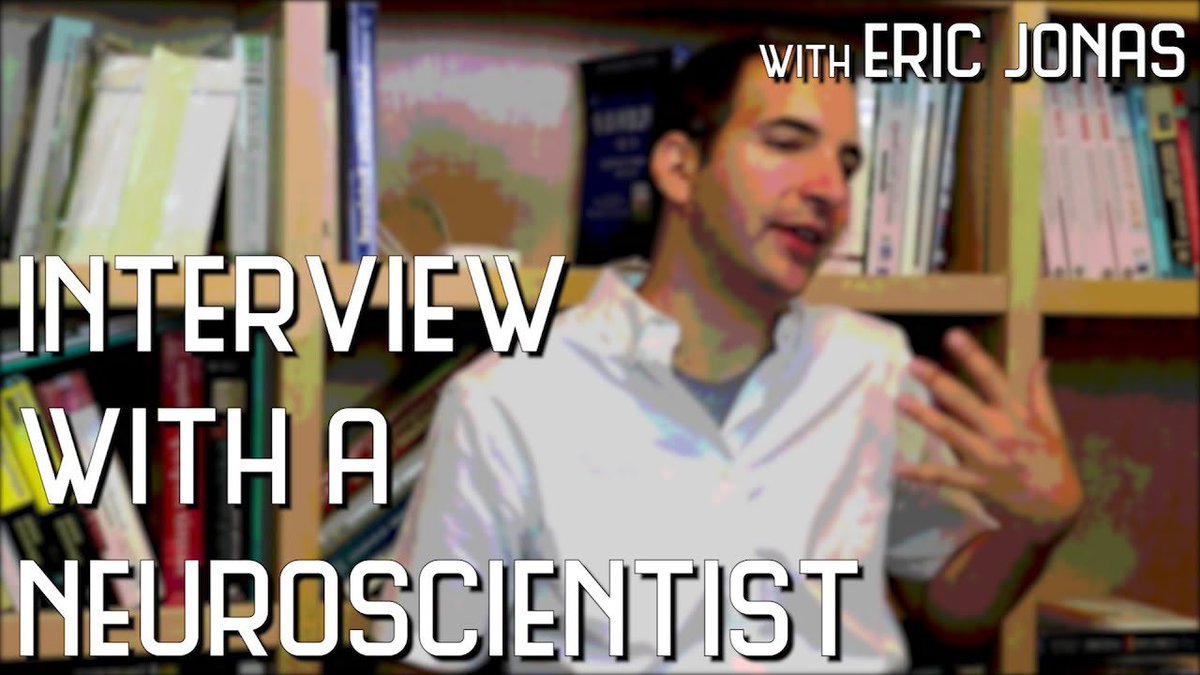

Computer scientist, neuroscientist, &amp; author of the paper "Could a Neuroscientist Understand a Microprocessor?” Dr. Jonas (<a href="/stochastician/">Eric Jonas</a>) sits down with <a href="/rhyolight/">𝒶𝓁𝓌𝒶𝓎𝓈 🄵🅁🄴🅂🄷</a> to talk about connectomes, brain lesions &amp; neurons vs transistors in this #HTMSchool video. youtu.be/bLbeIAGEgpc

Andrej Karpathy (@karpathy) 's Twitter Profile Photo

"Deep Reinforcement Learning Doesn't Work Yet" alexirpan.com/2018/02/14/rl-… great read, hits a lot of points I've also come to realize over last ~2 years. 70% is a vast understatement.

Harlan Krumholz (@hmkyale) 's Twitter Profile Photo

From @sciencemagazine: 'booming field of artificial intelligence (#AI) is grappling w/replication crisis” "AI researchers found it difficult to reproduce many key results” "esearchers often don't share source code” sciencemag.org/news/2018/02/m… #BigData #DigitalHealth #MachineLearning

From @sciencemagazine: 'booming field of artificial intelligence (#AI) is grappling w/replication crisis” "AI researchers found it difficult to reproduce many key results” "esearchers often don't share source code”  sciencemag.org/news/2018/02/m… #BigData #DigitalHealth #MachineLearning
Harvard Biostatistics (@harvardbiostats) 's Twitter Profile Photo

In an effort to enhance rigor & reproducibility in research, the J K has created a clearinghouse website for training modules that includes the new Harvard Online course: Principles, Statistical and Computational Tools for Reproducible Science youtube.com/watch?v=GJ9nK3…

Quanta Magazine (@quantamagazine) 's Twitter Profile Photo

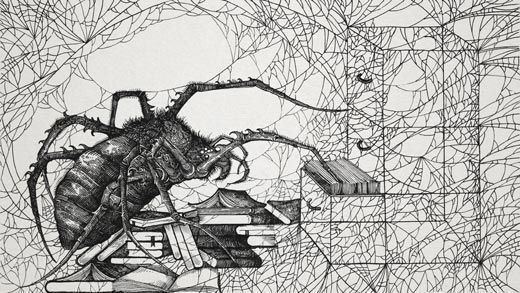
From the archives: Spiders appear to offload cognitive tasks to their webs, making them one of a number of species with a mind that isn’t fully confined within the head. buff.ly/2nXpkJR

From the archives: Spiders appear to offload cognitive tasks to their webs, making them one of a number of species with a mind that isn’t fully confined within the head.
buff.ly/2nXpkJR
Quanta Magazine (@quantamagazine) 's Twitter Profile Photo

Artificial brain: A tiny mesh of nanowires and synapselike switches remembers its past and solves simple problems. buff.ly/2EkPDkf

Denny Britz (@dennybritz) 's Twitter Profile Photo

Thinking about RL sample efficiency. Imagine you apply a transformation to Atari pixels that makes it look like noise to humans. How long would a person need to solve it? Very long. They’d probably just memorize the actions and overfit. Why expect RL to do something different?

The BMJ (@bmj_latest) 's Twitter Profile Photo

Few large high quality studies are available on robotics surgery: State of the Art Review looks at existing evidence on its feasibility, safety, efficacy, and costs bmj.com/content/360/bm…

Few large high quality studies are available on robotics surgery: State of the Art Review looks at existing evidence on its feasibility, safety, efficacy, and costs bmj.com/content/360/bm…
Quanta Magazine (@quantamagazine) 's Twitter Profile Photo

How do you get classical data in and out of a quantum neural network? Solving that problem could usher in a new era of machine learning. buff.ly/2EK4LHO

How do you get classical data in and out of a quantum neural network? Solving that problem could usher in a new era of machine learning.
buff.ly/2EK4LHO
Quanta Magazine (@quantamagazine) 's Twitter Profile Photo

ICYMI: Complex natural systems defy standard mathematical analysis, so one ecologist is throwing out the equations. buff.ly/2E1Wulz

General Medicine and Medical Evidence @ BMC (@medicalevidence) 's Twitter Profile Photo

Simulation study recommends considering prognostic covariates in regression models when estimating biomarker–treatment interactions, as the power for detecting true interactions can be increased - #Trialsjournal: trialsjournal.biomedcentral.com/articles/10.11…

Quanta Magazine (@quantamagazine) 's Twitter Profile Photo

“Proofs from THE BOOK” is a collection of some of the most beautiful and interesting proofs in mathematics. We spoke with Günter Ziegler, one of the book’s curators, about what makes the proofs in the book so special. quantamagazine.org/gunter-ziegler…