Erik Løhre (@lohrerik) 's Twitter Profile
Erik Løhre

@lohrerik

Associate professor @HandelshoyskBI uncertainty, judgment and decision making, open science

ID: 1329036419537526785

calendar_today18-11-2020 12:19:28

133 Tweet

87 Takipçi

237 Takip Edilen

Erik Løhre (@lohrerik) 's Twitter Profile Photo

New paper with the awesome S. Prasad Chandrashekar in the lead! We tested if “packing” information influences perceived consensus about climate change. We didn’t find that but found a kind of false consensus effect 🤔 read more about it in Collabra: Psychology !

Ingar Haaland (@ingar30) 's Twitter Profile Photo

OpenAI has launched Operator, an agent that can perform tasks in your browser. I asked it to complete a Qualtrics survey I created. The results are very promising for Operator but *very* concerning for survey researchers

OpenAI has launched Operator, an agent that can perform tasks in your browser. I asked it to complete a Qualtrics survey I created. The results are very promising for Operator but *very* concerning for survey researchers
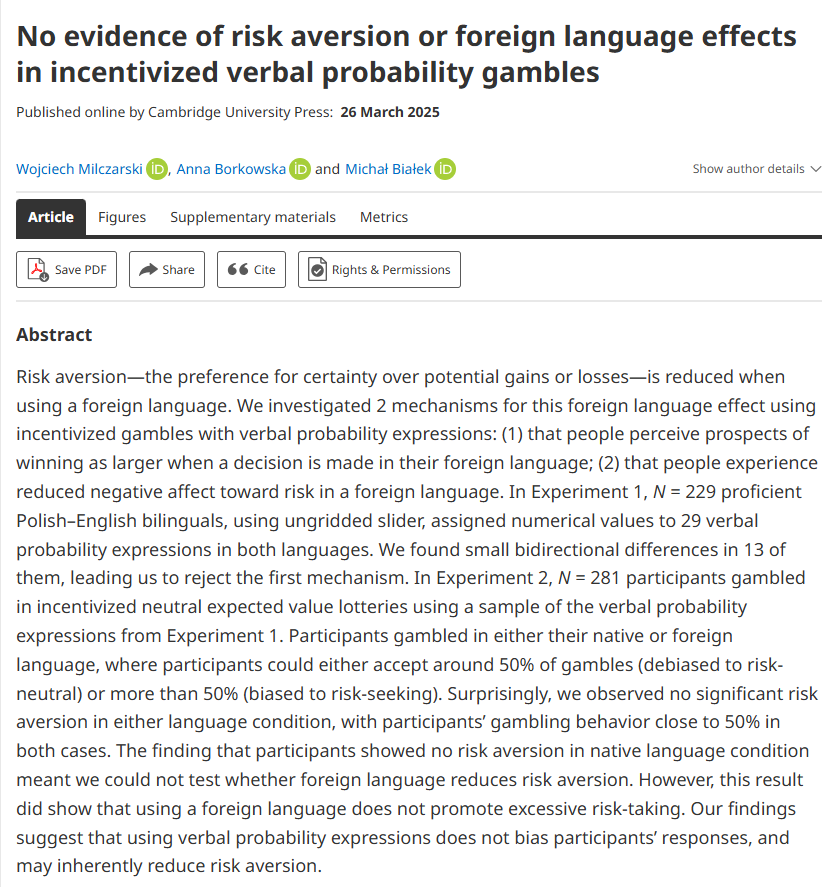
Michał Białek (@mbialek82) 's Twitter Profile Photo

🧵 THREAD: Just published in JDM! When we use verbal expressions like "likely" or "uncertain" to describe risk (instead of numbers like "70%"), something unexpected happens - people show NO RISK AVERSION at all! 1/8

🧵 THREAD: Just published in JDM! When we use verbal expressions like "likely" or "uncertain" to describe risk (instead of numbers like "70%"), something unexpected happens - people show NO RISK AVERSION at all!  1/8
Stefanie Stantcheva s-stantcheva.bsky.social (@s_stantcheva) 's Twitter Profile Photo

🥳🥳Super excited to see our paper on attitudes towards climate change out in the AEA Journals American Economic Review today! So much more work to do on this pressing issue--data is publicly available! (I had written a short summary thread here: x.com/s_stantcheva/s…)

🥳🥳Super excited to see our paper on attitudes towards climate change out in the <a href="/AEAjournals/">AEA Journals</a> American Economic Review today! So much more work to do on this pressing issue--data is publicly available! (I had written a short summary thread here: x.com/s_stantcheva/s…)
Lewend Mayiwar (@lewendm) 's Twitter Profile Photo

New paper out in JPSP with Erik Løhre, S. Prasad Chandrashekar, & Thorvald Hærem! In a registered report replication and extension, we find that the desire for status is linked to greater overconfidence. Pub: psycnet.apa.org/doi/10.1037/ps… OA: osf.io/fyx9c_v1

New paper out in JPSP with <a href="/LohrErik/">Erik Løhre</a>, <a href="/PRASAC/">S. Prasad Chandrashekar</a>, &amp; Thorvald Hærem! In a registered report replication and extension, we find that the desire for status is linked to greater overconfidence.

Pub: psycnet.apa.org/doi/10.1037/ps…
OA: osf.io/fyx9c_v1
Jay Van Bavel, PhD (@jayvanbavel) 's Twitter Profile Photo

Climate Terminology Does Not Matter Across tens of thousands of participants in two large-scale experiments, we found that labeling climate change in different ways had no effect on their stated willingness to act. By focusing on substantive strategies and actionable guidance,

Climate Terminology Does Not Matter

Across tens of thousands of participants in two large-scale experiments, we found that labeling climate change in different ways had no effect on their stated willingness to act.

By focusing on substantive strategies and actionable guidance,
Daniël Lakens (@lakens) 's Twitter Profile Photo

Another study showing the huge uptake, and very favorable evaluations, of preregistration (this time in experimental economics). This is by now a very established result. Mainly the older generation who is negative about is. econstor.eu/bitstream/1041… 1/3

Another study showing the huge uptake, and very favorable evaluations, of preregistration (this time in experimental economics). This is by now a very established result. Mainly the older generation who is negative about is. econstor.eu/bitstream/1041… 1/3
Gustav Tinghög (@tinghog) 's Twitter Profile Photo

Honestly, I think our new paper has serious implications for experimental econ 22–27% failed comprehension in the Dictator and Ultimatum games In the Trust Game and Public Goods Game, that number hit 70% and 52% These are foundational tools of exp econ doi.org/10.1016/j.jebo… 🧵

Kevin Hong (@kevinhong1991) 's Twitter Profile Photo

Fresh out in Psychological Review! Why do so many societies explain events through fate, spirits, or divine will—but rarely invoke “chance”? My new article examines the cross-cultural absence of chance-based explanations and what it reveals about human cognition.

Fresh out in Psychological Review!
Why do so many societies explain events through fate, spirits, or divine will—but rarely invoke “chance”?
My new article examines the cross-cultural absence of chance-based explanations and what it reveals about human cognition.
Lewend Mayiwar (@lewendm) 's Twitter Profile Photo

My most rejected paper — and my final PhD paper, and first solo-author article — is out in Social Psychological Bulletin! Preprint (+ data, code, materials): osf.io/bp4au_v1/ 🧵 A thread 👇🏻

Michał Białek (@mbialek82) 's Twitter Profile Photo

Is sunk cost bias one phenomenon or many? Consider: eating is eating, but the psychology differs whether you're driven by hunger or boredom. So, sticking with failing investments might involve distinct psych. mechanisms masquerading as a single bias. Link to paper ➡️last post)

Lewend Mayiwar (@lewendm) 's Twitter Profile Photo

Michał Białek Interesting findings! We also found very weak/near zero/sometimes negative associations among problems measuring the representativeness heuristic: mgto.org/wp-content/upl… Research by Lukas Röseler has found the same pattern among anchoring problems: ejop.psychopen.eu/index.php/ejop…

Lewend Mayiwar (@lewendm) 's Twitter Profile Photo

Nice summary of my first solo author and most rejected paper now out in Social Psychological Bulletin! No self-other differences in risky decision making among experts, but all were susceptible to gain and loss framing.

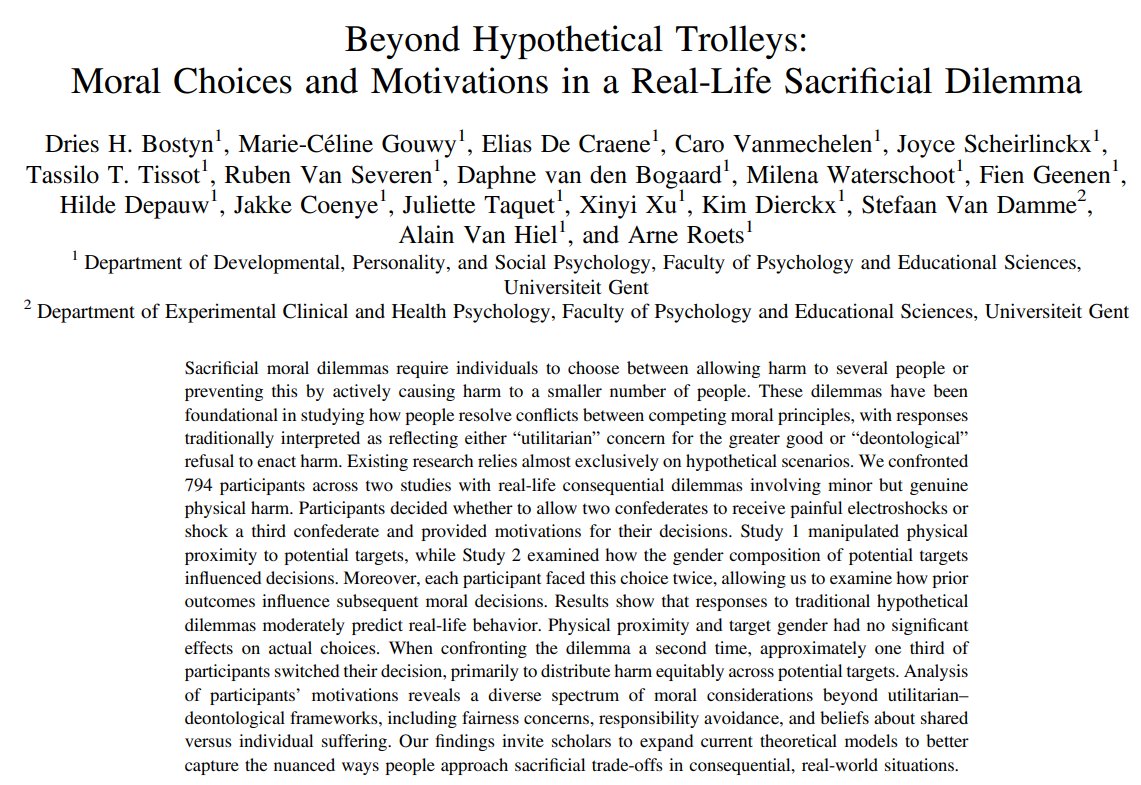
Dries Bostyn (@dhbostyn) 's Twitter Profile Photo

Upcoming in JPSP Psychologists study morality by having people respond to hypothetical "trolley dilemmas". We confronted people with a real-life version. Not with runaway trolleys, but with people hooked up to electroshock machines: "Do you want to save two people from pain by

Upcoming in JPSP

Psychologists study morality by having people respond to hypothetical "trolley dilemmas". We confronted people with a real-life version. Not with runaway trolleys, but with people hooked up to electroshock machines: "Do you want to save two people from pain by
Alex Imas (@alexolegimas) 's Twitter Profile Photo

Richard H Thaler and I wrote a book about behavioral economics You should get it if you: - Want to learn where BE started, how far it’s come, and where (we think) it’s going - Teach BE (comes w/ slides+materials) - Curious about replicability (we replicated main studies) 🧵w/ links
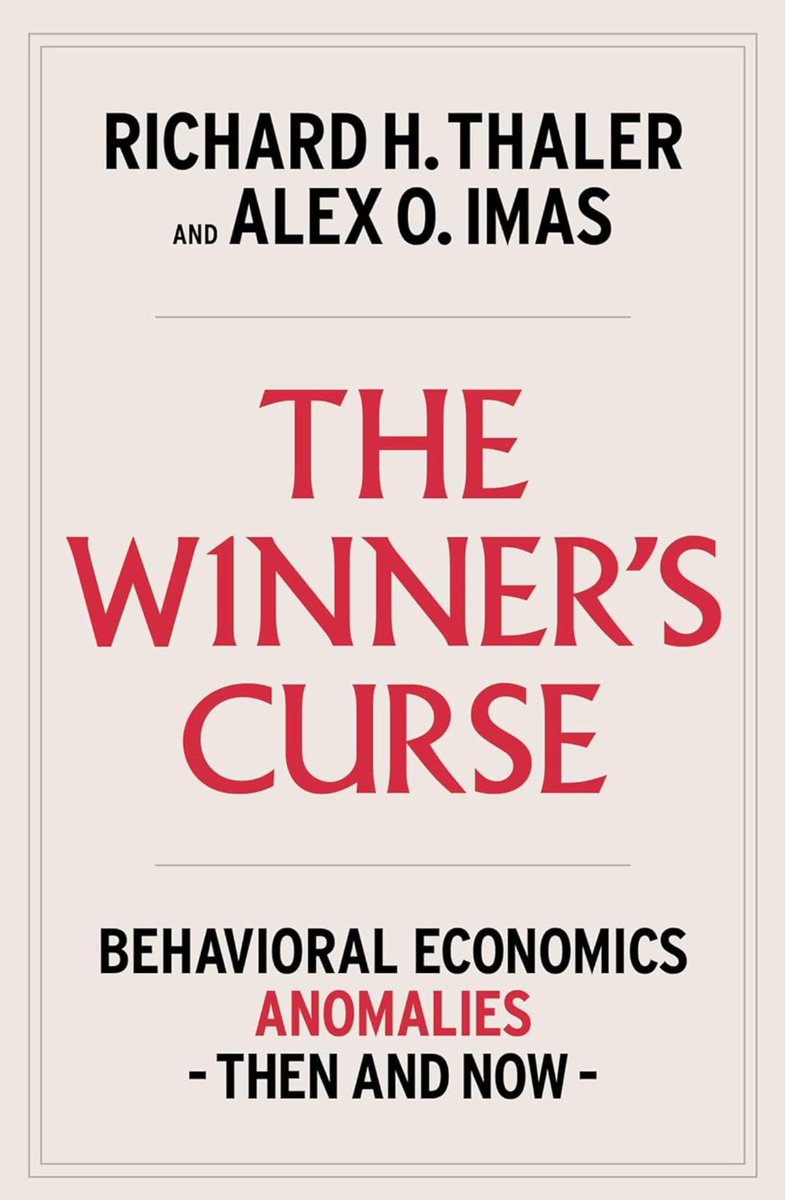

<a href="/R_Thaler/">Richard H Thaler</a> and I wrote a book about behavioral economics

You should get it if you:
- Want to learn where BE started, how far it’s come, and where (we think) it’s going
- Teach BE (comes w/ slides+materials)
- Curious about replicability (we replicated main studies)

🧵w/ links
Ethan Mollick (@emollick) 's Twitter Profile Photo

I had access to Gemini 3. It is a very good, very fast model. It also demonstrates the change from chatbot to agent. oneusefulthing.org/p/three-years-…

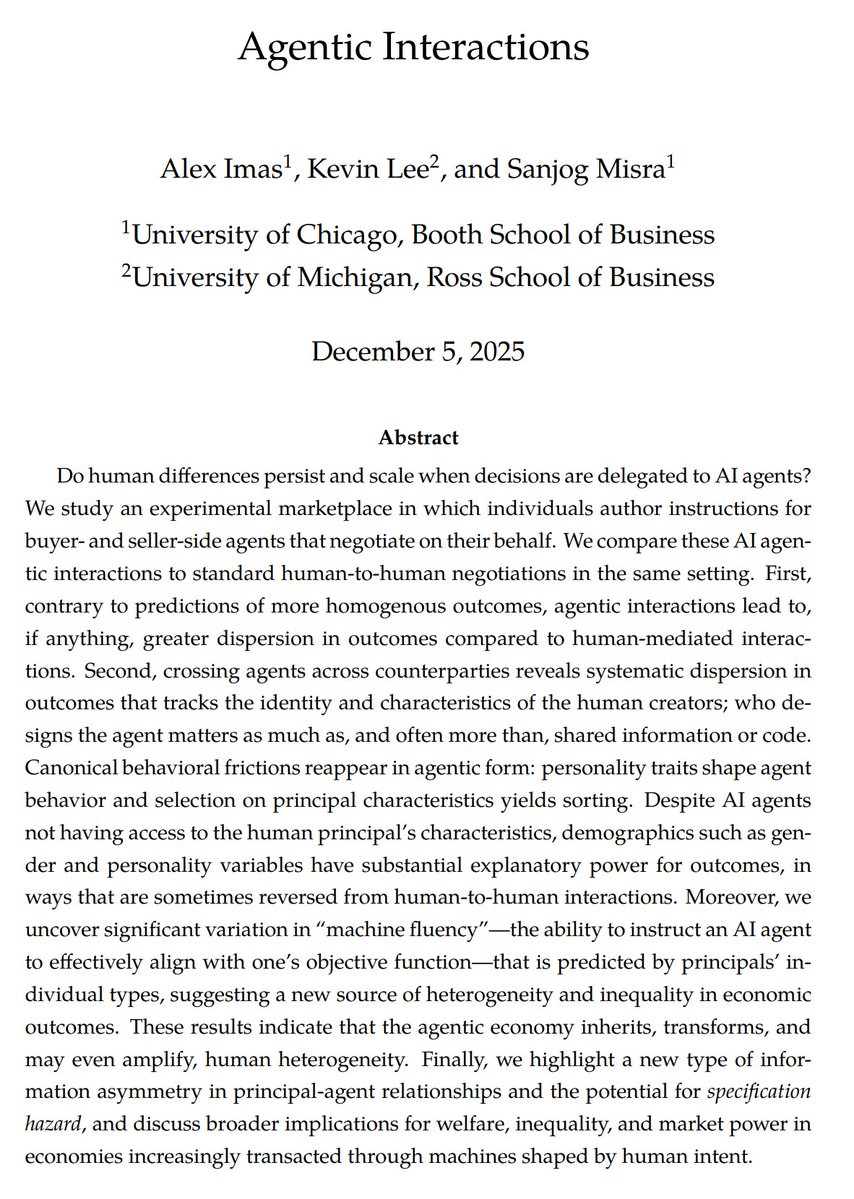
Alex Imas (@alexolegimas) 's Twitter Profile Photo

What will economic outcomes look like as transactions become delegated to AI agents? Will human differences be smoothed away, leading to more homogenous outcomes, or will they be recreated and potentially even amplified? Will AI agents mitigate inequality, or will it persist

What will economic outcomes look like as transactions become delegated to AI agents?

Will human differences be smoothed away, leading to more homogenous outcomes, or will they be recreated and potentially even amplified?

Will AI agents mitigate inequality, or will it persist