Karl Wegmann (@karlwegmann) 's Twitter Profile
Karl Wegmann

@karlwegmann

Earth Surface Processes at NC State University

ID: 894611214

linkhttps://meas.sciences.ncsu.edu/people/kwwegman calendar_today21-10-2012 04:32:41

640 Tweet

338 Followers

443 Following
Karl Wegmann (@karlwegmann) 's Twitter Profile Photo

Published and available just in time for #IntGeomorphWeek2022, The Mw 5.1, 9 August 2020, Sparta Earthquake, North Carolina: The First Documented Seismic Surface Rupture in the Eastern United States, doi.org/10.1130/GSATG5…, NC State MEAS NC State Sciences geosociety USGS Earthquakes - go to @USGS_Quakes
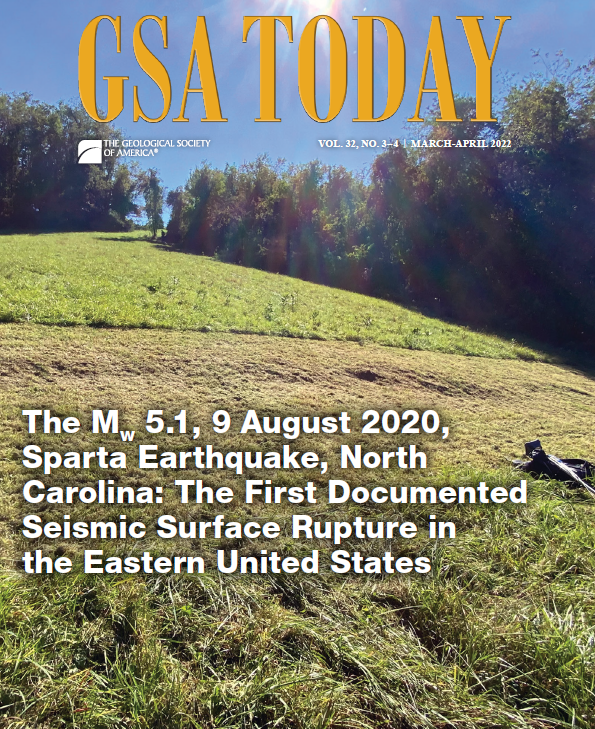
Published and available just in time for #IntGeomorphWeek2022, The Mw 5.1, 9 August 2020, Sparta Earthquake, North Carolina: The First Documented Seismic Surface Rupture in the Eastern United States, doi.org/10.1130/GSATG5…, <a href="/ncstatemeas/">NC State MEAS</a> <a href="/NCStateSciences/">NC State Sciences</a> <a href="/geosociety/">geosociety</a> <a href="/usgsquakes/">USGS Earthquakes - go to @USGS_Quakes</a>
Corey Scheip (@playingwithdata) 's Twitter Profile Photo

#Yellowstone #Flooding damage starting to become visible with #openaccess data. Somewhat cloudy image from #Sentinel2 is up in the Sentinel Hub EO Browser from yesterday. Waiting for the imagery to populate in #EarthEngine but for now this will do! See what else you can find.
HazMapper (@hazmapper) 's Twitter Profile Photo

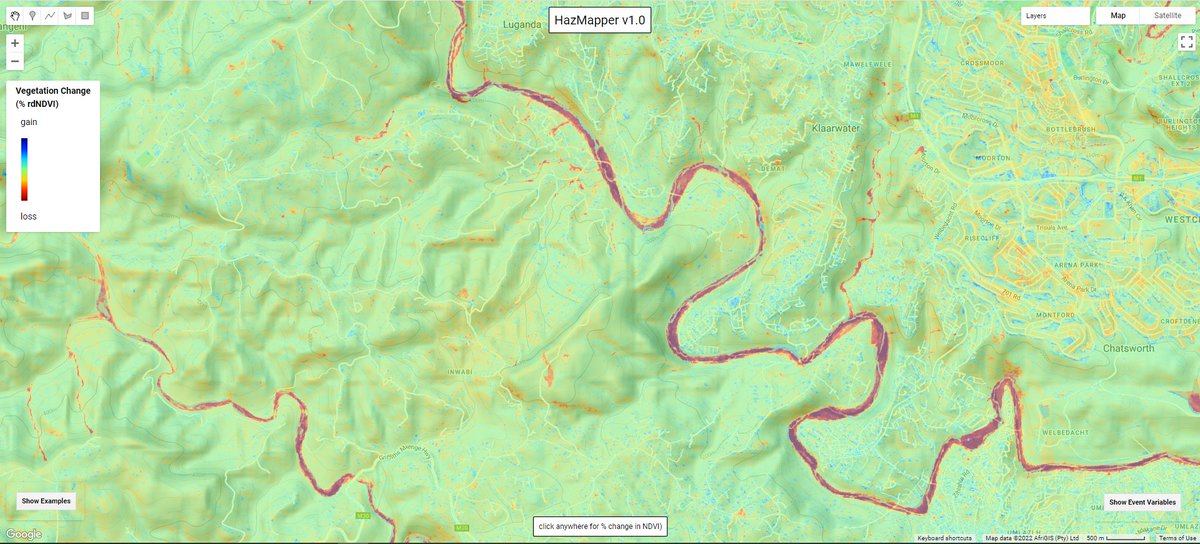
HazMapper Weekly Update #22 - April 2022 flooding and minor landsliding along the Mlazi (uMalzi) River, on the suburban fringe of Durban, South Africa.

HazMapper Weekly Update #22 - April 2022 flooding and minor landsliding along the Mlazi (uMalzi) River, on the suburban fringe of Durban, South Africa.
Corey Scheip (@playingwithdata) 's Twitter Profile Photo

I *really* wish I could find funding and time to develop the 2nd version of HazMapper. I have a bunch of code toward incorporating surface reflectance data, trend tracking, and cloud prob filtering....but alas, very cool to see v1 being useful for folks!!! #gee #opendata

Dr. Paula M Figueiredo (@paleoquake.bsky.social) (@pm_figueiredo) 's Twitter Profile Photo

Intraplate fault zone with seismic recurrence are real. Sometimes (frequently) hard to identify. Here, weathered bedrock (neoproterozoic ?) thrusting Pleistocene (?) colluvium.

Intraplate fault zone with seismic recurrence are real. Sometimes (frequently) hard to identify. Here, weathered bedrock (neoproterozoic ?) thrusting Pleistocene (?) colluvium.
International Geodiversity Day (@geodiversityday) 's Twitter Profile Photo

⭐️ Got an event planned for International Geodiversity Day? 📢 Share it with the world on the #GeodiversityDay website: 🌐 geodiversityday.org/organise-an-ev…

⭐️ Got an event planned for International Geodiversity Day?

📢 Share it with the world on the #GeodiversityDay website:

🌐 geodiversityday.org/organise-an-ev…
HazMapper (@hazmapper) 's Twitter Profile Photo

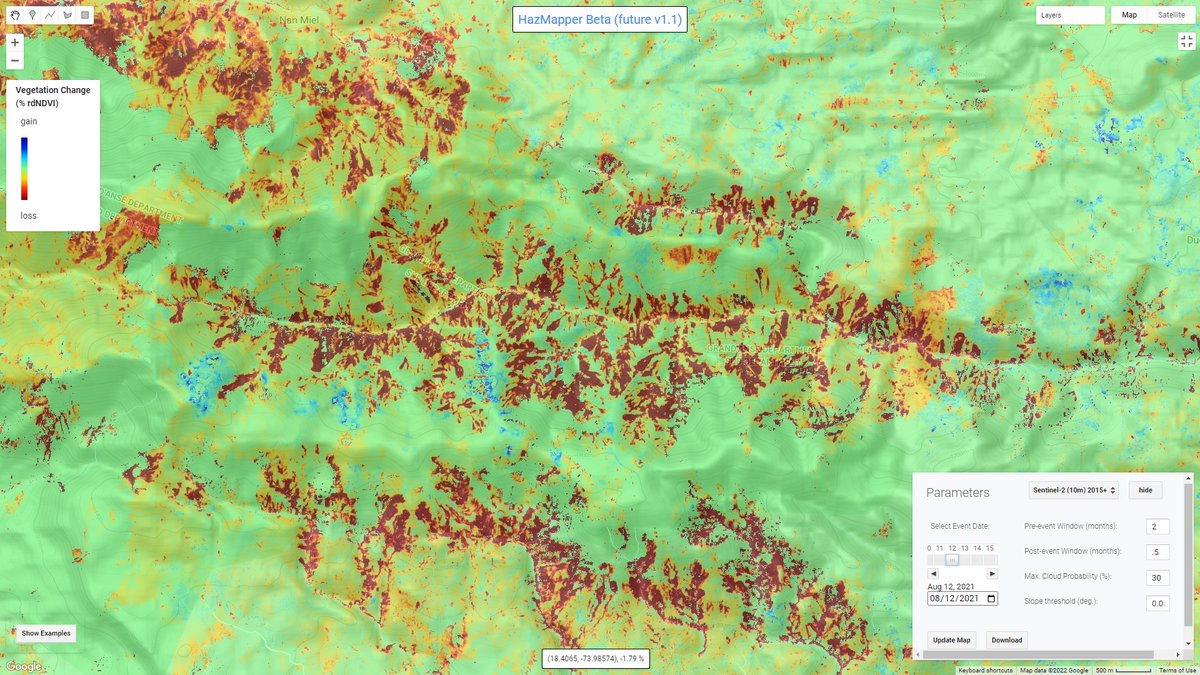
A quick comparison of mapping landslides (August 2021 Nippes EQ in #Haiti) in the original HazMapper compared to the beta v1.1 which includes moving from TOA to SR Sentinel data and some additional cloud filtering techniques. #googleearthengine #gee #bigdata #naturalhazards

A quick comparison of mapping landslides (August 2021 Nippes EQ in #Haiti) in the original HazMapper compared to the beta v1.1 which includes moving from TOA to SR Sentinel data and some additional cloud filtering techniques.

#googleearthengine #gee #bigdata #naturalhazards
HazMapper (@hazmapper) 's Twitter Profile Photo

October flood woes along the #Niger and #Benue Rivers is clearly visible using #Sentinel2 imagery and the HazMapper #rdNDVI algorithm. Contiguous red areas = loss of vegetation during #NigeriaFloods inundation. Explore yourself with the direct URL at cmscheip.users.earthengine.app/view/hazmapper…;
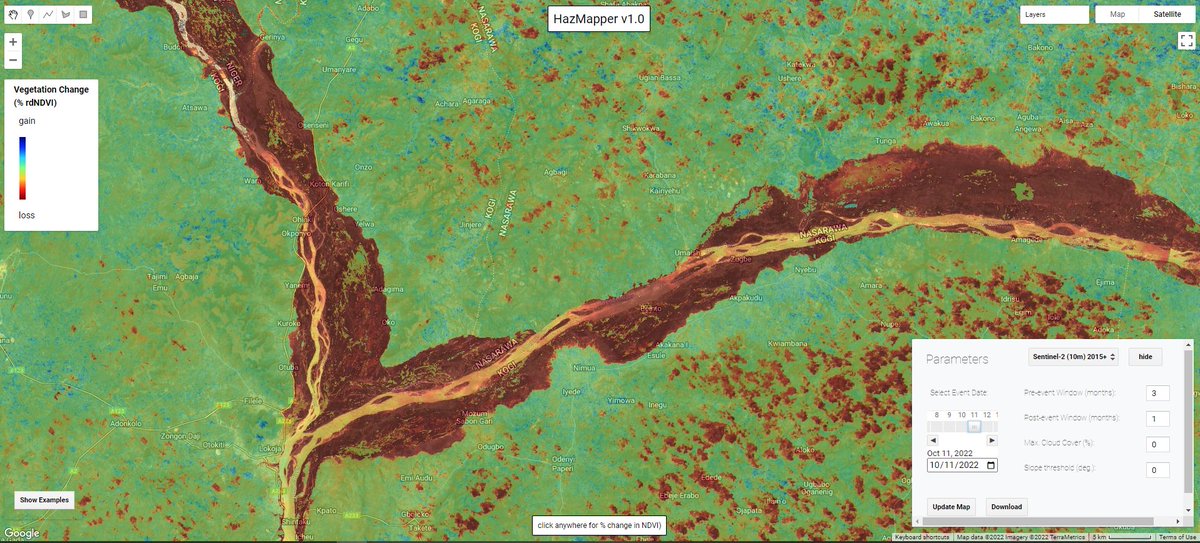
October flood woes along the #Niger and #Benue Rivers is clearly visible using #Sentinel2 imagery and the <a href="/HazMapper/">HazMapper</a> #rdNDVI algorithm. Contiguous red areas = loss of vegetation during #NigeriaFloods inundation. Explore yourself with the direct URL at cmscheip.users.earthengine.app/view/hazmapper…;
Karl Wegmann (@karlwegmann) 's Twitter Profile Photo

So nice to see the #geomorphology efforts of Rachel Atkins, Ph.D. and Del Bohnenstiehl out in print. Channel head response to anthropogenic landscape modification: A case study from the North Carolina Piedmont, USA, with implications for water quality onlinelibrary.wiley.com/doi/10.1002/es…

Rachel Atkins, Ph.D. (@rockdocrach) 's Twitter Profile Photo

I am SO excited to announce that one my PhD chapters is finally published in ESPL!!! We found that Piedmont channels are migrating up-valley and estimate the amount of future erosion and nutrient contributions to piedmont streams. Check it out: onlinelibrary.wiley.com/doi/10.1002/es…

NC Water Resources (@nc_wrri) 's Twitter Profile Photo

#NCWRRI Graduate fellow Chris Norcross is a PhD student at NC State MEAS who is studying the impact of beavers on #stormwater storage, water quality, and diversion in urban wetlands. Learn more about his project below! [🧵thread]

#NCWRRI Graduate fellow Chris Norcross is a PhD student at <a href="/ncstatemeas/">NC State MEAS</a> who is studying the impact of beavers on #stormwater storage, water quality, and diversion in urban wetlands.
Learn more about his project below! [🧵thread]
NC Water Resources (@nc_wrri) 's Twitter Profile Photo

Interested in following the beavers in the #WalnutCreekWatershed? Check out the Rocky Branch Greenway Beaver Cam to see them in action! chronolog.io/site/MEA101 Special thanks to Chris’ advisor, Karl Wegmann for capturing this footage!


SPUN (@spununderground) 's Twitter Profile Photo

“Islands are some of the most imperiled, highly disturbed ecosystems in the world, and are home to roughly 20% of Earth’s biodiversity” Amazing coverage in nature of our expedition to sample fungi on world's most remote island @VirginiaGewin nature.com/immersive/d415…

Nature Portfolio (@natureportfolio) 's Twitter Profile Photo

Human exploration of the Solar System began on the Moon during the mid-20th century. To facilitate documentation and study of the human influence on the Moon, a Comment article in Nature Geoscience argues it is time to designate a ‘Lunar Anthropocene.’ 🔒 go.nature.com/3NswDFc

Human exploration of the Solar System began on the Moon during the mid-20th century. To facilitate documentation and study of the human influence on the Moon, a Comment article in <a href="/NatureGeosci/">Nature Geoscience</a> argues it is time to designate a ‘Lunar Anthropocene.’ 🔒 go.nature.com/3NswDFc