Dr Eric Brennan❤️thinking...outside..the produce📦 (@ebrennanscience) 's Twitter Profile
Dr Eric Brennan❤️thinking...outside..the produce📦

@ebrennanscience

Scientist @USDA_ARS DIY YouTuber. I study ClimateSmart Ag▪Cover crops▪Soil▪Insects▪Weeds▪Sustainable🥦🍓 I❤#SciComm #RPCV🇹🇭🇿🇲 Roots in 🇵🇬. MyViews

ID: 1245465954361864192

linkhttps://bit.ly/2RxKn4C calendar_today01-04-2020 21:41:24

753 Tweet

598 Followers

996 Following

Dr Eric Brennan❤️thinking...outside..the produce📦 (@ebrennanscience) 's Twitter Profile Photo

Enjoyed attending the official opening of our new research center. It's great that it was named after fellow #RPCV Rep. Sam Farr who started his decades of public service as a Peace Corps volunteer. I appreciate his efforts to support sustainable agricultural research here.


Dr Eric Brennan❤️thinking...outside..the produce📦 (@ebrennanscience) 's Twitter Profile Photo

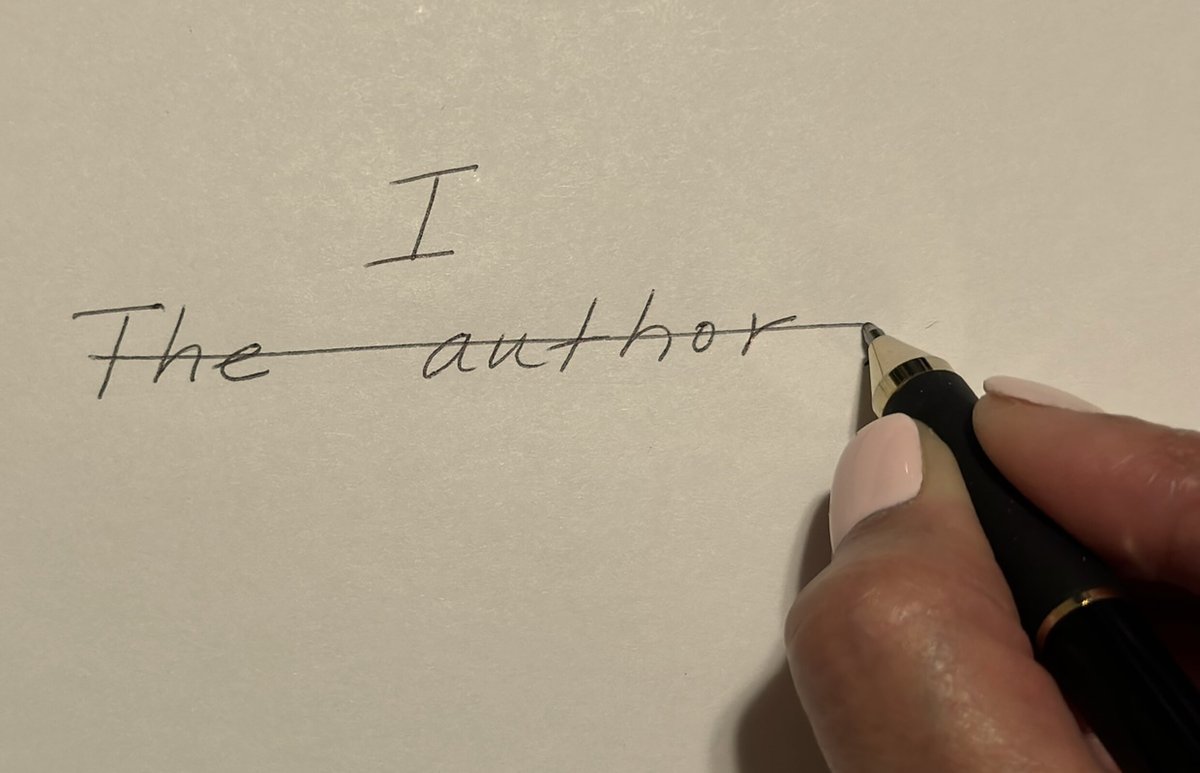
Excited to share my paper “I” versus “the author”: The power of first-person voice when writing about science. Let's embrace first-person pronouns & move beyond outdated notions that those powerful, short, gender-neutral, easy-to-read words are inappropriate in science writing

SRB (@reproductionsrb) 's Twitter Profile Photo

This PNAS opinion piece may be of interest to those writing up a thesis or a manuscript for publication. The use of “I” versus “the author” is debated and gives food for thought. #WordsMatter SRB pnas.org/doi/10.1073/pn…

Jason Bosch (@er_bosch) 's Twitter Profile Photo

Absolutely this! The easier it is to read a scientific paper, the better it will be for its understanding. I've even been told not to write "we did..." as it's "not scientific." I ignore that advice. "Scientific style" must stop meaning unnecessarily complicated and stilted.

PNASNews (@pnasnews) 's Twitter Profile Photo

Opinion piece: Can writing #ResearchPapers in the first person make them not only easier to read and understand, but also more impactful? In PNAS Front Matter: ow.ly/RHKu50S2Bzy #SciComm #ScienceCommunication #WritingStyle

Opinion piece: Can writing #ResearchPapers in the first person make them not only easier to read and understand, but also more impactful? In PNAS Front Matter: ow.ly/RHKu50S2Bzy #SciComm #ScienceCommunication #WritingStyle
Francis Villatoro (@emulenews) 's Twitter Profile Photo

#PNAS “I” versus “the author”: The power of first-person voice when writing about science pnas.org/doi/10.1073/pn… "I remember the moment when I began losing faith in the editorial fairness of peer-reviewed science literature. It happened as I struggled to publish a paper."

#PNAS “I” versus “the author”: The power of first-person voice when writing about science pnas.org/doi/10.1073/pn… "I remember the moment when I began losing faith in the editorial fairness of peer-reviewed science literature. It happened as I struggled to publish a paper."
U.S. Surgeon General (@surgeon_general) 's Twitter Profile Photo

Social media has become an important contributor to our #YouthMentalHealth crisis. We are in the middle of an emergency, and it’s essential that Congress act with speed and urgency. The health and well-being of our kids is at stake. Read more: nytimes.com/2024/06/17/opi… 2/2

Science Friday (@scifri) 's Twitter Profile Photo

Most scientific published studies have “positive results.” But what about the papers with negative results? Dr. Sarahanne Field, editor of Journal of Trial and Error, joins us to discuss how failure can make science stronger. sciencefriday.com/segments/journ…

Dr Eric Brennan❤️thinking...outside..the produce📦 (@ebrennanscience) 's Twitter Profile Photo

Thanks for this excellent video on an important topic, first-person pronouns in science writing. It's 1 of more than 50 helpful videos by Karen McKee to improve your science writing available here. Great resource for new & experienced science writers. youtube.com/playlist?list=…

Dr Eric Brennan❤️thinking...outside..the produce📦 (@ebrennanscience) 's Twitter Profile Photo

Check out my new video on the importance of Agricultural Systems Research in the Salad Bowl of America. This includes cover cropping, weed management, biological insect control, nutrient cycling, etc. It was fun to make. youtu.be/_MHQGa3qvx0

Dr Eric Brennan❤️thinking...outside..the produce📦 (@ebrennanscience) 's Twitter Profile Photo

Excellent talk that concluded with this important message: 'There is no room for dogma in science'. Agricultural scientists need to keep this in mind...especially those of us who work in organic agriculture.

Dr Eric Brennan❤️thinking...outside..the produce📦 (@ebrennanscience) 's Twitter Profile Photo

Check out this new video on a study I'm doing with Stanford University collaborators comparing fall-terminated versus winter cover crops to reduce N leaching & protect groundwater in vegetable systems in the Salad Bowl of America (Salinas, California) . Agricultural Research Service youtu.be/xggJV_vEZaM
Andrew McGuire (@agronomistag) 's Twitter Profile Photo

Soil bio-products - inoculants, biostimulants, biofertilizers - are risky; risky because these products often fail, are inconsistent, or have benefits<cost. When you use a bio-product, you are looking for the exception. More here: csanr.wsu.edu/soil-bio-produ…

Soil bio-products - inoculants, biostimulants, biofertilizers - are risky; risky because these products often fail, are inconsistent, or have benefits&lt;cost.
 When you use a bio-product, you are looking for the exception. 
More here: csanr.wsu.edu/soil-bio-produ…
Dr Eric Brennan❤️thinking...outside..the produce📦 (@ebrennanscience) 's Twitter Profile Photo

My new video on fall-terminated versus over winter rye cover crops. Interesting results on biomass production & seed set. Learning lots that can increase cover cropping in vegetable production & improve soil & nutrient management. Stanford University Agricultural Research Service youtu.be/tx3UBIdUO0Q

Dr Eric Brennan❤️thinking...outside..the produce📦 (@ebrennanscience) 's Twitter Profile Photo

Here's why I love being a public servant agricultural scientist. How about you? We do research to help farmers solve tough problems that affect Americans every day from field to table. Proud to be part of this hard-working team Agricultural Research Service youtu.be/JFbepltz0aM

Andrew McGuire (@agronomistag) 's Twitter Profile Photo

Rhizophagy and quorum sensing are fascinating soil processes, but do they matter for crop management? My latest post examines the evidence, looking for field relevance to determine whether these are hype or helpful... csanr.wsu.edu/rhizophagy-and…

Dr Eric Brennan❤️thinking...outside..the produce📦 (@ebrennanscience) 's Twitter Profile Photo

My latest video: Winter non-legume cover crops can take up leftover nitrogen & reduce nitrate leaching in high-value vegetable systems in California. This can reduce the size of the nitrogen footprint & help protect groundwater. youtu.be/KzI8DWeFC7Y