
Charles Li (@charles_h_li) 's Twitter Profile
Charles Li

@charles_h_li

ID: 1278349338188697601

calendar_today01-07-2020 15:27:19

16 Tweet

32 Followers

54 Following

Whitehead Institute (@whiteheadinst) 's Twitter Profile Photo

New discoveries from Whitehead Institute researchers about the disruption of condensates in the neurodevelopmental disorder Rett syndrome provide insights into how cells compartmentalize chromosomes as well as new potential paths for therapies: ow.ly/XNm550AFb2o

New discoveries from Whitehead Institute researchers about the disruption of condensates in the neurodevelopmental disorder Rett syndrome provide insights into how cells compartmentalize chromosomes as well as new potential paths for therapies: ow.ly/XNm550AFb2o
Whitehead Institute (@whiteheadinst) 's Twitter Profile Photo

Charles Li & @eliot_coffey led the study in the labs of Richard Young & Rudolf Jaenisch. “I hope the insights we have gained will prove useful both in our continued search for a treatment for Rett syndrome and more broadly in research on condensates and disease,” says Jaenisch.

Alicia Zamudio (@aliciazamudiom) 's Twitter Profile Photo

Must read paper from the Young lab! @eliot_coffey and Charles Li are among the best scientists I’ve had the pleasure of working with! Super happy their paper is finally out.

MIT Biology (@mitbiology) 's Twitter Profile Photo

A collaboration between the Young and Jaenisch labs, led by @eliot_coffey and Charles Li, investigates how MeCP2 proteins form phase-separated droplets. Disrupting these droplets can lead to neurodevelopmental disorders like Rett syndrome. Via @nature: go.nature.com/2OKNiVx
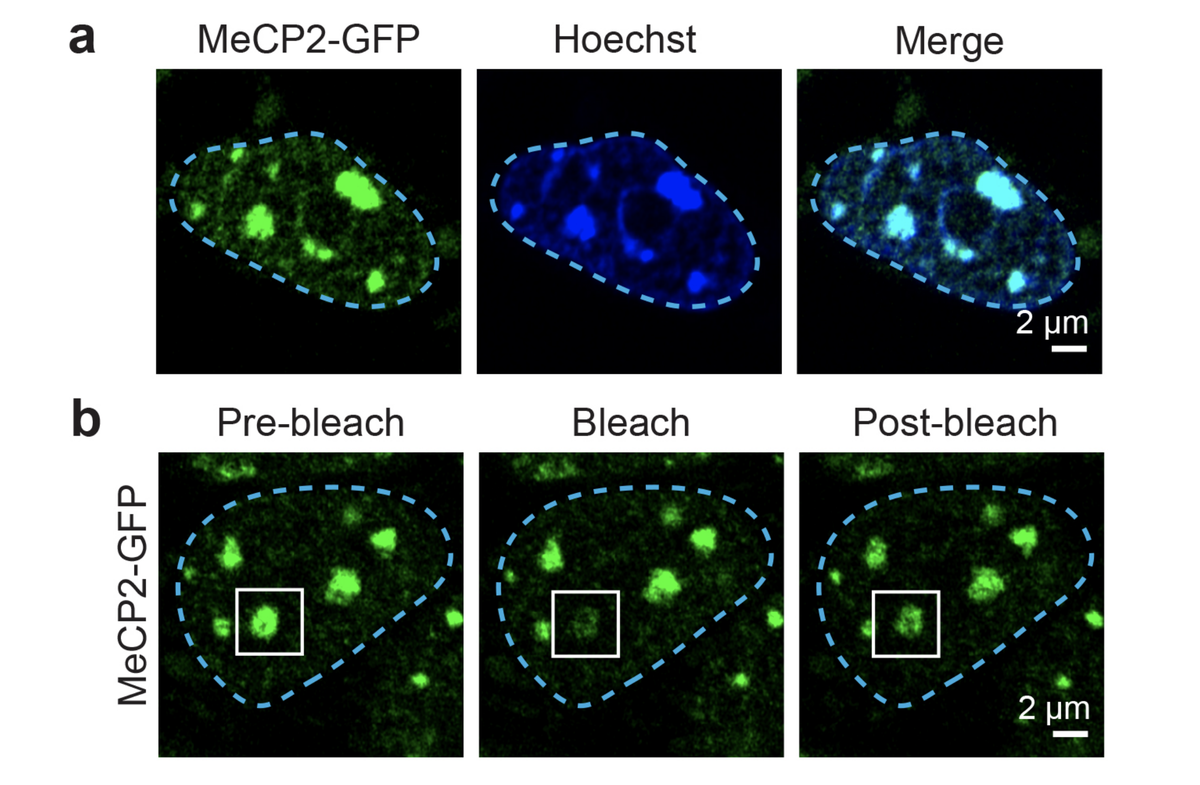
A collaboration between the Young and Jaenisch labs, led by @eliot_coffey and <a href="/Charles_H_Li/">Charles Li</a>, investigates how MeCP2 proteins form phase-separated droplets. Disrupting these droplets can lead to neurodevelopmental disorders like Rett syndrome. Via @nature: go.nature.com/2OKNiVx
Whitehead Institute (@whiteheadinst) 's Twitter Profile Photo

This collaborative work began when Young lab grad student Charles Li was searching for proteins that can form condensates. The search led him to MeCP2, a protein associated with Rett syndrome, which is studied by the Jaenisch lab. Learn more: ow.ly/Snbi50AFsqn

Charles Li (@charles_h_li) 's Twitter Profile Photo

Great fun working with @eliot_coffey on this study. Looking forward to seeing how these findings can be leveraged to benefit patients with Rett syndrome in the future. Huge thanks to the entire team for their amazing contributions to this study! nature.com/articles/s4158…

Dewpoint Therapeutics (@dewpoint_tx) 's Twitter Profile Photo

Great research published in nature exploring the potential for condensate science to open therapeutic pathways for #RettSyndrome. Read more: wi.mit.edu/news/archive/2…. Congratulations to all the authors including Dewpoint co-founder Richard Young and scientist Alicia Zamudio.


Richard Young (@youngricka) 's Twitter Profile Photo

Check out my MIT course this fall on “COVID-19, SARS-CoV-2 and the Pandemic”, taught by leading scientists Tuesdays at 11:30 ET beginning Sept 1. For the syllabus and a link to the live stream, visit bit.ly/700Covid.

Shawn Liu (@shawnliu_lab) 's Twitter Profile Photo

We are seeking a talented postdoc to study the epigenome in brain functions and disorders using cutting-edge technologies. More details at epibrain.info. Inquiry with CV to [email protected].

We are seeking a talented postdoc to study the epigenome in brain functions and disorders using cutting-edge technologies. More details at epibrain.info. Inquiry with CV to sl4738@columbia.edu.
Cell (@cellcellpress) 's Twitter Profile Photo

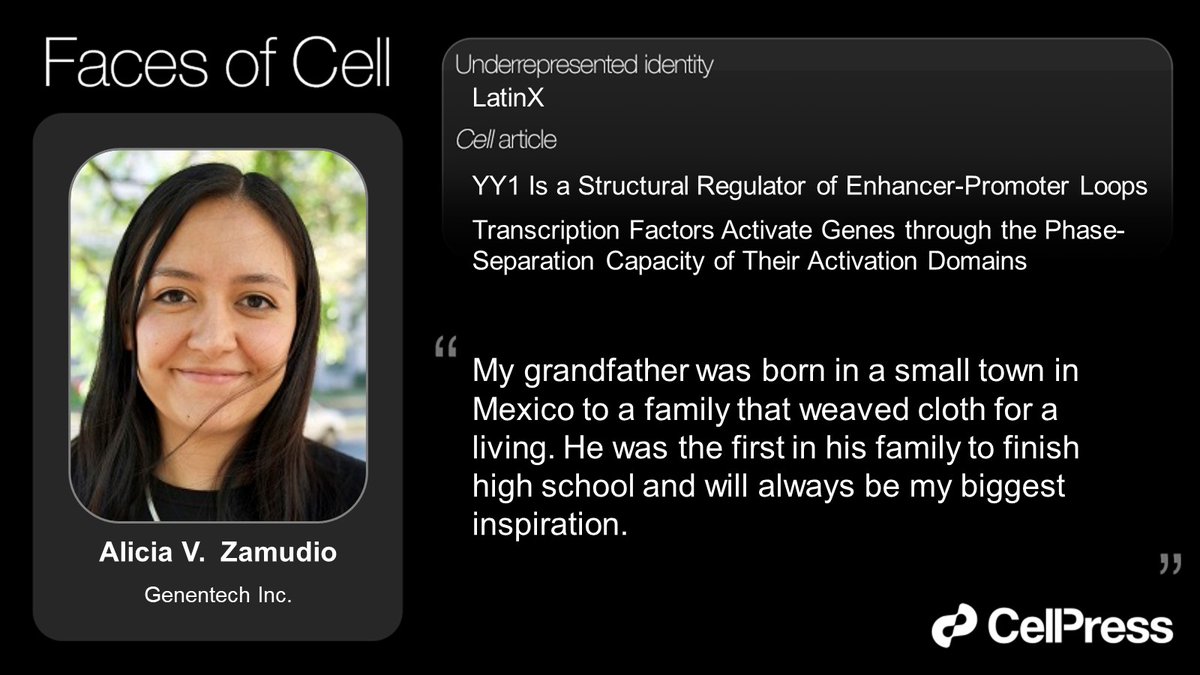
Read the research from Alicia V. Zamudio Alicia Zamudio published in Cell “YY1 Is a Structural Regulator of Enhancer-Promoter Loops” cell.com/cell/fulltext/… #FacesOfCell

Read the research from Alicia V. Zamudio <a href="/AliciaZamudioM/">Alicia Zamudio</a> published in <a href="/CellCellPress/">Cell</a> “YY1 Is a Structural Regulator of Enhancer-Promoter Loops” cell.com/cell/fulltext/… #FacesOfCell
MIT Biology (@mitbiology) 's Twitter Profile Photo

Condensates are membrane-less organelles that compartmentalize proteins and RNA. Here, Ann Boija, Isaac Klein & Richard Young summarize how studying condensates advances our understanding of cancer and could lead to novel therapeutics. Via Cancer Cell: bit.ly/35C5dGU

Condensates are membrane-less organelles that compartmentalize proteins and RNA. Here, <a href="/BoijaAnn/">Ann Boija</a>, <a href="/IsaacAKlein/">Isaac Klein</a> &amp; <a href="/youngricka/">Richard Young</a> summarize how studying condensates advances our understanding of cancer and could lead to novel therapeutics. Via <a href="/Cancer_Cell/">Cancer Cell</a>: bit.ly/35C5dGU