

András Tóth (@andrasdtoth) 's Twitter Profile
András Tóth

@andrasdtoth

MD, addicted to receptor pharmacology

ID: 1257530819545108480

calendar_today05-05-2020 04:41:35

57 Tweet

68 Followers

166 Following

Science Signaling (@scisignal) 's Twitter Profile Photo

A new paper shows that the #endocytosis of #GPCRs such as AT1R can influence biased signaling through #BetaArrestin, suggesting the efficacy of beta-arrestin-binding ligands depends on spatial location as much as on receptor conformation. Semmelweis University scim.ag/7th
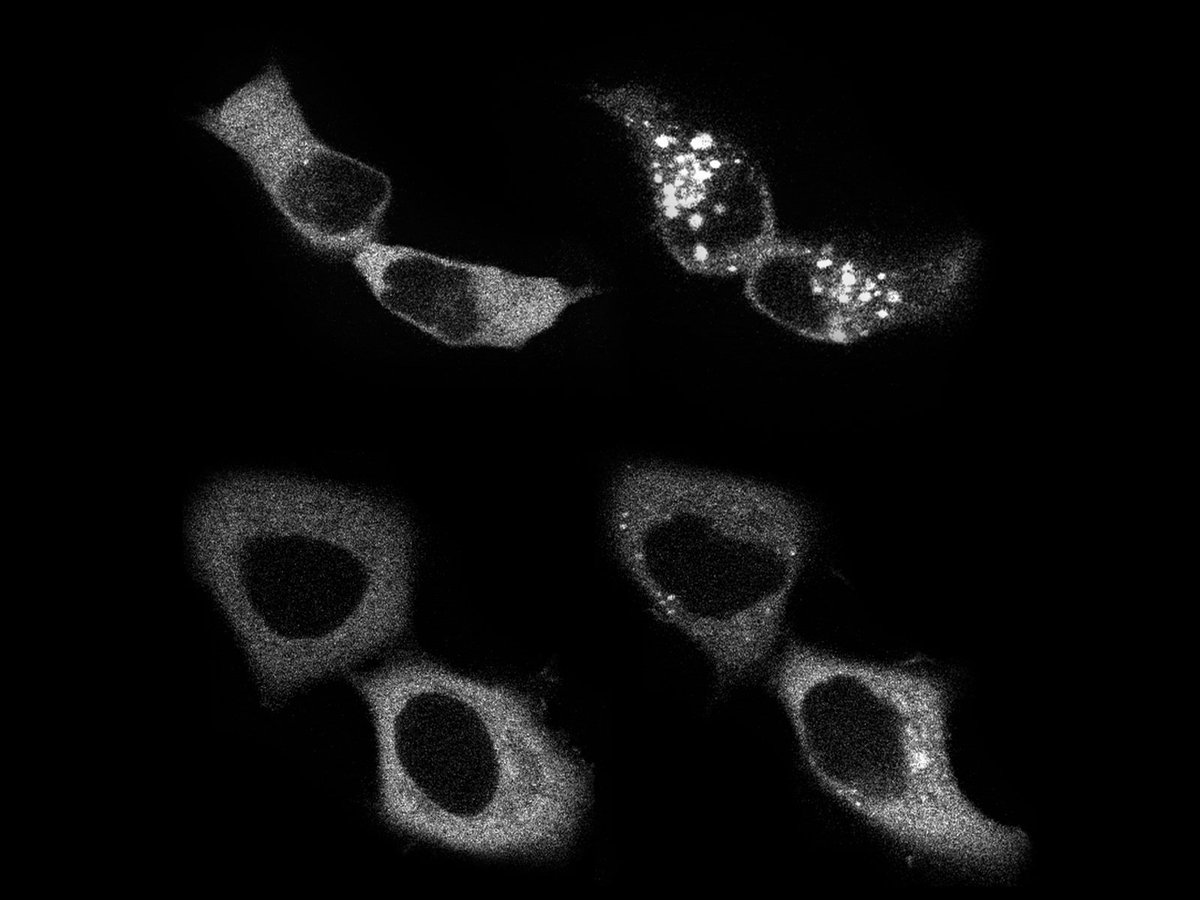
A new paper shows that the #endocytosis of #GPCRs such as AT1R can influence biased signaling through #BetaArrestin, suggesting the efficacy of beta-arrestin-binding ligands depends on spatial location as much as on receptor conformation. <a href="/semmelweishu/">Semmelweis University</a> scim.ag/7th
András Tóth (@andrasdtoth) 's Twitter Profile Photo

Our perspectives on the various aspects of bias in GPCR function, with a special focus on their relevance to the kidney, have been published in Nature Reviews Nephrology. nature.com/articles/s4158…

Bence Szalai (@ben_szalai) 's Twitter Profile Photo

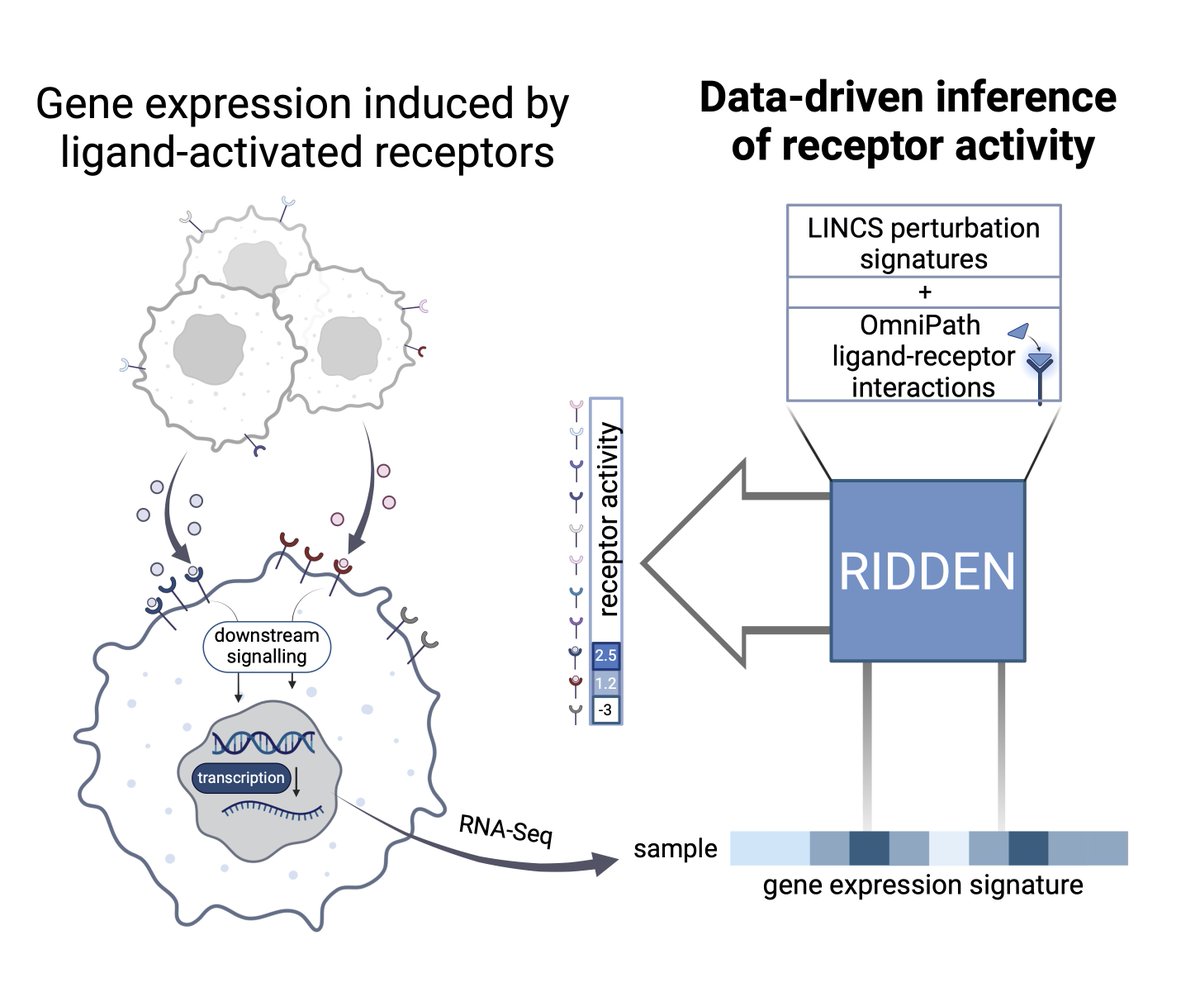
Receptors are essential for cell communication, yet most comp CCC tools focus on ligand/receptor expression, not receptor activity. To address this, we developed RIDDEN, a model that infers activity for 229 receptors from transcriptomics data. 1/ n biorxiv.org/content/10.110… 1/n

Receptors are essential for cell communication, yet most comp CCC tools focus on ligand/receptor expression, not receptor activity. To address this, we developed RIDDEN, a model that infers activity for 229 receptors from transcriptomics data. 1/ n biorxiv.org/content/10.110… 1/n
Arun K. Shukla (@arshukla) 's Twitter Profile Photo

Delighted to share our study on promiscuous chemokine binding at a chemokine receptor, now published in Molecular Cell!!! Molecular basis of promiscuous chemokine binding and structural mimicry at the C-X-C chemokine receptor, CXCR2: Molecular Cell cell.com/molecular-cell…

BryanRoth (@zenbrainest) 's Twitter Profile Photo

We are depositing the following mice to Mutant Mouse Resource & Research Centers Adgrf5-EGFP-CT-IRES-CRE GPR123- EGFP-CT-IRES-CRE GPR124- EGFP-CT-IRES-CRE GPR125- EGFP-CT-IRES-CRE Gpr133-EGFP-CT-IRES-CRE GPR156-IRES-Cre GPR156-mGL-IRES-Cre GPR75-IRES-Cre Bai1 mGL-CT-IRES-Cre GPRC5A- EGFP-CT-IRES-ERT2-CRE 1/2

RCNS MedChem Research Group (@keserulab) 's Twitter Profile Photo

Our new photoaffinity labelling technology (bit.ly/4kiVZ74) is published in Angewandte Chemie. It is more biocompatible, more efficienct, cheaper and easily accessible, even as a late-stage modification. We are working with Enamine Ltd 🇺🇦 to make it available for the community.


RCNS MedChem Research Group (@keserulab) 's Twitter Profile Photo

Our latest review in Eur J Pharm Sci summarizes recent advances (2018–2024) in #fluorescent probe development for Class A #GPCRs, analyzing over 120 newly developed probes covering 60 GPCRs. doi.org/10.1016/j.ejps…

Lauren Slosky (@laurenslosky) 's Twitter Profile Photo

Hooray!! The first major product from the lab is out today nature. Small molecules that bind the GPCR-transducer interface change G protein subtype selectivity in predictable ways, enabling rational drug design.💥 Check it out! 👉nature.com/articles/s4158… 🧵👇

Alejandra Tomás (@tomaslab_icl) 's Twitter Profile Photo

I am delighted to report that our latest paper has now been published in Science Advances: science.org/doi/10.1126/sc… In this study, we generated and characterised a humanised GLP‑1R mouse model carrying the gain‑of‑function A316T variant using CRISPR/Cas9 knock‑in technology.