𝔍𝔦π”ͺ β„­π”―π”žπ”¦π”€ (@10thlegio) 's Twitter Profile
𝔍𝔦π”ͺ β„­π”―π”žπ”¦π”€

@10thlegio

Don't fear the future, you will meet it carrying the same weapons of reason from which you arm yourself against the present. ~ Marcus Aurelius

ID: 3159138050

calendar_today16-04-2015 07:52:51

8,8K Tweet

8,8K Followers

384 Following
𝔍𝔦π”ͺ β„­π”―π”žπ”¦π”€ (@10thlegio) 's Twitter Profile Photo

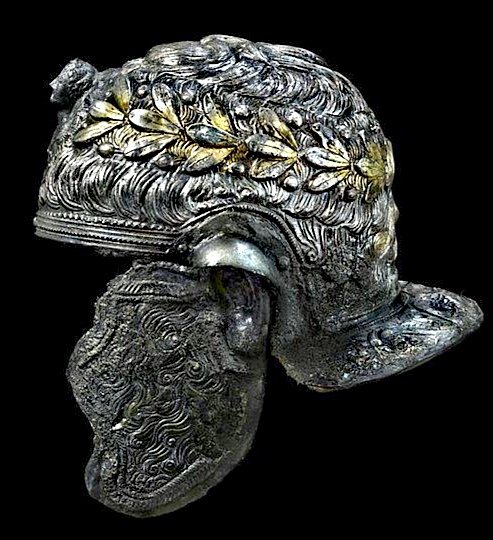
The beautiful 1stC AD Roman cavalry helmet discovered in Xanten, Germany. Part gilded with silver sheathing over an iron core, the helmet is decorated to represent short hair wearing a wreath and would've originally been highly polished, now in the Bonn museum, Germany.

The beautiful 1stC AD Roman cavalry helmet discovered in Xanten, Germany. Part gilded with silver sheathing over an iron core, the helmet is decorated to represent short hair wearing a wreath and would've originally been highly polished, now in the Bonn museum, Germany.
𝔍𝔦π”ͺ β„­π”―π”žπ”¦π”€ (@10thlegio) 's Twitter Profile Photo

A fantastic Roman cavalry helmet discovered in 1796 by a child playing on wasteland in the village of Ribchester, England. The 1/2ndCAD helmet was found buried as part of a hoard in a deep hollow and originally had a crest and pair of trailing streamers attached to the headpiece.

A fantastic Roman cavalry helmet discovered in 1796 by a child playing on wasteland in the village of Ribchester, England. The 1/2ndCAD helmet was found buried as part of a hoard in a deep hollow and originally had a crest and pair of trailing streamers attached to the headpiece.
𝔍𝔦π”ͺ β„­π”―π”žπ”¦π”€ (@10thlegio) 's Twitter Profile Photo

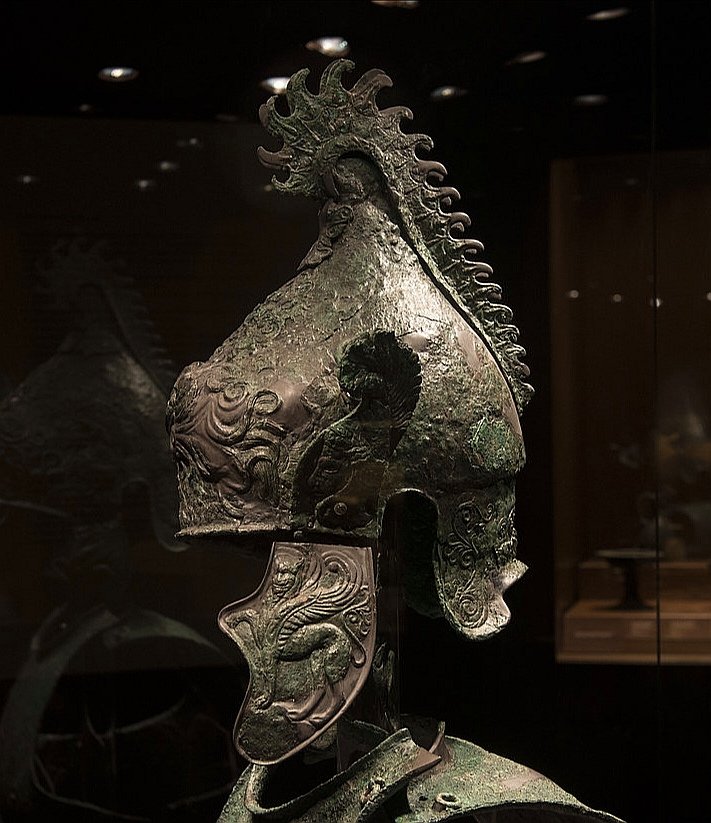
A 4thC BC bronze Etruscan Phrygian type helmet with a brilliant "chainsaw" styled crest found in Cortona, Italy. The helmet has beautifully embossed decorations and wings attached to the sides, it would have been quite a sight when originally highly polished.

A 4thC BC bronze Etruscan Phrygian type helmet with a brilliant "chainsaw" styled crest found in Cortona, Italy. The helmet has beautifully embossed decorations and wings attached to the sides, it would have been quite a sight when originally highly polished.
𝔍𝔦π”ͺ β„­π”―π”žπ”¦π”€ (@10thlegio) 's Twitter Profile Photo

One of the best preserved Greek bronze shields dated between 185-160BC from Pontus, Asia minor. It was probably dedicated as a votive offering following a successful campaign. A Greek inscription reads, ΒΑΣΙΛEΩΣ ΦΑΑΝAΚΟΞ₯ "of King Pharnakes" now in the Getty museum.

One of the best preserved Greek bronze shields dated between 185-160BC from Pontus, Asia minor. It was probably dedicated as a votive offering following a successful campaign. A Greek inscription reads, ΒΑΣΙΛEΩΣ ΦΑΑΝAΚΟΞ₯ "of King Pharnakes" now in the Getty museum.
𝔍𝔦π”ͺ β„­π”―π”žπ”¦π”€ (@10thlegio) 's Twitter Profile Photo

A brilliant example of 2ndC AD Roman scale armour found while excavating at Trimontium fort, Scotland. Made from small brass plates individually linked together to create a flexible yet protective layer, scale armour was a popular design and used widely across the ancient world.

A brilliant example of 2ndC AD Roman scale armour found while excavating at Trimontium fort, Scotland. Made from small brass plates individually linked together to create a flexible yet protective layer, scale armour was a popular design and used widely across the ancient world.
𝔍𝔦π”ͺ β„­π”―π”žπ”¦π”€ (@10thlegio) 's Twitter Profile Photo

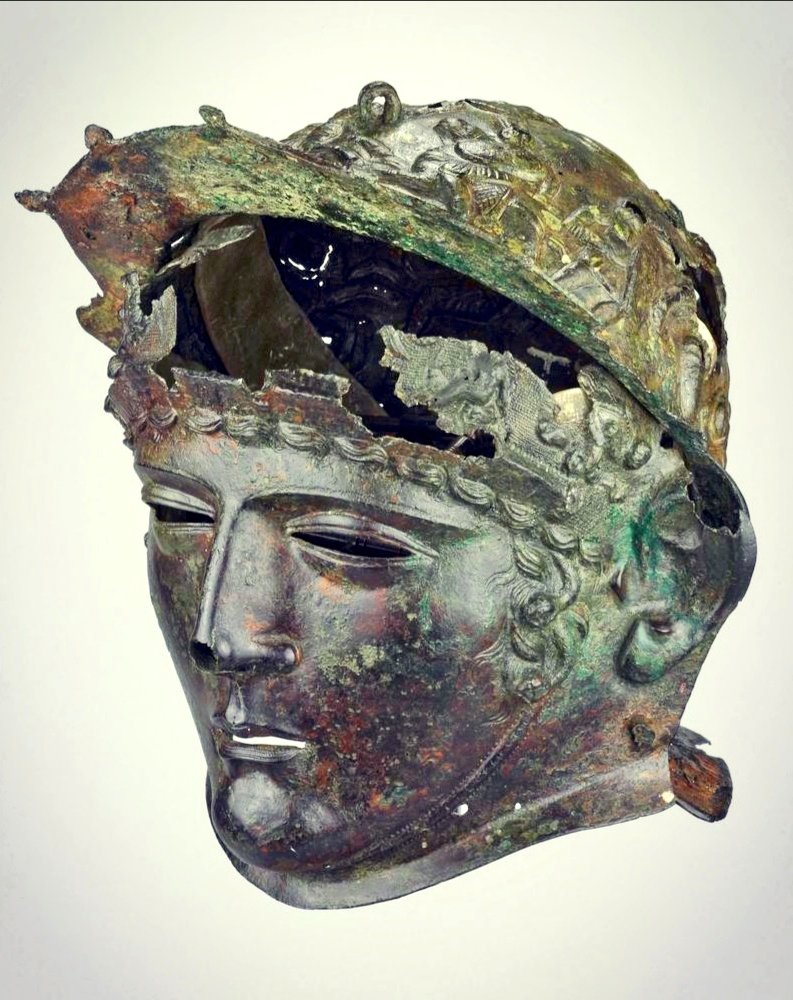
The Crosby Garrett helmet, a 2ndC AD Roman cavalry helmet and face mask discovered in 2010 by a metal detectorist in Cumbria, England. It was found folded and ritually buried near a Roman road. A controversial bidding war saw it auctioned off to a private collector for Β£2.3m.

The Crosby Garrett helmet, a 2ndC AD Roman cavalry helmet and face mask discovered in 2010 by a metal detectorist in Cumbria, England. It was found folded and ritually buried near a Roman road. A controversial bidding war saw it auctioned off to a private collector for Β£2.3m.
𝔍𝔦π”ͺ β„­π”―π”žπ”¦π”€ (@10thlegio) 's Twitter Profile Photo

A surviving Roman camp along with other earthworks built by the legions during the siege of Masada in 73AD. The preservation is due to its high rocky location in the Judaean desert where it has remained for almost 2000 years with gateways, roads, and tent spaces still visible.

A surviving Roman camp along with other earthworks built by the legions during the siege of Masada in 73AD. The preservation is due to its high rocky location in the Judaean desert where it has remained for almost 2000 years with gateways, roads, and tent spaces still visible.
𝔍𝔦π”ͺ β„­π”―π”žπ”¦π”€ (@10thlegio) 's Twitter Profile Photo

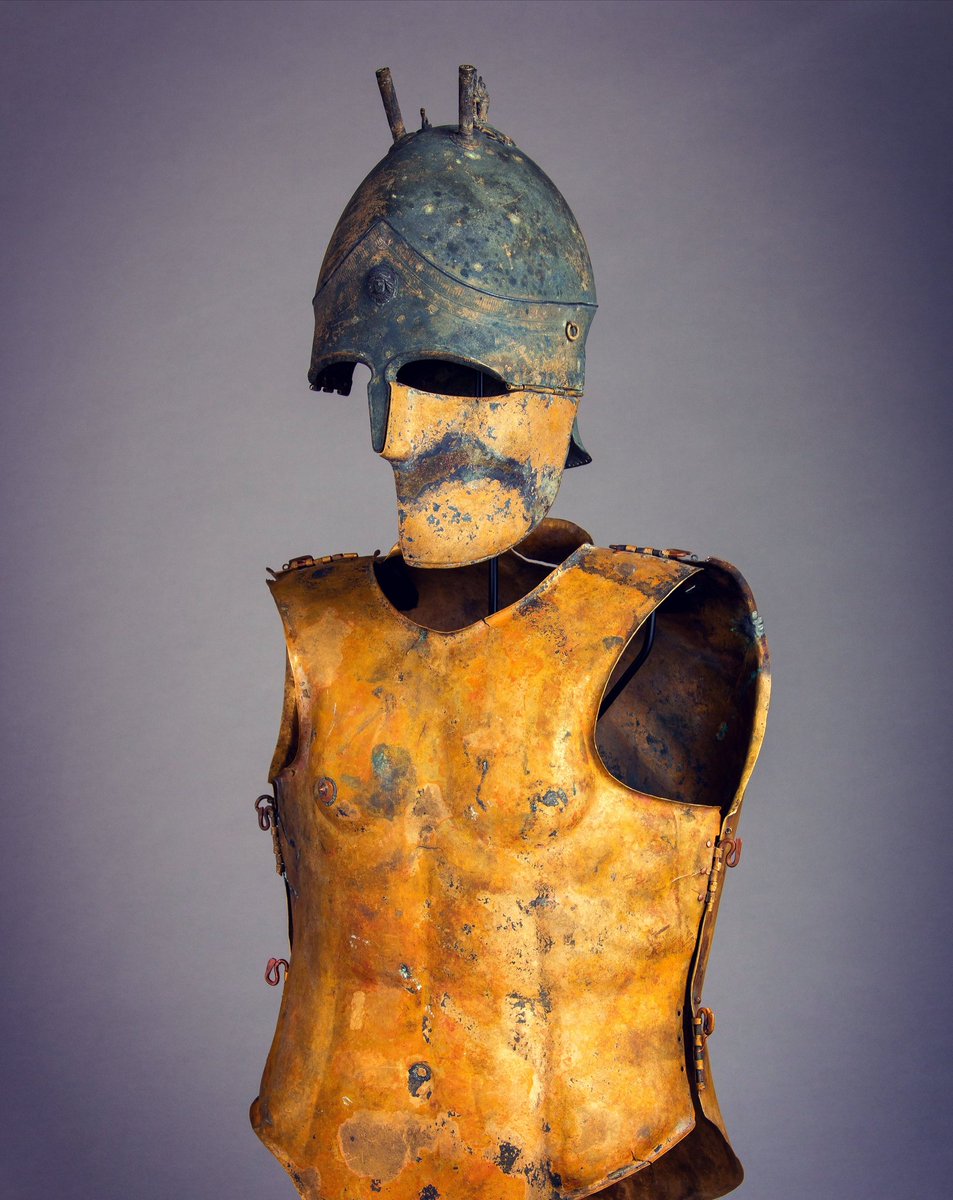
This 5/4thC BC Etruscan panoply is one of the finest examples to survive from the ancient world. The beautiful Italo-Chalcidian type helmet has unique hinged cheekpieces that enclosed the face and were made to closely follow the contours of the warrior's cheekbones and jawline.

This 5/4thC BC Etruscan panoply is one of the finest examples to survive from the ancient world. The beautiful Italo-Chalcidian type helmet has unique hinged cheekpieces that enclosed the face and were made to closely follow the contours of the warrior's cheekbones and jawline.
𝔍𝔦π”ͺ β„­π”―π”žπ”¦π”€ (@10thlegio) 's Twitter Profile Photo

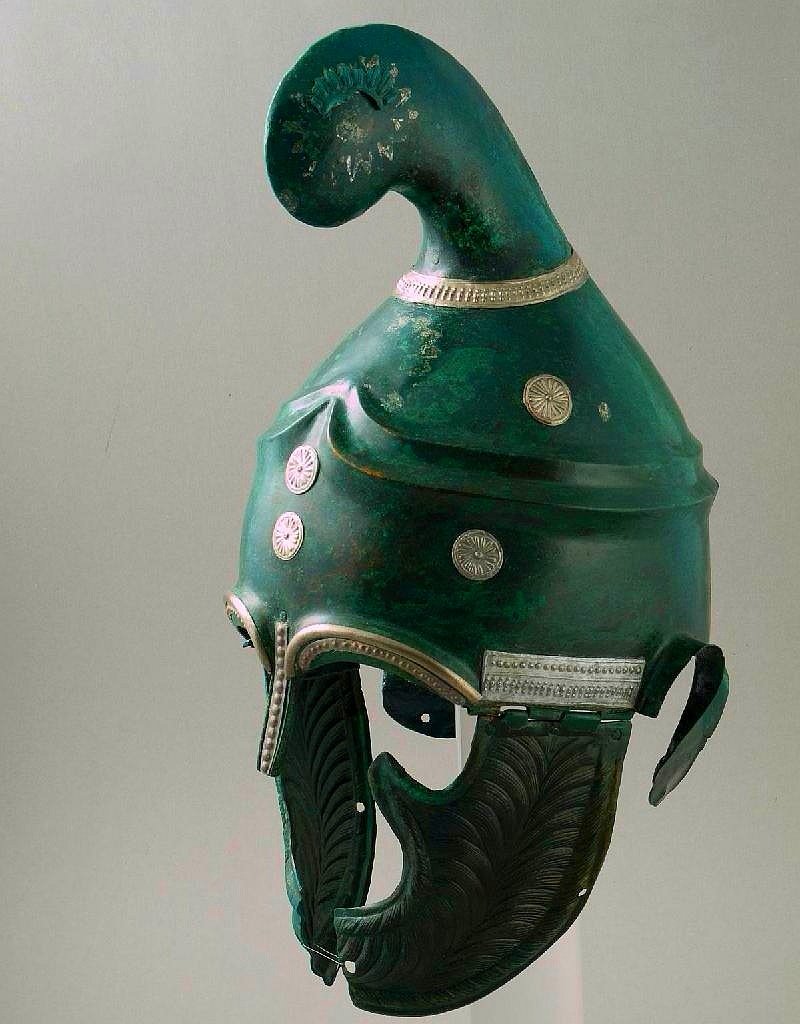
A 4thC BC bronze Thracian helmet discovered by chance in 1997 at the village of Pletena, Bulgaria. Decorated with silver bands and eyebrows with bearded patterns on the cheekpieces and a large Phrygian style crest. Now in the national history museum, Sofia.

A 4thC BC bronze Thracian helmet discovered by chance in 1997 at the village of Pletena, Bulgaria. Decorated with silver bands and eyebrows with bearded patterns on the cheekpieces and a large Phrygian style crest. Now in the national history museum, Sofia.
𝔍𝔦π”ͺ β„­π”―π”žπ”¦π”€ (@10thlegio) 's Twitter Profile Photo

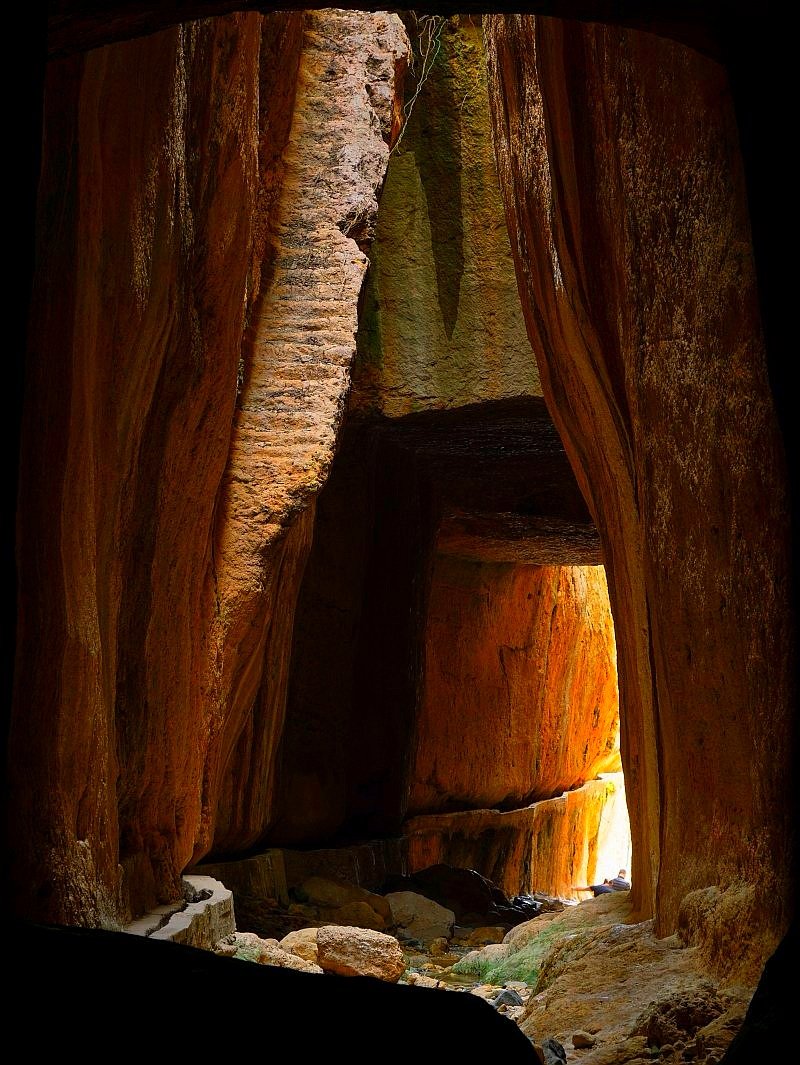
The incredible Vaspasianus Titus tunnel, a 1.4km long Roman engineering marvel built under orders of emperor Vaspasian to divert flood waters away from the city of Seleuceia Pieria, Turkey. Cut through solid rock by Roman legions and slaves it took over 50years to complete.

The incredible Vaspasianus Titus tunnel, a 1.4km long Roman engineering marvel built under orders of emperor Vaspasian to divert flood waters away from the city of Seleuceia Pieria, Turkey. Cut through solid rock by Roman legions and slaves it took over 50years to complete.
𝔍𝔦π”ͺ β„­π”―π”žπ”¦π”€ (@10thlegio) 's Twitter Profile Photo

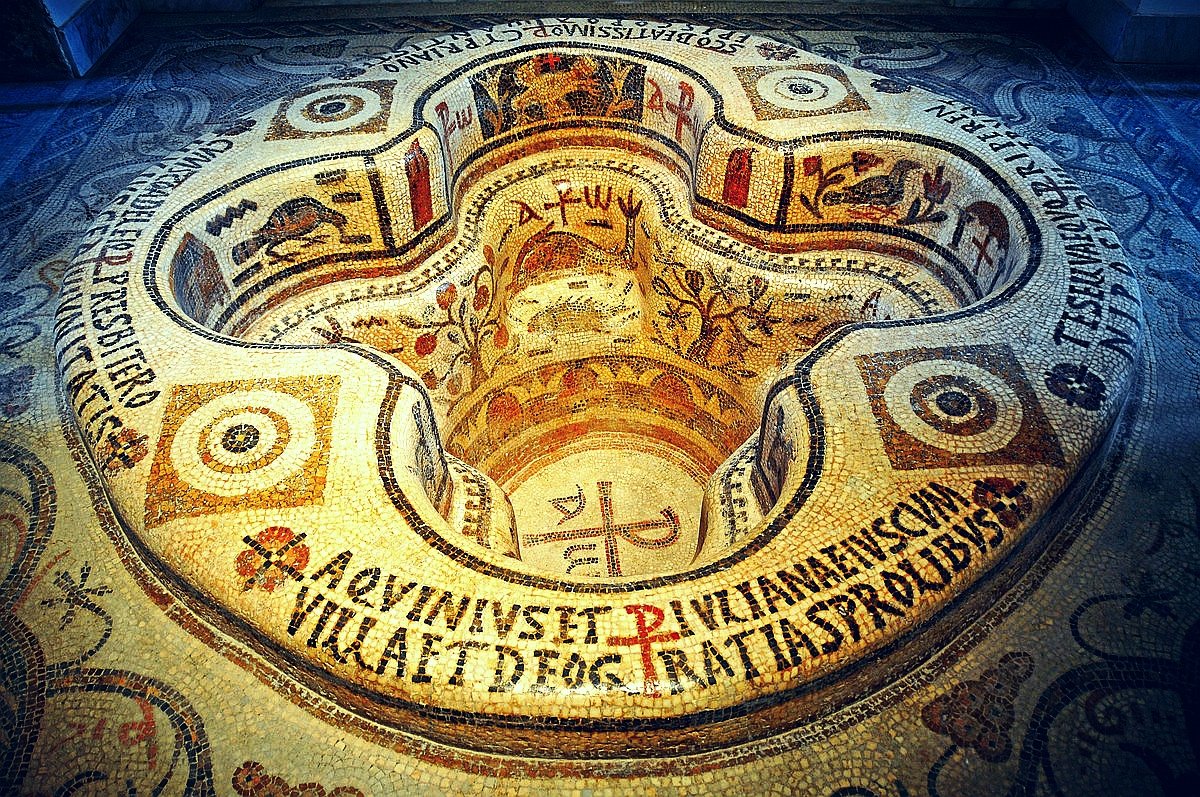
A beautiful 6thC AD baptismal font recovered from the ruins of a basilica in Demna, Tunisia. Richly decorated with some of the most fantastic surviving mosaic work, the fragile font was rescued and now sits as a centre piece in the Bardo national museum, Tunis.

A beautiful 6thC AD baptismal font recovered from the ruins of a basilica in Demna, Tunisia. Richly decorated with some of the most fantastic surviving mosaic work, the fragile font was rescued and now sits as a centre piece in the Bardo national museum, Tunis.
𝔍𝔦π”ͺ β„­π”―π”žπ”¦π”€ (@10thlegio) 's Twitter Profile Photo

Rome's Atlantis, the sunken city of Baia on the Gulf of Naples, Italy. Due to volcanic activity over the centuries the beautiful mosaic floors, sculptures and villas now sit meters below the surface of the Mediterranean sea. Image credit [Edoardo Ruspantini]

Rome's Atlantis, the sunken city of Baia on the Gulf of Naples, Italy. Due to volcanic activity over the centuries the beautiful mosaic floors, sculptures and villas now sit meters below the surface of the Mediterranean sea. Image credit [Edoardo Ruspantini]
𝔍𝔦π”ͺ β„­π”―π”žπ”¦π”€ (@10thlegio) 's Twitter Profile Photo

Wheel ruts worn into the streets of Pompeii by the passage of thousands of carts over many years. Some streets barely wide enough for a single cart suggest the ancient city probably had some kind of one way system.

Wheel ruts worn into the streets of Pompeii by the passage of thousands of carts over many years. Some streets barely wide enough for a single cart suggest the ancient city probably had some kind of one way system.
𝔍𝔦π”ͺ β„­π”―π”žπ”¦π”€ (@10thlegio) 's Twitter Profile Photo

A 4thC BC bronze Illyrian type helmet recently discovered during excavations of a warrior's tomb in Croatia. Originally highly polished and decorated with a large crest fitted on top, the Illyrian type was a popular design for many centuries. Replica by Res-bellica.

A 4thC BC bronze Illyrian type helmet recently discovered during excavations of a warrior's tomb in Croatia. Originally highly polished and decorated with a large crest fitted on top, the Illyrian type was a popular design for many centuries. Replica by Res-bellica.
𝔍𝔦π”ͺ β„­π”―π”žπ”¦π”€ (@10thlegio) 's Twitter Profile Photo

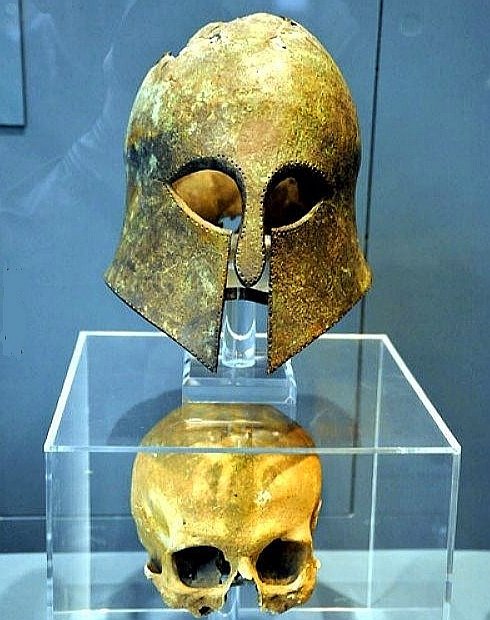
A 5thC BC corinthian helmet with the skull of a warrior inside supposedly found at the Battlefield of Marathon, Greece. The 192 Athenians killed in the battle were cremated, so there's a chance it belonged to one of the 11 Plataean allies who also fell during the fight in 490BC.

A 5thC BC corinthian helmet with the skull of a warrior inside supposedly found at the Battlefield of Marathon, Greece. The 192 Athenians killed in the battle were cremated, so there's a chance it belonged to one of the 11 Plataean allies who also fell during the fight in 490BC.