Yangjun Ruan (@yangjunr) 's Twitter Profile
Yangjun Ruan

@yangjunr

Visiting @stanfordAILab | ML Ph.D. student @UofT & @VectorInst

ID: 1356430737524858883

linkhttp://www.cs.toronto.edu/~yjruan/ calendar_today02-02-2021 02:34:36

212 Tweet

919 Followers

690 Following

Lilian Weng (@lilianweng) 's Twitter Profile Photo

Giving your models more time to think before prediction, like via smart decoding, chain-of-thoughts reasoning, latent thoughts, etc, turns out to be quite effective for unblocking the next level of intelligence. New post is here :) “Why we think”: lilianweng.github.io/posts/2025-05-…

CLS (@chengleisi) 's Twitter Profile Photo

Are AI scientists already better than human researchers? We recruited 43 PhD students to spend 3 months executing research ideas proposed by an LLM agent vs human experts. Main finding: LLM ideas result in worse projects than human ideas.

Are AI scientists already better than human researchers?

We recruited 43 PhD students to spend 3 months executing research ideas proposed by an LLM agent vs human experts.

Main finding: LLM ideas result in worse projects than human ideas.
Mira Murati (@miramurati) 's Twitter Profile Photo

Thinking Machines Lab exists to empower humanity through advancing collaborative general intelligence. We're building multimodal AI that works with how you naturally interact with the world - through conversation, through sight, through the messy way we collaborate. We're

Chris J. Maddison (@cjmaddison) 's Twitter Profile Photo

What makes a great scientist? Most AI scientist benchmarks miss the key skill: designing and analyzing experiments. 🧪 We're introducing SciGym: the first simulated lab environment to benchmark #LLM on experimental design and analysis capabilities. #AI4SCIENCE #ICML25

What makes a great scientist? Most AI scientist benchmarks miss the key skill: designing and analyzing experiments.

🧪 We're introducing SciGym: the first simulated lab environment to benchmark #LLM on experimental design and analysis capabilities.
#AI4SCIENCE #ICML25
LLM Evals Workshop @NeurIPS (@llm_eval) 's Twitter Profile Photo

We are happy to announce our NeurIPS Conference workshop on LLM evaluations! Mastering LLM evaluation is no longer optional -- it's fundamental to building reliable models. We'll tackle the field's most pressing evaluation challenges. For details: sites.google.com/corp/view/llm-…. 1/3
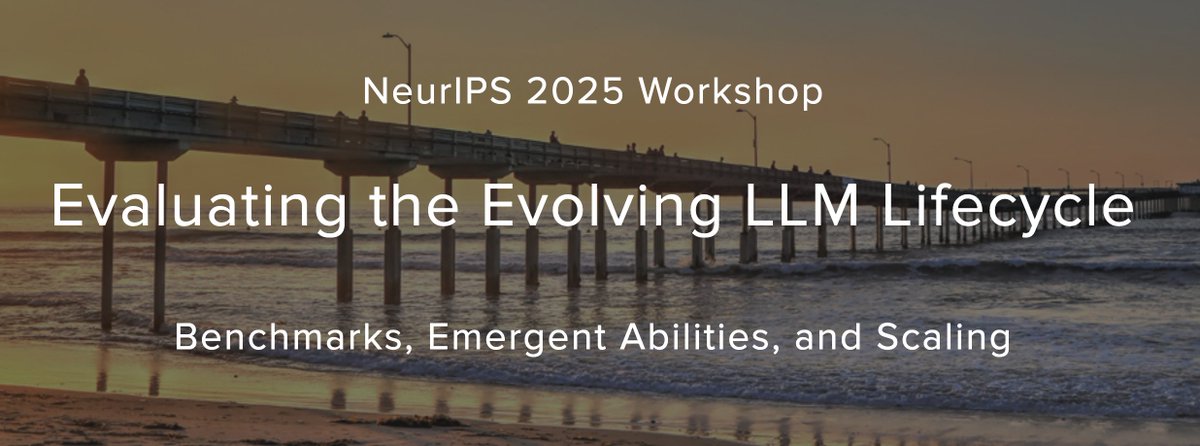

We are happy to announce our <a href="/NeurIPSConf/">NeurIPS Conference</a> workshop on LLM evaluations! 

Mastering LLM evaluation is no longer optional -- it's fundamental to building reliable models. We'll tackle the field's most pressing evaluation challenges. 

For details: sites.google.com/corp/view/llm-….  1/3
Ken Liu (@kenziyuliu) 's Twitter Profile Photo

New paper! We explore a radical paradigm for AI evals: assessing LLMs on *unsolved* questions. Instead of contrived exams where progress ≠ value, we eval LLMs on organic, unsolved problems via reference-free LLM validation & community verification. LLMs solved ~10/500 so far:

New paper! We explore a radical paradigm for AI evals: assessing LLMs on *unsolved* questions.

Instead of contrived exams where progress ≠ value, we eval LLMs on organic, unsolved problems via reference-free LLM validation &amp; community verification. LLMs solved ~10/500 so far:
Yanzhe Zhang (@stevenyzzhang) 's Twitter Profile Photo

Introducing Generative Interfaces - a new paradigm beyond chatbots. We generate interfaces on the fly to better facilitate LLM interaction, so no more passive reading of long text blocks. Adaptive and Interactive: creates the form that best adapts to your goals and needs!

Thinking Machines (@thinkymachines) 's Twitter Profile Photo

Today Thinking Machines Lab is launching our research blog, Connectionism. Our first blog post is “Defeating Nondeterminism in LLM Inference” We believe that science is better when shared. Connectionism will cover topics as varied as our research is: from kernel numerics to

Today Thinking Machines Lab is launching our research blog, Connectionism. Our first blog post is “Defeating Nondeterminism in LLM Inference”

We believe that science is better when shared. Connectionism will cover topics as varied as our research is: from kernel numerics to
Suhas Kotha (@kothasuhas) 's Twitter Profile Photo

Since compute grows faster than the web, we think the future of pre-training lies in the algorithms that will best leverage ♾ compute We find simple recipes that improve the asymptote of compute scaling laws to be 5x data efficient, offering better perf w/ sufficient compute

Since compute grows faster than the web, we think the future of pre-training lies in the algorithms that will best leverage ♾ compute

We find simple recipes that improve the asymptote of compute scaling laws to be 5x data efficient, offering better perf w/ sufficient compute
Zitong Yang (@zitongyang0) 's Twitter Profile Photo

📜 Paper on new pretraining paradigm: Synthetic Bootstrapped Pretraining SBP goes beyond next-token supervision in a single document by leveraging inter-document correlations to synthesize new data for training — no teacher needed. Validation: 1T data + 3B model from scratch.🧵

📜 Paper on new pretraining paradigm: Synthetic Bootstrapped Pretraining

SBP goes beyond next-token supervision in a single document by leveraging inter-document correlations to synthesize new data for training — no teacher needed. Validation: 1T data + 3B model from scratch.🧵
Thinking Machines (@thinkymachines) 's Twitter Profile Photo

Efficient training of neural networks is difficult. Our second Connectionism post introduces Modular Manifolds, a theoretical step toward more stable and performant training by co-designing neural net optimizers with manifold constraints on weight matrices.

Efficient training of neural networks is difficult. Our second Connectionism post introduces Modular Manifolds, a theoretical step toward more stable and performant training by co-designing neural net optimizers with manifold constraints on weight matrices.
Thinking Machines (@thinkymachines) 's Twitter Profile Photo

LoRA makes fine-tuning more accessible, but it's unclear how it compares to full fine-tuning. We find that the performance often matches closely---more often than you might expect. In our latest Connectionism post, we share our experimental results and recommendations for LoRA.

LoRA makes fine-tuning more accessible, but it's unclear how it compares to full fine-tuning. We find that the performance often matches closely---more often than you might expect. In our latest Connectionism post, we share our experimental results and recommendations for LoRA.
Thinking Machines (@thinkymachines) 's Twitter Profile Photo

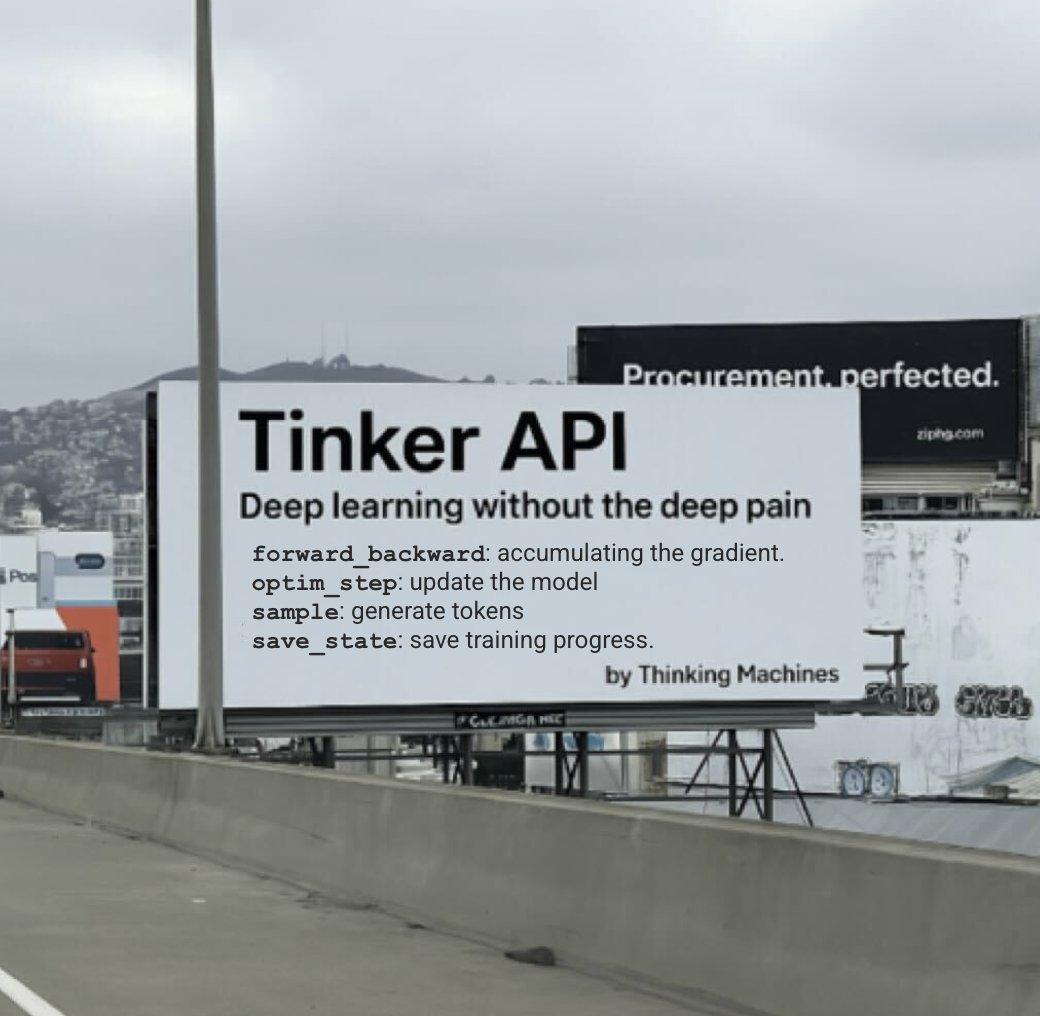
Introducing Tinker: a flexible API for fine-tuning language models. Write training loops in Python on your laptop; we'll run them on distributed GPUs. Private beta starts today. We can't wait to see what researchers and developers build with cutting-edge open models!

Introducing Tinker: a flexible API for fine-tuning language models.

Write training loops in Python on your laptop; we'll run them on distributed GPUs.

Private beta starts today. We can't wait to see what researchers and developers build with cutting-edge open models!
Lilian Weng (@lilianweng) 's Twitter Profile Photo

GPUs are expensive and setting up the infrastructure to make GPUs work for you properly is complex, making experimentation on cutting-edge models challenging for researchers and ML practitioners. Providing high quality research tooling is one of the most effective ways to

GPUs are expensive and setting up the infrastructure to make GPUs work for you properly is complex, making experimentation on cutting-edge models challenging for researchers and ML practitioners. 

Providing high quality research tooling is one of the most effective ways to
Yangjun Ruan (@yangjunr) 's Twitter Profile Photo

Building infra for R&D is essential but painful and often repetitive (when not publicly shared). Tinker removes this layer of complexity for you and lets you focus on your actual ideas!

John Schulman (@johnschulman2) 's Twitter Profile Photo

Fine-tuning APIs are becoming more powerful and widespread, but they're harder to safeguard against misuse than fixed-weight sampling APIs. Excited to share a new paper: Detecting Adversarial Fine-tuning with Auditing Agents (arxiv.org/abs/2510.16255). Auditing agents search

Thinking Machines (@thinkymachines) 's Twitter Profile Photo

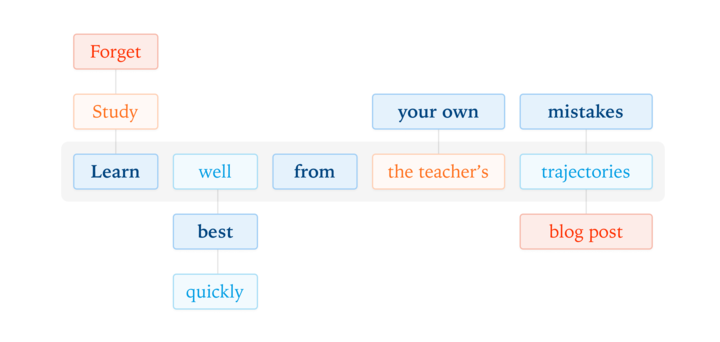
Our latest post explores on-policy distillation, a training approach that unites the error-correcting relevance of RL with the reward density of SFT. When training it for math reasoning and as an internal chat assistant, we find that on-policy distillation can outperform other

Our latest post explores on-policy distillation, a training approach that unites the error-correcting relevance of RL with the reward density of SFT. When training it for math reasoning and as an internal chat assistant, we find that on-policy distillation can outperform other