Hrithik Ravi (@r1pster7) 's Twitter Profile
Hrithik Ravi

@r1pster7

Theoretical ML and LLMs at UMich

ID: 1381715373259550720

calendar_today12-04-2021 21:06:43

273 Tweet

17 Takipçi

130 Takip Edilen

Andrew Gordon Wilson (@andrewgwils) 's Twitter Profile Photo

We need to do research, to go back to ideas, yet virtually no frontier labs have the courage to step away from the rat race to do meaningful research.

Hrithik Ravi (@r1pster7) 's Twitter Profile Photo

I’m applying to PhD programs and will be at the NeurIPS workshops! I’m interested in generalization theory, interpretability, and reasoning. Hope to meet profs and students working in these areas! Please see my website (hrithikravi.github.io) for more details about my

Dwarkesh Patel (@dwarkesh_sp) 's Twitter Profile Photo

I totally buy that AI has made you more productive. And I buy that if other lawyers were more agentic, they could also get more productivity gains from AI. But I think you're making my point for me. The reason it takes lawyers all this schlep and agency to integrate these models

I totally buy that AI has made you more productive. And I buy that if other lawyers were more agentic, they could also get more productivity gains from AI.

But I think you're making my point for me. The reason it takes lawyers all this schlep and agency to integrate these models
Francois Chaubard (@francoischauba1) 's Twitter Profile Photo

Last night, Ankit Gupta @ NeurIPS and I hosted a great dinner with 14 professors at #NeurIPS2025 from leading academic labs across the US, and many cited compute in academia as "abhorrent". Out of curiosity I just pulled these stats. This is insane. To do meaningful AI research today you need


Last night, <a href="/agupta/">Ankit Gupta @ NeurIPS</a> and I hosted a great dinner with 14 professors at #NeurIPS2025 from leading academic labs across the US, and many cited compute in academia as "abhorrent". Out of curiosity I just pulled these stats. This is insane. To do meaningful AI research today you need
@jacobparis.com ❖ (@jacobmparis) 's Twitter Profile Photo

adding floats with different precisions gives different results depending on element order (a+b)+c !== a+(b+c) GPUs batch and schedule operations based on workload, which adds variance to element order therefore outputs will vary even with 0 temp x.com/SebbeBroman/st…

Science Magazine (@sciencemagazine) 's Twitter Profile Photo

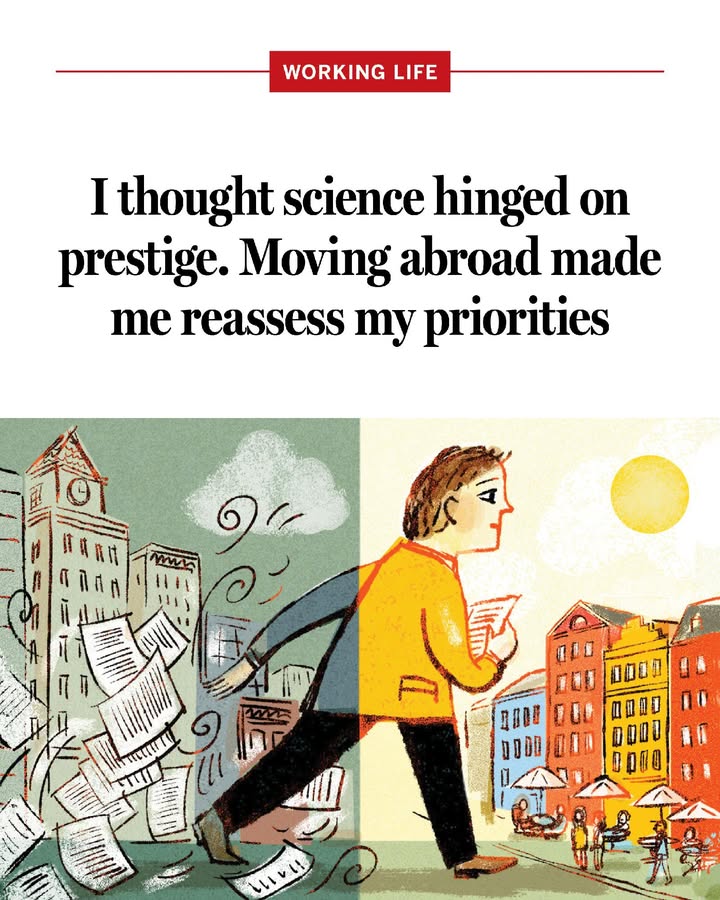
"I still remember the first morning I biked to university in Copenhagen, the February air reddening my cheeks. I was thrilled to be on an exchange semester overseas, but I saw it as just a detour from my imagined career path. I didn’t realize I was already pedaling toward a

"I still remember the first morning I biked to university in Copenhagen, the February air reddening my cheeks. I was thrilled to be on an exchange semester overseas, but I saw it as just a detour from my imagined career path. I didn’t realize I was already pedaling toward a
François Fleuret (@francoisfleuret) 's Twitter Profile Photo

I repeat: We have to split lectures / practice / exams and people should be allowed to pick and mix whatever elements from whatever academic institution. In particular universities must allow LLM-self-taught people to get "real world credentials".

Peyman Milanfar (@docmilanfar) 's Twitter Profile Photo

Claude Shannon revolutionized the world not by just grinding, but also by playing. Research demands the confidence to "waste time" pursuing the new and unknown. His work underpins everything from hardware to AI. Had he lived to see the era he built, he’d be a Nobel laureate.

Claude Shannon revolutionized the world not by just grinding, but also by playing. Research demands the confidence to "waste time" pursuing the new and unknown.

His work underpins everything from hardware to AI. Had he lived to see the era he built, he’d be a Nobel laureate.
Markus J. Buehler (@profbuehlermit) 's Twitter Profile Photo

If a model can not afford to simulate the atoms, it is forced to invent the 'chemistry' to predict the outcome. Check out this fascinating new preprint that provides an information theoretical foundation along with quantifiable measures "From Entropy to Epiplexity" by Marc Finzi


Jonathan Gorard (@getjonwithit) 's Twitter Profile Photo

In that moment, I decided to stop shutting off my curiosity. I would become an applied mathematician, follow my random intellectual interests (wherever they took me) without worrying about whether they were "pure" enough. One of the best things that ever happened to me. (10/10)

Ganesh UOR (@ganeshuor) 's Twitter Profile Photo

On 15 January, 1950, John Nash published a one-page paper, “Equilibrium Points in N-Person Games,” in the Proceedings of the National Academy of Sciences. Based on his PhD work and citing only two references, it introduced the Nash equilibrium and later earned him the Nobel Prize

On 15 January, 1950, John Nash published a one-page paper, “Equilibrium Points in N-Person Games,” in the Proceedings of the National Academy of Sciences. Based on his PhD work and citing only two references, it introduced the Nash equilibrium and later earned him the Nobel Prize