Kjell Henry Knivsflå (@kjellknivsfla) 's Twitter Profile
Kjell Henry Knivsflå

@kjellknivsfla

I am interested in financial statement analysis and valuation

ID: 1248256702539075590

linkhttps://www.nhh.no/en/employees/faculty/kjell-henry-knivsfla/#tab1 calendar_today09-04-2020 14:30:00

175 Tweet

52 Takipçi

147 Takip Edilen

NBER (@nberpubs) 's Twitter Profile Photo

Analysis of the q-factor model – an empirical implementation of the investment Capital Asset Pricing Model, from Lu Zhang nber.org/papers/w26538

Analysis of the q-factor model – an empirical implementation of the investment Capital Asset Pricing Model, from <a href="/zhanglu_osu/">Lu Zhang</a> nber.org/papers/w26538
Aswath Damodaran (@aswathdamodaran) 's Twitter Profile Photo

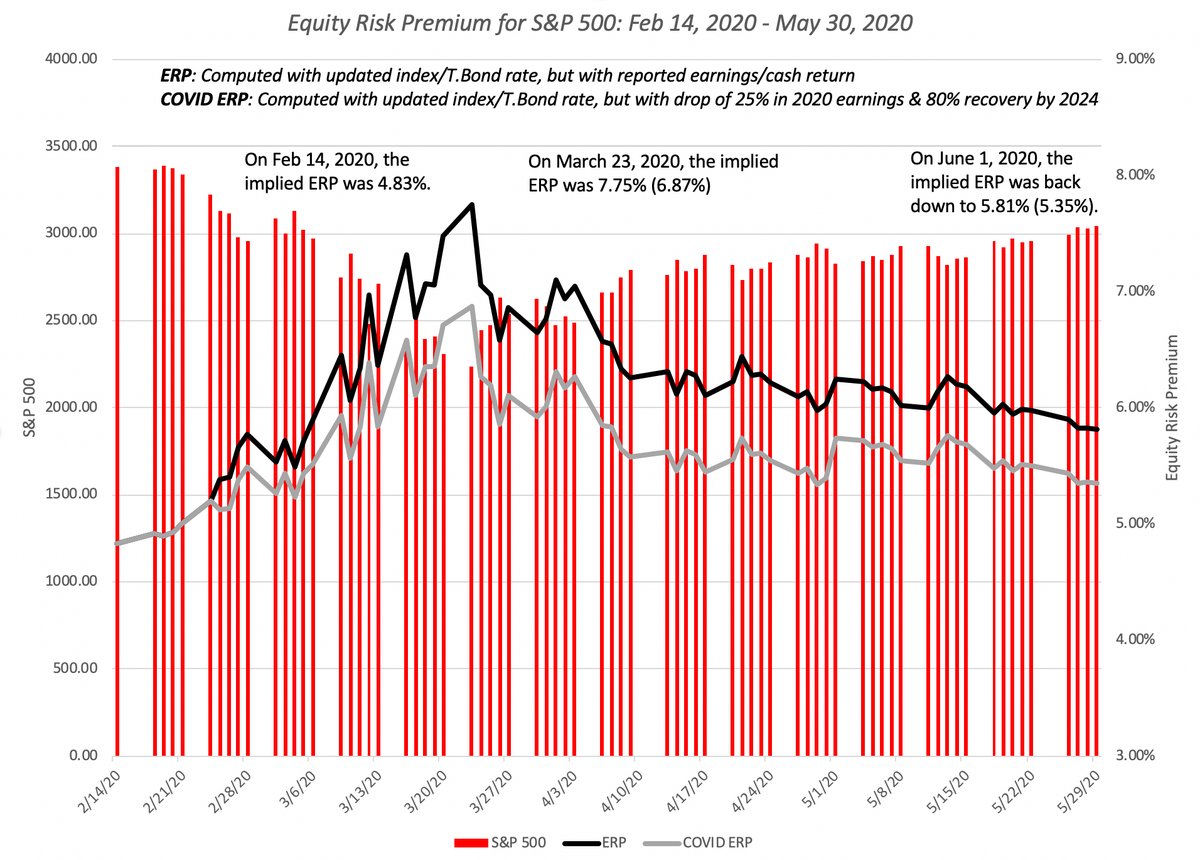
As May draws to a close, US indices are moving back up to pre-COVID levels, bad macroeconomic news notwithstanding. My day-to-day estimates of the ERP for the S&P 500 reflect this convergence: Website: damodaran.com Spreadsheet: stern.nyu.edu/~adamodar/pc/E…

As May draws to a close, US indices are moving back up to pre-COVID levels, bad macroeconomic news notwithstanding. My day-to-day estimates of the ERP for the S&amp;P 500 reflect this convergence: Website: damodaran.com Spreadsheet: stern.nyu.edu/~adamodar/pc/E…
McKinsey & Company (@mckinsey) 's Twitter Profile Photo

What impact will #COVID19 have on company valuations? Tim Koller, lead author of VALUATION, discusses the role coronavirus, uncertainty, and market volatility will play on #financial valuations now and in the future. To learn more go to mck.co/36NJafV.

McKinsey & Company (@mckinsey) 's Twitter Profile Photo

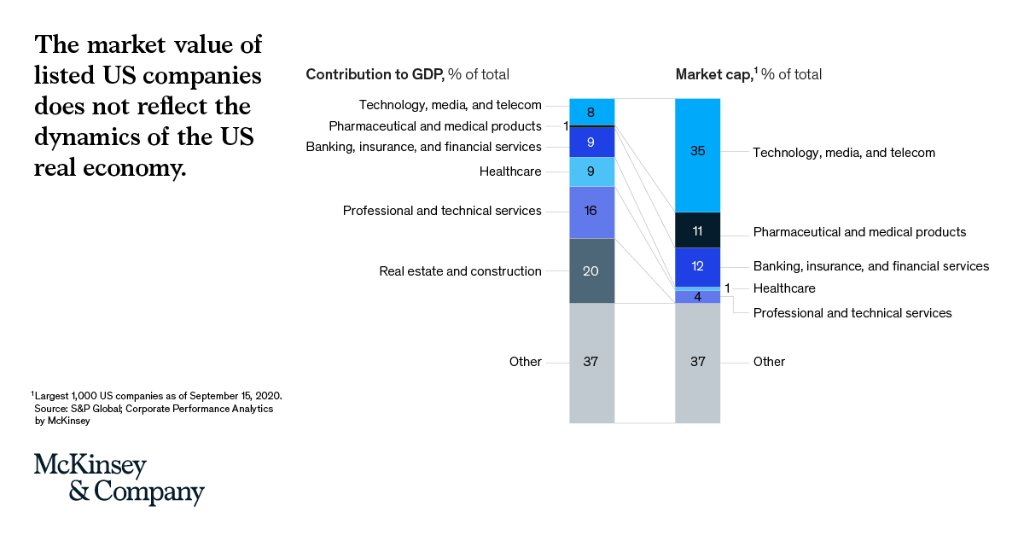
Has the stock market lost touch with reality? As we've seen in this pandemic, the overall stock market can do well even when employment and GDP are severely depressed. Here's why 👉 mck.co/3lRxoap

Has the stock market lost touch with reality? 

As we've seen in this pandemic, the overall stock market can do well even when employment and GDP are severely depressed. Here's why 👉 mck.co/3lRxoap
Kjell Henry Knivsflå (@kjellknivsfla) 's Twitter Profile Photo

Suppose there is a wealth tax on the book value of equity. Should the equity owners invest in equipment or labor doing the same job? Example: The free cash flow from the investment is -100, 70, 60 in both cases. -100 is the cost of the equipment or the upfront payment for labor.

Kjell Henry Knivsflå (@kjellknivsfla) 's Twitter Profile Photo

1) Financial statements - equipment Year 0 1 2 FCF -100 70 60 - Dep -100 50 50 = Income 0 20 10 - Div -100 70 60 = D equity 100 -50 -50 Assets 100 50 0 Equity 100 50 0

Kjell Henry Knivsflå (@kjellknivsfla) 's Twitter Profile Photo

2) Financial statements - labor Year 0 1 2 FCF -100 70 60 - Dep 0 0 0 = Income -100 70 60 - Div -100 70 60 = D equity 0 0 0 Assets 0 0 0 Equity 0 0 0

Kjell Henry Knivsflå (@kjellknivsfla) 's Twitter Profile Photo

The return on the investment is 20% in both cases before the wealth tax After a wealth tax of say 1% on book equity, the cash flow is -101, 69,5; 60 for the investment in equipment. The return is 19,6% After the wealth tax, the return on the labor investment is still 20%

Kjell Henry Knivsflå (@kjellknivsfla) 's Twitter Profile Photo

Conclusion and criticism: The welth tax makes - in this case - investments in labor relatively more profitable than equipment Someone may claim that the upfront payment for labor is prepayment that should be recognised as an asset, making the net return identical

Kjell Henry Knivsflå (@kjellknivsfla) 's Twitter Profile Photo

Among accounting departments in the Nordic countries, the one at the Norwegian School of Economics (NHH) is ranked #1. In Europe, NHH is among the four-five best! byuaccounting.net/rankings/univr… #regnskap

Kjell Henry Knivsflå (@kjellknivsfla) 's Twitter Profile Photo

New publication with Aasmund Eilifsen in the IJA: Core earnings management: How do audit firms interact with classification shifting and accruals management? doi.org/10.1111/ijau.1… Wp version: ssrn.com/abstract=30807… #regnskap

Aswath Damodaran (@aswathdamodaran) 's Twitter Profile Photo

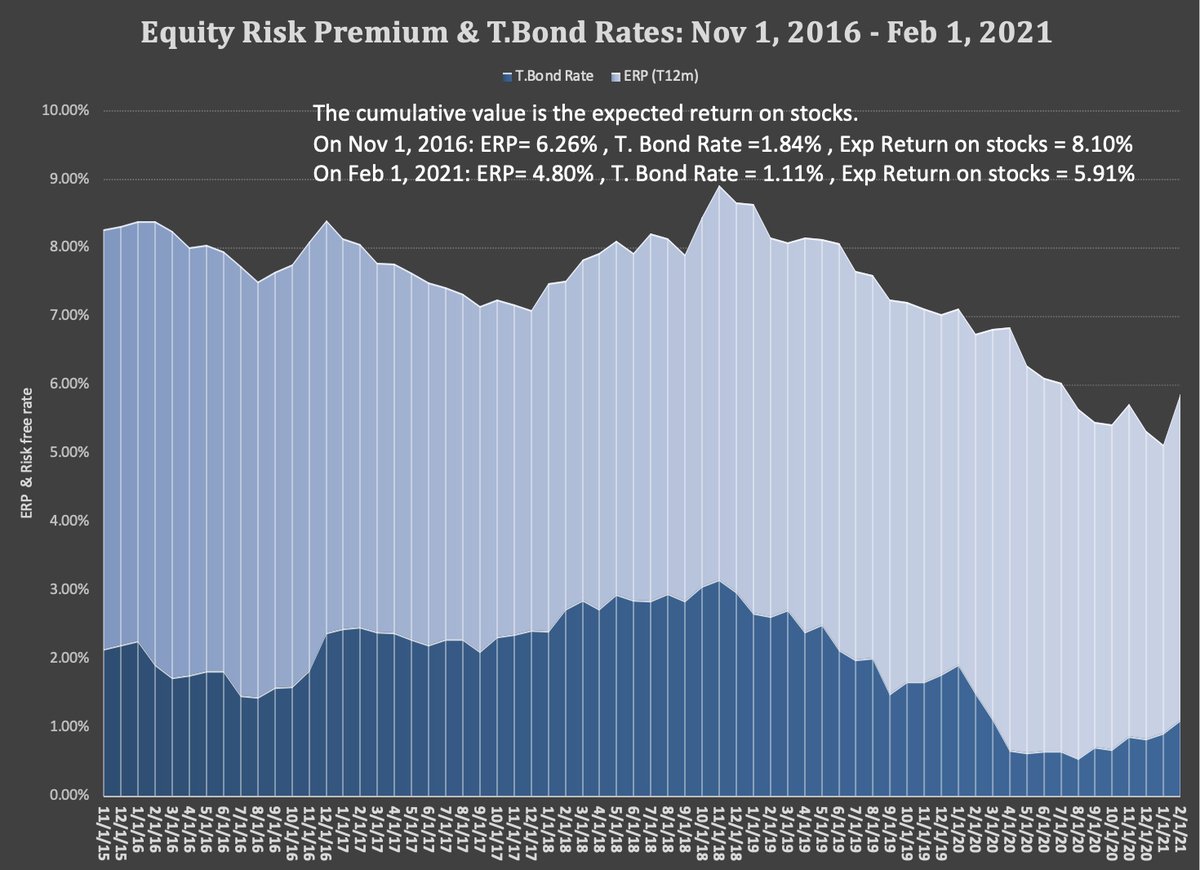
In the GME frenzy, there are lessons to be learned, but we all need investing anchors, and mine is the equity risk premium. ERP for S&P on 2/1/21 is 4.80%, reasonable enough, but the expected return of 5.91% is at low end of historic norms. (Error fixed!) Damodaran.com

In the GME frenzy, there are lessons to be learned, but we all need investing anchors, and mine is the equity risk premium. ERP for S&amp;P on 2/1/21 is 4.80%, reasonable enough, but the expected return of 5.91% is at low end of historic norms. (Error fixed!) Damodaran.com
Aswath Damodaran (@aswathdamodaran) 's Twitter Profile Photo

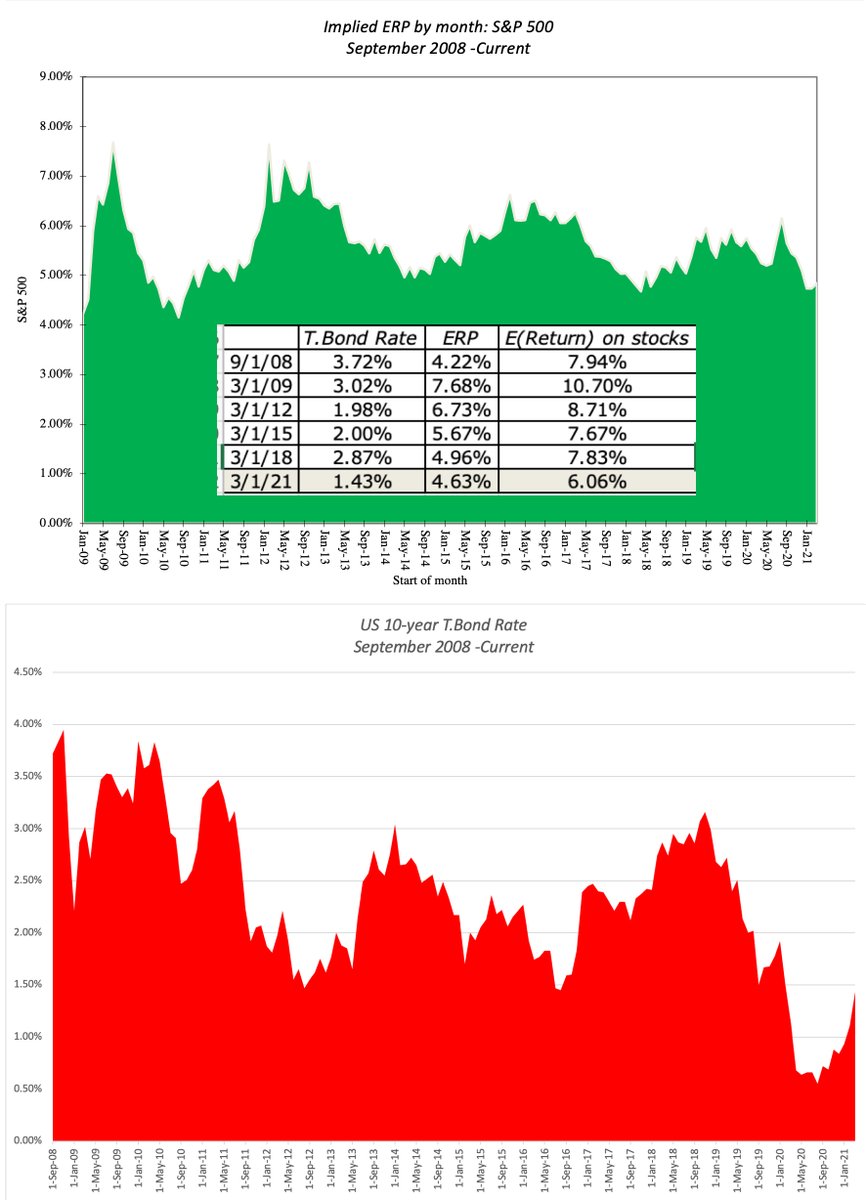
The S&P 500 rose in February, the T.Bond rate surged & the ERP dropped from 4.80% to 4.56%. The rise in rates lays bare the delusional belief that the Fed can keep rates low, while also assuming a strong economic comeback. damodaran.com

The S&amp;P 500 rose in February, the T.Bond rate surged &amp; the ERP dropped from 4.80% to 4.56%. The rise in rates lays bare the delusional belief that the Fed can keep rates low, while also assuming a strong economic comeback. damodaran.com
Kjell Henry Knivsflå (@kjellknivsfla) 's Twitter Profile Photo

I have posted a new working paper at SSRN: Fair Value of Operational Assets, Uncertainty, and Information ssrn.com/abstract=39266… Comments are welcome #accotwitter

Kjell Henry Knivsflå (@kjellknivsfla) 's Twitter Profile Photo

Fair value of operational assets I have updated my paper "Fair Value of Operational Assets, Uncertainty, and Information" at SSRN You find it here: ssrn.com/abstract=39266… Thanks to all that have contributed with comments and suggestions #AccoTwitter

Kjell Henry Knivsflå (@kjellknivsfla) 's Twitter Profile Photo

What is the normal P/E? Some seem to think that P = E/(k - g) so that P/E = 1/(k - g) However, P = D/(k - g), meaning that P/E = d/(k - g). Since g = (1 - d) r, P/E = (1/k) (1 + g (r - k)/(r (k - g))). The normal P/E = 1/k With k = 7% and g = 1%, the normal P/E is 14 not 16