Holcomb Observatory & Planetarium (@holcombobserv) 's Twitter Profile
Holcomb Observatory & Planetarium

@holcombobserv

Home of the largest telescope in the state of Indiana on the campus of Butler University. Educating the public for 70 years.

ID: 901434961412198406

linkhttps://www.butler.edu/holcomb-observatory calendar_today26-08-2017 13:23:37

122 Tweet

592 Takipçi

10 Takip Edilen
Holcomb Observatory & Planetarium (@holcombobserv) 's Twitter Profile Photo

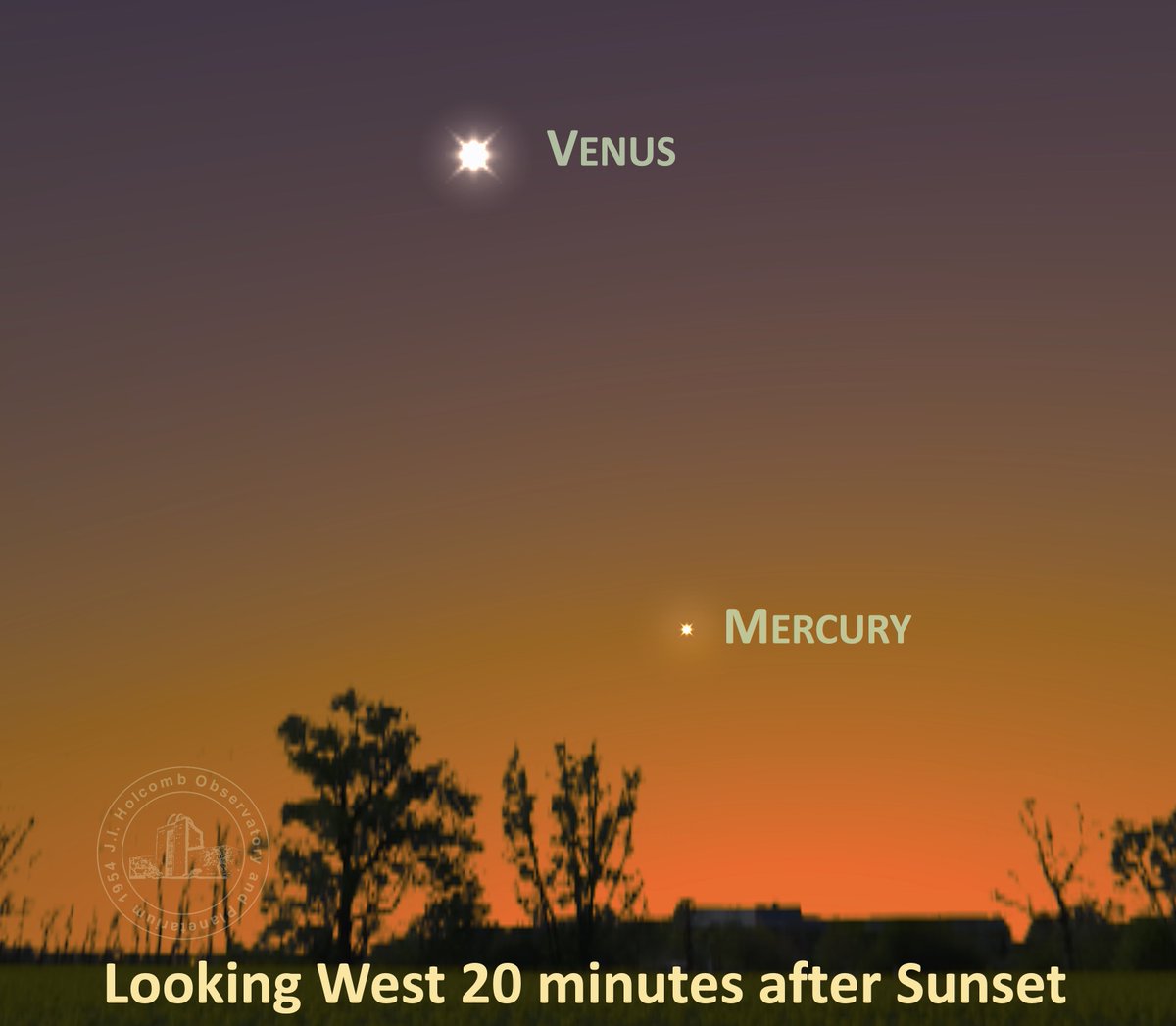
This week is an ideal time to get out and see the planets MERCURY & VENUS shortly after sunset. Venus is the higher and much brighter of the two. Mercury doesn't stray too far from the Sun so most people never see it! Look low to the horizon for Mercury.

This week is an ideal time to get out and see the planets MERCURY & VENUS shortly after sunset.  Venus is the higher and much brighter of the two.   Mercury doesn't stray too far from the Sun so most people never see it!   Look low to the horizon for Mercury.
Holcomb Observatory & Planetarium (@holcombobserv) 's Twitter Profile Photo

If we get the sky to clear later tonight it looks like there is a chance for an AURORA (also known as Northern Lights). Indiana is on the southern limit of visibility. But if it clears up take a look to the Northern horizon, perhaps you may see something!

If we get the sky to clear later tonight it looks like there is a chance for an AURORA (also known as Northern Lights).   Indiana is on the southern limit of visibility.  But if it clears up take a look to the Northern horizon, perhaps you may see something!
Holcomb Observatory & Planetarium (@holcombobserv) 's Twitter Profile Photo

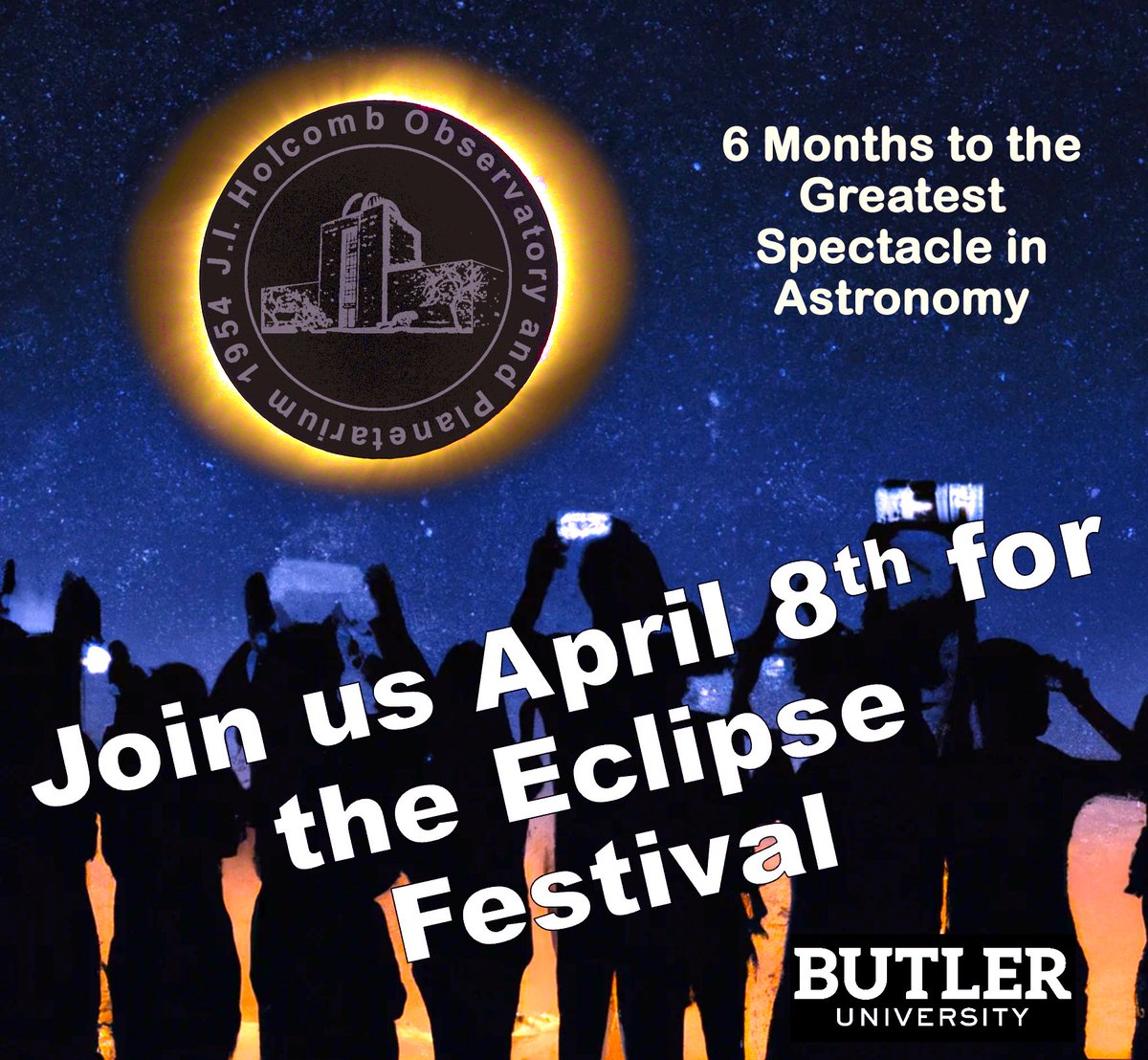
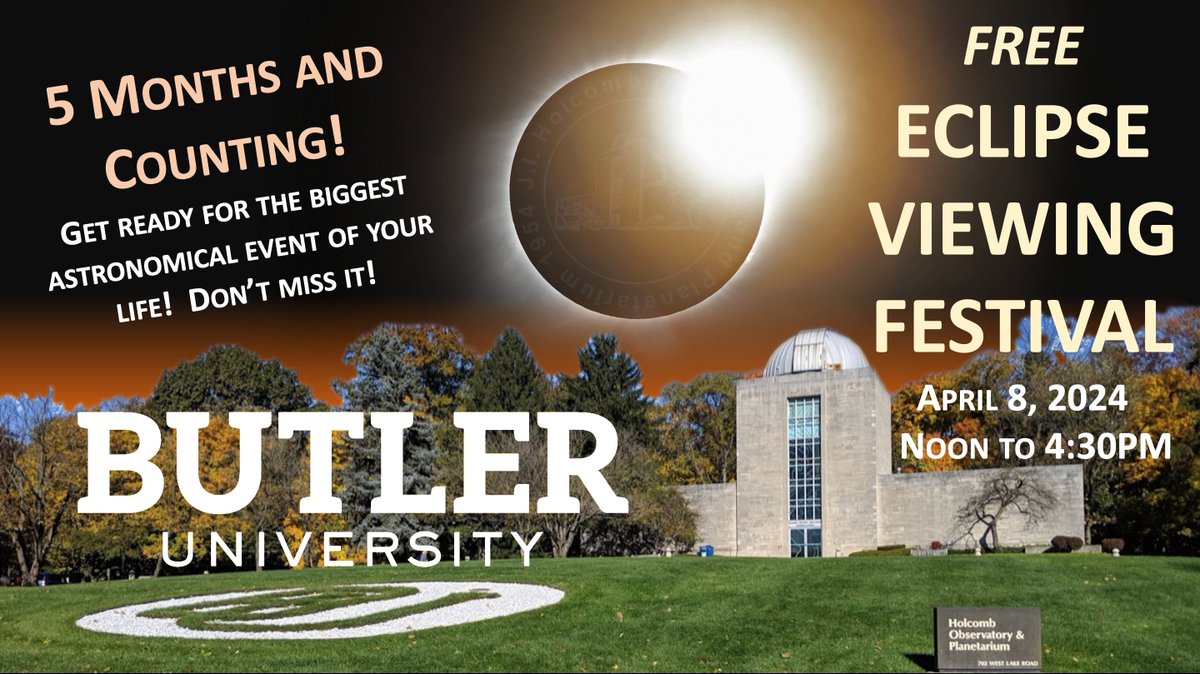
6 months and counting! ... Join us for an unforgettable experience at our ECLIPSE FESTIVAL on Butler University’s campus as we celebrate this extraordinary event together. More information can be found here: butler.edu/.../holcomb-ob…

6 months and counting! ... Join us for an unforgettable experience at our ECLIPSE FESTIVAL on Butler University’s campus as we celebrate this extraordinary event together.

More information can be found here:  butler.edu/.../holcomb-ob…
Holcomb Observatory & Planetarium (@holcombobserv) 's Twitter Profile Photo

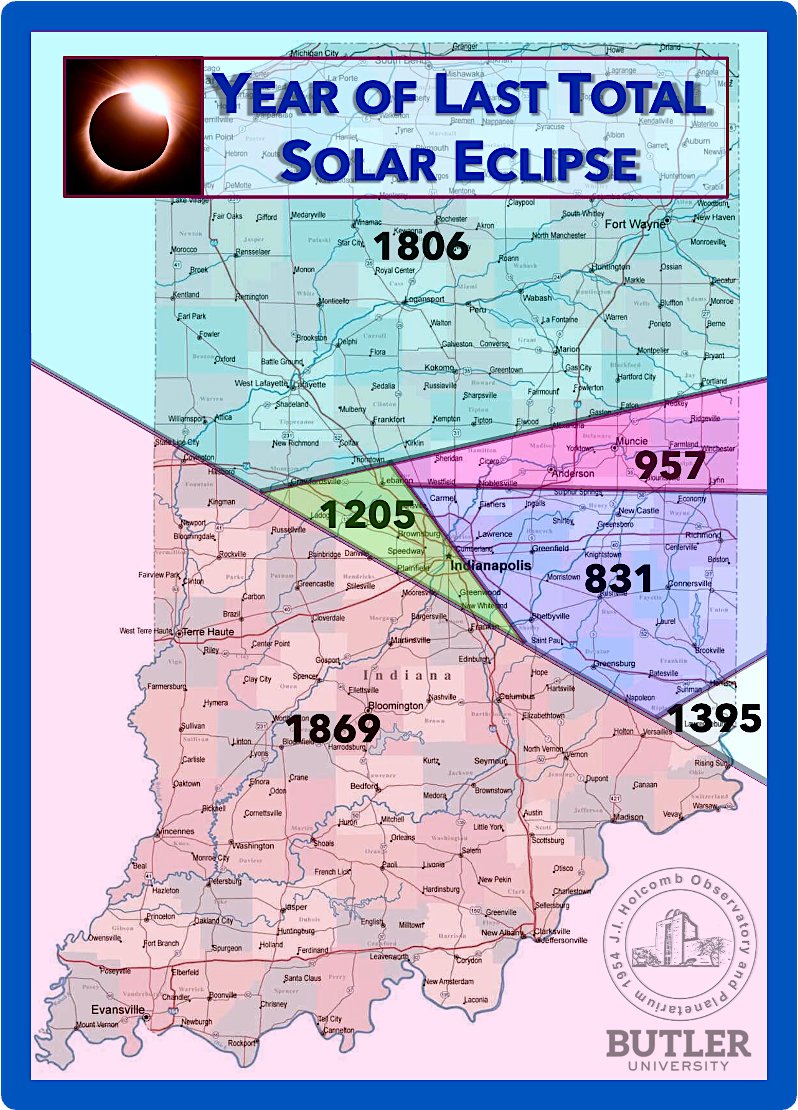
For those of you in the Indiana, check out the last time your locale had a Total Solar Eclipse. It's been nearly 1200 years for many locations! Get ready for April 8th 2024. butler.edu/arts-sciences/…

For those of you in the Indiana, check out the last time your locale had a Total Solar Eclipse.   It's been nearly 1200 years for many locations!   Get ready for April 8th 2024.  butler.edu/arts-sciences/…
Holcomb Observatory & Planetarium (@holcombobserv) 's Twitter Profile Photo

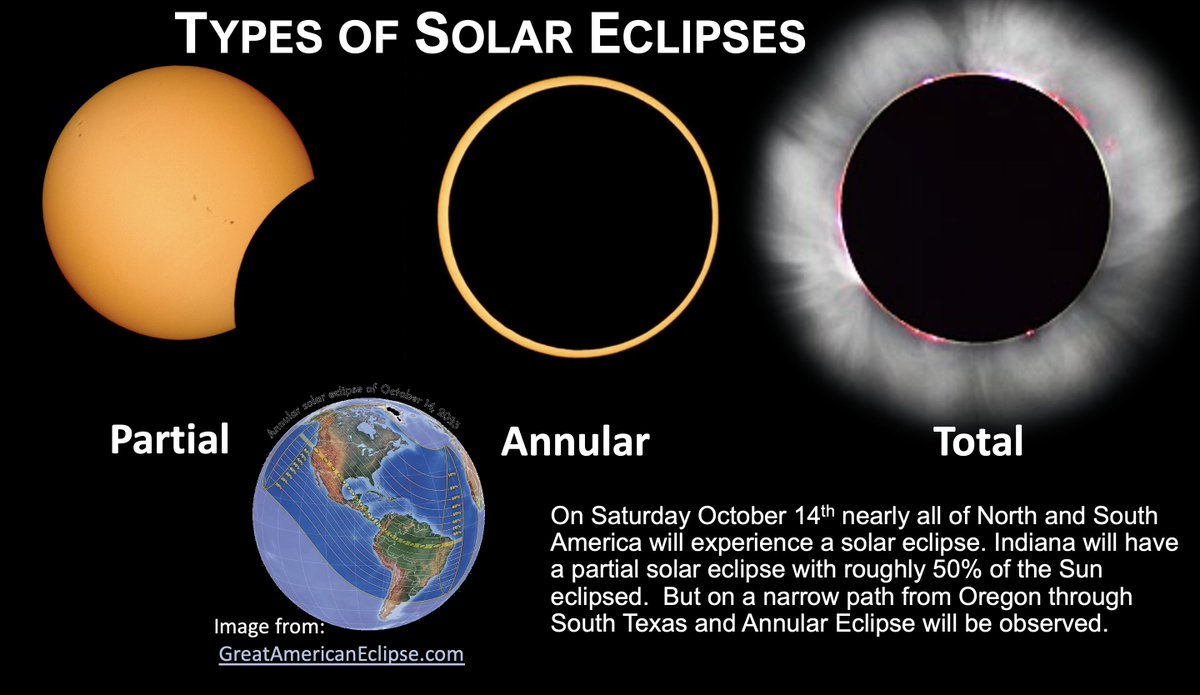
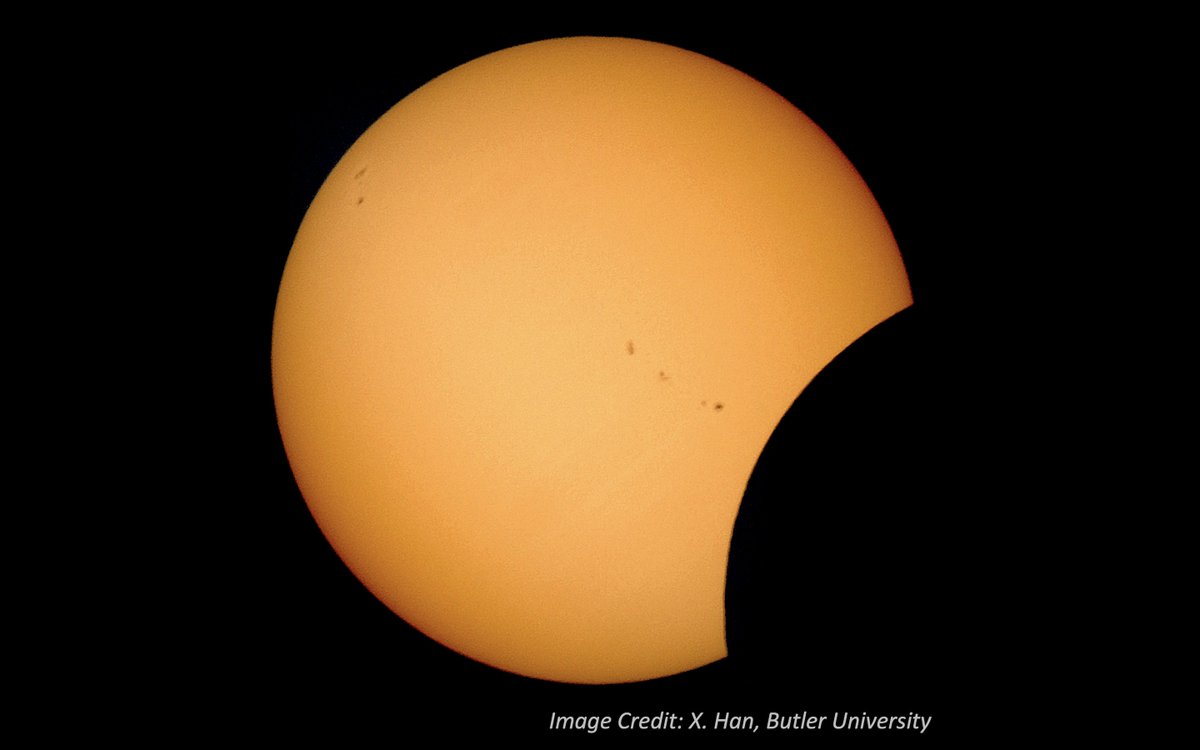
Sat. Oct 14 we'll experience a PARTIAL SOLAR ECLIPSE. Even if cloudy ~50% decrease in the diffuse light filtering through the clouds. For Indianapolis area, the eclipse will start at 11:39AM, peak at 1:02PM, when the Moon juts 55% across the Sun’s surface, concludes at 2:28 PM.

Sat. Oct 14 we'll experience a PARTIAL SOLAR ECLIPSE.  Even if cloudy ~50% decrease in the diffuse light filtering through the clouds. For Indianapolis area, the eclipse will start at 11:39AM, peak at 1:02PM, when the Moon juts 55% across the Sun’s surface, concludes at 2:28 PM.
Holcomb Observatory & Planetarium (@holcombobserv) 's Twitter Profile Photo

IS IT SAFE TO BE OUTSIDE DURING SATURDAY SOLAR ECLIPSE? ... ABSOLUTELY! Sunlight during eclipse no different than normal. Wear proper eye protection to look directly at Sun. Never look directly at the Sun without solar viewing glasses/filters sold by astronomical specialists.

IS IT SAFE TO BE OUTSIDE DURING SATURDAY SOLAR ECLIPSE? ... ABSOLUTELY!  Sunlight during eclipse no different than normal. Wear proper eye protection to look directly at  Sun.  Never look directly at the Sun without solar viewing glasses/filters sold by astronomical specialists.
Holcomb Observatory & Planetarium (@holcombobserv) 's Twitter Profile Photo

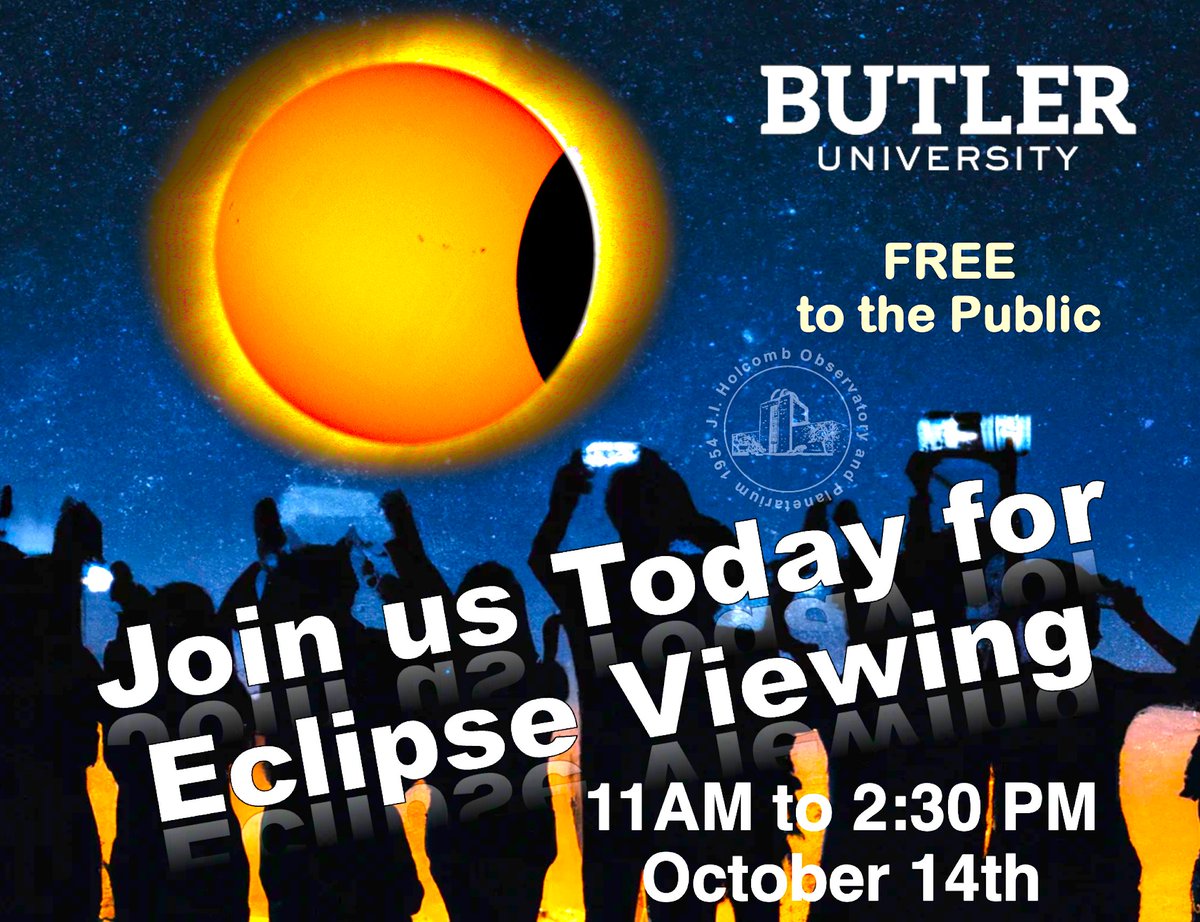
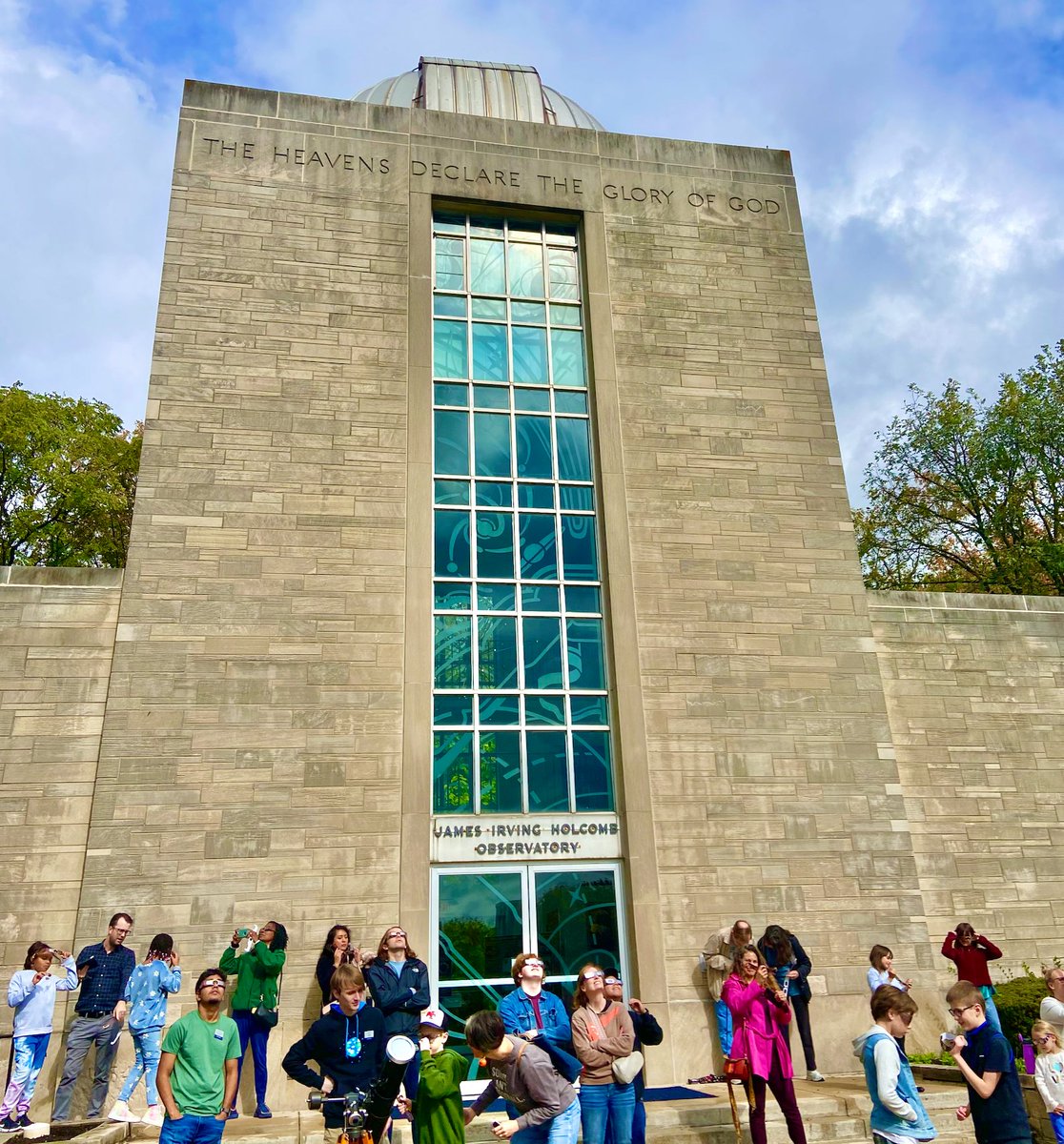
WE WILL BE OPEN TODAY! Join us for Partial Solar Eclipse Viewing Party from 11AM-2:30PM. Hoping for a few breaks in the clouds. *Note we can't see through the clouds with telescopes.*. Eclipse glasses will be available for purchase throughout the event, priced at just $2 each.

WE WILL BE OPEN TODAY!   Join us for Partial Solar Eclipse Viewing Party from 11AM-2:30PM. Hoping for a few breaks in the clouds.  *Note we can't see through the clouds with telescopes.*. Eclipse glasses will be available for purchase throughout the event, priced at just $2 each.
Holcomb Observatory & Planetarium (@holcombobserv) 's Twitter Profile Photo

We'll be the BEST IN THE MIDWEST. Yes the cosmos is FREE for all to view at HOLCOMB OBSERVATORY! 5 months to go to first total solar eclipse in 819 yrs. Join our eclipse experts on April 8th, 2024, at Indiana's largest observatory. Details here: butler.edu/arts-sciences/…

We'll be the BEST IN THE MIDWEST.  Yes the cosmos is FREE for all  to view at HOLCOMB OBSERVATORY!  5 months to go to first total solar eclipse in 819 yrs.  Join our eclipse experts on April 8th, 2024, at Indiana's largest observatory.  Details here: butler.edu/arts-sciences/…
Holcomb Observatory & Planetarium (@holcombobserv) 's Twitter Profile Photo

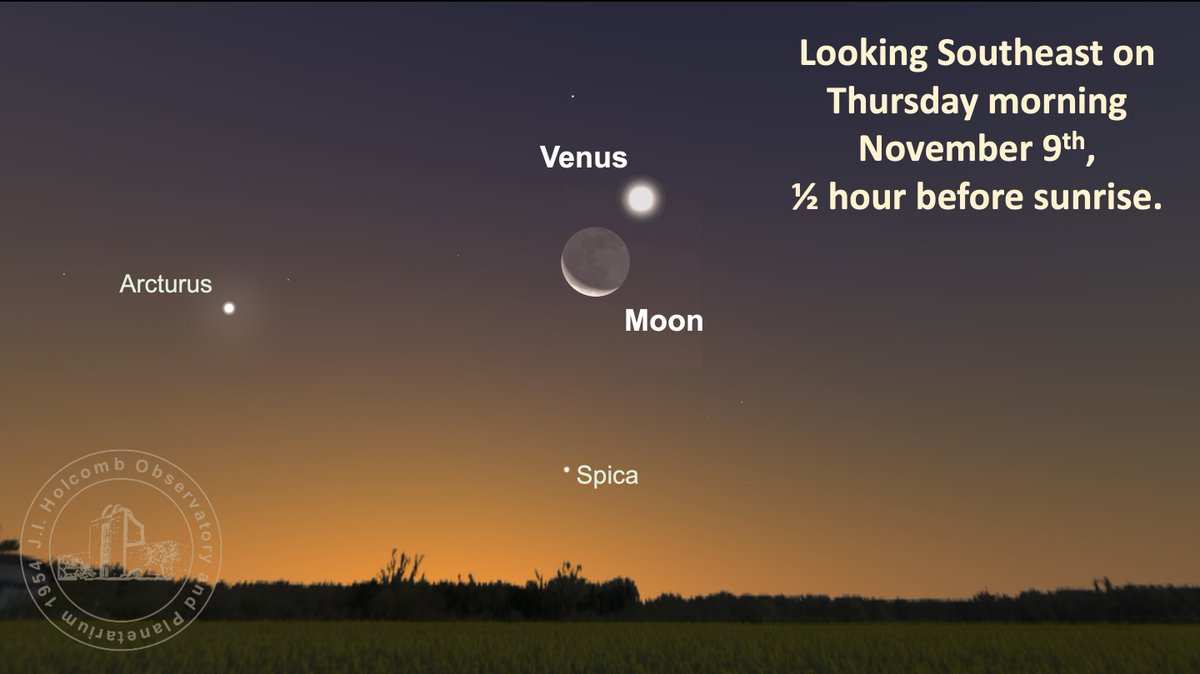
It's looking like the skies will be clear tomorrow morning (Nov 9). So if you are up between 5:30 - 7:15AM or so take in the 2nd and 3rd brightest objects in the sky. The crescent MOON and VENUS. Just LOOK SOUTHEAST to see this beautiful pairing.

It's looking like the skies will be clear tomorrow morning (Nov 9).   So if you are up between 5:30 - 7:15AM or so take in the 2nd and 3rd brightest objects in the sky.  The crescent MOON and VENUS.  Just LOOK SOUTHEAST to see this beautiful pairing.
Amir Caspi, Ph.D. (@astronamir) 's Twitter Profile Photo

Just look at this absolutely beautiful eclipse! Just published — polarization of light from the Sun's corona, as observed by Citizen CATE 2024 during the total solar #eclipse2023 in Australia, is mapped to colors (h/t Dr. Ritesh Patel). Stunning! 1/x Paper: iopscience.iop.org/article/10.384…
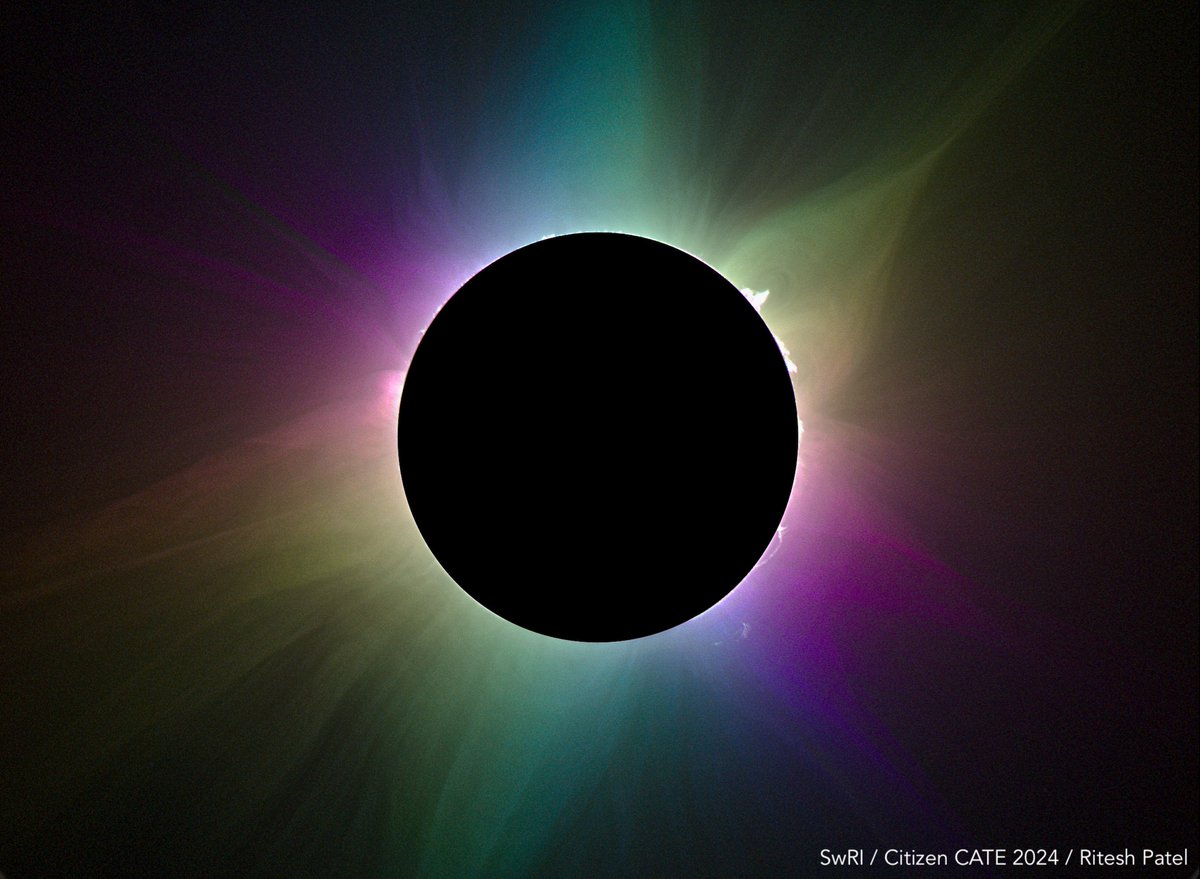
Just look at this absolutely beautiful eclipse!

Just published — polarization of light from the Sun's corona, as observed by <a href="/citizenCATE2024/">Citizen CATE 2024</a> during the total solar #eclipse2023 in Australia, is mapped to colors (h/t <a href="/s0larish/">Dr. Ritesh Patel</a>). Stunning!

1/x

Paper: iopscience.iop.org/article/10.384…
Holcomb Observatory & Planetarium (@holcombobserv) 's Twitter Profile Photo

Great year to see GEMINID METEOR SHOWER peaking December 14th. Will ramp up over coming week. No Moon to interfere with the shower this year. NO special equipment needed, just your eyes looking upward! Best viewing conditions after midnight though can be seen all night.

Holcomb Observatory & Planetarium (@holcombobserv) 's Twitter Profile Photo

4 MONTHS TO GO ! ... FREE for all to view at HOLCOMB OBSERVATORY! Our 1st total solar eclipse in over 800 yrs. Join our team of eclipse experts on 4/8/24, for this extraordinary event at Indiana's largest observatory with over a dozen telescopes focused on the Sun.

4 MONTHS TO GO ! ... FREE for all to view at HOLCOMB OBSERVATORY!  Our 1st total solar eclipse in over 800 yrs. Join our team of eclipse experts on 4/8/24, for this extraordinary event at Indiana's largest observatory with over a dozen telescopes focused on the Sun.
Holcomb Observatory & Planetarium (@holcombobserv) 's Twitter Profile Photo

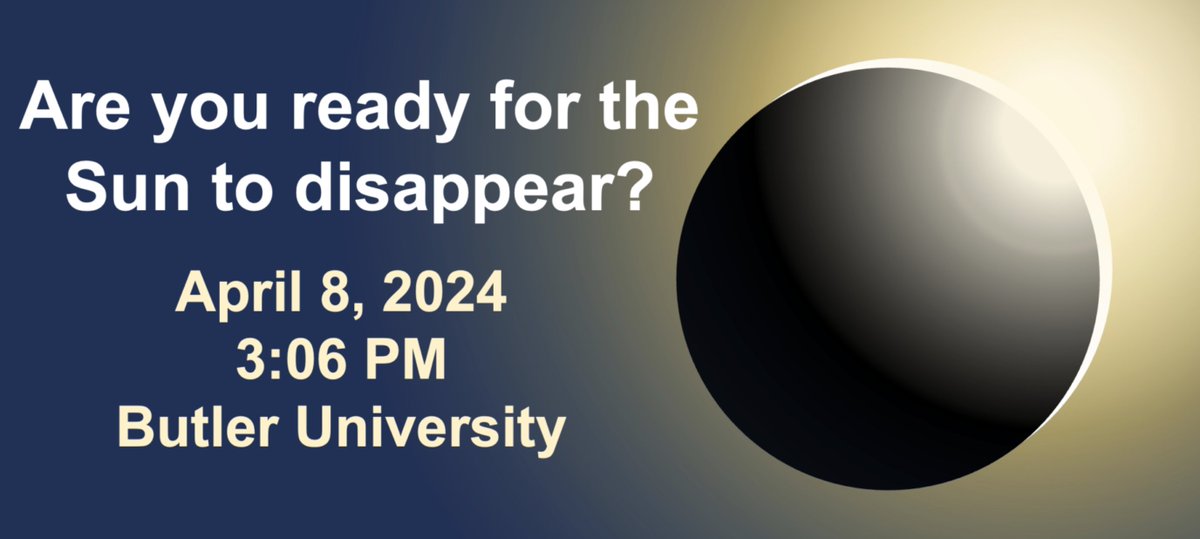
1 month to go! The ECLIPSE is FREE for all to view at HOLCOMB OBSERVATORY! Join our eclipse experts and solar scientists from National Center for Atmospheric Research April 8th, for an extraordinary experience at Indiana's largest observatory with well over a dozen telescopes.

1 month to go! The ECLIPSE is FREE for all to view at HOLCOMB OBSERVATORY!  Join our eclipse experts and solar scientists from National Center for Atmospheric Research April 8th, for an extraordinary experience at Indiana's largest observatory with well over a dozen telescopes.
Holcomb Observatory & Planetarium (@holcombobserv) 's Twitter Profile Photo

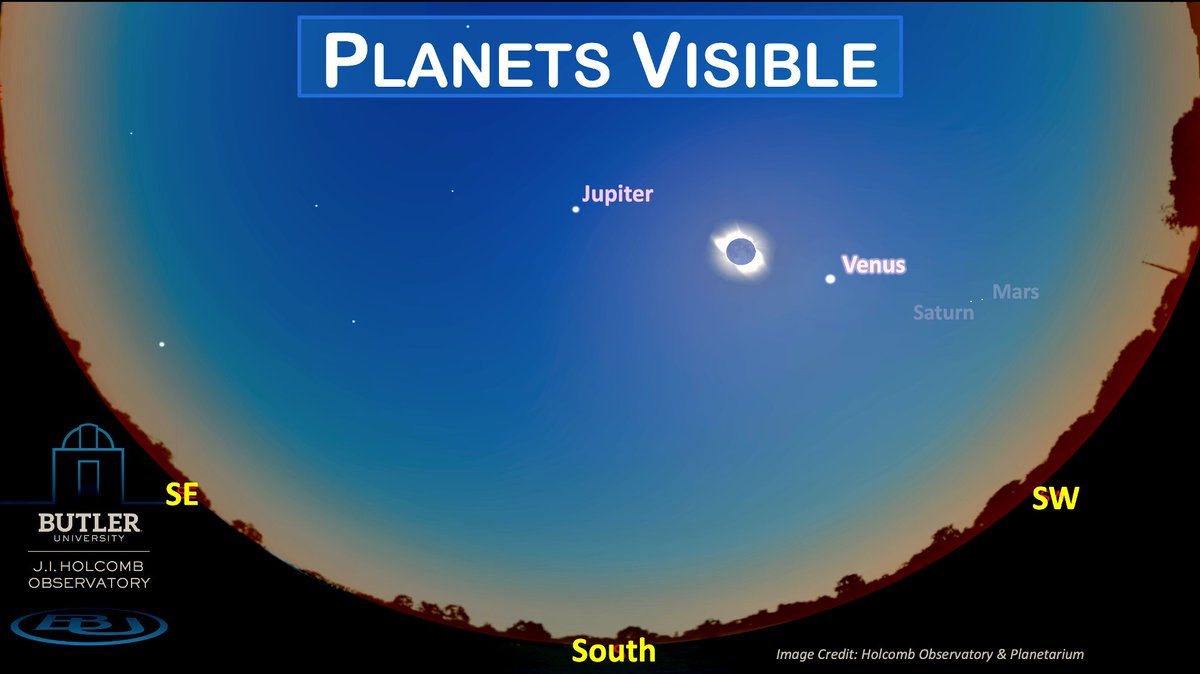
3 weeks to Indy's 1st Total Solar Eclipse in 819 years! During totality you should easily see the 2 planets of VENUS & JUPITER. If conditions are good you might see Saturn & Mars. Want to learn more about the eclipse? Take in planetarium shows Fri & Sat evenings in March.

3 weeks to Indy's 1st Total Solar Eclipse in 819 years!  During totality you should easily see the 2 planets of VENUS  &amp; JUPITER.  If conditions are good you might see Saturn &amp; Mars.   Want to learn more about the eclipse?   Take in planetarium shows Fri &amp; Sat evenings in March.
Holcomb Observatory & Planetarium (@holcombobserv) 's Twitter Profile Photo

We're trying to combat misinformation about April total eclipse. 1. For PARTIAL portion of the eclipse, glasses must be worn when viewing the Sun. 2. For TOTALITY the Sun’s surface is totally covered by the Moon. Then SAFE to look directly at Sun’s corona without eye protection.

We're trying to combat misinformation about April total eclipse.
1. For PARTIAL portion of the eclipse, glasses must be worn when viewing the Sun.
2. For TOTALITY the Sun’s surface is totally covered by the Moon.  Then SAFE to look directly at Sun’s corona without eye protection.
Holcomb Observatory & Planetarium (@holcombobserv) 's Twitter Profile Photo

Morning of Mar 25 a very small appetizer to ready us for the BIG event on April 8th. On the 25th we'll have a Penumbral Lunar Eclipse. This type of lunar eclipse is not all that impressive. It happens when a Full Moon moves into the Earth's shadow known as the penumbra.

Morning of Mar 25  a very small appetizer to ready us for the BIG event on April 8th.  On the 25th we'll have a Penumbral Lunar Eclipse. This type of lunar eclipse is not all that impressive.  It happens when a Full Moon moves into the Earth's shadow known as the penumbra.
Holcomb Observatory & Planetarium (@holcombobserv) 's Twitter Profile Photo

During the 76-min wait to totality (approximately 1:50 to 3:06 PM EDT), you'll observe shadows might contain miniature images of eclipsed Sun. In this instance, the tree canopy above acted as nature's makeshift pinhole projector, casting its own unique projection of the event.

During the 76-min wait to totality (approximately 1:50 to 3:06 PM EDT), you'll observe shadows might contain miniature images of  eclipsed Sun. In this instance, the tree canopy above acted as nature's makeshift pinhole projector, casting its own unique projection of the event.
Holcomb Observatory & Planetarium (@holcombobserv) 's Twitter Profile Photo

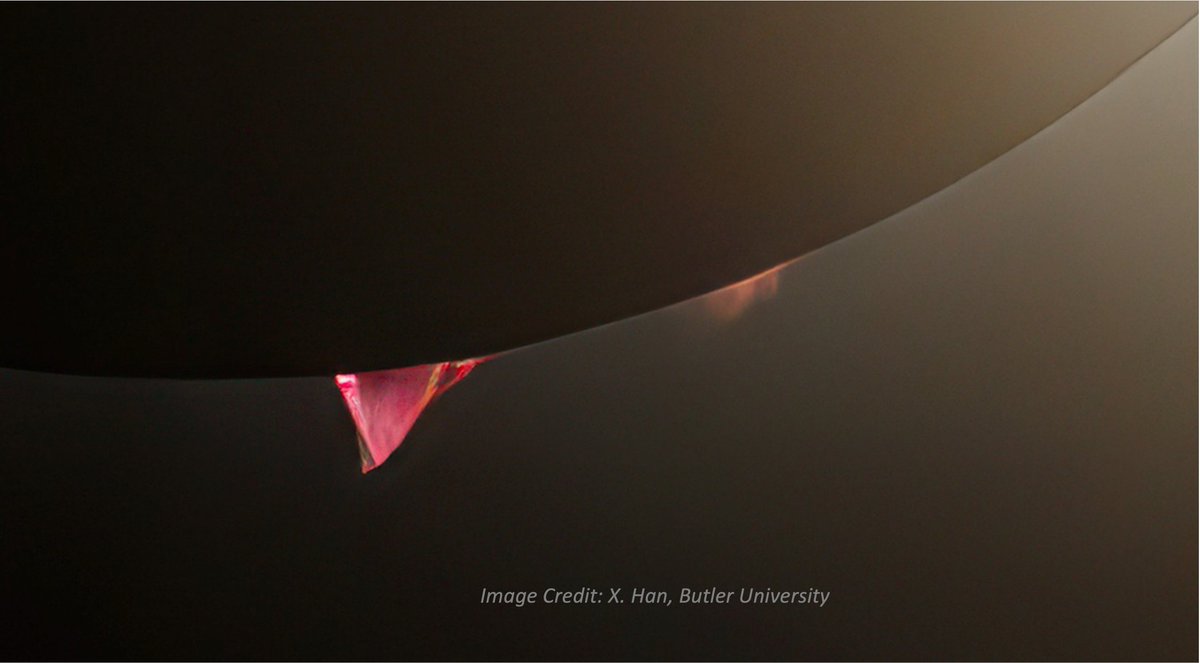
Magnificent closeup of naked-eye prominence on lower limb of Sun during totality. These striking features don pinkish hue courtesy of gaseous hydrogen achieving the perfect density & temperature to fluoresce. This prominence measures a whopping 3 times the diameter of our Earth!

Magnificent closeup of naked-eye prominence on lower limb of Sun during totality. These striking features don pinkish hue courtesy of gaseous hydrogen achieving the perfect density &amp; temperature to fluoresce. This prominence measures a whopping 3 times the diameter of our Earth!